- Popular countries
- Popular regions
- Popular cities
- Popular airports
- Car Rental Italy
- Car Rental Spain
- Car Rental United States
- Car Rental Portugal
- Car Rental South Africa
- Car Rental France
- Car Rental Netherlands
- Car Rental Greece
- Car Rental Germany
- Car Rental United Kingdom
- Car Rental Belgium
- Car Rental Croatia
- Car Rental Switzerland
- Car Rental Austria
- Car Rental Denmark
- Car Rental Norway
- Car Rental Australia
- Car Rental Ireland
- Car Rental Cyprus
- Car Rental Canada
- Car Rental Florida
- Car Rental Sicily
- Car Rental California
- Car Rental England
- Car Rental Sardinia
- Car Rental Mallorca
- Car Rental Ibiza
- Car Rental Crete
- Car Rental Tenerife
- Car Rental Rhodes
- Car Rental Madeira
- Car Rental Corsica
- Car Rental Gran Canaria
- Car Rental Malta
- Car Rental Scotland
- Car Rental Azores
- Car Rental Fuerteventura
- Car Rental Lanzarote
- Car Rental Corfu
- Car Rental Zakynthos
- Car Rental Amsterdam
- Car Rental Milan
- Car Rental Miami
- Car Rental Lisbon
- Car Rental Malaga
- Car Rental Porto
- Car Rental Rome
- Car Rental Cape Town
- Car Rental Barcelona
- Car Rental Faro
- Car Rental Alicante
- Car Rental Nice
- Car Rental Bari
- Car Rental Naples
- Car Rental Johannesburg
- Car Rental Brussels
- Car Rental Bergamo
- Car Rental Orlando
- Car Rental Palma de Mallorca
- Car Rental Vienna
- Car Rental Amsterdam Schiphol Airport
- Car Rental Miami International Airport
- Car Rental Lisbon Airport
- Car Rental Malaga Airport
- Car Rental Porto Airport
- Car Rental Milan Malpensa Airport
- Car Rental Rome Fiumicino Airport
- Car Rental Faro Airport
- Car Rental Alicante Airport
- Car Rental Bari Palese Airport
- Car Rental Nice Airport
- Car Rental Barcelona Airport
- Car Rental Cape Town Airport - International Terminal
- Car Rental Bergamo Airport
- Car Rental Orlando International Airport
- Car Rental Mallorca Airport
- Car Rental Catania Airport
- Car Rental Johannesburg International Airport
- Car Rental Ibiza Airport
- Car Rental Athens Airport

12 Tips for a Road Trip Starting from Olbia or Alghero
The Perfect Road Trip Through Sardinia in a Rental Car
The first question you should ask yourself when planning a vacation to Sardinia is which part of the island you want to visit. You’ll be tempted to want to see everything, but trust us, that’s nearly impossible in just one vacation. Yes, you could drive across the entire island in a rental car in four weeks, but then you’d spend more time behind the wheel than enjoying all that Sardinia has to offer. And that doesn’t seem like the point of renting a car to us. So choose between the north or the south of the island. If you rent a car in Olbia or Alghero, you’ve already made that choice: the north. The capital, Cagliari, is an excellent starting point for exploring the other part of Sardinia. Check out our blog post about a road trip from Cagliari through southwestern Sardinia and the island’s mountainous heart.
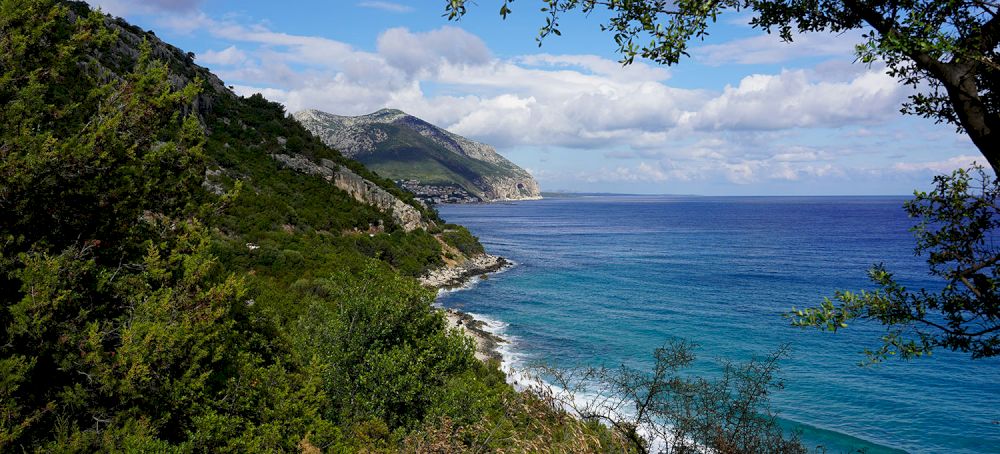
Sardinia is the second-largest island in the Mediterranean (after Sicily) and has a coastline stretching a full two thousand kilometers. The idyllic beaches, such as those along the Costa Smeralda, attract the most tourists and can get very crowded during peak season (July and August). That’s the beauty of renting a car in Sardinia: you can head inland, where there are far fewer tourists, and enjoy the quintessential Mediterranean beauty and tranquility. Versatile Sardinia is perfect for a road trip in a rental car: winding, picturesque roads take you from the dazzling blue sea to the mountainous interior with its authentic villages and historic sights. Sardinia’s rugged landscape is an attraction in itself, but it’s also dotted with thousands of so-called nuraghi—mysterious Bronze Age stone ruins consisting of towers shaped like beehives.
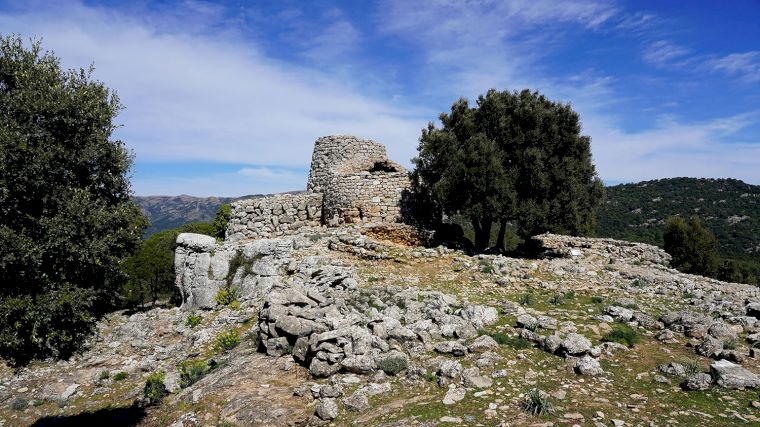
Below, we describe a road trip through the sights—including the most beautiful beaches—in northern Sardinia, starting in Olbia and stopping in Alghero along the way. Whether you rent a car at Olbia Airport or Alghero Airport, you can follow this route from either location, and of course, you can travel it in either direction, whichever suits you best.
Olbia
In our blogs, we often recommend spending one or more days in your city of arrival. In the case of Olbia, however, it’s debatable whether you’d want to. It’s not a bad city, but it certainly isn’t among the highlights of what Sardinia has to offer. So it depends a bit on what time you arrive at the airport. If it’s late in the afternoon, you might prefer to drive to a small hotel in the city first to start your vacation on a relaxing note with a drink on a terrace in the old town. If you arrive earlier, you can skip Olbia altogether and start your road trip right after picking up your rental car at the airport. A nice day trip from Olbia is a visit to Isola Tavolara, which rises out of the sapphire-blue sea like some kind of giant sea creature. At the port of Porto San Paolo, you can board the ferry to the island. Experienced mountaineers will want to climb to the 567-meter summit. From Punta Cannone, you’ll have an incredible view of the Sardinian mainland.
Budoni
It’s very tempting to drive straight to the Costa Smeralda (Emerald Coast) north of Olbia, but our road trip heads south first. From the airport, follow the signs to the SS125, the road along Sardinia’s east coast. This first stretch isn’t particularly spectacular yet, but you’ll be driving right past the beaches, so if you’re already eager to take a dip in the sea, now’s your chance. For a panoramic view of the Tyrrhenian Sea, pull over briefly at Capo Coda Cavallo. A little further on, the road runs right past the Stagno di San Teodoro, a lagoon where you can spot various species of birds, including flamingos. The beach along the lagoon’s seaward side, La Cinta, is beautiful, and this has transformed the former fishing village of San Teodoro into a popular (and, during the summer months, bustling) seaside resort with a lively nightlife. Budoni, located twenty kilometers further south by car, is a quieter destination. It also boasts stunning beaches (Cala di Budoni and Baia Sant’Anna) and serves as a great base for exploring the surrounding area in your rental car. For example, you can visit the ruins of the San Pietro nuraghe, not far from the old town of Posada. You should definitely visit this town, as it has a small but charming historic center, dominated by the Castello della Fava. On the east side of the historic center, there’s a parking lot where you can park your rental car for free.
Dorgali / Cala Gonone
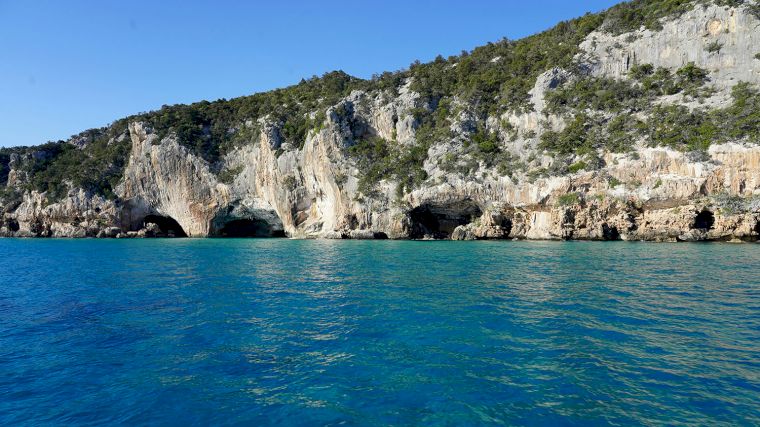
After Orussei, the SS125 runs right through a quarry. It’s not a pretty sight, but keep going a bit further, and the Orientale Sarda—as the road is also known—winds its way through beautiful, green countryside toward Dorgali. You can choose either that town or the seaside resort of Cala Gonone as your base. The road between these two places (SP26) is a must-do because of the fantastic views along the way. The beaches near the resort itself are easily accessible, but others can only be reached after a brisk hike or by boat—for example, Cala Luna and Cala Sisine. The hiking trails wind through the stunning coastal scenery, and at the end, you’ll be rewarded with a dreamy little beach. You can also take boat trips to impressive sea caves, such as the Grotta dei Cormorani or the Grotta del Bue Marino. These are organized tours, but if you rent a small boat yourself, you can explore the Golfo di Orusei on your own.
The Archaeological Museum in Dorgali isn’t very large, but it does provide a good overview of the archaeological sites of ancient cultures in the area. You can also hire guides there for tours to the archaeological sites. Hiring a guide is highly recommended, not only because you’ll learn much more about the history, but also because it’s easy to get lost on the hiking trails in the mountains of Sardinia.
Su Gologone is a fascinating spring west of Dorgali. It is the outlet of a vast underground water system in the Supramonte mountain range. The water comes from very deep, but no one knows exactly how deep. A diver once tried to reach the bottom of the spring but got no further than 135 meters. Especially around noon, when the sun is directly overhead, the water takes on a beautiful green color. It’s easy to drive there from Dorgali in your rental car: follow the SP38 and SP46 toward Oliena and turn left at the signs for Su Gologone. There’s a large parking lot at the end of the road. On the way back, you can rent a canoe or kayak at Canales Kayak to take a beautiful trip across the Lago del Cedrino reservoir.
Gola di Gorrupu
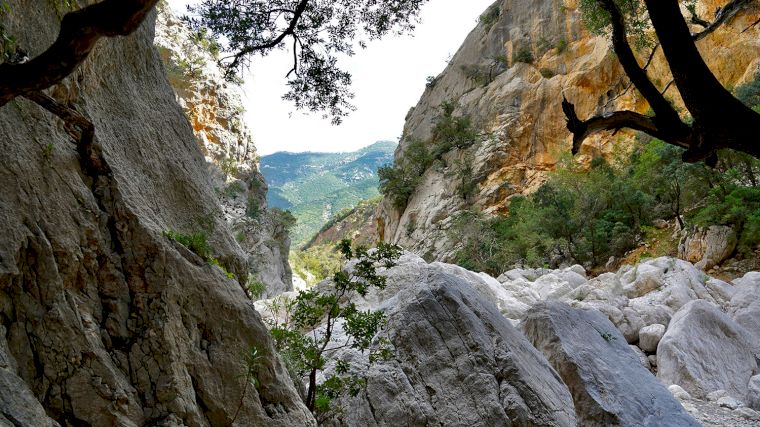
From Dorgali, it’s a half-hour drive to the Ghenna Silana parking lot, the starting point for the hike to Sardinia’s most spectacular gorge. You’ll descend no less than 700 meters along a trail of about 5 kilometers; the Gola di Gorrupu is, in fact, one of the deepest gorges in Europe. The gorge is strewn with large boulders, and three routes have been marked out: an easy green route, a slightly more difficult yellow route, and a truly challenging red route, where you’ll be scrambling almost exclusively over rocks. These rocks can sometimes be slippery, so be sure to wear hiking boots with good traction. The descent into the gorge isn’t too difficult, but you’ll have to make your way back up, and that’s a strenuous climb. If you’re not up for it, there are jeeps at the bottom of the gorge that will take you back up—for a fee, of course.
Orientale Sarda
The road from Dorgali to the Gola di Gorrupu gorge is already beautiful, but follow the Orientale Sarda (SS125) a bit further, because from Urzulei onward it becomes even more winding and challenging. All the way to Santa Maria Navarrese, the curves and straightaways alternate at an ever-increasing pace. It’s a delight for anyone who enjoys a bit of a drive. Be sure to stay focused while driving, though, as the rock faces, mountain slopes, gorges, and valleys provide a constant distraction. Unfortunately, there are only a few spots where you can pull over your rental car to better enjoy the stunning scenery. However, in the village of Baunei, you can take the turnoff toward Cala Goloritzé, a beautiful white pebble beach. The final stretch, starting from the Su Porteddu RV park, must be covered on foot through a sort of gorge.
Gennargentu and Foresta di Montes
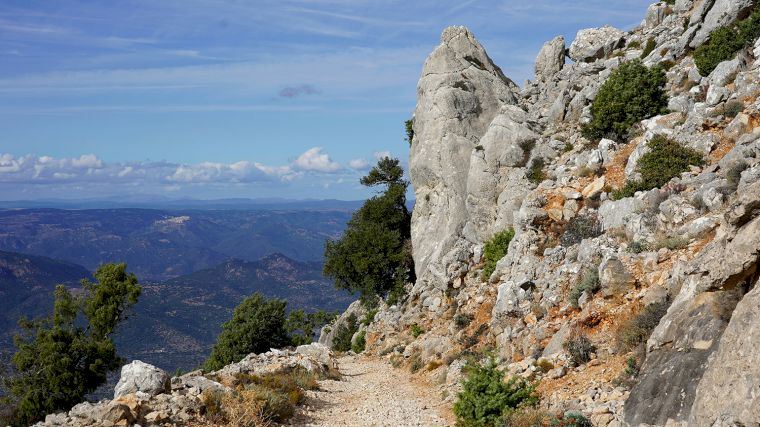
Drive through Tortolì along winding roads once again to the Gennargentu National Park, a mountain range featuring the island’s highest peaks and covered in ancient trees. A wild and unspoiled area, home to the golden eagle and the mouflon. You can smell the intense fragrance of the many thyme bushes, especially at the start of summer when they’re in full bloom. Thanks to the trees in the Foresta di Montes, you’ll spend much of your time in the shade while hiking these mountains, which is quite pleasant on hot summer days. There are several hiking trails where you can enjoy the most beautiful views and rock formations. For example, the trail to the table mountain Monte Novo San Giovanni. To reach Sardinia’s highest point, Punta la Marmora, take the SP7 to Passo di Tascusì, where you’ll turn left. At the S’Arena mountain hut (closed), you can park your rental car and hike to the 1,834-meter summit. Needless to say, the view from here is spectacular; among other things, you’ll see Sardinia’s second-highest peak, Bruncu Spina (1,829 m).
Bosa
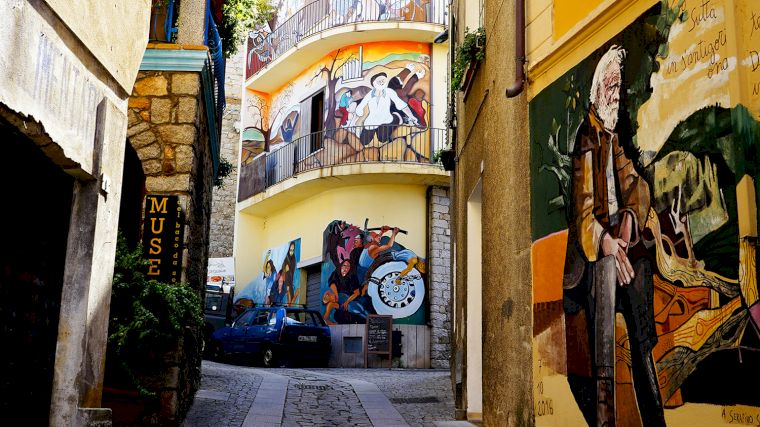
Be sure to allow plenty of time for the drive through Sardinia’s interior to Bosa. The landscape is breathtaking, and you’ll want to stop in every little village along the way. It easily takes a whole day to drive to Bosa in a rental car, and even then, you’ll feel like you haven’t seen nearly everything. One very special village is Orgosolo, where many walls are adorned with murals. This tradition began in the 1960s and 1970s as a form of protest, but later, murals depicting everyday life were added.
Medieval Bosa, on the banks of the Temo River, is one of Sardinia’s most colorful towns. Especially from the Ponte Vecchio, you can clearly see how the town’s brightly painted houses are built into the hillside, with the ruins of Castello Malaspina towering above them. The castle itself isn’t much to look at anymore, but it naturally offers a beautiful view. It’s delightful to wander through the narrow, charming streets of the old town. Bosa is home to several museums, including the Museo Casa Deriu, which is housed in a historic home and showcases how a wealthy family lived in the nineteenth century. Across the river, at the Museo delle Conce (Tannery Museum), you can see how leather was processed in the old days, from cowhide to the finished product. It’s housed in a beautifully restored building dating from 1700. Of course, the town has a beach: Spiaggia di Bosa Marina. You can go for walks in the nearby hills of Monte Furru, where you’ll also find a nuraghe. In short, Bosa is an ideal stopover on the way to Alghero.
Alghero
It’s as if there’s no end to the beautiful routes: even when driving from Bosa to Alghero in your rental car, you’ll fully enjoy the views of the Mediterranean Sea along the way. This stunning coastal road consists of the provincial roads SP49 (in the province of Oristano) and SP105 (in Sassari) and runs along the steep cliffs of the west coast. At the end of this route, you’ll be rewarded with the beautiful, historic city of Alghero. The centro storico is almost entirely surrounded by 16th-century sea walls. Between Piazza Sulis and Porta a Mare, a walking path runs along these so-called bastioni, where you can take a break every now and then at one of the many cafés and restaurants. From the Bastioni Marco Polo, you can see Capo Caccia in the distance.
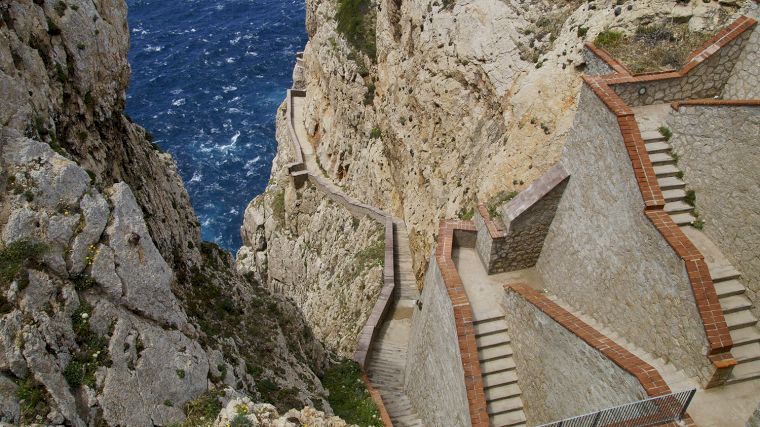
You can reach that cape from the harbor by ferry, but it’s more fun to drive there in your rental car and walk down more than a hundred meters from the parking lot via the Escala del Cabirol. Not for those afraid of heights! The destination is the Neptune’s stalactite caves, also known as Grotta di Nettuno. On the western side of the peninsula, you’ll have a beautiful view of the islet of Foradada, especially at sunset. The waters around Capo Caccia are a protected marine area, and it’s one of the few places in the Mediterranean where divers can see red coral at shallow depths. On the way to and from the cape, you’ll pass by Nuraghe di Palmavera, which not only features those characteristic towers but is also surrounded by an entire Bronze Age village. It’s very interesting if you want to learn more about Sardinia’s ancient culture.
Spiaggia La Pelosa or della Pelosetta?
Ready for another day at the beach? Then drive your rental car north from Alghero to the town of Stintino, home to what is perhaps Sardinia’s most beautiful beach: La Pelosa. It has become so popular that access is now restricted during the summer months: only 1,500 people are allowed on the beach per day. Between June 1 and October 31, you’ll need to purchase an access ticket online. It’s a breathtakingly beautiful beach that slopes very gently into the sea. The subtle contrast between the bright white sand and the turquoise water creates a stunning scene. Don’t feel like dealing with the crowds or paying to visit the beach? There’s a great alternative nearby: Pelosetta, also known as “Little Pelosa.” It’s much smaller, but less crowded, and this little beach also features white sand and a blue sea.
Castelsardo
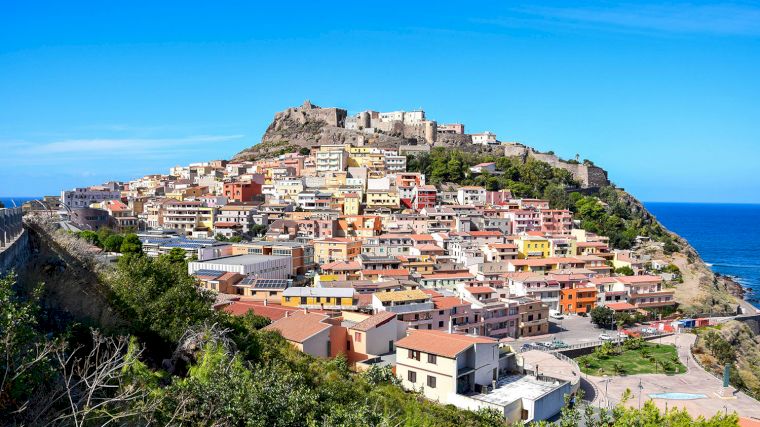
As you drive into Castelsardo, it’s not hard to see where the town gets its name. High above it stands Castel Doria, built in the twelfth century by the Doria family of Genoa. The castle and the village that grew up around it were then also known as Castelgenovese. That changed when the Crown of Aragon from Spain took control in the fifteenth century. The name was changed to Castellaragonese, only to be renamed to its current name four hundred years later. The Concattedrale di Sant’Antonio Abate stands in a beautiful location: on the northern edge of the medieval center, where you have a panoramic view of the harbor and the sea. Castelsardo is a particularly charming little town, with narrow streets and stairways where you can find excellent restaurants. To the southeast of Castelsardo, you’ll see a remarkable boulder that the elements have shaped into the form of an elephant, though the trunk is a bit on the short side. You don’t have to drive far to get there, as this Roccia dell’Elefante is located right along the SS134, just past the junction with the SP90.
Porto Antico di Isola Rossa
Take the SP90 in your rental car to reach Isola Rossa in just over half an hour. Although there’s a nice beach (La Marinedda) for surfing, kayaking, or snorkeling, the real gem of this town is found on the small island of the same name off the coast. There, you’ll find a unique underwater museum. Diver Diego Crippa organizes diving trips there to a shipwreck that sank in Roman times. The six anchors that the crew dropped to prevent a collision with the cliff are still in their exact positions. You’ll also see remnants of the cargo, such as Roman jars (amphoras). If you have a diving certification, you really shouldn’t miss this underwater archaeological museum!
Costa Paradiso
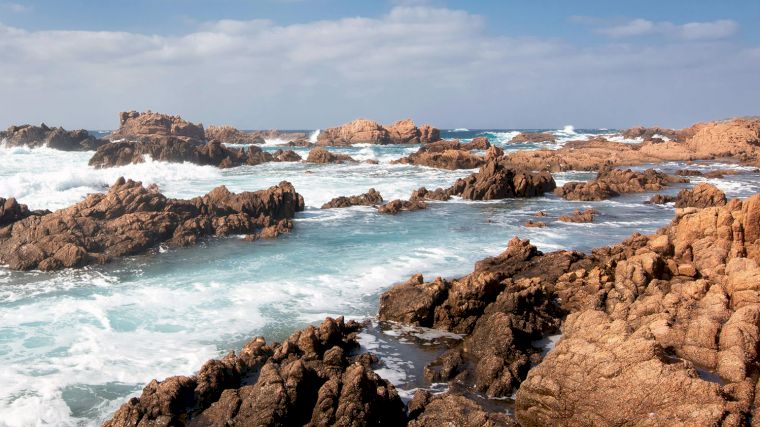
The name of the town, Costa Paradiso, is entirely fitting: a long stretch of breathtaking rocky landscapes. The rugged, rocky coastline is characterized by pink granite, dense shrubbery, coves, and natural pools. Here, you can easily find a spot among the rocks where you’ll be completely on your own, away from other tourists. However, the roads leading to these spots can be quite adventurous—read: unpaved sandy roads—so drive very carefully in your rental car. It’s best to park the car in a designated spot and walk the rest of the way to the impressive rocky coastline. There are also a few larger beaches in the Costa Paradiso area, but they’re busier. Tinnari Beach consists of large pebbles, and the descent to it can be quite steep at times. So be sure to wear good hiking shoes, which will also come in handy if you want to walk from the beach to the piscina naturale: beautiful, natural pools nestled among the rocks. On the southwest side of Costa Paradiso is a parking lot, from which you can walk right along the rugged coastline to the popular Li Cossi Beach. Because of its proximity to the parking lot, that beach can get very crowded, but far fewer people make the walk to the jagged rock formations at Porto Lèccio.
La Maddalena Archipelago
From the port of Palau, you can take your rental car across to the main island of the Maddalena Archipelago. This archipelago consists of seven larger islands and dozens of smaller ones, surrounded by the azure waters of the Tyrrhenian Sea. Only four islands are inhabited, and only the town of La Maddalena has a dense population. The entire archipelago, including the surrounding waters, is a protected nature reserve. We highly recommend taking your rental car on the ferry, as this will allow you to explore the most beautiful spots and take a pleasant drive around the largest islands, Isola Maddalena and Caprera, which are connected by a bridge. In the northeast of Caprera, you can park at the start of a trail leading to the Batteria di Candeo, built in 1928. The observation posts and artillery were perfectly camouflaged in the granite rock, and of course, you’ll have a perfect view from there.
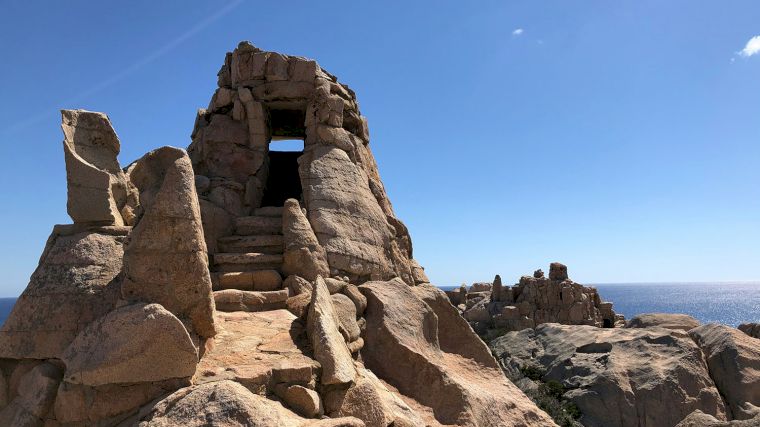
On both islands, you can visit hidden coves, but you usually have to walk a bit to get there. There’s a special app, La Maddalena Archipelago, with information about the various beaches and the accessibility of the trails leading to them. You can also visit the other islands by boat. Thanks to the many coves, there are countless landing spots. The seabed near the rocks and caves is a paradise for snorkelers, especially the shallow areas of Spargiotello, Punta Coticcio, and Grottino di San Francesco.
Costa Smeralda
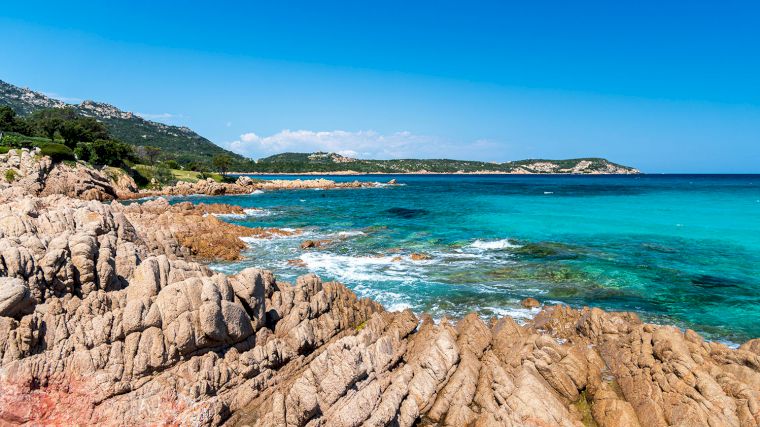
The Emerald Coast— Costa Smeralda —is what Sardinia is famous for. Some people think it encompasses the entire northeast coast, but that’s not the case. The real Costa Smeralda is a stretch about twenty kilometers long between Cala di Volpe and Liscia di Vacca, with the glamorous seaside resort of Porto Cervo at its heart. It’s called the Emerald Coast, but you could just as easily call it the Gold Coast, since this is where the world’s wealthy have their vacation homes and luxury yachts. Staying overnight in one of the beach resorts along this coast is quite pricey, but you can often find good deals at places like an agriturismo inland. As you drive along this coast, you’ll once again be glad you rented a car. Along the way, you’ll enjoy stunning views of the yacht-lined coastline, and the best beaches—such as Cala Petra Ruja—are only accessible if you have your own transportation. However, you’ll still have to walk a short distance from the road to reach them. Keep in mind that parking at the beaches along the Costa Smeralda is often quite expensive.
Driving a Rental Car in Sardinia
Due to the mountainous terrain, many roads in Sardinia are winding, including the main roads. In some cases, a second, straighter road has been built alongside the original one, especially in the southern part of the island. For example, between Cagliari and Tertenia, the SS125var runs parallel to the original SS125; it bypasses villages and, thanks to tunnels, is much less winding. Sometimes the old road is referred to as Ex SS125. But isn’t part of the fun of a vacation driving slowly in your rental car along wonderfully winding roads through beautiful natural scenery? The roads in Sardinia are generally very well maintained. However, on secondary roads, livestock—such as sheep, goats, cows, and pigs—sometimes wander onto the road. Be aware that there are often speed cameras near villages, causing locals to slam on the brakes. Some villages also lack sidewalks, so drive carefully there. It can be very windy in Sardinia, so be prepared for strong gusts, especially when driving higher up in the mountains.
One-Way Car Rental in Sardinia
The road trip described above takes you to both Olbia and Alghero. But what if you can only do part of the trip, for example, because you don’t have much time? No problem—you can rent a car for a so-called one-way rental, where you pick up the car at Olbia Airport and drop it off at Alghero Airport. Or the other way around, of course. Many car rental companies in Sardinia offer this option, and it’s very easy to find them. Just enter different pickup and drop-off locations on our search form, and we’ll show you only the rental cars for which this is possible.
Why rent a car in Olbia (or Alghero)?
The answer to this question is simple: a rental car is the best way to make the most of a road trip through Sardinia. Renting a car is ideal if you want to fully enjoy the beautiful nature, the wild landscapes, and the fantastic local cuisine—which you’ll find mainly inland, far from the tourist areas along the coast. But even if you just want to go beach-hopping in Sardinia, you’ll almost certainly need to rent a car, since public transportation is very limited. Start looking for a rental car today for a wonderful, carefree vacation in Sardinia!

Where would you like to rent a car?
- 24000+ pick-up locations
- Free cancellation
- Independent comparator

Useful tips for a well-prepared trip
Which insurance should I choose, and what's the deal with the deposit? Read our articles with useful information and tips to ensure you choose the right rental car for you.


