- Popular countries
- Popular regions
- Popular cities
- Popular airports
- Car Rental Italy
- Car Rental Spain
- Car Rental United States
- Car Rental Portugal
- Car Rental South Africa
- Car Rental France
- Car Rental Netherlands
- Car Rental Greece
- Car Rental Germany
- Car Rental United Kingdom
- Car Rental Belgium
- Car Rental Croatia
- Car Rental Switzerland
- Car Rental Austria
- Car Rental Denmark
- Car Rental Norway
- Car Rental Australia
- Car Rental Ireland
- Car Rental Cyprus
- Car Rental Canada
- Car Rental Florida
- Car Rental Sicily
- Car Rental California
- Car Rental England
- Car Rental Sardinia
- Car Rental Mallorca
- Car Rental Ibiza
- Car Rental Crete
- Car Rental Tenerife
- Car Rental Rhodes
- Car Rental Madeira
- Car Rental Corsica
- Car Rental Gran Canaria
- Car Rental Malta
- Car Rental Scotland
- Car Rental Azores
- Car Rental Fuerteventura
- Car Rental Lanzarote
- Car Rental Corfu
- Car Rental Zakynthos
- Car Rental Amsterdam
- Car Rental Milan
- Car Rental Miami
- Car Rental Lisbon
- Car Rental Malaga
- Car Rental Porto
- Car Rental Rome
- Car Rental Cape Town
- Car Rental Barcelona
- Car Rental Faro
- Car Rental Alicante
- Car Rental Nice
- Car Rental Bari
- Car Rental Naples
- Car Rental Johannesburg
- Car Rental Brussels
- Car Rental Bergamo
- Car Rental Orlando
- Car Rental Palma de Mallorca
- Car Rental Vienna
- Car Rental Amsterdam Schiphol Airport
- Car Rental Miami International Airport
- Car Rental Lisbon Airport
- Car Rental Malaga Airport
- Car Rental Porto Airport
- Car Rental Milan Malpensa Airport
- Car Rental Rome Fiumicino Airport
- Car Rental Faro Airport
- Car Rental Alicante Airport
- Car Rental Bari Palese Airport
- Car Rental Nice Airport
- Car Rental Barcelona Airport
- Car Rental Cape Town Airport - International Terminal
- Car Rental Bergamo Airport
- Car Rental Orlando International Airport
- Car Rental Mallorca Airport
- Car Rental Catania Airport
- Car Rental Johannesburg International Airport
- Car Rental Ibiza Airport
- Car Rental Athens Airport

16 places of interest between Naples and Lamezia Terme
Road Trip Through Authentic Italy in a Rental Car
Naples is a city full of contrasts, and opinions about it are just as divided. You’ll either fall irrevocably in love with its chaotic charm or hate the rough-and-tumble, unpolished Neapolitans. The fact is that Naples has a beautiful historic center. There, you can enjoy historic architecture, art, and archaeological sites from Roman and Greek antiquity—and, of course, the delicious food. Sun-drenched terraces overlook the Bay of Naples, with the looming Mount Vesuvius in the background. There you have it again—that very contrast that so characterizes Naples. Visit the medieval Castel Nuovo, the catacombs of San Gennaro, admire the metro stations—which are works of art in their own right—and stroll along the Lungomare promenade.
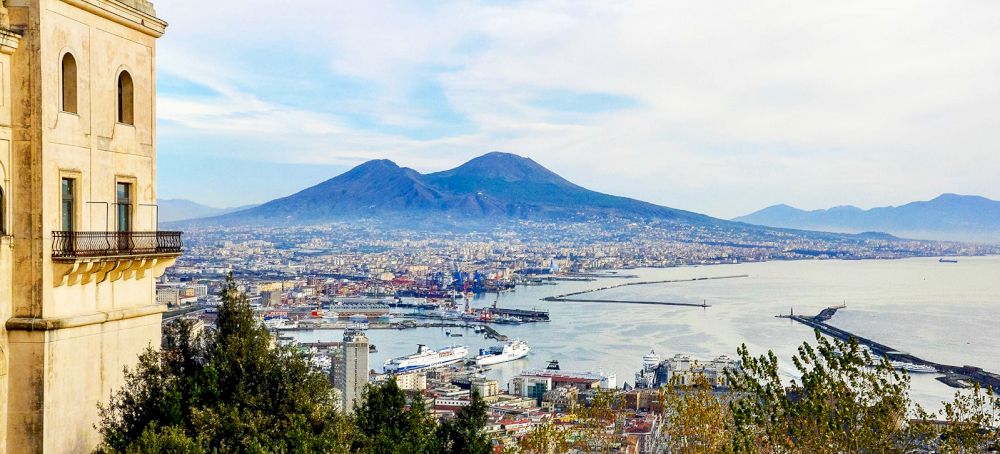
Naples is a great starting point for a road trip, as it has the largest airport in southern Italy with a wide selection of rental cars. You don’t need to rent a car to explore the city itself, but having your own transportation is definitely convenient for visiting attractions in the surrounding area. There are also plenty of places to rent a car within the city, such as at the Napoli Centrale train station.
Below, we describe a road trip through the regions of Campania, Basilicata, and Calabria. This area is among the least-explored, most beautiful, and most authentic regions of Italy. In fact, you should rent a car and head there as soon as possible, before crowds of tourists discover it. The road trip takes you past Lamezio Terme, which has an international airport. So you can also start your road trip there.
1. From Caserta to Benevento
You’ve probably heard of the Via Appia, one of the most important roads in the Roman Empire, which connected Rome with Brindisi. That road ran just north of Naples through what is now Caserta. There, you can admire the former royal palace, the Reggia di Caserta, which rivals the Palace of Versailles.
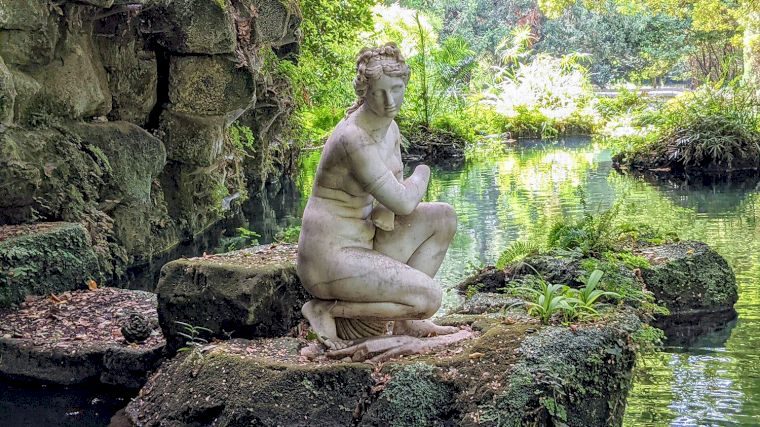
State Road 7 follows the original route of the Via Appia to Benevento, about sixty kilometers northeast of Naples. Near the city itself, the modern SS7 runs along the south side, but you can still see a section of the original road: the Ponte Leproso over the Sabato River. On the north side of Benevento stands one of the best-preserved Roman triumphal arches. This Arco di Traiano was built in honor of Emperor Trajan, who constructed a shorter route to Brindisi. The Roman theater in the city is still regularly used for performances and festivals. Of later date is the Chiesa Santa Sofia from the eighth century, a smaller replica of the Hagia Sophia in Istanbul. The church is decorated with beautiful frescoes.
2. Monticchio Lakes / Venosa
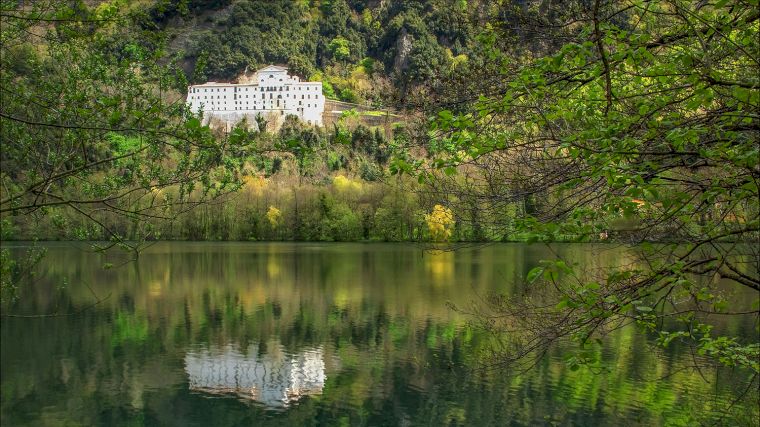
From Benevento, it’s about a two-hour drive in a rental car to Venosa. Just before you reach that town, take a detour via the two volcanic lakes of Monticchio, situated in the middle of a wild and unspoiled area. You can explore the smaller lake (Lago Piccolo) by pedal boat, while the larger lake (Lago Grande) is difficult to access. From the biking and hiking trails in the area, you’ll have a beautiful view of both lakes, as well as the Benedictine Abbey of San Michele, which was built against the wall of the former crater. You can visit not only the abbey and the chapel carved into the rock but also the natural history museum housed there.
The quaint little town of Venosa is an attractive stopover on this road trip through southern Italy in a rental car. The charming little square with outdoor cafes in the center is dominated by the 15th-century Castello Aragonese, which houses the Archaeological Museum. Among other things, the museum features animal remains and artifacts dating from 300,000 to 600,000 years ago, discovered in the vicinity of Venosa. To the northeast of the town, you can see the ruins of the Roman city of Venusia. The street layout is clearly visible, and signs with maps provide detailed explanations about the buildings that once stood there.
If you love colorful frescoes, be sure to stop in Ripacandida on your way to Venosa—a charming old village in its own right. The jewel of this village is the Santuario di San Donato. From the outside, it’s a simple Romanesque church, but the vaulted ceiling inside is adorned with dazzling 16th-century frescoes.
3. Pietragalla’s palmenti
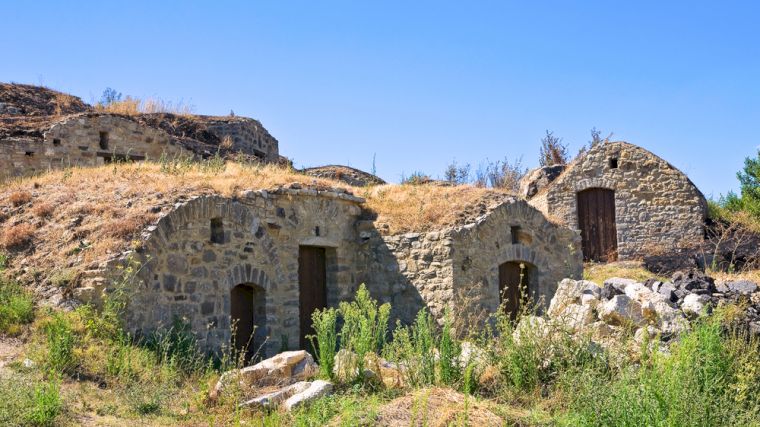
You’ve probably heard of the so-called sassi (cave dwellings) in Matera. That little town is now overrun with tourists. Far less well-known are the palmenti in Pietragalla, fifty kilometers by car south of Venosa. These small, cave-like houses, covered with grass, look just like hobbit homes. But they were never lived in; they were used for making wine. Inside, each palmento has a vat for crushing the grapes and a larger, deeper vat for fermentation. You’ll find these wine caves on the east side of Pietragalla, right along the SS169.
4. Piccolo Dolomiti Lucane
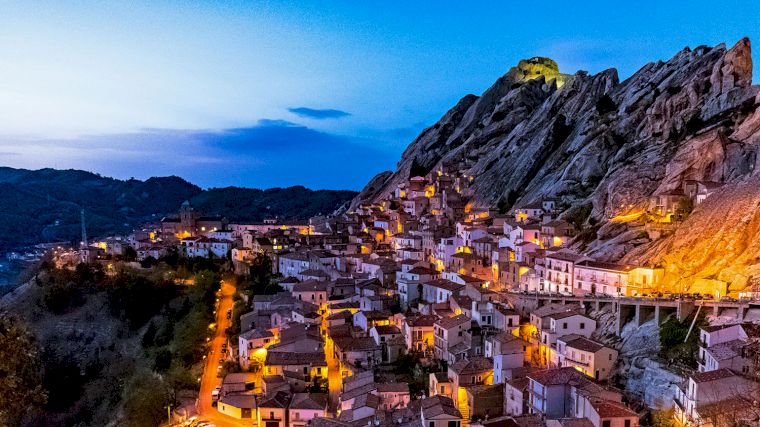
So far, the elevation changes on this road trip haven’t been too significant, but that changes when you drive through Potenza toward the Piccolo Dolomiti Lucane. These rugged and steep mountains are so named because they resemble the Dolomites in northern Italy. The first part of the route, along the SS407, doesn’t have many curves yet, but as soon as you turn off toward Castelmezzano, that changes. You can park your rental car just outside the village in a paid parking lot along the SP13. The pastel-colored houses seem to be glued to the steep rock faces and overlook a deep gorge. Just outside the village, there are via ferratas along steep rock faces, with suspension bridges connecting them. You can also fly like an angel on the Il Volo dell’Angelo zip line between Castelmezzano and the village across the gorge, Pietrapertosa.
It feels like that village is just a stone’s throw away, but it’s still about a ten-kilometer drive along a road with countless hairpin turns. Needless to say, the views along the way are fantastic. It’s nice if you can take turns driving here. So be sure to arrange for an additional driver when booking your rental car. Pietrapertosa sits at an elevation of 1,088 meters, making it the highest village in Basilicata. The name means “perforated stone” and refers to its dramatic location, surrounded by jagged cliffs. Here, too, you’ll need to park your rental car outside the village in a paid parking lot. Be sure to have some euro coins on hand, because although the meters are equipped to accept credit cards, that feature doesn’t always work. In the village, it’s quite a climb to the Castello Normanno-Svevo, but you’ll be rewarded with the most beautiful view.
If you have the time, you should spend a night in one of these two villages, because in the evening the mountain slopes are beautifully illuminated. Would you like to head further east from here, to places like Gravina in Puglia, Matera, or Bari on the Adriatic Sea? Then we recommend reading our blog about the 11 most beautiful travel destinations in Southern Italy, which focuses more on the Apulia region.
5. Ghost Town of Craco & Calanchi Lucani
Drive back to the SS407 and follow the signs toward Metaponto. After about fifty kilometers, turn off toward Pisticci and then drive toward Craco Peschiera. Close to this modern-day Craco lies the village that was abandoned in the 1960s and 1970s following a landslide. This ghost town is accessible only by rental car. As it looms ahead of you while you drive uphill, you’ll understand why it served as the backdrop for many films, including the James Bond movie *Quantum of Solace*. Today, Craco Vecchia presents itself as a “town frozen in time.” The Museo Emozionale, housed in the former monastery, highlights the village’s history, and from the roof you’ll have a great view of the ruins.
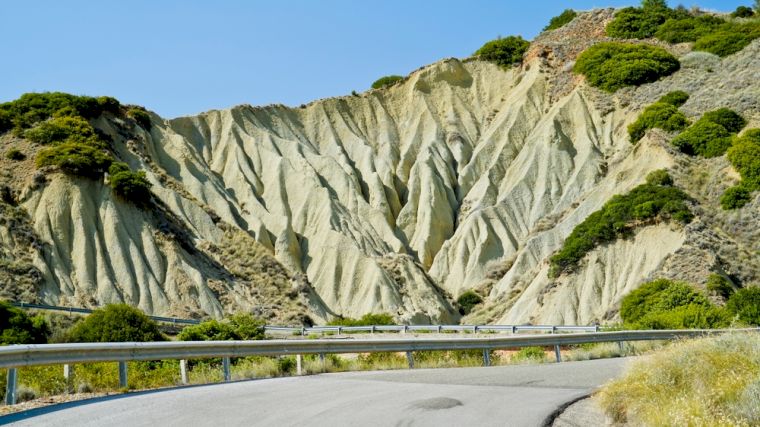
Drive south from Craco, then take the SS598 west. There you’ll encounter the badlands, an eroded wasteland with very unique formations. The gorges and ravines (calanchi) were formed by flowing rainwater.
6. Roseto Capo Spulico
The “Boot of Italy” is surrounded by seas, and you haven’t visited a single one on this road trip yet. To change that, drive toward Policoro and then along the coast of the Ionian Sea to Roseto Capo Spulico. Along the way, you’ll cross the border between Basilicata and Calabria. The town’s name refers to the cultivation of roses during the time when the powerful Greek city of Sybaris stood here. The inhabitants were known for their decadence, and according to legend, wealthy ladies had their mattresses stuffed with rose petals.
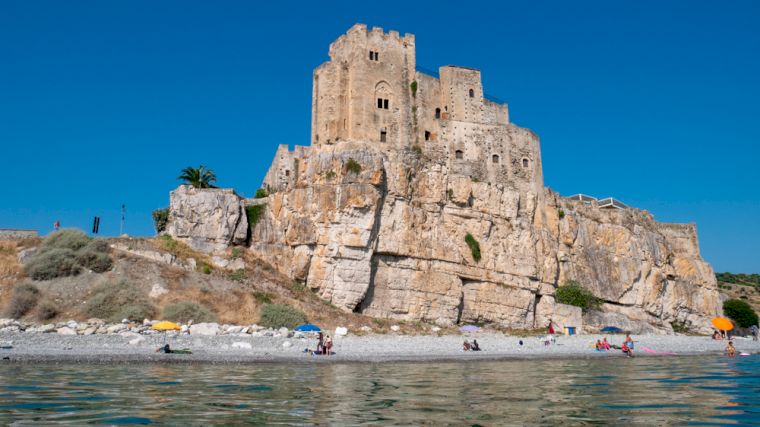
Next to the coastal road, a castle perched atop a rock right by the sea catches the eye. It was built in the thirteenth century by Holy Roman Emperor Frederick II. It is a sturdy structure, and its enormous rooms are adorned with decorative spears and chandeliers. From the castle windows, you have a magnificent view of the sea and the beach directly below the cliff. That beach is quite rocky and drops off steeply, but with the Castello Federiciano in the background, it’s a magical place. The castle houses a restaurant, and you can also enjoy the view from the outdoor terrace. Spending the night in the suite on the castle’s top floor isn’t cheap, but it’s very romantic.
7. Pollino National Park
West of Roseto lies Italy’s largest national park and one of Europe’s last great wildernesses. The Parco Nazionale del Pollino covers nearly two thousand square kilometers and features mountain peaks over two thousand meters high. It’s remarkably green—something you might not expect in the deep south of Italy. In addition to the stunning landscape, you’ll come across authentic villages and ancient castles scattered throughout the area. There’s a vast selection of trails, and the various visitor centers have detailed maps to help you find your way. Consider the route we’re taking merely as an example.
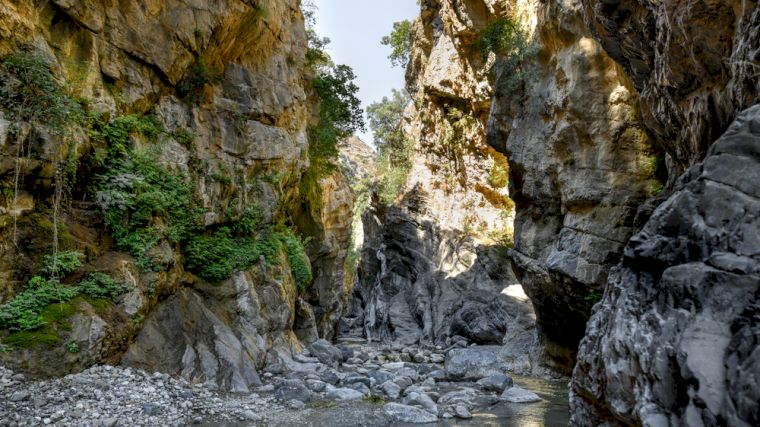
From Roseta, you can drive along the SS106 coastal road and the SP263 to the Albanian village of Civita in less than an hour. Albanians in Italy? Yes, this is home to the descendants of people who fled Albania in the fifteenth century when the Ottomans conquered the country. To this day, Albanian culture is very much alive, as seen in the facades of the so-called Kodra houses. These resemble a face and were immortalized by the Albanian artist Ibrahim Kodra. Civita is perched high above the Gole del Raganello gorge. The majestic, steep limestone cliffs are home to a rich variety of flora and fauna, ranging from foxes and martens to golden eagles. Just outside the village, the gorge is spanned by the Ponte del Diavolo (Devil’s Bridge). It owes its name to the legend that the bridge was built by the devil in exchange for the life of the first soul to cross it. The man who made the pact with the devil sent not a human but a sheep.
The village of Morano Calabro is a gem: built against the slopes of Monte Pollino, it itself is shaped like a mountain. So you’ll have to climb quite a bit before you reach the Porta Ferrante viewpoint—if you can find it at all, that is, because it’s easy to get lost in this labyrinth of narrow streets, steep staircases, and narrow gateways. You’ll also have a magnificent view of the village’s red roofs and the surrounding area from the old Norman castle.
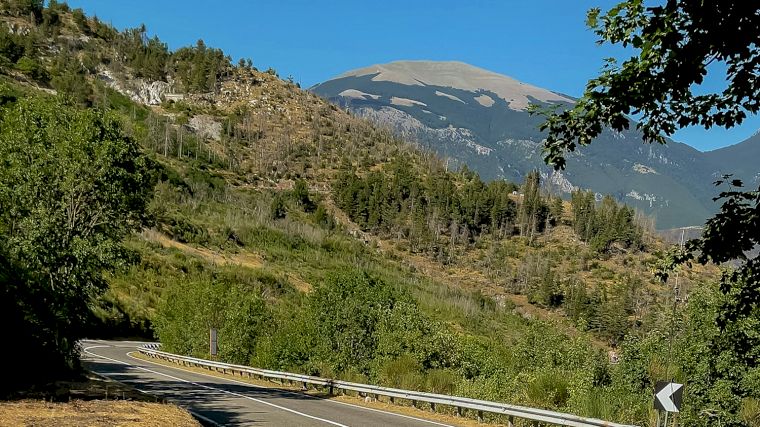
Rotonda is the main gateway to the national park. Just outside the old village stands the Ecomuseum, which offers extensive information about the flora and fauna, as well as the various ethnic groups that live here. From Rotonda, a narrow, winding road leads through the woods to the Belvedere del Malvento lookout point and Colle d’Impiso (1,554 m). This is the starting point for mountain hikes to higher peaks such as Monte Pollino (2,248 meters) and Serra del Prete (2,181 meters).
Pollino National Park is a paradise for nature lovers, and there are plenty of active things to do there. In addition to hiking and mountain biking, you can go hang gliding, rock climbing, and whitewater rafting. From the charming village of Viggianello, so-called “aquatrekking” tours are organized. This is a hike where you alternate between climbing upstream in rivers or streams and wading through the water with walking along trails.
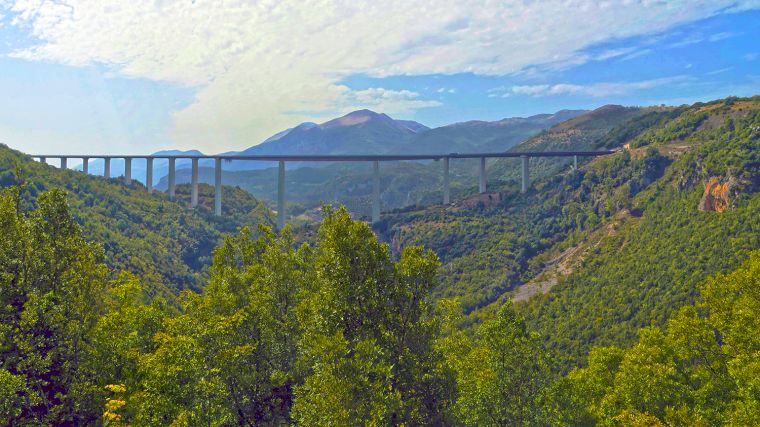
The area around the village of Mormanno is also beautiful, and you wouldn’t really expect the Autostrada del Mediterraneo (A2 to Reggio Calabria) to run right past it. Yet that’s the case, and you can quickly reach your next destination via that highway.
8. Cosenza
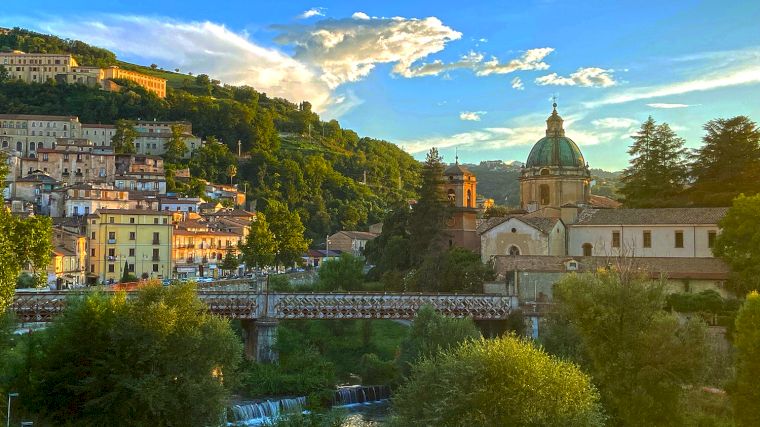
As you approach from the A2, Cosenza looks like a modern city, not worth visiting. But wait until you reach the centro storico, situated on a hill at the confluence of two small rivers, the Busento and the Crati. With a bit of luck, you can park just past the bridge over the Busento; otherwise, you can leave your rental car in the large parking lot along the Crati, a short distance further on. The English writer George Gissing found the word “picturesque” inadequate to describe the town. At the beginning of the last century, he wrote: “At every step, from the start of the main street at the foot of the hill to the austere medieval castle that crowns its summit, you marvel and admire.” Strangely enough, the oldest part of the city is not (yet) a Zona á Trafico Limitato (ZTL), but the area around the main shopping street in the newer part is. That shopping street is lined with modern works of art, making it an open-air museum.
9. Sila National Park
From Cosenza, you can drive to Lamezia Terme in an hour via the A2, but then you’ll miss the beautiful Sila National Park, which lies east of that highway. Just like in Pollino, there is little to no public transportation through the park, so a rental car is ideal. The name is derived from the Latin word “Silva,” meaning “forest.” The area is densely forested and known for the enormous trees—over 300 years old—in the Riserva Giganti near Camigliatello Silano. In winter, that town becomes a ski resort. The three reservoirs in the park are also popular: Lago Cecita is located near the visitor center in Cupone; near Lorico, you can rent canoes to paddle across the largest lake, Lago Arvo; and the oldest reservoir is Lago Ampollino.
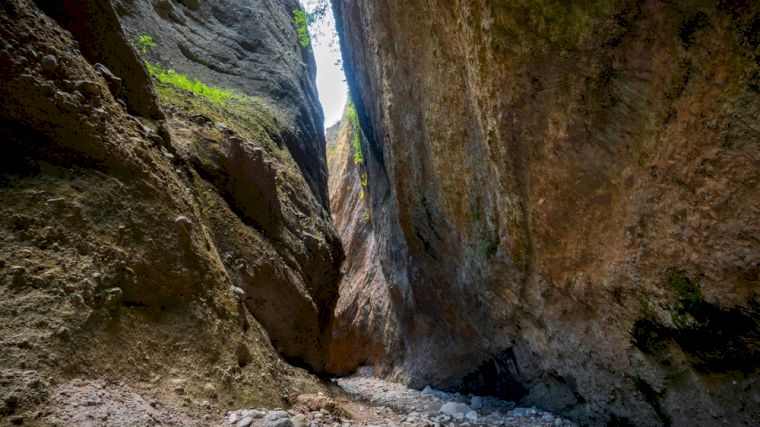
Scattered throughout the park, you’ll see signs pointing to various hiking trails, ranging from very easy to quite challenging. For example, the walk to the waterfall and rapids of the Crocchio River is very easy, but the hike through the Valli Cupe ravines, south of Sersale, requires a bit more effort. Once you’ve descended to the bottom, you can walk about four hundred meters into the gorge.
10. Lamezia Terme
Most people know Lamezia Terme only as the location of the airport, the gateway to the beaches along the Calabrian coast. Although the city is situated in a beautiful area—which you can only explore by rental car—Lamezia itself doesn’t have much to offer. With one exception: the thermal baths, which have been known for their healing properties since Roman times. And a dip in the hot spring at Terme di Caronte is even free! However, the sulfur content is high, so after a bath you’ll smell like a rotten egg…
11. Tropea / Capo Vaticano
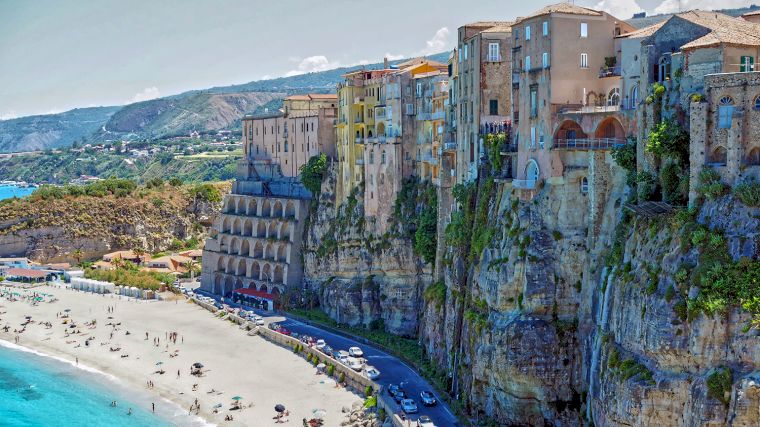
The coastline southwest of Lamezia Terme, between Pizzo and Nicotera, is affectionately known by Italians as the Costa degli Dei, or the Coast of the Gods. And you’ll understand why as soon as you drive there: incredibly beautiful scenery, fine sandy beaches, and crystal-clear azure waters. Of all the seaside resorts along this coast, Tropea is the undisputed queen. The town’s well-preserved historic center sits on a rocky headland high above the white-sand beach. At sunset, the clear turquoise water turns into vivid shades of purple.
Take a scenic drive in your rental car along the SP22 coastal road toward the southwest. In the town of San Nicolò, follow the signs to Capo Vaticano. From this cape at the southwestern tip of the Promontorio di Tropea, you’ll have a breathtaking view of the sea and the volcanic island of Stromboli. On a very clear day, you can even see Sicily.
12. Le Grotte di Zungri
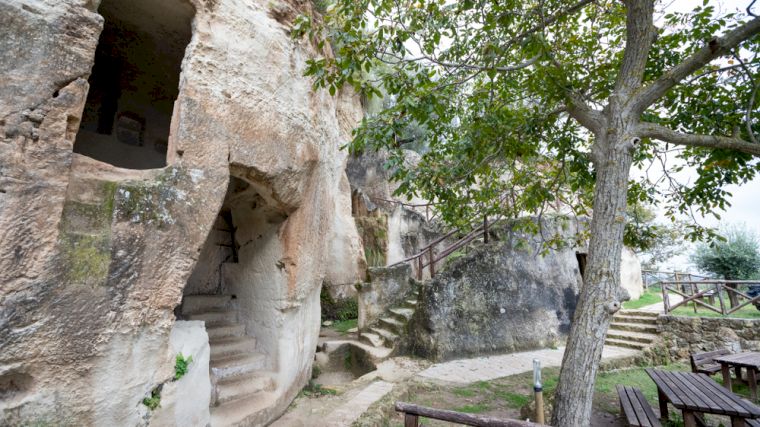
Less than twenty kilometers by car east of Tropea, you’ll find a hidden gem of Calabria that transports you back in time. In Zungri, monks retreated to the area, and a small village of about a hundred cave dwellings sprang up. A long staircase, carved out of natural stone, winds past the one- and two-room houses. The dwellings feature windows, arches, vents for smoke, and countless niches carved into the interior walls. The houses in the città di pietra (stone city) are clustered together and connected by a network of narrow streets and stairways. There is also an ingenious system of water channels and reservoirs. The natural, white walls blend seamlessly into the surroundings, and the view of the surrounding landscape is breathtaking.
13. Scalea and Maratea
If, after visiting Tropea, you’re still craving more sun, sea, and sand, you can make a stop in Scalea Marina or Maratea on your way back to Naples. Scalea has an incredibly long and wide sandy beach, lined with numerous hotels, restaurants, and other businesses entirely geared toward tourism. In the summer, it gets extremely crowded, and large sections of the beach are accessible only for a fee. You can rent a kayak to paddle to one or more of the four sea caves in the area. Scalea’s historic center (centro storico ) is situated on a hill and is a complex maze of stairs and alleys. Notable features include the suppuorti, wooden platforms built above the alleys.
Maratea has a completely different atmosphere than Scalea. The town has the ambiance of a seaside resort from a bygone era. It doesn’t have a single long beach; instead, you can choose from several smaller beaches. These coves are bordered on both sides by high cliffs. Maratea is also known as the town of 44 churches. These large and small churches and chapels in the historic center are beautifully illuminated in the evening. The town’s religious character (past or present) is further emphasized by the enormous statue of Christ atop Monte San Biagio. From there, you’ll enjoy a panoramic view of the coast, which is especially beautiful at sunset. During the summer months, you can’t park right next to the statue; instead, you’ll need to leave your rental car a few hundred meters below.
14. Cilento National Park
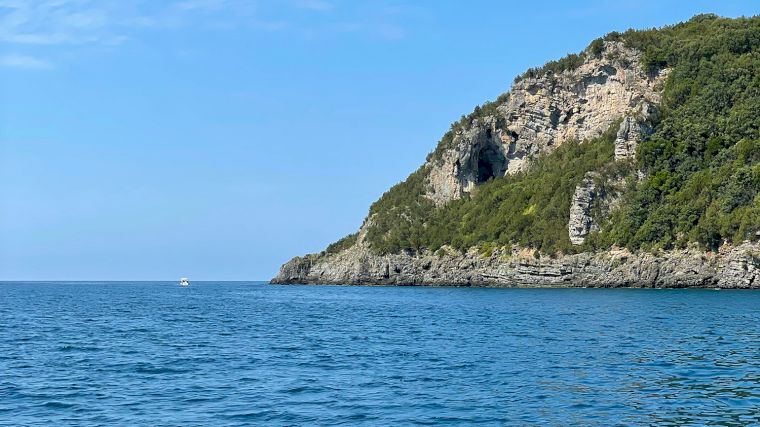
North of Maratea, you’ll drive along the SS18 right next to the Gulf of Policastro, one of the most beautiful stretches of the Tyrrhenian coast. This road can rival the much busier SS168 along the Amalfi Coast. After Policastro Bussentino, you’ll enter the Cilento National Park. With your rental car, you can take beautiful drives along the roads through this protected nature reserve, or you can go horseback riding, hiking, biking, or take a boat ride on Lake Alento. Some highlights in this area include the stunning Gole del Galore gorge near Felitto, the Capelli di Venere (Angel’s Hair) waterfall just outside Casaletto Spartano, and the sea caves at Capo Palinuro.
15. Greek Temples of Paestum
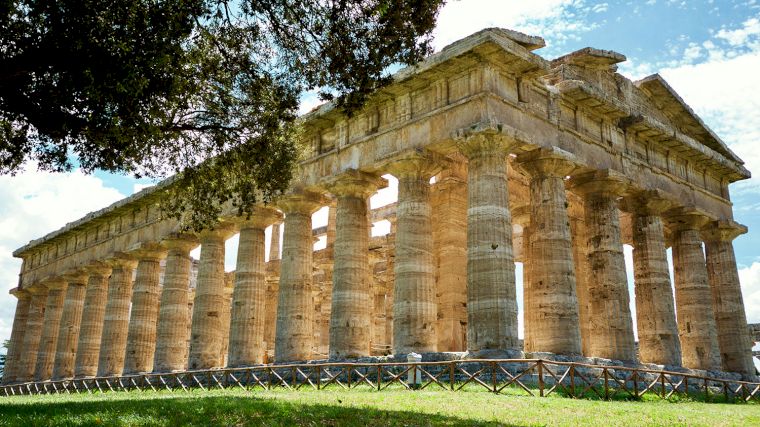
Before the Romans conquered what is now Italy, there were many Greek colonies (apoikia) along the southern coasts. About 2,500 years ago, the Greeks built temples in a colony they called Poseidonia, which the Romans later renamed Paestum. The three Doric temples there are among the best-preserved remnants of Greek antiquity. The oldest temple was dedicated to Hera, the wife of the supreme god Zeus. A second temple is dedicated to Athena, goddess of wisdom. The largest temple is believed to have been dedicated to the god of the sea, Poseidon, though this is not entirely certain.
All kinds of artifacts have been found in the vicinity of these temples and are on display at the Paestum Archaeological Museum. The centerpiece is the Tomba del Tuffatore, a tomb whose interior is painted with, among other things, the image of a man diving into the water. What makes it truly remarkable is that the colors of these paintings are still very vivid.
16. Amalfi Coast
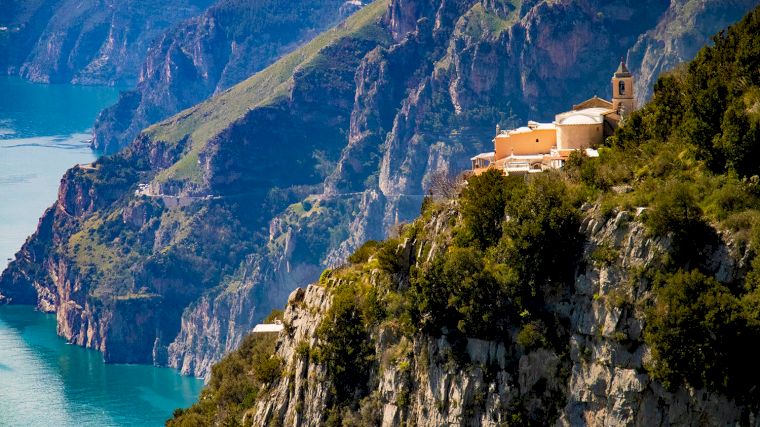
And then: the highlight of any trip through this part of Italy. Or is it? To be honest, we hesitated about including the Amalfi Coast on this road trip. The fifty-kilometer-long coastline is breathtakingly beautiful and is therefore on many people’s bucket list. At the same time, this route now attracts so many tourists that you might wonder if it’s still enjoyable. The fact is that the local government has taken measures to limit the number of cars.
During Holy Week, on weekends in June, July, and September, and every day in August, only (rental) cars with license plates ending in an even number are allowed to drive on even-numbered days. On odd-numbered days, cars with license plates ending in an odd number are allowed on the road. This restriction applies from 10:00 a.m. to 6:00 p.m. on the SS163 between Positano and Vietri sul Mare. On the road between Sorrento and Vico Equense (SS145), these rules even apply from 8:00 a.m. to 7:00 p.m.
Keep in mind that—especially during the summer months—everyone is jostling for space on the narrow, winding road: cars, scooters, large tour buses, bicycles, and even pedestrians. All of this makes the route challenging, stressful, and exhausting. As a driver, you must remain constantly alert. Furthermore, during peak times, it’s difficult to find a parking spot for your rental car.
The route attracts many tourists because it winds through impressive scenery. But during this road trip through southern Italy, you’ve already seen so many beautiful sights. You might wonder whether you want to add yet another scenic—but also stressful—route to your itinerary. If you still want to see the Amalfi Coast, we recommend driving the route in April or May, when it’s not quite as crowded.
Why Rent a Car in Naples
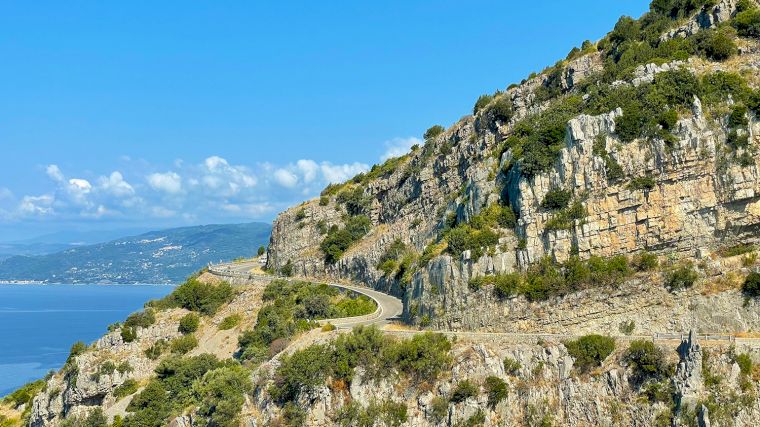
With the exception of the crowded Amalfi Coast, a rental car is essential if you want to explore southern Italy. While there is a good train network, it only serves the major cities. And part of the fun is being able to decide for yourself exactly where you want to drive. So rent a car, because southern Italy has countless quiet backroads where you can enjoy a relaxing drive. Even on mountain roads, there’s usually very little traffic, so you don’t have to feel rushed.

Where would you like to rent a car?
- 24000+ pick-up locations
- Free cancellation
- Independent comparator

Useful tips for a well-prepared trip
Which insurance should I choose, and what's the deal with the deposit? Read our articles with useful information and tips to ensure you choose the right rental car for you.


