- Popular countries
- Popular regions
- Popular cities
- Popular airports
- Car Rental Italy
- Car Rental Spain
- Car Rental United States
- Car Rental Portugal
- Car Rental South Africa
- Car Rental France
- Car Rental Netherlands
- Car Rental Greece
- Car Rental Germany
- Car Rental United Kingdom
- Car Rental Belgium
- Car Rental Croatia
- Car Rental Switzerland
- Car Rental Austria
- Car Rental Denmark
- Car Rental Norway
- Car Rental Australia
- Car Rental Ireland
- Car Rental Cyprus
- Car Rental Canada
- Car Rental Florida
- Car Rental Sicily
- Car Rental California
- Car Rental England
- Car Rental Sardinia
- Car Rental Mallorca
- Car Rental Ibiza
- Car Rental Crete
- Car Rental Tenerife
- Car Rental Rhodes
- Car Rental Madeira
- Car Rental Corsica
- Car Rental Gran Canaria
- Car Rental Malta
- Car Rental Scotland
- Car Rental Azores
- Car Rental Fuerteventura
- Car Rental Lanzarote
- Car Rental Corfu
- Car Rental Zakynthos
- Car Rental Amsterdam
- Car Rental Milan
- Car Rental Miami
- Car Rental Lisbon
- Car Rental Malaga
- Car Rental Porto
- Car Rental Rome
- Car Rental Cape Town
- Car Rental Barcelona
- Car Rental Faro
- Car Rental Alicante
- Car Rental Nice
- Car Rental Bari
- Car Rental Naples
- Car Rental Johannesburg
- Car Rental Brussels
- Car Rental Bergamo
- Car Rental Orlando
- Car Rental Palma de Mallorca
- Car Rental Vienna
- Car Rental Amsterdam Schiphol Airport
- Car Rental Miami International Airport
- Car Rental Lisbon Airport
- Car Rental Malaga Airport
- Car Rental Porto Airport
- Car Rental Milan Malpensa Airport
- Car Rental Rome Fiumicino Airport
- Car Rental Faro Airport
- Car Rental Alicante Airport
- Car Rental Bari Palese Airport
- Car Rental Nice Airport
- Car Rental Barcelona Airport
- Car Rental Cape Town Airport - International Terminal
- Car Rental Bergamo Airport
- Car Rental Orlando International Airport
- Car Rental Mallorca Airport
- Car Rental Catania Airport
- Car Rental Johannesburg International Airport
- Car Rental Ibiza Airport
- Car Rental Athens Airport

14 Best Day Trips by Rental Car from Rome
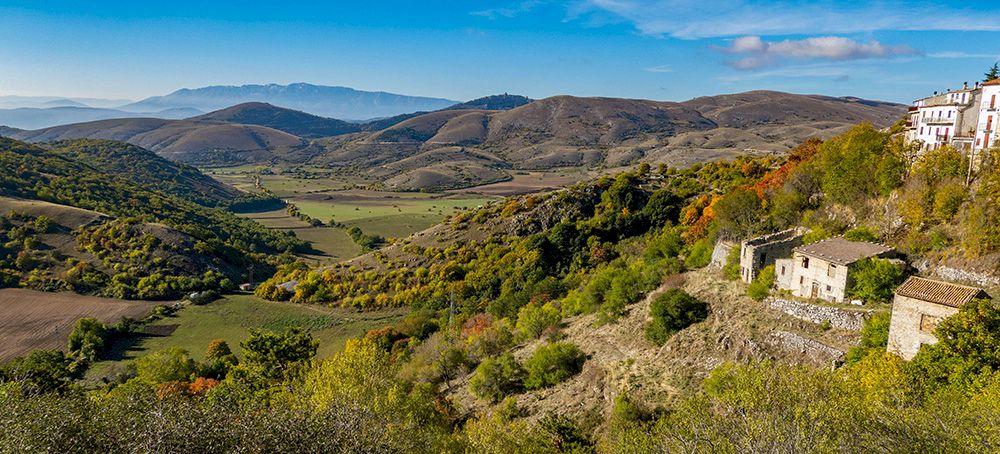
Or rent a car for a road trip through Abruzzo
All roads lead to Rome. This famous saying reflects the city’s importance throughout history. The Italian capital was the center of the Roman Empire, which boasted an extensive network of roads. All those roads did indeed lead to Rome. And that remains true to this day, making the city an excellent base for day trips by rental car to interesting destinations and beautiful sights in the surrounding area. While Rome may be known as the ultimate treasure trove of history, art, and culture, don’t overlook the rest of Central Italy. Below, we describe day trips to nearby gems in the Lazio region and an extensive road trip through the lesser-known but beautiful Abruzzo region.
Day Trips from Rome
Day trips from Rome are perfect for anyone who wants to explore Italy’s rich history, natural beauty, and charming towns. Here are 14 destinations and attractions you can easily reach if you rent a car in Rome.
1. Ostia Antica
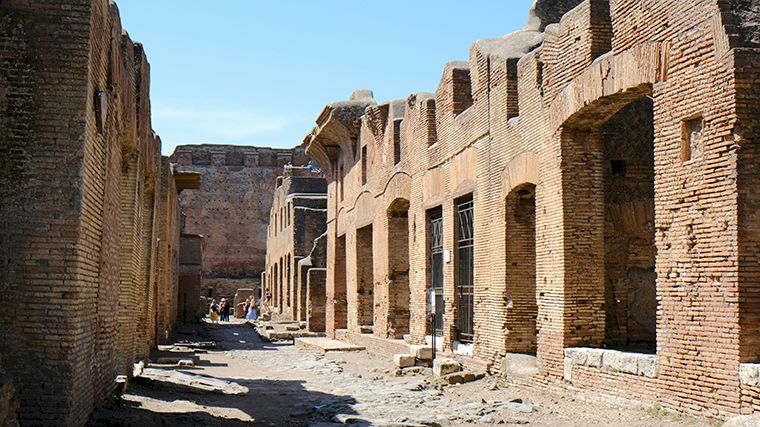
Just a half-hour drive from the Italian capital, Ostia Antica offers a glimpse into ancient Roman life. This archaeological site was the seaport of ancient Rome and features well-preserved ruins, including baths, temples, and an amphitheater that could seat 4,000 spectators. As you walk down the main street, the Decumanus Maximus, it feels as if you’re stepping back in time. Don’t miss the Terme di Nettuno, a second-century bathhouse with striking floor mosaics. In the thermopolium tavern (“a place where something warm is sold”), you can even see traces of the menu on the wall.
Within walking distance of the ruins lies medieval Ostia, which was built by Pope Gregory IV and was therefore called Gregoriopolis at the time. It’s unknown to many tourists, but it’s the perfect spot for a bite to eat or a drink after your visit to the ruins. If you’d rather take a dip in the sea, head to the beach at Lido di Ostia. It’s very popular among Rome’s residents and can get quite crowded during the summer months.
2. Tivoli: Villa d’Este and Villa Adriana
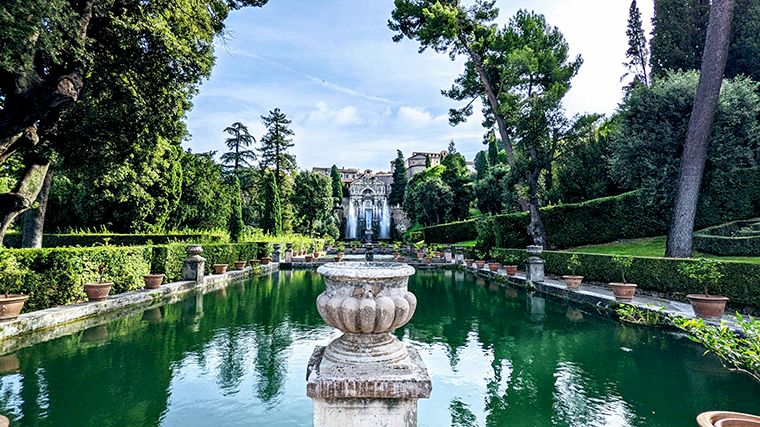
Tivoli is located just thirty kilometers east of Rome. The town itself has a beautiful historic center, but it is primarily two large villas that attract visitors. The Villa d’Este is a 16th-century Renaissance palace with stunning frescoes, gardens, and fountains, including the iconic Fountain of Neptune. The Villa Adriana is a ruin: the remains of the summer residence of the Roman Emperor Hadrian. Both of these monuments are listed as UNESCO World Heritage Sites. Thanks to its slightly cooler location (on a hill), Tivoli served as a retreat for Rome’s wealthy for centuries. This is still clearly evident in the estate surrounding Villa Gregoriana, with its waterfalls and grottoes.
Tivoli is easily accessible by rental car and offers a delightful escape from the hustle and bustle of Rome. Just outside the town, the SS5 passes through Tivoli Terme—also known as Terme di Roma —where you can relax in one of the spas.
3. Castel Gandolfo / Castelli Romani
The picturesque town of Castel Gandolfo is situated on Lake Albano, about twenty-five kilometers southeast of Rome. It is best known as the papal summer residence, which has been open to visitors since 2014. The palace complex consists of several buildings: the Palazzo Pontificio, the Villa Barberini—surrounded by beautiful gardens—the Villa Cybo, and a small farmhouse. You can only visit the papal palace in Castel Gandolfo on a guided tour with an audio guide, which is best reserved in advance.
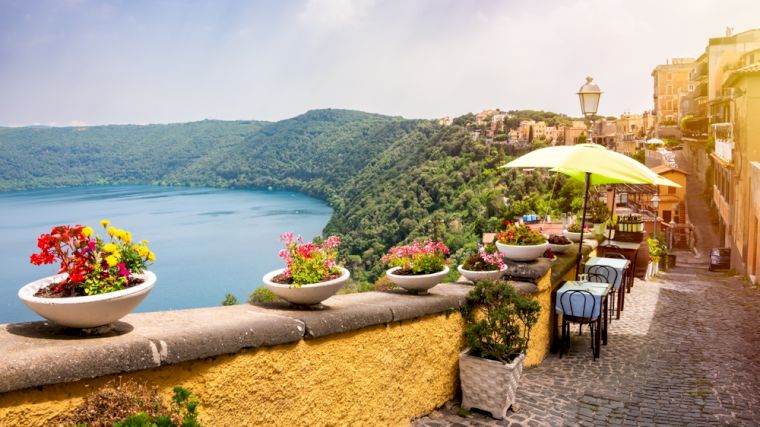
The small historic center of the town of Castel Gandolfo consists of charming streets lined with trattorias serving local delicacies, including those along the Corso della Repubblica. Just south of the town (along the Viale Pio XI) is a small parking lot offering a panoramic view of the lake.
That lake and the nearby Lago di Nemi are part of the Castelli Romani region, an area of forests, vineyards, and ancient towns and villages with historic wine cellars. You can go hiking, biking, and kayaking there, but you can also embark on a culinary adventure. The region’s specialty is porchetta (spiced, spit-roasted pork), served in a bun and, of course, paired with a delicious local wine.
4. Orvieto
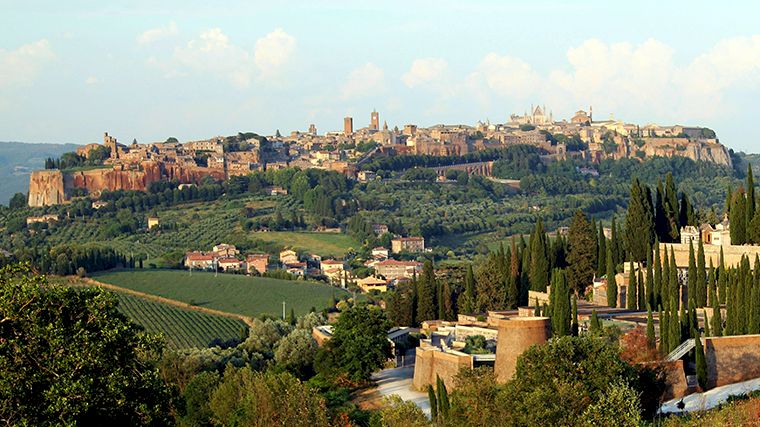
Halfway between Rome and Florence, perched atop a volcanic rock, lies the city of Orvieto. There’s a perfect spot to park your rental car: the Parcheggio Percorso Meccanizzato. From this parking garage, escalators lead up to the old city center. The charming medieval streets are a delight to explore, and there are restaurants, shops, and panoramic views everywhere. What makes Orvieto special is its awe-inspiring cathedral, one of the largest Gothic churches in Italy. The façade features colorful mosaics and beautiful sculptures. The other walls consist of alternating layers of white travertine and blue-gray basalt, creating a zebra-like pattern that is also visible on the pillars inside. Inside, you can marvel at stunning frescoes. Incidentally, this is not the oldest church in Orvieto; that distinction belongs to the Chiesa di San Giovenale, which was built over a thousand years ago.
Not far from the cathedral stands the 13th-century Torre del Moro. The medieval staircase has been replaced by a modern wooden staircase with no fewer than 230 steps leading to the top. You can skip the first 60 steps by taking the elevator. Of course, from the top you’ll enjoy a panoramic view of the town and the surrounding area, including the Apennine Mountains to the east.
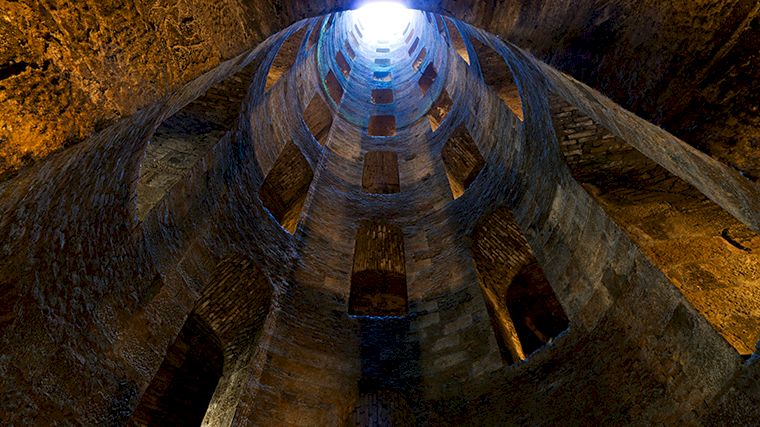
On the east side of Orvieto, you can see a four-century-old marvel of engineering: the Pozzo di San Patrizio (St. Patrick’s Well). It was designed to supply the town with water during sieges. You can walk down a spiral staircase alongside the well.
Going deep underground wasn’t limited to people in the Middle Ages. As early as 2,500 years ago, the Etruscans ventured underground and built a complex network. Beneath the “modern” city lies a labyrinth of tunnels, staircases, unexpected passageways, and chambers. It’s fascinating to explore this intriguing layer of Orvieto’s history with Orvieto Underground.
5. Monti Simbruini
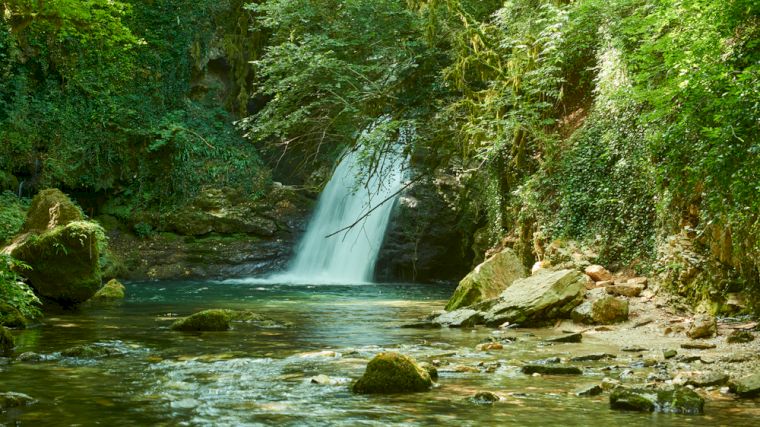
If traffic around Rome isn't too heavy, it takes about an hour to drive from the Italian capital to Subiaco, the gateway to the national park Monti Simbruini. It is a protected nature reserve in the Apennines with mountain peaks reaching up to two thousand meters, vast forests, large karst plateaus, and an abundance of spring water (the name is derived from the Latin sub imbribus, “under the rain”). Several roads wind through the park, passing various small villages rich in historical monuments. For example, a scenic drive takes you along a winding road to the monastery of San Benedetto and the Sacro Speco (holy cave), where a young Benedict once sought refuge. Even if you don’t plan to visit the monastery or the cave, it’s a beautiful drive along the SP45a. Further on, the road connects to the SP193, which leads to the Cascata di Trevi waterfall.
6. Cerveteri / Tarquinia
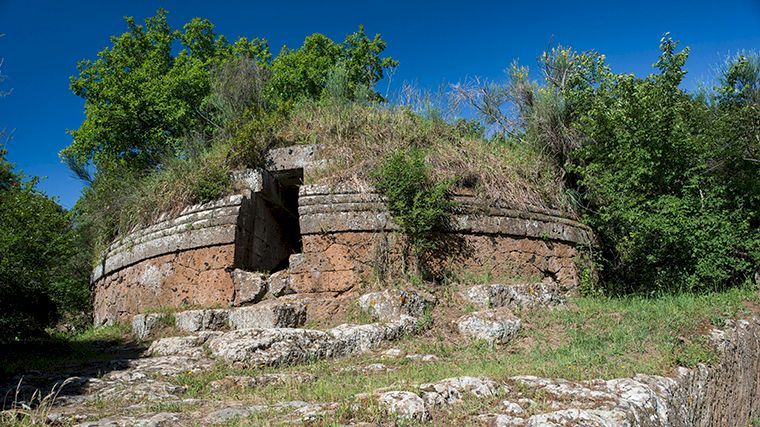
Before the Romans arrived, Cerveteri was a thriving Etruscan trading city on the coast of the Tyrrhenian Sea. The wealthy elite could afford large burial chambers, which can still be seen just north of the modern city. This fascinating Necropoli della Banditaccia is one of the largest Etruscan necropolises, along with that of Tarquinia, more than fifty kilometers northwest of Cerveteri. Both are listed as UNESCO World Heritage Sites. Some of the enormous round tumuli (burial mounds) are richly decorated. The so-called relief tomb, for example, features many details of an Etruscan household, depicted in stone.
The archaeological museum in Cerveteri isn’t very large, but it’s quite interesting to visit after exploring the necropolis. Here you can see the artifacts that archaeologists have uncovered in the burial chambers. You’ll also learn more about the rituals and traditions of Etruscan life. The museum in Tarquinia houses a larger collection of urns, ceramics, frescoes, sculptures, and other Etruscan works of art.
7. Cività di Bagnoregio
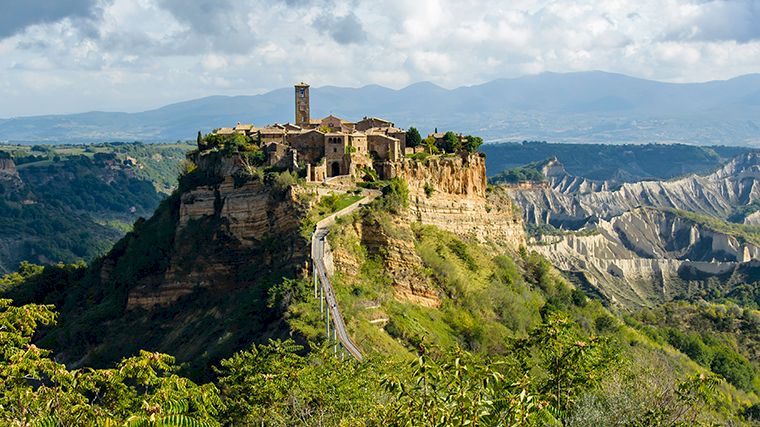
You’ve probably seen photos of the iconic footbridge leading to Cività di Bagnoregio (as shown above), which sits high on an eroding cliff. The town has a reputation as a “dying town,” but that’s no longer really the case, since Cività has firmly established itself on the tourist map. To maintain that status, measures have been taken to combat the erosion of the tuff and prevent the rock from collapsing entirely. In the past, there was a narrow path connecting Cività to the larger and busier town of Bagnoregio. That path has completely disappeared, leaving Cività now perched precariously atop a narrow rock. In the geological museum, you’ll discover why this happened and see photos of the former narrow path between the two towns.
There are several places to park your rental car, but the closer you get to the footbridge, the harder it is to find an available parking spot. Your best bet is the Battaglini parking lot in Bagnoregio. There, you’ll see signs pointing you toward the walking route to Cività.
8. Pozze del Diavolo / Dolina del Revotano
Poggio Cantino is a mountain village in the Sabina region, about seventy kilometers from Rome. It’s a stunning area for scenic drives in your rental car and hikes to attractions such as thePozze del Diavolo (Devil’s Pools). To get there, drive east from Poggio Cantino and park your car just past the small stone bridge over the Galantina stream. A trail to the Grotta di San Michele starts there, but if you walk thirty meters further, you’ll find a path on the right side of the road that descends toward the stream. Look for a suitable spot to cross this shallow stream. On the other side, an easy trail runs along the water, and after a little over two hundred meters, you’ll reach small waterfalls that have formed crystal-clear pools. A wonderfully secluded and serene spot! For this hike, wear shoes with good traction, and a walking stick is also a good idea.
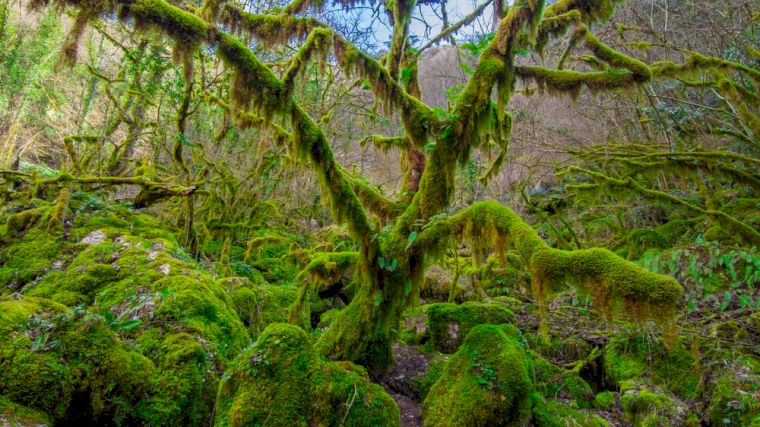
North of Poggio Cantino lies the deep Dolina del Revotano crater, a sinkhole formed by the collapse of a cave. It has a diameter of about 250 meters and is 130 meters deep. Here, too, you’ll need sturdy shoes to reach the bottom via a very steep trail. Due to the damp environment, some sections are also quite slippery. Ropes are provided at the most difficult spots to hold onto, but the descent remains quite a challenge. Once at the bottom, the unique vegetation will make you forget all the effort. You’ll find yourself in an enchanting landscape: trees completely covered in moss, stacked megaliths, ferns, and an otherworldly silence.
9. Bomarzo / Sacro Bosco
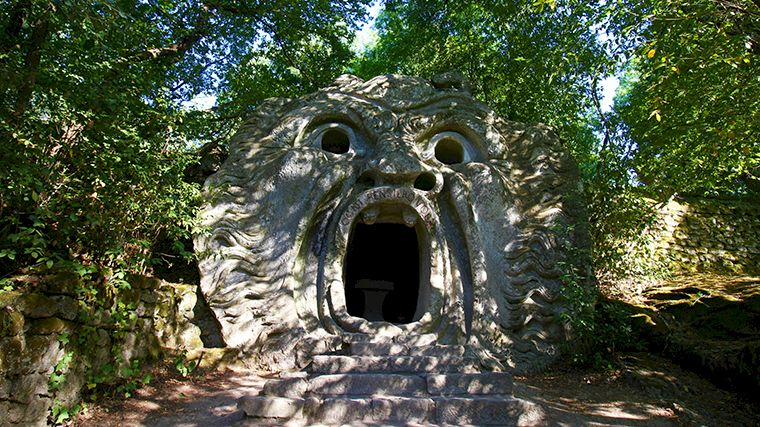
Near the charming town of Bomarzo lies the unique sculpture park Sacro Bosco, also known as Parco dei Mostri (Monster Park). It was created in the sixteenth century but fell into obscurity over the centuries, until Salvador Dalí visited it. There, he found the inspiration for his painting *The Temptation of Saint Anthony*.
The garden is filled with fantastical and grotesque sculptures of mythical creatures, giants, and monsters, including a female figure standing on a turtle, a menacingly tilting house, and even more strange sculptures. Each sculpture embodies elements of myths and legends and often depicts complex ideas about love, death, and human nature. Particularly intriguing is the monster Orcus with his gaping mouth, inscribed with the words “ogni pensiero vola” (every thought flies). You can step inside that mouth and sit down at the table—the “tongue.” Even if you whisper there, you can be heard clearly outside. In other words: your thoughts fly away. All these surprising objects together make for a highly entertaining visit to the “sacred forest.” Bomarzo is an hour and a half’s drive from Rome, at least if you take the A1 toll road. Choose the SR2 regional road for a leisurely journey through towns and villages.
10. Forre de Corchiano
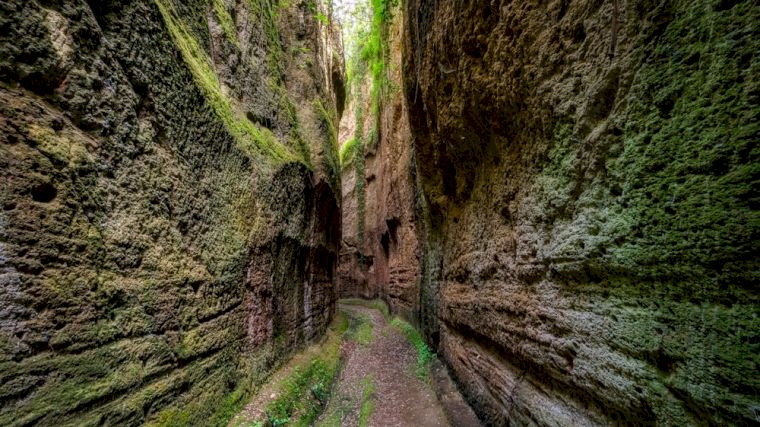
Just an hour’s drive from Rome, you’ll find a hidden gem. Hiking through a deep gorge can often be quite tiring, but in the case of the Forre de Corchiano, the trail is relatively flat and easily accessible as well. Park your rental car at the little church on Via Sant’Egidio in Corchiano. If there’s no space, you can park your car along the main road. To the left of the church, a path leads downhill, taking you straight into a network of narrow ravines flanked by high rock walls. Between these ravines are even narrower tunnels, and further on you’ll find deep caves and inlets carved out by the Etruscans. At the end, you’ll cross an old Roman bridge to a clearing with a waterfall.
11. Lake Bracciano / Lake Martignano
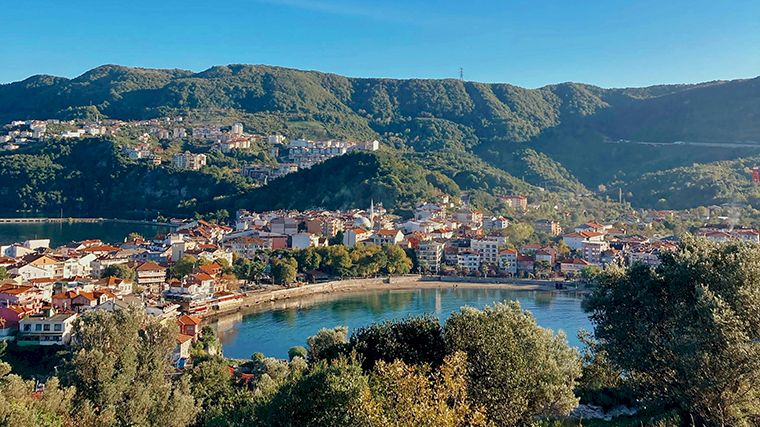
The charming town of Bracciano is located 40 kilometers by car from Rome on the lake of the same name, surrounded by wooded hills. Because it’s a short distance from the Italian capital, it’s a popular weekend destination for Romans. If you don’t like crowds, it’s best to avoid Lago di Bracciano on weekends or during school vacations. Still, it’s remarkably quiet in terms of ambient noise, thanks to the ban on motorboats. This has also ensured that the water in this deep crater lake is very clean. Some of the beaches belong to campgrounds or hotels and are not open to the public. The beach near the village of Anguillara Sabazia, however, is open to the public.
In addition to being a lovely lake for swimming, canoeing, or kayaking, Bracciano boasts an impressive castle that towers high above the town. This Renaissance-style Castello Orsini-Odescalchi is now a museum featuring richly decorated rooms and beautiful murals. The kitchen is still in its original condition, and you can easily imagine the kitchen maids bustling about with their pots and pans. Part of the castle is rented out for weddings and parties, but that will set you back a pretty penny.
Right next to Lake Bracciano lies the much smaller (and quieter) Lago di Martignano. Aside from a few eateries, there are no buildings around this lake. You have to pay for access to the grassy shores.
12. Cascata delle Marmore
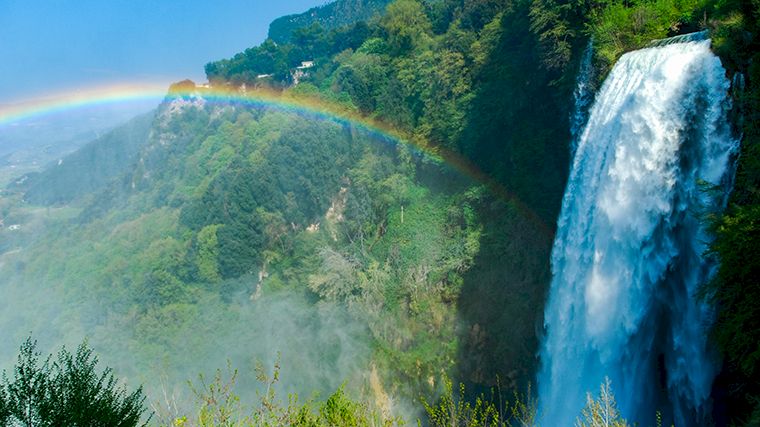
The Marmore Falls are among the highest in Europe and are also unique for another reason: they were created by human intervention. In the third century B.C., the Sabina River regularly caused flooding. As a result, the river was diverted via a canal to the Nera River, 165 meters below. A little further upstream, there is now a reservoir, which means the waterfall does not have a full flow of water all day long. Two or three times a day, the gates are opened, and you can enjoy the enormous volume of water as it plunges down with a thunderous roar in three impressive cascades. There are beautiful viewpoints near the waterfall, such as the romantic Balcone degli Innamorati (Lovers’ Balcony), which is accessible only through a tunnel, and the spectacular view at the Specola. On the website of the Cascata delle Marmore , you can see when the gates are opened.
Downstream from the waterfalls, you can enjoy various water sports. When the gates are open, it’s a great time for rafting; when the river is calmer, you can go kayaking or try river walking.
13. Giardino di Ninfa
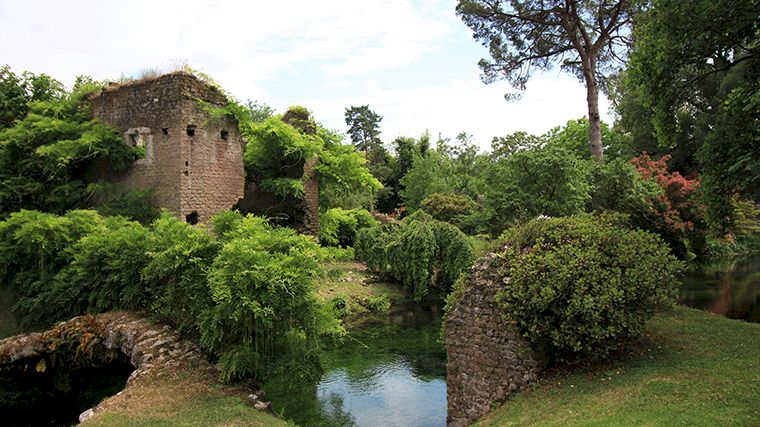
The Giardino di Ninfa (Garden of the Nymphs) is located more than sixty kilometers southeast of Rome, near Cisterna di Latina. The name is derived from a so-called nymphaeum from classical antiquity—a temple dedicated to nymphs on an island in the small lake. Nymphs were believed to dwell near springs and rivers in dense forests. The garden was laid out around the ruins of a medieval settlement and is often called the most romantic garden in the world.
The landscape garden features various oaks, cypresses, and poplars; grassy meadows; a wide range of exotic plants from different parts of the world; numerous waterways; and a great variety of climbing roses and ferns growing over the stone walls of the ruins. The garden is open to the public from March through November.
The Garden of the Nymphs borders another beautiful area where the original natural landscape has been restored, the Pantanello Nature Park.
14. Terracina: Beach and History
From Rome, it’s a drive of over 100 kilometers to Terracina, where you can combine a dip in the sea with a dive into history. The drive through the Pontine Plain isn’t particularly exciting, but once you arrive in Terracina, you’ll quickly forget all about it.
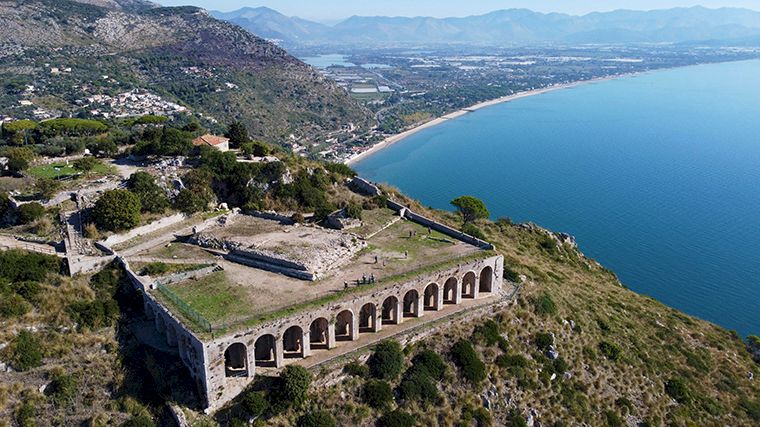
Even before the Romans conquered this area, there was a temple dedicated to the god Anxur in Terracina. The Romans expanded that temple and dedicated it to Jupiter. The impressive ruins of that temple complex are scattered across three terraces, high above the modern city. In the city itself, you can see the Roman Forum and a section of the famous Via Appia. Interestingly, many ruins from the Roman era were hidden by medieval buildings and were only rediscovered after a bombing raid during World War II.
Terracina has a city beach, but there are more beautiful beaches in the surrounding area. You’ll definitely need a rental car to drive there. Heading east, you’ll pass kilometers of beaches on your way to Sperlonga and Gaeta. To the west lies the seaside resort of Sabaudia, situated on a lagoon behind a long, narrow beach.
Road Trip Through Abruzzo
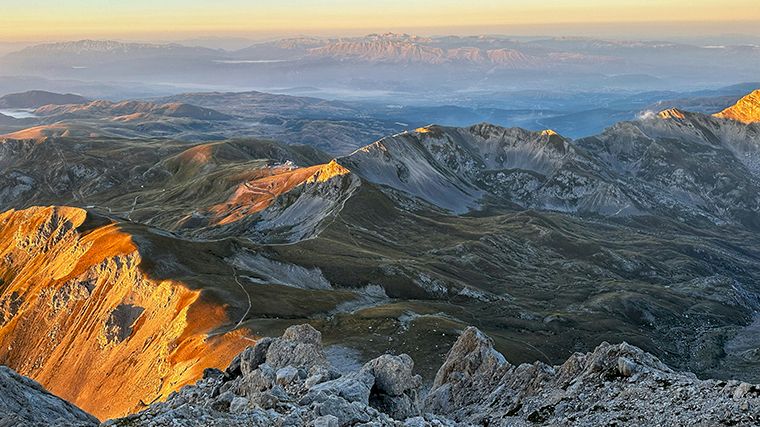
The Abruzzo region is often overlooked, but it’s a wonderful destination, especially if you’ve rented a car. The region is known for its long beaches along the Adriatic coast, but you’ll also find rustic countryside, ancient mountain towns where nothing seems to have changed for centuries, and no fewer than four national parks. The drive from Rome to L’Aquila, the capital of Abruzzo, takes less than two hours.
L’Aquila is the gateway to the Gran Sasso National Park, which includes the highest peak in the Apennines, the Corno Grande (2,912 m). You can climb it, but it’s a pretty tough hike. In addition to climbing the various peaks, you can go horseback riding, mountain biking, canoeing, and birdwatching here. In the winter, you can go downhill and cross-country skiing.
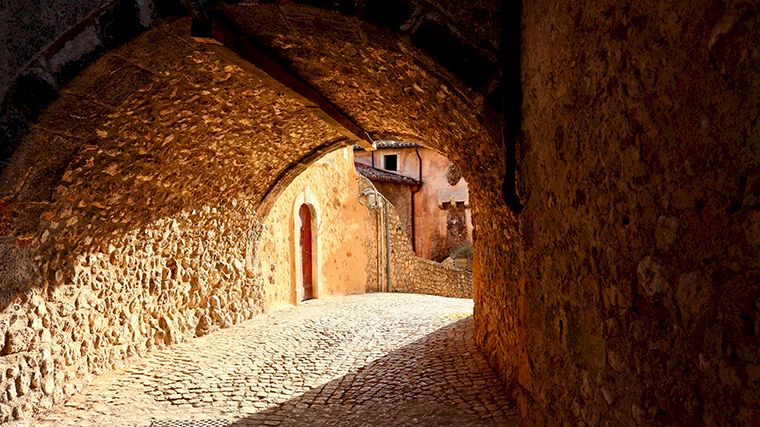
Santo Stefano di Sessanio is a beautiful medieval town. It was severely damaged in an earthquake in 2009, but nearly all the houses have since been restored. Even the collapsed Torre Medicea in the center of the village has been rebuilt. From Santo Stefano, you can easily drive your rental car along the SP7 to Calascio, but the narrow road leading to the ruins of the castle of the same name is full of hairpin turns. You’ll be rewarded with a beautiful view.
From Calascio, it’s a fifty-kilometer drive to Sulmona, which is known for its confetti—sugar-coated almonds. East of this town lies the Maiella National Park. You’ll drive through lower mountains covered in dense forests, while the high peaks rise bare above them. On the north side lies the beautiful Valle dell’Orfento, where you can walk along a wild, rushing stream. Further south, the town of Pescocostanzo lies among rolling hills that resemble Alpine meadows. You can drive back to Sulmona via the SS17. Drive carefully here, as animals may cross the road! This is also a beautiful route in winter.
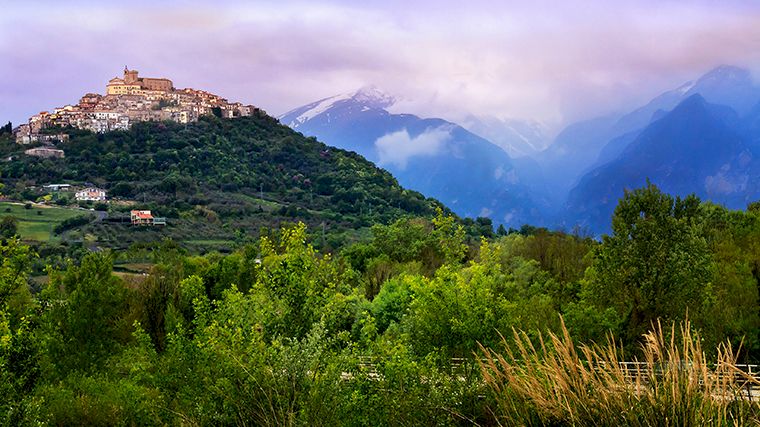
Want to take another fantastic drive in your rental car? Then head southwest from Sulmona on the SR479. First, you’ll pass through the Gole del Sagittario, an area featuring limestone gorges, waterfalls, and forests. Time to stretch your legs, as there are several themed trails marked out, including the “sentiero del fiume” (river trail) and the “sentiero geologico” (geological trail). Further along, you’ll pass Lago di Scanno. Time again to park the rental car—this time for a refreshing dip. The village of Scanno is a truly picturesque town with steep alleyways and a cluster of slate-gray stone houses nestled against a mountainside. It’s no wonder it’s considered one of the borghi più belli d’Italia.
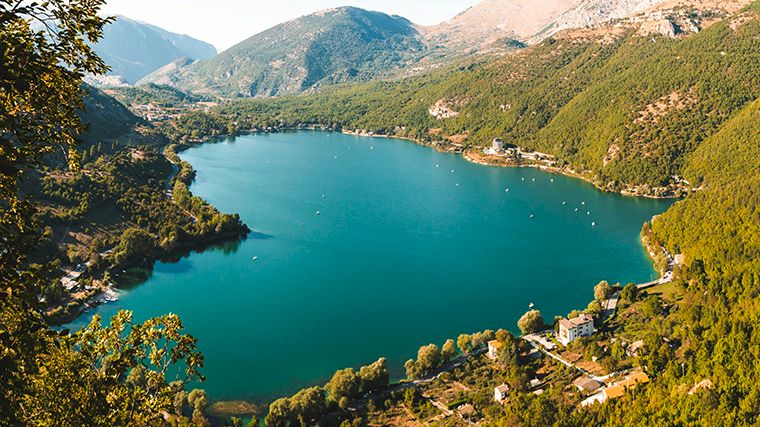
South of Scanno, you’ll climb up to the Passo Godi mountain pass. In winter, this is the perfect destination for a fun day in the snow—especially if you’re traveling with young children, since you can not only ski there but also go on dog-sled rides!
On your way back to Rome, don’t miss the Parco Nazionale D’Abruzzo Lazio e Molise. As the name suggests, this protected nature reserve lies on the border of three regions. It offers a wonderful experience in rugged nature throughout all seasons, and you can easily spend several days there. You’ll enjoy incredible landscapes, beautiful lakes, and crystal-clear spring water, all while surrounded by deer, eagles, foxes, and medieval villages and castles. There’s a wide range of hiking and biking trails, and in winter you can go skiing, snowboarding, or snowshoeing.
Rent a car in Rome and set out on an adventure
We hope we’ve inspired you to take some beautiful trips through Lazio and Abruzzo. These two Italian regions are less crowded than, say, Tuscany, but they have a lot to offer. If you’ve already seen Rome, you can rent a car at one of the Italian capital’s airports (Fiumicino or Ciampino) and set off right away to discover the lesser-known parts of Italy! If you’d like to see Rome first, you can rent a car in the city; most rental agencies are located near the Termini and Tiburtina train stations.

Where would you like to rent a car?
- 24000+ pick-up locations
- Free cancellation
- Independent comparator

Useful tips for a well-prepared trip
Which insurance should I choose, and what's the deal with the deposit? Read our articles with useful information and tips to ensure you choose the right rental car for you.


- Renting a Car with Kids: The Best Routes and Stops
- 12 stops between Venice and Florence
- 16 places of interest between Naples and Lamezia Terme
- The 11 Most Beautiful Travel Destinations in Southern Italy
- 12 Tips for a Road Trip Starting from Olbia or Alghero
- Rental Cars in Italy: Everything You Need to Know About ZTL Zones