- Popular countries
- Popular regions
- Popular cities
- Popular airports
- Car Rental Italy
- Car Rental Spain
- Car Rental United States
- Car Rental Portugal
- Car Rental South Africa
- Car Rental France
- Car Rental Netherlands
- Car Rental Greece
- Car Rental Germany
- Car Rental United Kingdom
- Car Rental Belgium
- Car Rental Croatia
- Car Rental Switzerland
- Car Rental Austria
- Car Rental Denmark
- Car Rental Norway
- Car Rental Australia
- Car Rental Ireland
- Car Rental Cyprus
- Car Rental Canada
- Car Rental Florida
- Car Rental Sicily
- Car Rental California
- Car Rental England
- Car Rental Sardinia
- Car Rental Mallorca
- Car Rental Ibiza
- Car Rental Crete
- Car Rental Tenerife
- Car Rental Rhodes
- Car Rental Madeira
- Car Rental Corsica
- Car Rental Gran Canaria
- Car Rental Malta
- Car Rental Scotland
- Car Rental Azores
- Car Rental Fuerteventura
- Car Rental Lanzarote
- Car Rental Corfu
- Car Rental Zakynthos
- Car Rental Amsterdam
- Car Rental Milan
- Car Rental Miami
- Car Rental Lisbon
- Car Rental Malaga
- Car Rental Porto
- Car Rental Rome
- Car Rental Cape Town
- Car Rental Barcelona
- Car Rental Faro
- Car Rental Alicante
- Car Rental Nice
- Car Rental Bari
- Car Rental Naples
- Car Rental Johannesburg
- Car Rental Brussels
- Car Rental Bergamo
- Car Rental Orlando
- Car Rental Palma de Mallorca
- Car Rental Vienna
- Car Rental Amsterdam Schiphol Airport
- Car Rental Miami International Airport
- Car Rental Lisbon Airport
- Car Rental Malaga Airport
- Car Rental Porto Airport
- Car Rental Milan Malpensa Airport
- Car Rental Rome Fiumicino Airport
- Car Rental Faro Airport
- Car Rental Alicante Airport
- Car Rental Bari Palese Airport
- Car Rental Nice Airport
- Car Rental Cape Town Airport - International Terminal
- Car Rental Barcelona Airport
- Car Rental Bergamo Airport
- Car Rental Orlando International Airport
- Car Rental Mallorca Airport
- Car Rental Johannesburg International Airport
- Car Rental Catania Airport
- Car Rental Ibiza Airport
- Car Rental Athens Airport

Through the Austrian Alps in a rental car
The most beautiful route past the best sights
Vienna is a wonderful destination for a city trip. Salzburg and Innsbruck are especially popular in the winter as gateways to the ski resorts in the Alps. But did you know that you can take a wonderful road trip through Austria, where you’ll not only visit those three cities but also enjoy the fantastic scenery, learn about the fascinating history, and drive along breathtaking roads? Discover that Austria is more than just Sachertorte and apple strudel: rent a car for an unforgettable journey through this Alpine country.
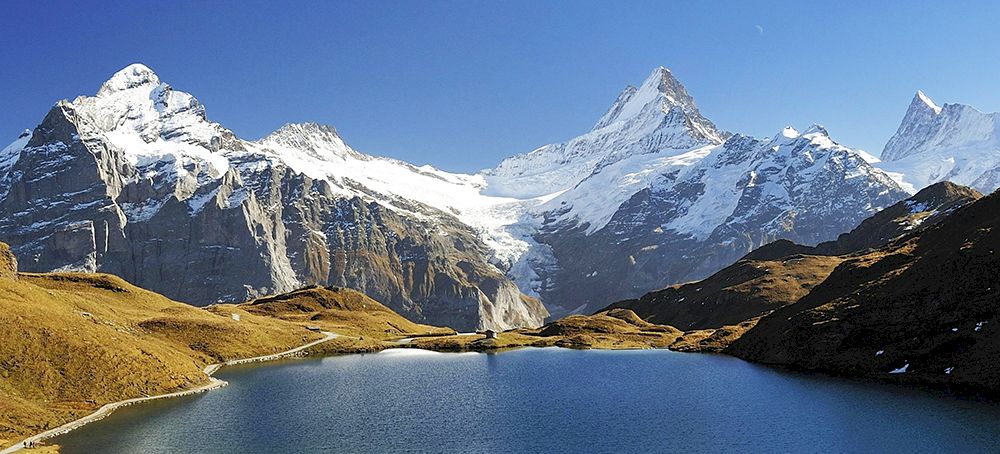
When is the best time to rent a car in Austria?
You can take the road trip described below any time of year. That’s because the main roads in Austria are kept well cleared of snow in the winter. Only some high-altitude, scenic roads are closed in the winter—but not all of them! However, winter tires are required during winter conditions (from November 1 through April 15). Rental cars are often equipped with them as standard during that period, but you’ll need to book snow chains separately.
Vienna
Austria’s capital proudly bears the nickname “graceful old lady,” as there’s no more fitting way to describe Vienna. The city on the Danube is famous for its stately boulevards and squares filled with Baroque and Rococo architecture. Major attractions include Schönbrunn and Belvedere Palaces, but if you want to learn more about the influential Habsburg dynasty, the Hofburg is the place to go. Much less crowded is the beautiful Laxenburg Hunting Lodge, south of Vienna, nestled in the middle of a stunning park.
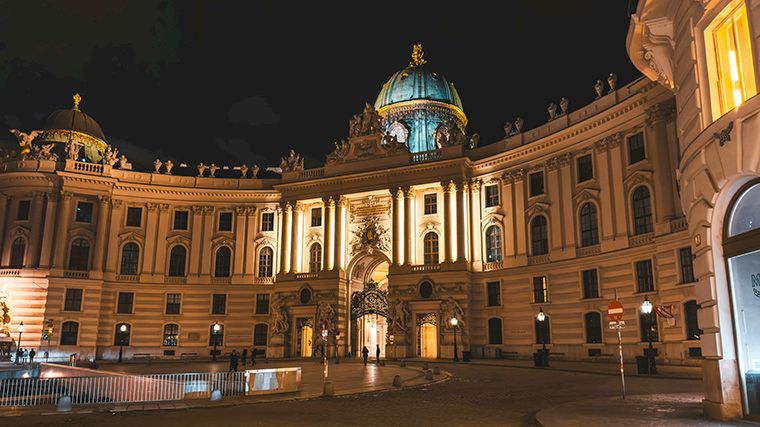
The historic center of the Austrian capital is brimming with interesting sights: from the imposing Gothic St. Stephen’s Cathedral (and many other churches) to the house where Mozart composed and the Lipizzaner horses of the Spanish Riding School. Vienna’s monuments are beautifully illuminated in the evening. And of course, you must visit the famous Viennese coffeehouses: not only for coffee and cake, but also for the beautiful, historic interiors. From the Ferris wheel at the Prater amusement park, you have a lovely view of the city, but an even higher vantage point (150 meters) is the observation deck of the Donauturm.
If you’re flying to Vienna, you can rent a car right at the airport, but if you’d like to spend a few days in the city first, there are also car rental offices at the train station in the Austrian capital.
Wachau
With a rental car, it takes about an hour to drive from Vienna to the Wachau Valley between Krems an der Donau and Melk. The valley is known for its breathtaking landscapes, historical treasures, and delicious wines. The entire region is a UNESCO World Heritage Site. Between Krems and Melk, there are no bridges across the Danube—only three ferry crossings. Two of these ferries also carry cars: between Weißenkirchen and St. Lorenz, and between Spitz and Oberarnsdorf. So, in Krems, the question arises: which bank of the Danube should you choose—the northern or the southern one?
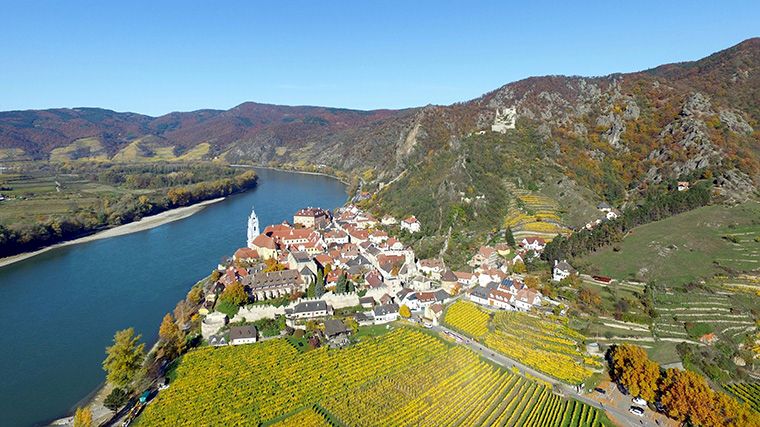
The north bank is the most popular with tourists, as it is home to the charming villages of Dürnstein, Weißenkirchen, and Spitz, nestled amid vast vineyards. You’ll also find the highest mountain along the Danube here—the Jauerling —in the nature park of the same name. Numerous hiking trails have been marked out through this unique landscape. Between Schwallenbach and Willendorf, it gets very busy in the spring, when the apricot trees are in bloom.
On the south side, too, you can enjoy the blossoms of apricot, apple, and pear trees in the spring. A highlight along the southern route is the ruins of Aggstein, which offer a breathtaking view of the river. The right bank of the Danube offers the most spectacular views in any case. What’s more, in the summer you can swim in the Danube on this side of the river: across from Dürnstein and near Rührsdorf. At the route’s endpoint in Melk, don’t miss the 18th-century abbey, one of Austria’s most famous Baroque structures.
Linz / Mauthausen
As you drive further west along the beautiful Danube, you’ll pass one of the darkest chapters in history. The contrast between the charming village of Mauthausen and the concentration camp of the same name couldn’t be greater. The camp was known as one of the Nazis’ most brutal, and a visit to the museum in the former infirmary will certainly move you.
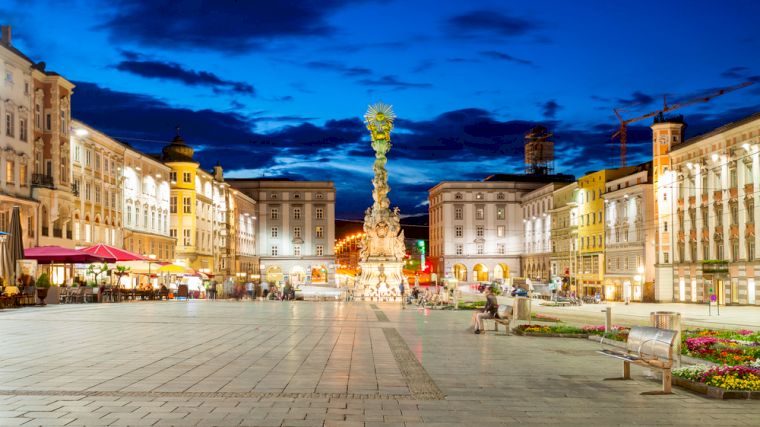
After visiting the concentration camp, you’ll want to take some time to recover from all the emotions, and Linz is the perfect place for that. Although the city pales in comparison to Graz or Salzburg, in the summer there are cozy outdoor cafes on the Hauptplatz, the central city square. From this square, you can take a historic tram up a steep route in twenty minutes to the Pöstlingberg Church, perched high on a hill across the Danube. The St. Mary’s Cathedral looks older than it is; this largest church in Austria was not completed until 1924. The Ars Electronica Center focuses on the future, and its exhibitions are constantly updated.
Day trip from Linz: Schlögener Schlinge
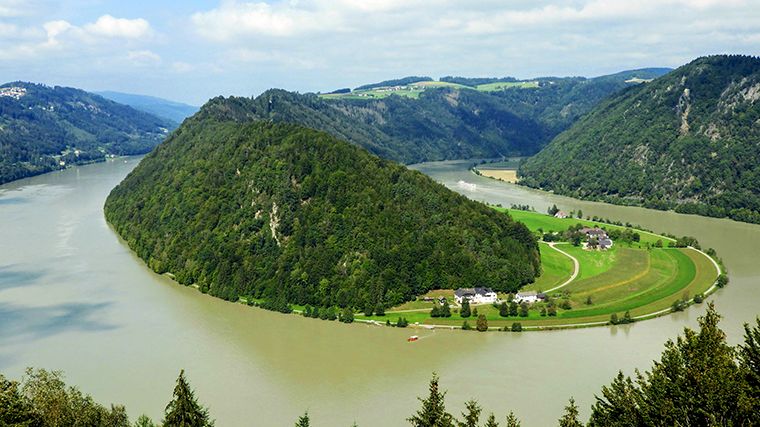
Did you know that the Danube in Austria makes a bend that strongly resembles the famous Horseshoe Bend on the Colorado River in the U.S.? To see it, drive your rental car to Schlögen, about forty kilometers northwest of Linz. From the parking lot, it’s a twenty- to thirty-minute walk to the Schlögener Blick observation deck. Not sure if the view will be clear enough? Check the Donauschlinge webcam first. There are several other hiking trails through the forest and on the peninsula in the Danube. You’ll reach it by driving a little further over the bridge to Niederanna.
Salzkammergut Lake District
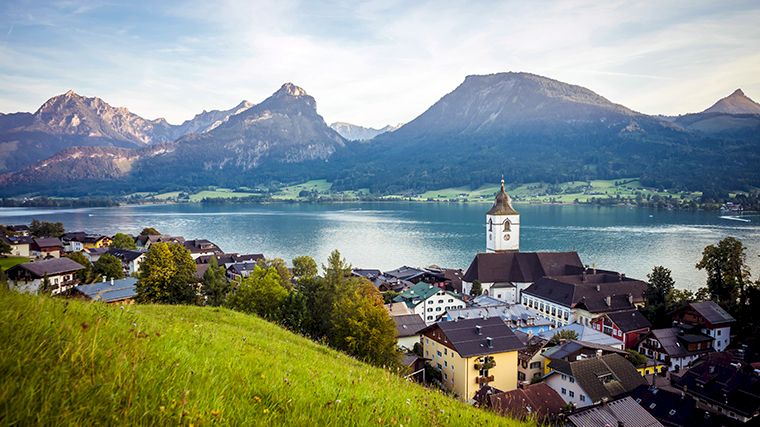
Hallstatt is the most photographed village in the Salzkammergut lake district, between Linz and Salzburg. But it’s also the busiest and most touristy town in this beautiful region, which has so much more to offer. If you want to visit Hallstatt, go early in the morning, before the tour buses arrive and the parking lots fill up. Or go late in the afternoon and stay overnight, because the village has a wonderful atmosphere in the evening. You’ll need to book a hotel well in advance, though, as accommodations are limited. Not far from Hallstatt lies the village of Altaussee, which is also beautiful but less crowded.
In the heart of Austria’s beautiful lake district lies the town of Mondsee on the lake of the same name. From here, you can take day trips to picturesque villages and crystal-clear mountain lakes. In the summer, there are plenty of activities to enjoy on the lakes: swimming, of course, but also kayaking, sailing, water skiing, wakeboarding, and stand-up paddleboarding. One of the larger towns is Gmunden on Lake Traunsee, which is often considered the most beautiful lake. On a small island in the lake lies the charming Schloss Ort.
Salzburg
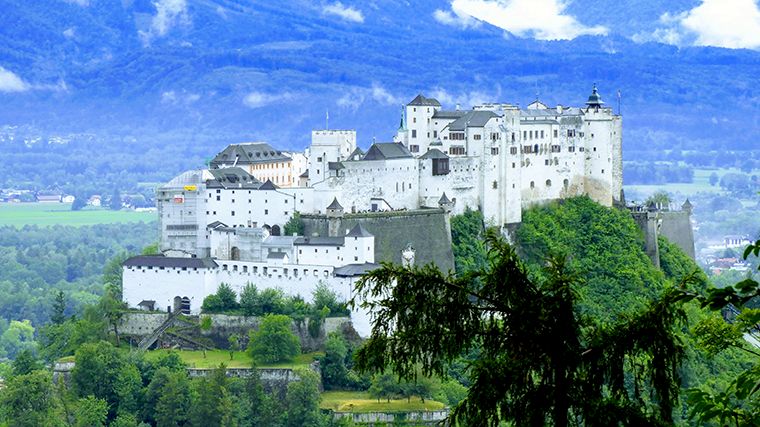
Salzburg’s world-renowned historic center is a must-see at least once in a lifetime. Nestled between the Mönchsberg and Kapuzinerberg hills, the Altstadt is home to many attractions. Well-known sites include Hohensalzburg Fortress, one of the largest medieval castles in Europe, Salzburg Cathedral, and Getreidegasse. In 1756, Wolfgang Amadeus Mozart was born in the stately townhouse at number 7. The narrow, winding streets of the old town are perfect for a leisurely stroll that leads to hidden courtyards and medieval squares with Baroque fountains. A cable car takes you to the castle on the Mönchsberg, which offers a beautiful view, but even more stunning is the Gaisbergspitze viewpoint, east of the city. Not only do you get a beautiful view there, but you can also go paragliding. A winding road leads to the summit.
Continuing the route through Germany
Salzburg is located close to the German border, which raises the question: will you continue your road trip through the neighboring country, or will you stay in Austria? Most Austrian car rental companies don’t mind if you cross the border with their car. You just need to mention this when making your reservation. That way, the rental car will also be insured in the other country.
Berchtesgaden / Königsee
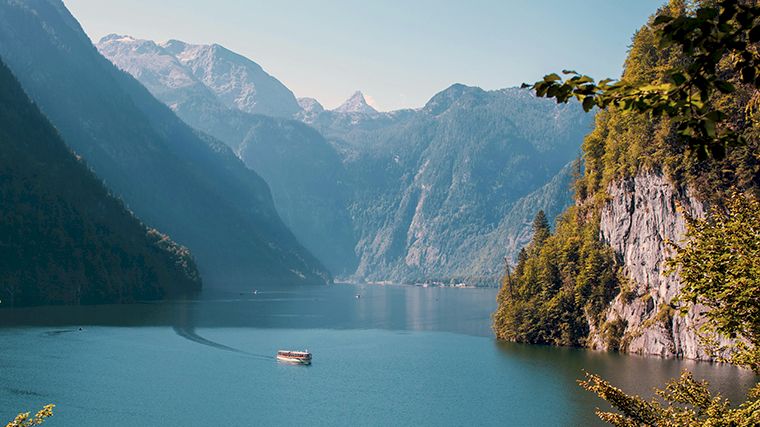
From Salzburg, it’s a half-hour drive to Berchtesgaden, Germany. The route winds through stunning natural scenery, culminating at Königsee, south of Berchtesgaden. Germany’s deepest lake is surrounded by steep rock faces. In some places, these create a clear echo. During boat tours, it’s customary to stop and play a bugle or trumpet to demonstrate the echo. In the area around the lake, you can go hiking, including through the Wimbachgries, the gorge of the Wimbach River near Ramsau. There are also beautiful hiking trails marked out around the Hintersee in the Zauberwald.
Just after you cross the German-Austrian border, you’ll see a sign along the road pointing to Reith. If you take that turn, you’ll arrive at the Parkplatz Innersbachklamm. This walking trail is well worth pulling over your rental car for a moment. From the parking lot, it’s a five-minute walk to a short but enjoyable hike along wooden walkways beside the valley’s cliffs.
From here, it’s another thirty kilometers to Sankt-Johann.
Continuation of the route through Austria
If you don’t choose the route through Germany, drive forty kilometers south from Salzburg toward Werfen. That’s also a beautiful road, running along the Salzach River.
Hohenwerfen Castle
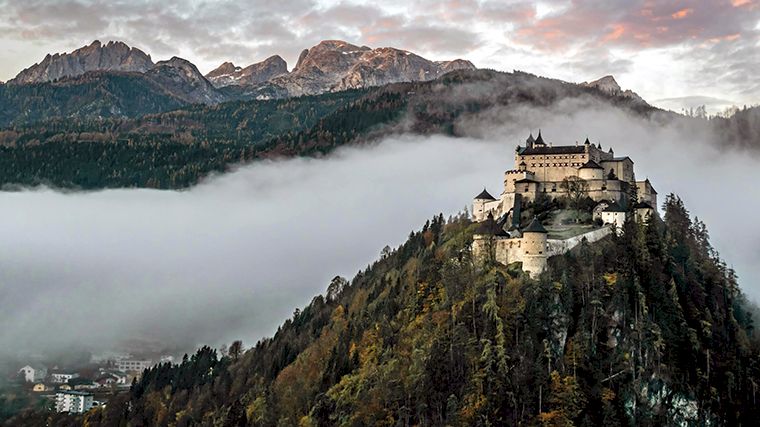
The parking lot for the castle is located right off the B-159 Hohenwerfen. From the parking lot, a small cable car runs up to the castle atop the rock, but you can also follow the winding path through the forest. It is a remarkably well-preserved medieval castle on a steep rock cone, and it’s no wonder it’s called an “adventure castle”—there’s so much to see and discover, even for children. There are also daily flight demonstrations featuring various birds of prey, including eagles, falcons, hawks, and vultures.
Werfen
Across the Salzach River lie the Eisriesenwelt ice caves. From Werfen, it’s a five-kilometer drive to the visitor center. Contrary to what the name suggests, these caves are closed in the winter and accessible only from May 1 through October 31. Be sure to dress warmly—they’re called ice caves for a reason.
From Werfen, it’s a drive of over eighty kilometers to Sankt-Johann, near Kitzbühel. Both towns are great starting points for day trips in the Kaisergebirge.
Kaisergebirge
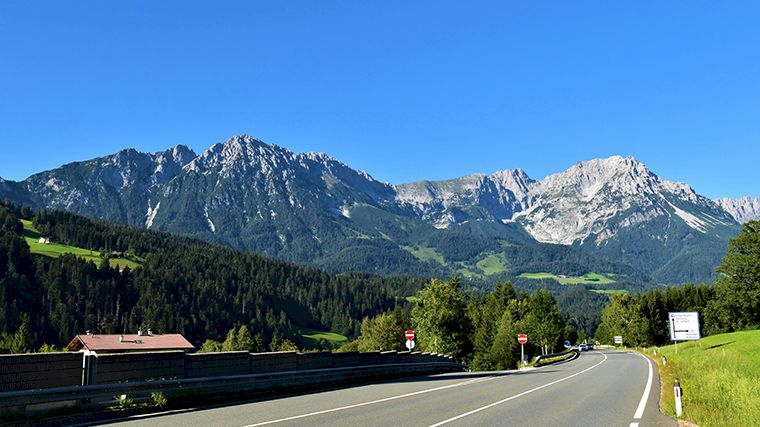
The Kaisergebirge is one of Austria’s most beautiful mountain landscapes. The Kaisertal, east of Kufstein, separates the Zahmer Kaiser (Tame Emperor) from the Wilder Kaiser (Wild Emperor). It goes without saying that the latter is the ruggedest mountain range. The Stripsenjoch peak is more or less the center, with countless trails leading to it—all of which are quite challenging. Good hiking boots are essential, and on some routes, mountaineering gear is even required. If you want to make things a bit easier on yourself, take the cable car from Söll or Hopfgarten up to the Hohe Salve (1,829 m). A ski resort in the winter, it’s a great spot for mountain hikes and paragliding in the summer.
Achensee
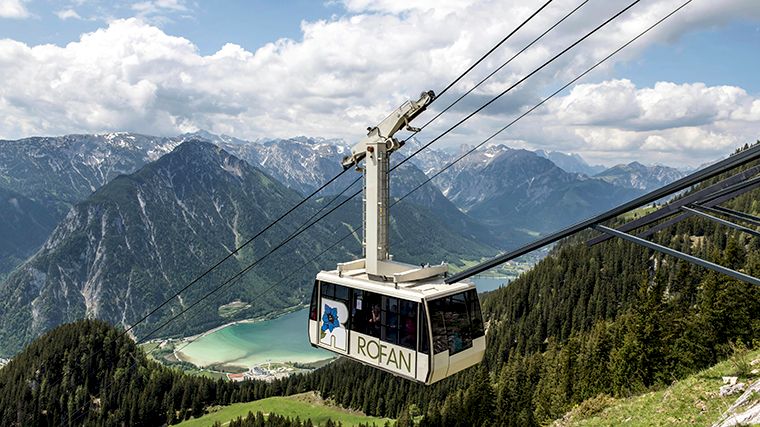
From Sankt-Johann, it’s just over an hour’s drive to Pertisau on the beautiful Achensee. This is also a great area for hiking, with hundreds of kilometers of trails. One of these trails goes around the lake and is over 22 kilometers long. On the western side, the path gets very narrow in some places and runs right along the mountainside. The nice thing is that you don’t have to walk the entire route, because at various points you can board the boat that circles the lake and takes you back to your starting point. If you don’t want to exert yourself at all, hop in your rental car and drive along the B-181 right next to the eastern shore.
On the eastern side of the lake, near Buchau, there are two waterfalls. The Buchauer Wasserfall is fairly easy to reach, but it can run dry in the summer. The climb to the more impressive Dalfazer Wasserfall is more strenuous. During the hike up, you’ll have a beautiful view of Lake Achensee. If you take the cable car from Maurach to Rofanblick, you can enjoy that same beautiful view with less effort.
Innsbruck
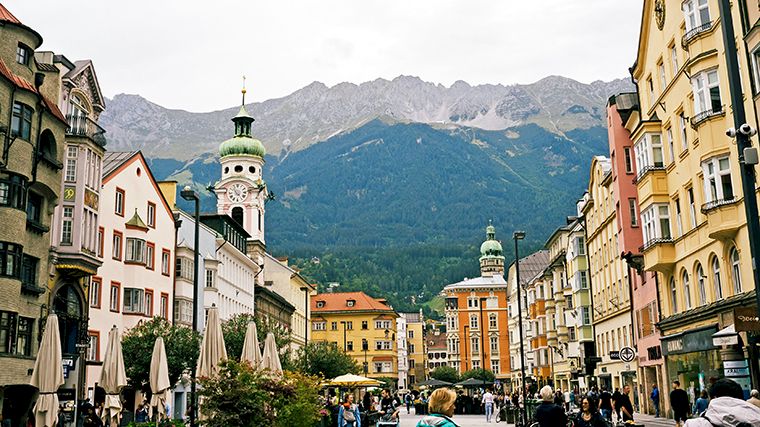
Innsbruck lies in the valley of the Inn River and is surrounded by high mountains. You can see the majestic Alps from almost anywhere in the city—not only in the center, but also as a backdrop to the brightly colored houses along the river. In the Altstadt, be sure to stop by the Goldenes Dachl: a balcony with a roof made of no fewer than 2,657 gilded roof tiles. This was a box where Emperor Maximilian I would watch festivals, tournaments, and other events in the square below.
In winter, Innsbruck is a great base for sports like skiing, cross-country skiing, and snowboarding, and in summer, it’s perfect for fantastic road trips along winding, panoramic mountain roads. If you’re lucky, there might be a competition at the Bergisel ski jump in winter. Or maybe you’d prefer there not to be a competition, because then you can sit on the bench from which the ski jumpers take off. Another must-do is the cable car to the Nordkette. You’ll arrive at the Hafelekarspitze, from where you can hike to the highest point (2,334 m).
High Mountain Roads Near Innsbruck
From Innsbruck, you can drive your rental car along scenic mountain roads. Below, we’ll first describe three of these beautiful routes in Tyrol, followed by two other winding roads in the Hohe Tauern. Please note: the truly high-altitude roads are closed during the winter months because they cannot be kept free of snow and ice. Of the three roads in Tyrol, only the Kaunertaler Gletscherstraße is open year-round; the other two are not passable again until late May or even early June. You also have to pay to use these roads (see the links to the respective websites).
Silvretta Hochalpenstraße
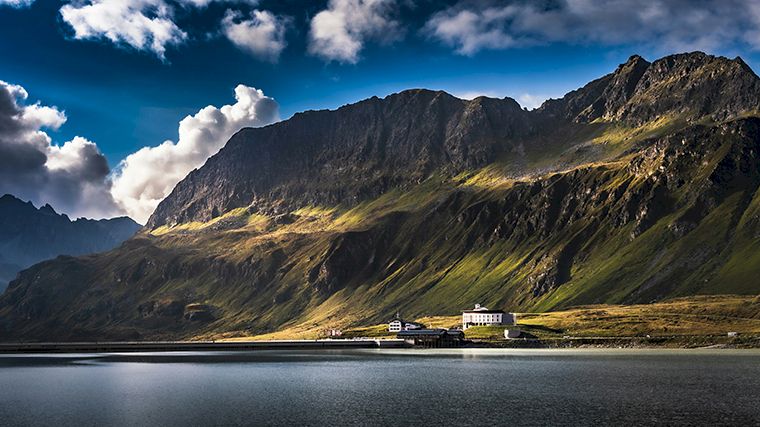
The Silvretta Hochalpenstraße , which is over 22 kilometers long, is one of the most popular tourist routes. This dream route runs from Partenen over the Bielerhöhe Pass at an altitude of over 2,000 meters to Galtür in the Paznaun Valley, passing two reservoirs. The road is extremely winding: there are no fewer than 34 hairpin turns. Between turns 22 and 23, you’ll find the perfect spot for stunning photos.
Kaunertal Glacier Road
Unlike the other two panoramic mountain roads in Tyrol, the Kaunertal Glacier Road remains open year-round. Starting from the valley in Feichten, past the Gepatschspeicher reservoir all the way to the edge of the glacier, you’ll climb nearly 1,500 meters in elevation. Along the way, you’ll drive through diverse alpine landscapes, from lush green alpine meadows to eternal snow.
Ötztal Glacier Road
The Ötztal is also very diverse in terms of nature. It is especially the contrast between the rolling forests and vineyards in the valley and the rugged, snow-capped mountains surrounding it that makes this area so beautiful. The Ötztaler Glacier Road is a dead-end road (so you have to take the same route back) from Sölden to two glaciers: the Rettenbach and the Tiefenbach. To reach the latter glacier, you drive through a tunnel nearly two kilometers long.
Panoramic Roads in the Hohe Tauern
From Innsbruck, it’s about an hour’s drive to Zell am Ziller. That’s where the Gerlos Straße begins, winding through hairpin turns and past the Durlaßboden reservoir on its way to Krimml. This is a regular public road that’s free to use. But if you want to visit the waterfalls near Krimml, you can only reach them by rental car via the Gerlos Alpenstraße (note the addition of “Alpen”), for which you’ll have to pay a toll.
Gerlos Alpenstraße / Krimml Waterfalls
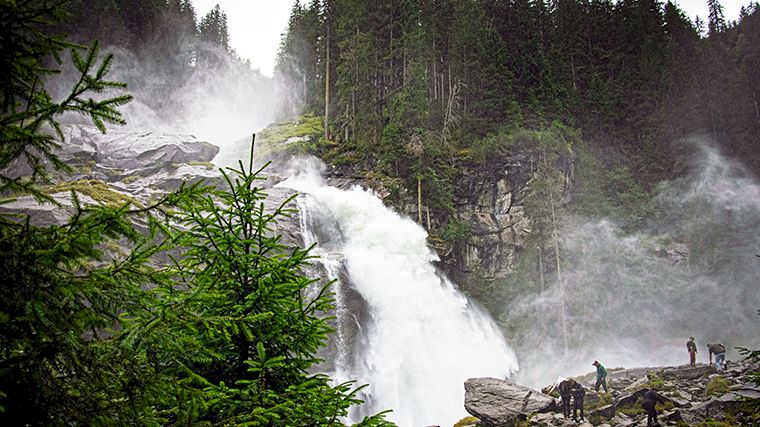
The Gerlos Alpine Road is open year-round and runs from Krimml to the waterfalls near this town. Incidentally, you can already see them from all the parking lots along this 12-kilometer route. From the last parking lot, it’s about a ten-minute walk to the Krimml Waterfalls, the highest waterfalls in Europe. The water plunges a total of 380 meters in three stages. The waterfalls are most impressive during the months with the highest water flow—July and August—but they’re also a beautiful sight in winter when the water is frozen.
Großglockner High Alpine Road
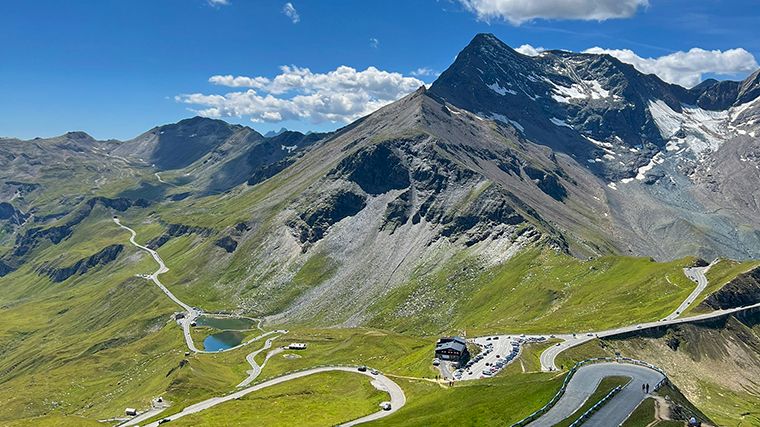
The longest (and most expensive) tourist route through the high mountains of Austria is the Großglockner Hochalpenstraße. It’s an exhilarating 48-kilometer roller-coaster of a road, offering views of glaciers, waterfalls, forested slopes, crystal-clear mountain lakes, and towering peaks. You’ll have a hard time keeping your eyes on the road, but you’ll have to, because the hairpin turns require some serious driving skill. You’ll first climb to the Edelweiß (2,571 m), but the crowning achievement is, of course, the Großglockner itself—at 3,798 meters, Austria’s highest mountain.
Hohe Tauern National Park
As much fun as it is to drive a rental car along winding mountain roads, you’ll want to stretch your legs every now and then to breathe in the Alpine air and fully enjoy nature. And what better place to do that than Austria’s largest national park, Hohe Tauern? As the name suggests, the landscape consists of towering mountains, including the Großglockner and the Großvenediger (3,658 m). Certain parts of the park are off-limits to people, in part to protect animals such as ibex, chamois, and alpine marmots. In the sky, you’ll spot birds of prey, including bearded vultures, which had previously gone extinct here but have since been reintroduced. The Hohe Tauern lies on both sides of the road between Mittersill (which has a fun, interactive visitor center) and Lienz.
Klagenfurt am Wörthersee
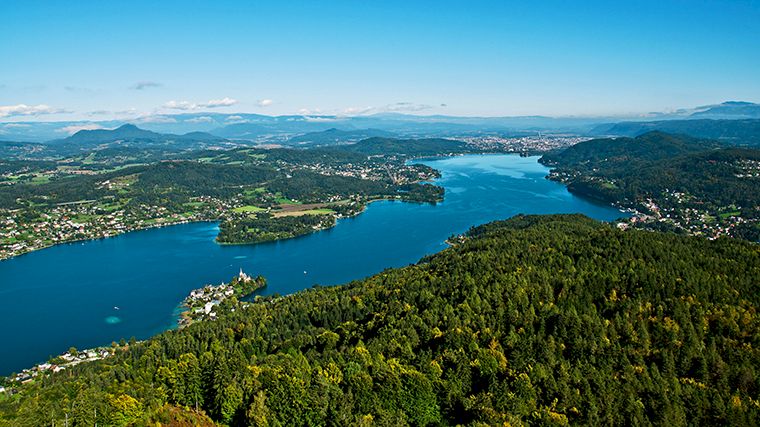
It’s almost a 150-kilometer drive from Lienz to Klagenfurt, but you won’t get bored along the way. You’ll pass Lake Weißensee, Lake Milstätter See, and Lake Ossiacher See, among others, and for the last twenty kilometers before Klagenfurt, the road runs right alongside Lake Wörthersee. There are plenty of ways to enjoy yourself in both summer and winter. From Annenheim on Lake Ossiacher See, you can take a cable car to the Gerlitzen Alpe. You can also get there by rental car via a narrow road (drive carefully in winter!) that starts in Bodensdorf. You’ll have a beautiful view of Lake Wörthersee from the high Pyramidenkogel, a striking wooden structure on the south side of the lake. The lifts aren’t always running, but the stairs aren’t too difficult.
One of Klagenfurt’s major attractions is Minimindus, which features a vast collection of miniature models of famous buildings from more than fifty countries. It’s open from April through October and is located right next to the Strandbad on Lake Wörthersee.
Hochosterwitz Castle
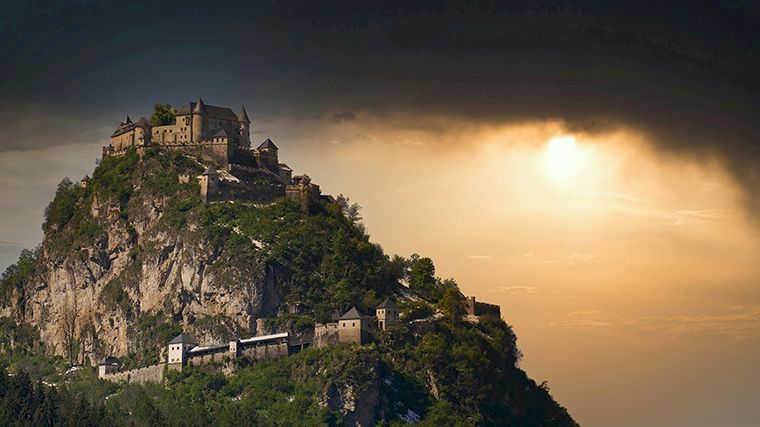
Northeast of Klagenfurt lies Burg Hochosterwitz, one of Austria’s most impressive medieval castles, thanks in large part to its dramatic location. It stands on a 172-meter-high dolomite cliff. You can take an elevator to the top, but the trail is more fun, as it takes you through no fewer than fourteen gates. At each gate, there’s an explanation of how it was defended. The castle is open from April 1 through October 31.
Graz
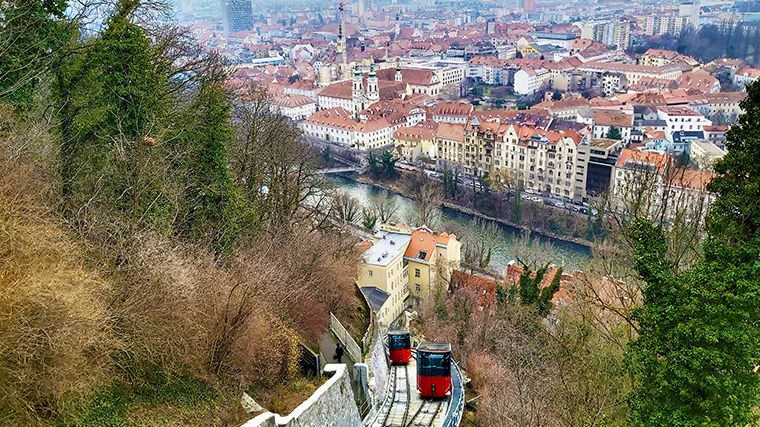
Graz is Austria’s second-largest city and is located an hour and a half’s drive from Klagenfurt. Like Salzburg, Graz has a stunning historic center with buildings from various eras and in a variety of architectural styles. In addition, thanks to its large student population, the city has lively nightlife districts. From Schloßbergplatz, you can climb the 260 wooden steps to the castle on the hill, but there’s also a small cable car and an elevator to take you up. On the west side of Graz lies the 17th-century Schloss Eggenberg. The palace itself is only open during the summer months, but you can take walks in the large park surrounding it year-round.
Day Trip from Graz: Lurgrotte
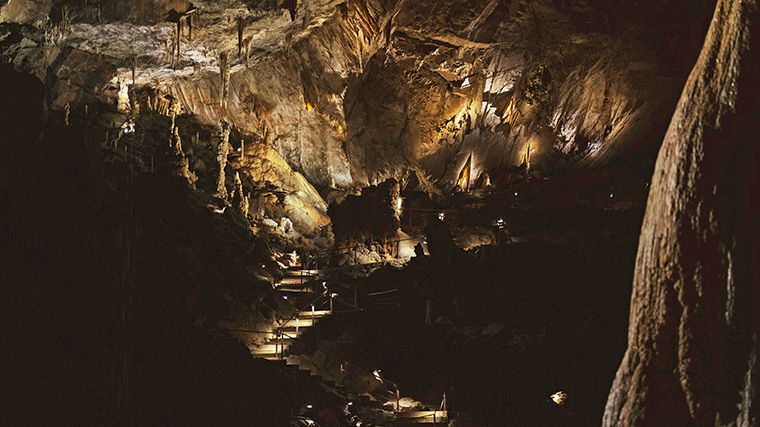
Just over fifteen kilometers north of Graz lies the Lurgrotte, a complex cave system on multiple levels with two entrances. On the west side, near Peggau, the Schmelz River flows out of the cave; on the east side, near Semriach, the Lur River disappears underground. Only when the water level is high is there a connection between these two streams, but no one knows exactly where. The most interesting entrance is at Semriach, where you can venture about two kilometers into the cave, all the way to a massive chamber called the Großen Dom. With a length of 120 meters, a width of 80 meters, and a height of 40 meters, this is one of the largest underground chambers in Central Europe.
20 Schilling Blick
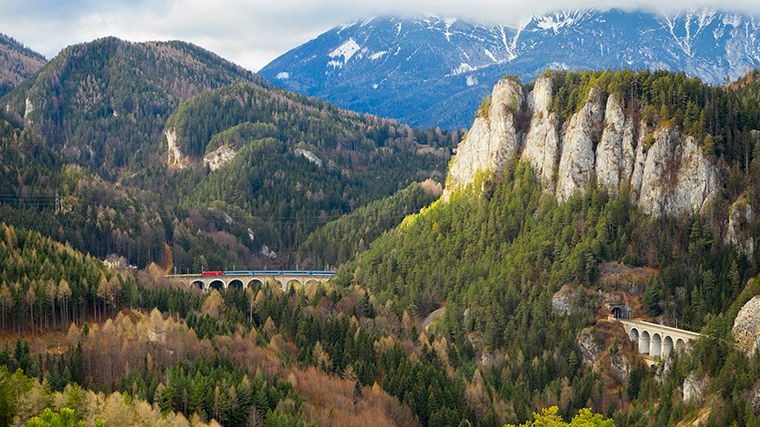
On your way from Graz to Vienna, be sure to take a detour to the town of Semmering to see the famous 20 Schilling Blick. It owes its name to the fact that this viewpoint was featured on the Austrian 20-schilling banknote. You can drive along a winding road between the viaducts of the Semmeringbahn, but the viewpoint itself is even more enjoyable. To get there, park your rental car at the Wolfsbergkogel train station and walk along an easy path to the iconic view. Another observation tower nearby, the Doppelreiterwarte, is also worth visiting.
One-way trip from Vienna to Innsbruck
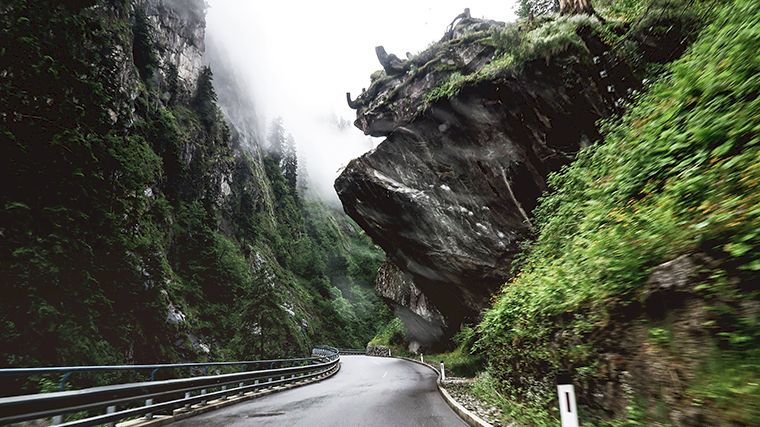
Above, we described a round-trip itinerary from Vienna, through Salzburg, Innsbruck, Klagenfurt, and Graz, back to the Austrian capital. But did you know that you can also pick up a rental car in one city and drop it off in another? This is called one-way car rental, and it’s very easy to arrange. Simply select a different drop-off location in our search form, and we’ll show you only the rental cars that allow this option, including any surcharge for such a “one-way” trip. This way, you can drive from Vienna to Innsbruck (or vice versa) or choose any other combination of two cities that works best for you.
Toll stickers, toll tunnels, and tourist routes in Austria
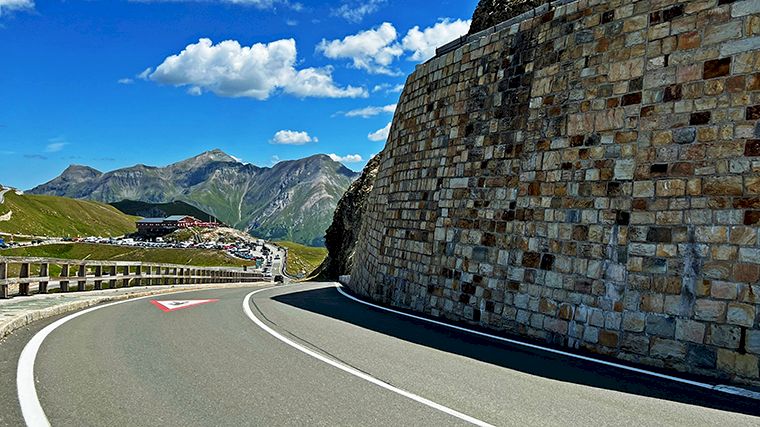
To drive on Austrian highways, you need a toll sticker. A rental car you pick up in Austria will most likely have a toll sticker, because renting a car without one would severely limit your freedom of movement. To be on the safe side, you should check with the car rental company. In addition to the toll sticker, a separate toll is charged on certain road sections, known as the Sondermautstrecke. This fee applies to six tunnels in the Alps and on the Brenner Pass.
You’ll also have to pay for a few popular tourist routes. Officially, this isn’t a toll but an “entry fee,” which can be quite high in some cases. The highest fee is charged for driving on the Grossglockner Hochalpenstrasse.

Where would you like to rent a car?
- 24000+ pick-up locations
- Free cancellation
- Independent comparator

Useful tips for a well-prepared trip
Which insurance should I choose, and what's the deal with the deposit? Read our articles with useful information and tips to ensure you choose the right rental car for you.


