- Popular countries
- Popular regions
- Popular cities
- Popular airports
- Car Rental Italy
- Car Rental Spain
- Car Rental United States
- Car Rental Portugal
- Car Rental South Africa
- Car Rental France
- Car Rental Netherlands
- Car Rental Greece
- Car Rental Germany
- Car Rental United Kingdom
- Car Rental Belgium
- Car Rental Croatia
- Car Rental Switzerland
- Car Rental Austria
- Car Rental Denmark
- Car Rental Norway
- Car Rental Australia
- Car Rental Ireland
- Car Rental Cyprus
- Car Rental Canada
- Car Rental Florida
- Car Rental Sicily
- Car Rental California
- Car Rental England
- Car Rental Sardinia
- Car Rental Mallorca
- Car Rental Ibiza
- Car Rental Crete
- Car Rental Tenerife
- Car Rental Rhodes
- Car Rental Madeira
- Car Rental Corsica
- Car Rental Gran Canaria
- Car Rental Malta
- Car Rental Scotland
- Car Rental Azores
- Car Rental Fuerteventura
- Car Rental Lanzarote
- Car Rental Corfu
- Car Rental Zakynthos
- Car Rental Amsterdam
- Car Rental Milan
- Car Rental Miami
- Car Rental Lisbon
- Car Rental Malaga
- Car Rental Porto
- Car Rental Rome
- Car Rental Cape Town
- Car Rental Barcelona
- Car Rental Faro
- Car Rental Alicante
- Car Rental Nice
- Car Rental Bari
- Car Rental Naples
- Car Rental Johannesburg
- Car Rental Brussels
- Car Rental Bergamo
- Car Rental Orlando
- Car Rental Palma de Mallorca
- Car Rental Vienna
- Car Rental Amsterdam Schiphol Airport
- Car Rental Miami International Airport
- Car Rental Lisbon Airport
- Car Rental Malaga Airport
- Car Rental Porto Airport
- Car Rental Milan Malpensa Airport
- Car Rental Rome Fiumicino Airport
- Car Rental Faro Airport
- Car Rental Alicante Airport
- Car Rental Bari Palese Airport
- Car Rental Nice Airport
- Car Rental Barcelona Airport
- Car Rental Cape Town Airport - International Terminal
- Car Rental Bergamo Airport
- Car Rental Orlando International Airport
- Car Rental Mallorca Airport
- Car Rental Catania Airport
- Car Rental Johannesburg International Airport
- Car Rental Ibiza Airport
- Car Rental Athens Airport

The Best Road Trips Around Madrid in a Rental Car
Historic towns and villages nestled in the heart of magical natural surroundings
Last updated: July 22, 2026.
The Spanish capital, Madrid, is a great destination for a city break, but why not combine it with a road trip through Spain’s beautiful countryside? Or opt for day trips in a rental car. There are plenty of sights to see around Madrid: beautiful historic towns, ancient ruins, and impressive natural landscapes. You’ll experience authentic Spain, far away from mass tourism. Before you leave, make sure you’re familiar with Spanish traffic rules.
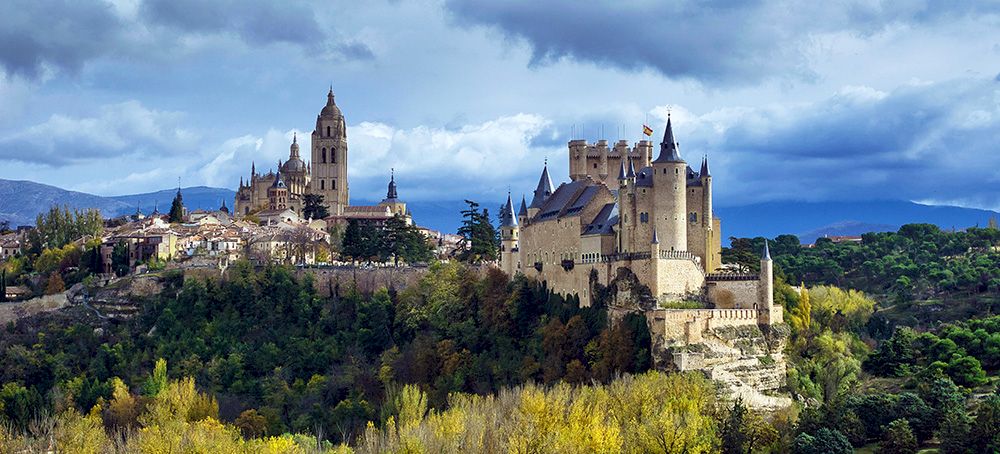
Below, we describe a road trip in a rental car through the Castilla y León region, northwest of the city. You can also visit some of these attractions on a day trip. In addition, we have seven other tips for the best and most interesting day trips around the Spanish capital. You can rent a car at Madrid Airport, but there are also many car rental companies in the city itself, such as at the Atocha and Chamartín train stations and around Plaza de Castilla.
Road Trip Through Castile and León
The name of the Spanish region of Castile and León derives from two historic kingdoms that were separated and reunited several times during the Middle Ages. The area is visited by relatively few tourists, which is a shame, because did you know that it’s home to no fewer than eleven World Heritage Sites? Furthermore, thirty of Spain’s most beautiful villages (Los Pueblos más Bonitos de España) are located in Castile and León. In addition to historical sights, the region offers stunning natural scenery and—not unimportant if you’ve rented a car—picturesque routes along winding roads.
Alcalá de Henares
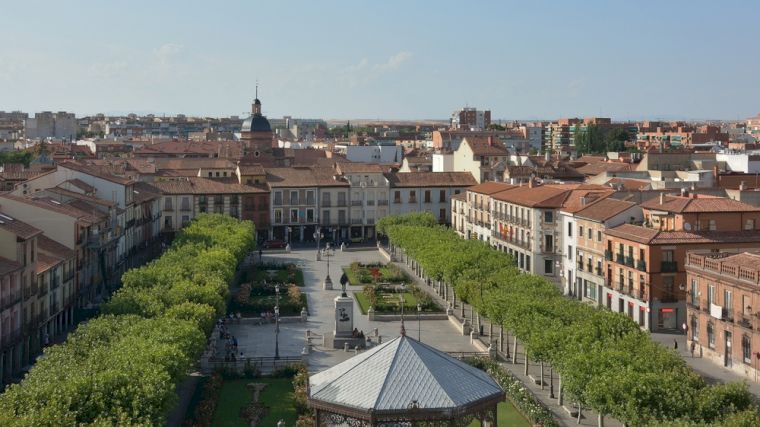
Let’s start right off with a World Heritage Site: the medieval center of Alcalá de Henares, just east of Madrid. In the old city center, with its winding, cobblestone streets, you’ll find, among other things, a Moorish, Jewish, and Christian quarter. That’s why Alcalá is also known as “the city of three cultures.” The city is built around the Plaza de Cervantes, lined with trees and rose bushes and named after the author of the legendary book about Don Quixote, who was born in Alcalá. Incidentally, the Casa Natal de Cervantes is not his actual birthplace.
The long Calle Mayor running through the center is a magnificent shopping street with arcades on both sides and an abundance of cozy outdoor cafés. The 16th-century university buildings on the Plaza de San Diego are definitely worth a visit. Behind the elegant façade, you’ll find three courtyards, a chapel, and the auditorium with a beautifully carved Mudejar-style ceiling.
Sierra de Guadarrama
Drive your rental car north from Alcalá and you’ll pass through the eastern part of the Sistema Central, the mountain range that divides the Spanish Plateau in two. This eastern section is called the Sierra de Guadarrama, and the A1 highway runs right through it. Did you know that this is the highest highway in Europe? Although the Spanish aren’t entirely sure exactly how high it is: if you approach the tunnel from the north, a sign says the Puerto de Somosierra is 1,444 meters high; if you’re coming from the south, it’s 1,440 meters high. Either way, it’s a beautiful area, and it would be a shame to just speed through it without stopping.
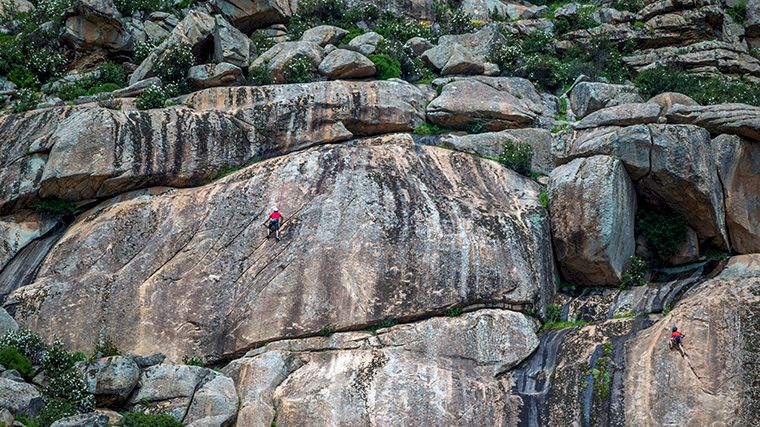
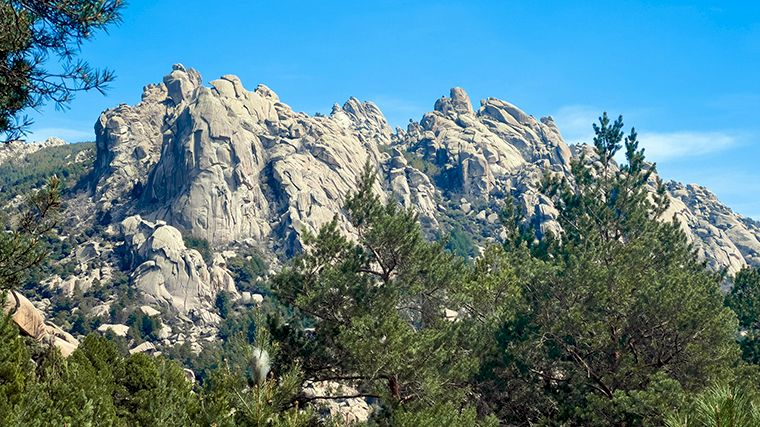
For example, visit the unique rock formations in the La Pedriza area. The rocks’ peculiar shapes have earned them names such as El Yelmo (The Helmet) and Los Fantasmas (The Ghosts). There are nearly a thousand climbing routes of all difficulty levels, making it a popular spot for rock climbers. You’ll also see birds of prey there, including a breeding colony of griffon vultures. Due to its proximity to Madrid, this area is heavily visited. The main parking lots close once they’re full, so it’s important to arrive early, especially during Spanish school holidays and on weekends.
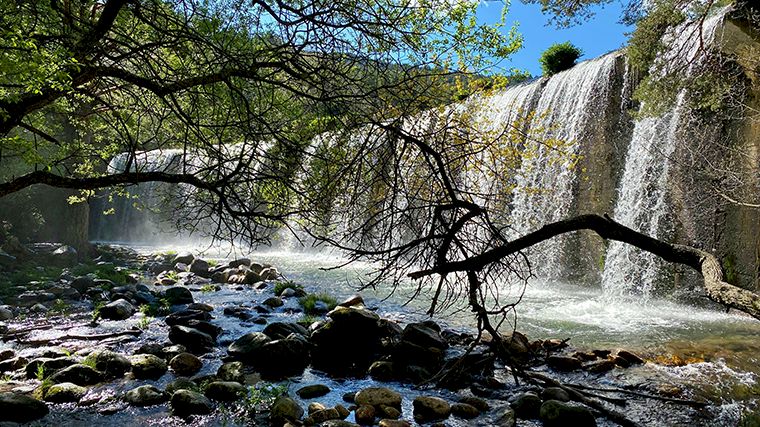
Further to the north lies the highest mountain in this area, Peñalara (2,428 m). Glacial lakes lie at the foot of this peak. There is a large parking lot along the M-604, and several hiking trails start from the visitor center. It’s also very popular in the winter, especially right after it snows. The waterfall at the Presa del Pradillo reservoir is man-made, yet it’s a beautiful spot because it’s nestled in the middle of a dense forest.
Burgos
Just 250 kilometers north of Madrid lies yet another beautiful Spanish city with a long history: Burgos, characterized by its well-preserved medieval architecture. The Arlanzón River runs right through the city, and the oldest part of Burgos is on the north bank. There stands the enormous Gothic Catedral de Santa María, the third-largest cathedral in Spain (after those in Seville and Toledo). The no fewer than fifteen chapels, with their intriguing gold decorations, statues, and wood carvings, are truly impressive. Inside the cathedral, you’ll also find the tomb of the legendary military leader El Cid, a national hero. Another historic building is the Casa del Cordón, a 15th-century noble palace with a beautiful courtyard.
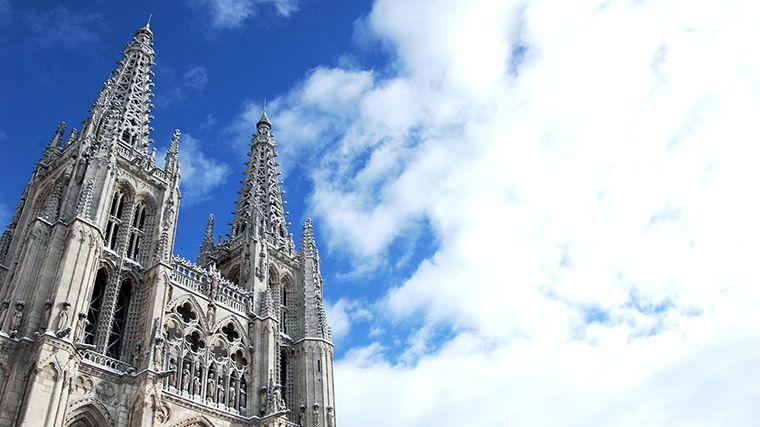
But the old town of Burgos isn’t just an open-air museum. On the contrary, it’s a wonderfully charming, lively city. In the central Plaza Mayor and the narrow streets surrounding it, you’ll find many tapas bars and restaurants. The small squares around the cathedral are just as charming.
To the north of the city lie the ruins of Burgos Castle. The castle stood proudly atop a hill for centuries, until the troops of the French Emperor Napoleon destroyed it with explosives during their retreat. Still visible today is the sixty-meter-deep well, with a stone spiral staircase of equal depth next to it—used for maintenance. And, of course, the hill offers a beautiful view of Burgos.
Valladolid
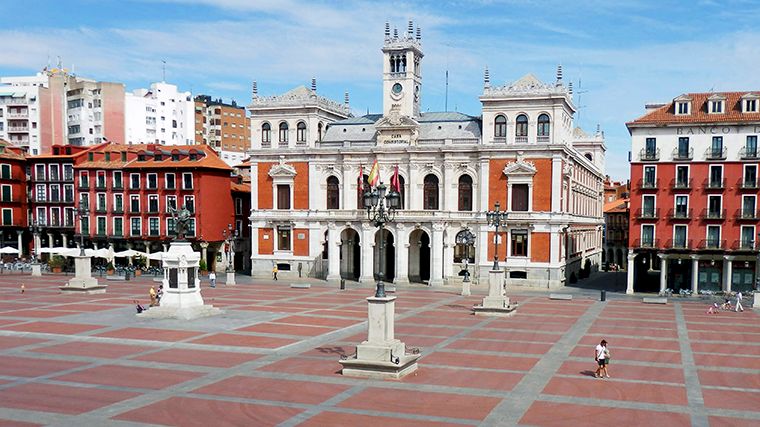
In a rental car, it takes just over an hour and a half to drive from Burgos to Valladolid, which briefly served as the capital of Spain in the 17th century. For that reason, construction began on a cathedral that was intended to be the largest in the country. The complex was to feature no fewer than five towers. Unfortunately, funding ran out, and only one tower remains. You can climb it for a beautiful view of the old town.
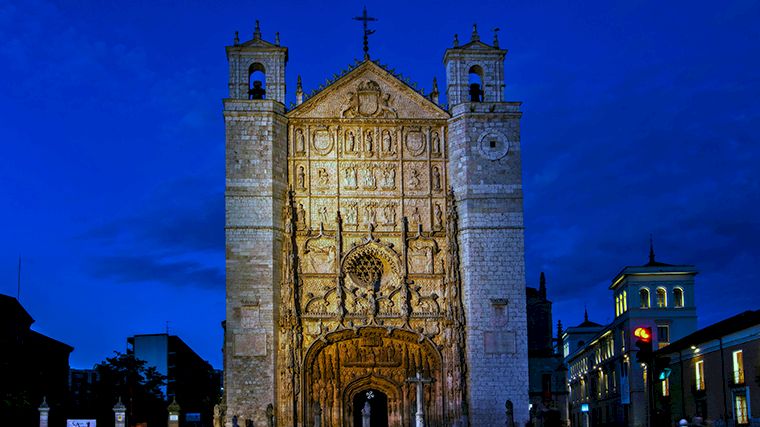
Valladolid boasts some fine examples of the so-called Castilian Late Gothic style, including the facades of the Iglesia de San Pablo and the Colegio de San Gregorio. The latter houses an interesting museum of sculpture, the Museo Nacional de Escultura. If you have a soft spot for old maps, be sure to visit the Casa Museo Colón, dedicated to the voyages of Christopher Columbus. In the evening, the buildings are beautifully illuminated, and an app is available for the special route along these Ríos de Luz (Rivers of Light).
Are you traveling with children? Then head to the Castillo Encantado in the village of Trigueros, just north of Valladolid. This castle has been transformed into an enchanting experience featuring excitingly lit sculptures of mythological creatures, characters from science fiction movies, dragons, trolls, and other spooky figures. Not recommended for very young children, as they might get scared.
Salamanca
Between Valladolid and Salamanca, you’ll pass through the Rueda and Toro wine regions. You can visit various wineries, some of which are centuries old. For example, Bodegas De Alberto in the village of Serrada has been producing wine for 350 years.
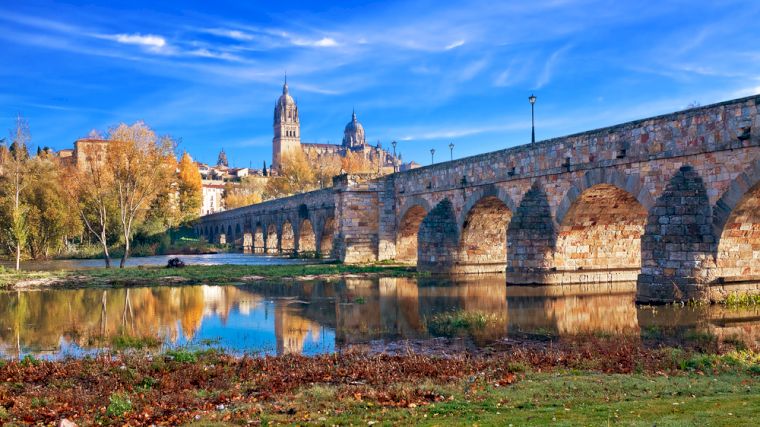
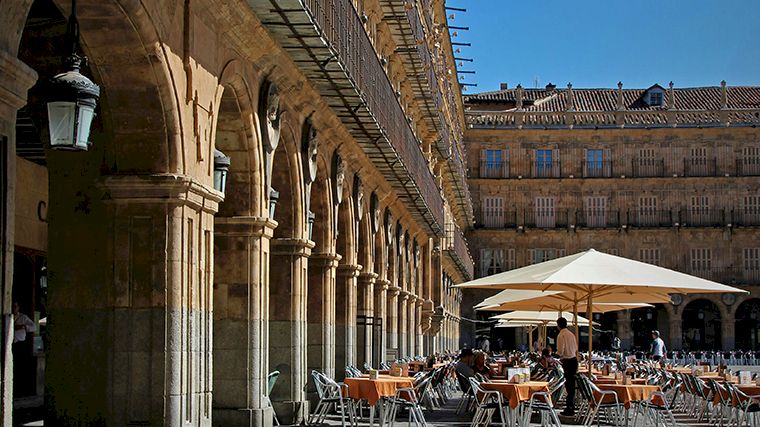
There’s so much to see in the historic center of Salamanca. It all starts at the monumental Plaza Mayor, home to the Pabellón Real (Royal Pavilion). The many outdoor cafes surrounding it make this a very lively square. From the Roman Bridge, you have a beautiful view of the new cathedral, perched high on a hill. Well, “new”—construction on this church began in the sixteenth century—but right next to it stands the old cathedral from the twelfth century. Also very beautiful are the buildings of Spain’s oldest university, surrounding the Patio de Escuelas.
There are countless historic buildings in Salamanca. The best thing to do is to wander around the old town, where you’ll come across one gem after another, such as the Casa de las Conchas (House of Shells). The Casa Lis is a museum dedicated to Art Deco and Art Nouveau. Its southern facade features a huge stained-glass window that sparkles beautifully on a sunny day. Classic car enthusiasts will be in heaven at the Museo de Historia de la Automoción, which features a fantastic collection of car models.
Arribes del Duero
It’s a bit of a drive from Salamanca (about 100 kilometers), but the nature reserve Arribes del Duero on the border with Portugal is definitely worth the trip. Here, the Duero (called the Douro in Portuguese) flows through a deep ravine, and the views are phenomenal. The mountain walls rise as high as five hundred meters, making the gorges formed by the river the deepest in Spain. Golden eagles and other birds of prey soar through the air in search of prey. There are various hiking and biking trails leading to spectacular viewpoints such as Mirador del Fraile and Picón de Felipe, where you can look out over a dam. The Pozo de los Humos waterfall is most impressive in early spring. Near the town of Aldeadávila de la Ribera, you can rent kayaks and canoes or explore the river on a sightseeing boat.
Valle de las Batuecas / La Alberca / Mogarraz
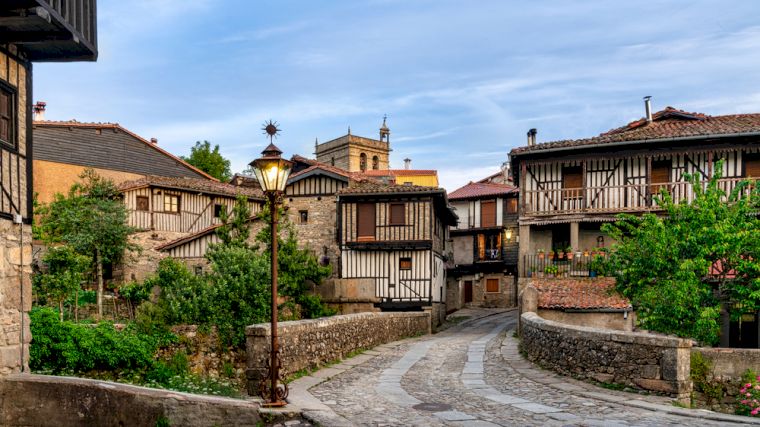
On the way back from the Duero, a stop in the village of La Alberca is well worth it. It’s a unique little place that, with its half-timbered houses, feels quite un-Spanish. These days, it’s a popular weekend destination for Spaniards, because it’s not only a picturesque village but also boasts excellent restaurants and traditional tapas bars that still retain their medieval, dark interiors.
The village serves as the gateway to the beautiful Las Batuecas Valley in the Sierra de Francia mountains. To get there, drive south from La Alberca in your rental car and descend via spectacular hairpin turns. The Castile and León Tourism Board has a very helpful website where you can choose from a variety of hiking and biking trails of varying difficulty levels. For more information, you can also visit the Casa del Parque visitor center in La Alberca. Children will enjoy the adjacent adventure park, featuring zip lines and climbing trails through the woods.
La Alberca, along with the nearby towns of Mogarraz and Miranda del Castañar, is listed among Spain’s most beautiful villages. Mogarraz is located seven kilometers by car east of La Alberca, and here, too, you’ll see half-timbered houses lining narrow alleys and passageways. The enlarged passport photos on the walls are unique. These are portraits taken in the 1960s so that all residents could obtain official identification. Now it’s an open-air art gallery. Miranda del Castañar lies a little further east, high on a hill. A large section of the 13th-century fortress wall has been preserved, as have the four gates leading into the medieval town.
Puerto de Peñanegra / Sierra de Gredos
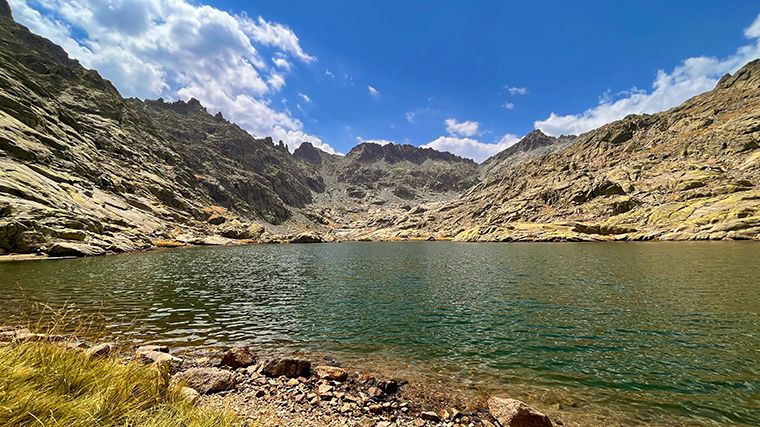
The small town of Piedrahíta is located just over an hour’s drive southeast of Salamanca. That’s where a wonderfully winding provincial road (AV-932) begins, heading toward the Sierra de Gredos mountain range. The route takes you over the Peñanegra Pass at an elevation of 1,919 meters. The northern slope of that pass is a popular launch site for hang gliders and paragliders. This road also presents a challenge for road cyclists. So be careful, as these cyclists can descend at considerable speeds.
The landscape of the Sierra de Gredos was shaped by glaciers, which left behind serene mountain lakes, rocky cirques, steep gorges, and imposing cliffs. It is home to mountain goats, vultures, and eagles. The highest peak is the Almanzor (2,591 m). The Cuevas del Águila near the village of Ramacastañas are impressive stalactite caves
Ávila
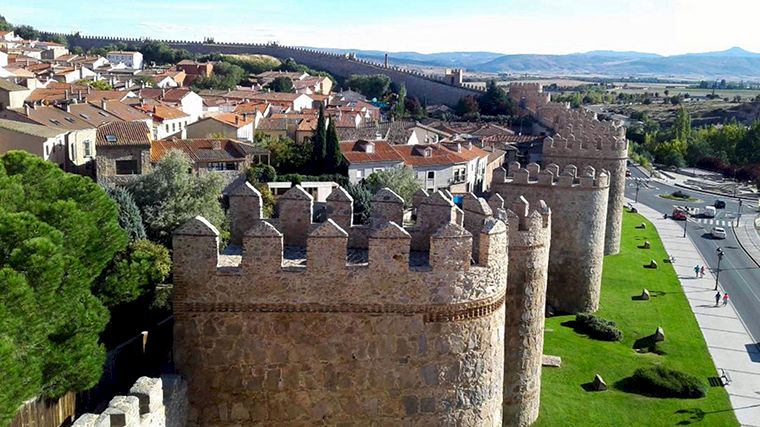
The historic center of Ávila is enclosed by one of the best-preserved medieval city walls in Europe, featuring no fewer than one hundred watchtowers. Within the walls, you’ll find ancient monasteries, Romanesque churches, and Renaissance palaces. The cathedral is integrated into the city wall and, as a result, resembles a fortress more than a church. The Romans had already built a wall around the town, and you can still see some stones from that era at the entrance gates, Puerta de San Vicente and Puerta del Alcázar. The site of the Roman Forum is still the heart of the old town: the incredibly charming Plaza del Mercado Chico.
The Parque del Rastro is located along the southern city walls, and there is also a parking garage there. Another option for parking your rental car in Ávila is the underground garage near the Plaza del Mercado Grande.
Segovia
The final destination on this road trip is the historic town of Segovia, just ninety kilometers northwest of Madrid and therefore easily accessible on a day trip from the Spanish capital. The Plaza Mayor is dominated by an enormous 16th-century Gothic cathedral.
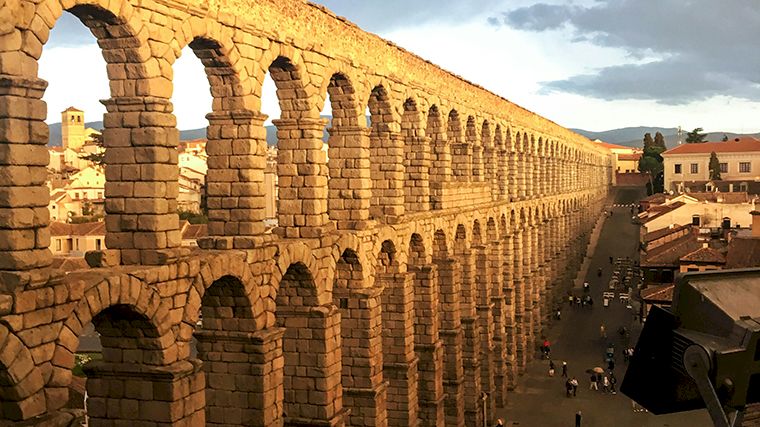
One of the most impressive remnants from Roman times is the Segovia Aqueduct. You can’t help but be in awe of this architectural masterpiece from the first century. The aqueduct ends at the beautifully restored Alcázar, whose turrets are reminiscent of a castle from a Disney fairy tale. This was not only a defensive fortress but also the residential palace of various Castilian monarchs. You can climb the massive tower of John II. Around this hill, there are several spots you can drive to in your rental car for a beautiful view of this castle. For example, near the stunning Santa María del Parral monastery north of the city. Guided tours of the monastery itself begin at 11:00 a.m. and 5:00 p.m., except on Mondays and Tuesdays.
Just like in other old cities, the best thing to do is simply wander around Segovia’s Casco Antiguo, because that’s the only way to discover charming, hidden spots. You can park your rental car in the underground parking garage at the roundabout just before the aqueduct.
Day Trips from Madrid
Some of the destinations we mentioned above are also easily accessible on a day trip from Madrid, such as Alcalá de Henares, the Sierra de Guadarrama, Ávila, and Segovia. But there are even more great trips to take if you’ve rented a car in the Spanish capital. We’ve listed the best sights around Madrid for you.
Royal Palace of Aranjuez
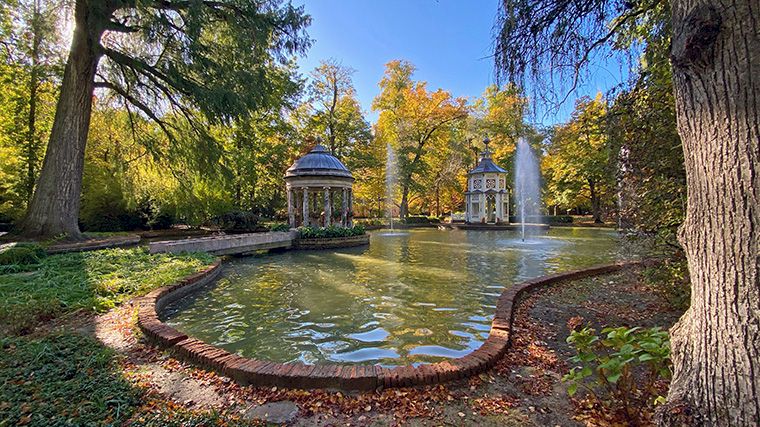
About fifty kilometers south of Madrid lies a royal country estate, beautifully situated on the banks of the Tagus River. King Philip II had this Palacio de Aranjuez built in 1560, when Spain was at the height of its power. At the Museo de la Vida, you can learn more about daily life at the Spanish court in this palace, which was used primarily in the spring. The gardens surrounding the palace are just as impressive as the palace’s rooms and decorations. As you stroll along the paths through these gardens, you’ll pass statues, fountains, and gazebos in various styles. In the Jardín de la Isla, some of the trees are centuries old. If you don’t feel like walking, you can take a small train through the sprawling Jardín del Príncipe.
Valle del Lozoya / M-637
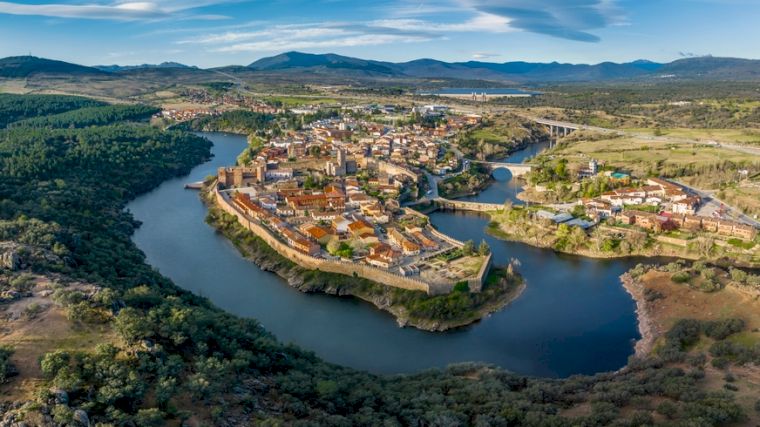
We’ve already mentioned the Sierra de Guadarrama above as the first stop on the tour from Madrid, but we’d like to highlight the Alto del Lozoya Valley here as a destination for a day trip. This area combines impressive natural beauty with fascinating historical heritage. There are several hiking trails through this nature reserve. For example, you can hike to the Cascada del Purgatorio waterfall or climb Pico Peñalara. There’s also a trail that runs along the Riosequillo reservoir. On the shore of that lake, just outside the medieval town of Buitrago del Lozoya, lies a massive outdoor swimming pool that’s no less than 220 meters long. On the two reservoirs in the valley, you can enjoy various water sports: sailing, paddleboarding, kayaking, and canoeing. Abseiling is possible at the Cascada de Somosierra waterfall.
There are several parking lots around the high-altitude village of Rascafría. This village lies along a small stream, the Arroyo del Artiñuelo, which becomes a wild, rushing river in early spring. There are several outdoor cafes along this waterway. Just south of the village stands the 14th-century El Paular Monastery, surrounded by beautiful natural scenery. During a guided tour, you’ll learn not only about the monastery’s centuries-old history but also explore a section dedicated to rotating exhibitions of modern art. When booking a tour, you’ll be asked if you need a parking space and will need to provide the license plate number of your rental car.
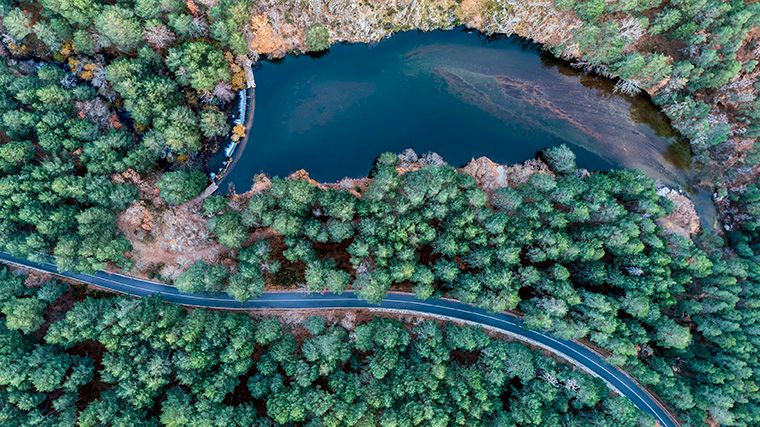
There are several beautiful driving routes in this area. One of the most scenic is the road from Lozoya to Navafría, officially known as the M-637. As you drive uphill through dense pine forests, you’ll enjoy stunning views of the Pinilla Reservoir at various points along the way. There are several spots along the route where you can park your rental car to go for a walk or have a picnic. Just before Navafría, an old copper smelter has been transformed into a very interesting ethnographic museum, where you can see how copper was processed into all kinds of everyday objects in the past. In the area around this village, you can take beautiful hikes to streams, waterfalls, and natural pools where you can swim.
Patones de Arriba
The once-abandoned village of Patones de Arriba is home to some excellent restaurants. (Photo: https://unsplash.com/@elenafzhz)
Patones de Arriba came very close to becoming a deserted village that would slowly turn into ruins. Just in time, its unique beauty and cultural significance were recognized, and the village was granted protected status. Today, it’s come back to life, not least because it’s a favorite weekend getaway for Madrileños. The slate-roofed houses line steep streets, and many still feature traditional wood-fired ovens that were once used to bake bread. The former threshing floors offer a beautiful view of this old village.
Chinchón
Spanish towns and villages almost always have a Plaza Mayor, but Chinchón’s is truly unique. For starters, it isn’t rectangular like other central squares, but what makes it most special are the medieval houses surrounding it, with balconies made of green-painted wood. On summer evenings, the atmosphere is charming, with packed terraces and beautifully lit balconies. Events, including bullfights, are regularly held in the central square. If you’ve rented a car, it takes about an hour to drive from Madrid to Chinchón. There’s a large, unpaved parking lot northeast of the old town center.

All that remains of an old church is the bell tower, the Torre del Reloj. From the small square next to it, you have a fantastic view of the city and the castle ruins. The current church was completed in the nineteenth century, and inside you can see a magnificent painting by Francisco de Goya, *La Asunción de la Virgen*.
Toledo
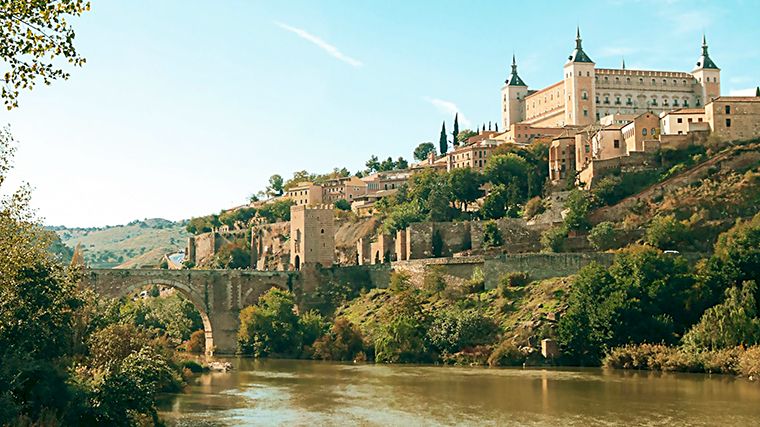
You can see Moorish influences in Toledo’s street layout: narrow, winding alleys, just like in the medinas of Arab cities. And just like in many other cities in Spain, the Christian cathedral was built on the foundations of an Islamic mosque. That cathedral towers high above the city and features a mix of architectural styles. The church houses a rich collection of sculptures and paintings, including works by El Greco (“The Greek”), who settled in Toledo in 1577 to live and work there until his death. The house where he lived no longer exists, but its interior has been recreated in another 16th-century residence. Next to it is a more modern section featuring some of El Greco’s works, including the intriguing *Vista y plano de Toledo*.
In that painting, the Alcázar is clearly visible; it is now a military museum. That museum is worth a visit if you’re interested in antique swords, cannons, and other weapons. From the hill on which the museum stands, you have a beautiful view of Toledo. You also have a lovely view of the city above from the old Puente de Alcántara bridge. Toledo is surrounded by a medieval wall, and the city gates are all impressive. If you drive your rental car along the small roads on the other side of the Tagus River, you’ll pass some beautiful viewpoints. Highly recommended at sunset!
Cuenca
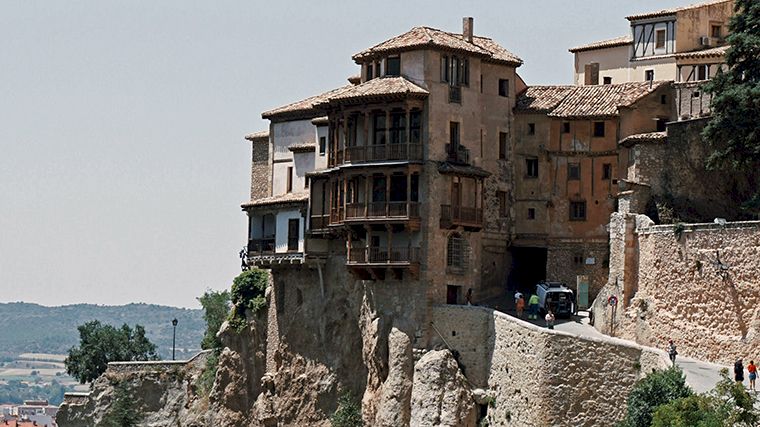
It takes less than two hours to drive to Cuenca via the highway; the city is famous for its casas colgadas (hanging houses). But why not take your time and drive along the back roads? Whichever route you choose, Cuenca is a town you won’t want to miss. It’s perched high on a cliff, and it’s quite a climb from the lower town. Only four of the hanging houses remain, and strictly speaking, it’s not the houses themselves but the balconies and bay windows that hang over the precipice. The best view of these houses is from the Puente de San Pablo pedestrian bridge, though it can get crowded there. There are far fewer people beneath the bridge, and the view of the hanging balconies is perhaps even more spectacular.
The town has much more to offer than just those hanging houses: from the colorful buildings and the imposing cathedral on the Plaza Mayor to the quaint Calle Alfonso VIII and the castle ruins with their fabulous views.
Serranía de Cuenca / La Ciudad Encantada
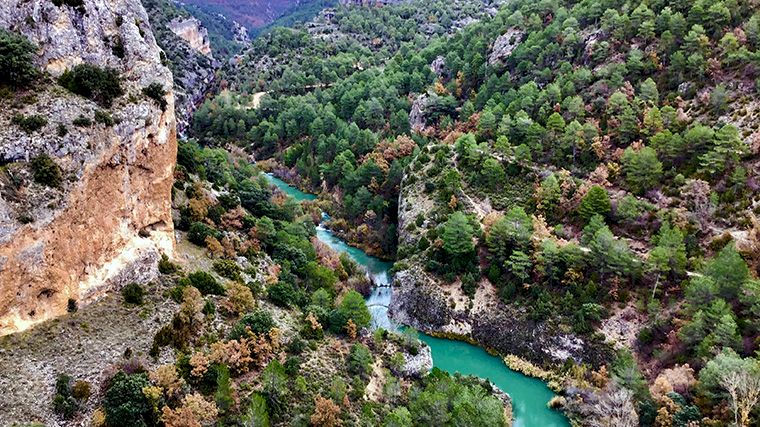
If you’ve driven to Cuenca in your rental car, you certainly won’t want to miss the nature reserve northeast of the city. The Parque Natural de la Serranía de Cuenca is breathtakingly beautiful: intriguing rock formations, deep ravines, wild rivers, and waterfalls. Many of the rocks have names. For example, El Ventano del Diablo (The Devil’s Window) high above the Júcar River. La Ciudad Encantada (The Enchanted City) consists of strangely shaped, almost magical rocks that were formed about 90 million years ago, when this area was a deep sea.
One-way car rental
Cuenca and the Serranía Nature Reserve are located roughly halfway between Madrid and Valencia, making them a welcome stopover on the journey between these two cities. Did you know that you can easily rent a car in one city and return it somewhere else? This is called one-way car rental, and it’s very easy to arrange. Simply enter a different drop-off location on our search form, and we’ll show you only the cars for which that combination is available. If you’re driving to Valencia, you might find our 11 best day trips around Valencia helpful. Other popular one-way destinations from Madrid include:

Where would you like to rent a car?
- 24000+ pick-up locations
- Free cancellation
- Independent comparator

Useful tips for a well-prepared trip
Which insurance should I choose, and what's the deal with the deposit? Read our articles with useful information and tips to ensure you choose the right rental car for you.


- Renting a Car with Kids: The Best Routes and Stops
- La Palma by Rental Car: Routes, Day Trips, and Tips
- Explore 18 top destinations around Girona in a rental car
- 15 Tips for the Best Vacation in Menorca
- The 11 Best Day Trips in the Valencian Community
- Exploring the Fantastic Basque Country in a Rental Car