- Popular countries
- Popular regions
- Popular cities
- Popular airports
- Car Rental Italy
- Car Rental Spain
- Car Rental United States
- Car Rental Portugal
- Car Rental South Africa
- Car Rental France
- Car Rental Netherlands
- Car Rental Greece
- Car Rental Germany
- Car Rental United Kingdom
- Car Rental Belgium
- Car Rental Croatia
- Car Rental Switzerland
- Car Rental Austria
- Car Rental Denmark
- Car Rental Norway
- Car Rental Australia
- Car Rental Ireland
- Car Rental Cyprus
- Car Rental Canada
- Car Rental Florida
- Car Rental Sicily
- Car Rental California
- Car Rental England
- Car Rental Sardinia
- Car Rental Mallorca
- Car Rental Ibiza
- Car Rental Crete
- Car Rental Tenerife
- Car Rental Rhodes
- Car Rental Madeira
- Car Rental Corsica
- Car Rental Gran Canaria
- Car Rental Malta
- Car Rental Scotland
- Car Rental Azores
- Car Rental Fuerteventura
- Car Rental Lanzarote
- Car Rental Corfu
- Car Rental Zakynthos
- Car Rental Amsterdam
- Car Rental Milan
- Car Rental Miami
- Car Rental Lisbon
- Car Rental Malaga
- Car Rental Porto
- Car Rental Rome
- Car Rental Cape Town
- Car Rental Barcelona
- Car Rental Faro
- Car Rental Alicante
- Car Rental Nice
- Car Rental Bari
- Car Rental Naples
- Car Rental Johannesburg
- Car Rental Brussels
- Car Rental Bergamo
- Car Rental Orlando
- Car Rental Palma de Mallorca
- Car Rental Vienna
- Car Rental Amsterdam Schiphol Airport
- Car Rental Miami International Airport
- Car Rental Lisbon Airport
- Car Rental Malaga Airport
- Car Rental Porto Airport
- Car Rental Milan Malpensa Airport
- Car Rental Rome Fiumicino Airport
- Car Rental Faro Airport
- Car Rental Alicante Airport
- Car Rental Bari Palese Airport
- Car Rental Nice Airport
- Car Rental Barcelona Airport
- Car Rental Cape Town Airport - International Terminal
- Car Rental Bergamo Airport
- Car Rental Orlando International Airport
- Car Rental Mallorca Airport
- Car Rental Catania Airport
- Car Rental Johannesburg International Airport
- Car Rental Ibiza Airport
- Car Rental Athens Airport

The 10 Most Beautiful Coastal Routes in Europe by Rental Car
Distances, practical tips, and highlights for each route
On a road trip along Europe’s most beautiful coastal routes, you’ll experience stunning views, dramatic cliffs, winding roads, and culinary highlights. From the SS163 on Italy’s Amalfi Coast to Ireland’s Wild Atlantic Way and Portugal’s Algarve Route N125: with a rental car, you won’t have to stick to a train or bus schedule.
On this page:
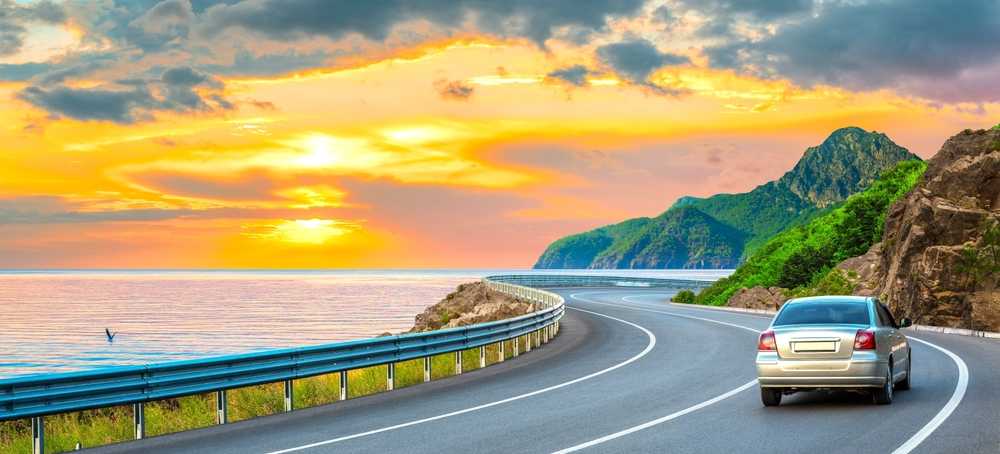
The 10 Most Beautiful Coastal Routes in Europe
We’ve put together a list of the most beautiful routes along Europe’s coastlines. Get inspired and choose a route for a day trip, or take your time and spread it out over several days.
1. Amalfi Coast (SS163), Italy
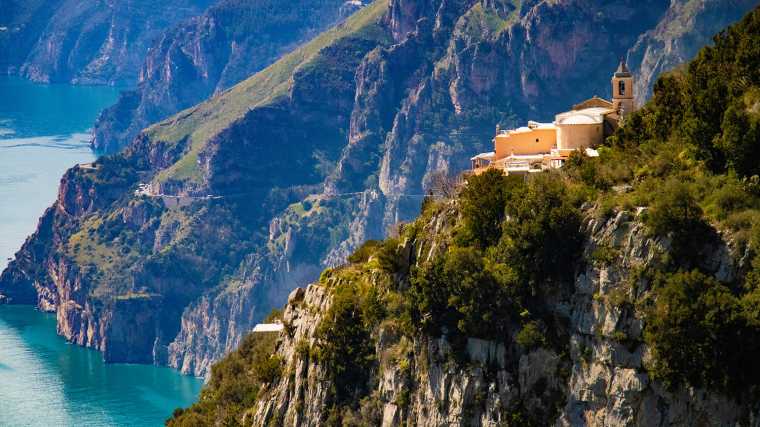
An impressive scenic route south of Naples, from Salerno to Sorrento.
Distance: ~50 km
Driving time: 2–3 hours (without stops); with stops: all day
Rental car pickup:
Naples Capodichino (NAP)
Salerno Costa d’Amalfi (QSR)
Highlights:
Positano: without a doubt the jewel of this coast, with a string of pastel-colored houses cascading down a steep cliff to a small pebble beach.
Ravello: Perched high above the coast, it feels like a world apart from the hustle and bustle below. From the balustrade with marble busts at Villa Cimbrone, you can enjoy a breathtaking view.
Amalfi: the historic heart of the coast, featuring an imposing Arab-Norman cathedral and a medieval monastery.
Please note: From June through October, only certain cars are allowed to drive there between 10:00 a.m. and 6:00 p.m., based on the last digit of the license plate (odd-even system): in August and September, restrictions apply every day; in other months, only on weekends.
Car class: compact or small; a large SUV is unsuitable for the narrow road with hairpin turns; an automatic transmission is recommended.
Best time to visit: May and October (less crowded, milder weather)
More info in our complete Amalfi guide.
2. Wild Atlantic Way, Ireland
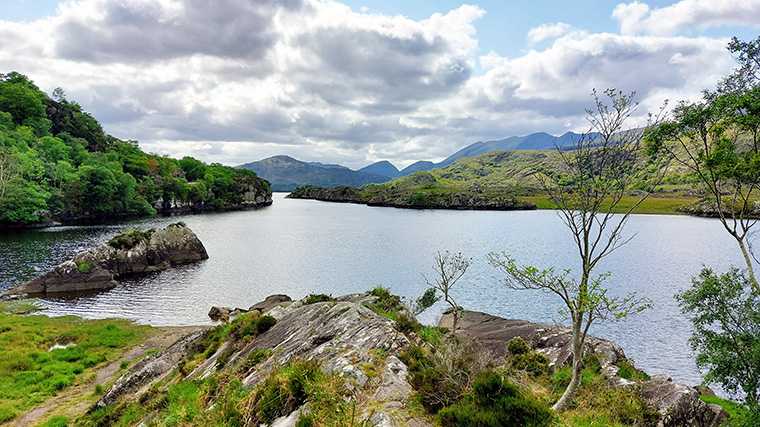
This is just a section of the Wild Atlantic Way, along Ireland’s southwest coast, from Galway through Dingle to the Ring of Kerry.
Distance: 600–800 km (depending on how much of the route you take through the peninsulas)
Driving time: 4–5 days
Rental car pickup:
Dublin Airport (DUB)
Cork Airport (ORK)
Highlights:
Cliffs of Moher: breathtaking cliffs up to 214 meters high.
Slea Head Drive: Ireland’s westernmost point, featuring ancient forts and views of the Blasket Islands.
Ladies View (Killarney National Park): a classic Kerry panorama of lakes and mountains.
Note: If this is your first time driving on the left, the M6 highway (from Dublin to Galway) is a great route to get used to it.
Tip: Tour buses drive clockwise. To avoid driving right behind a tour bus for 100 kilometers, it’s best to drive counterclockwise on both the Ring of Kerry and Slea Head Drive.
Car class: A compact hatchback is perfect for the narrow one-lane roads and is easy to maneuver on passing lanes. A compact SUV is also fine, but avoid larger rental cars.
Best time to visit: May–June (blooming fuchsias, fewer crowds) and September–October (golden light, mild temperatures).
Read our comprehensive guide to a road trip along the Wild Atlantic Way.
3. Algarve (N125), Portugal
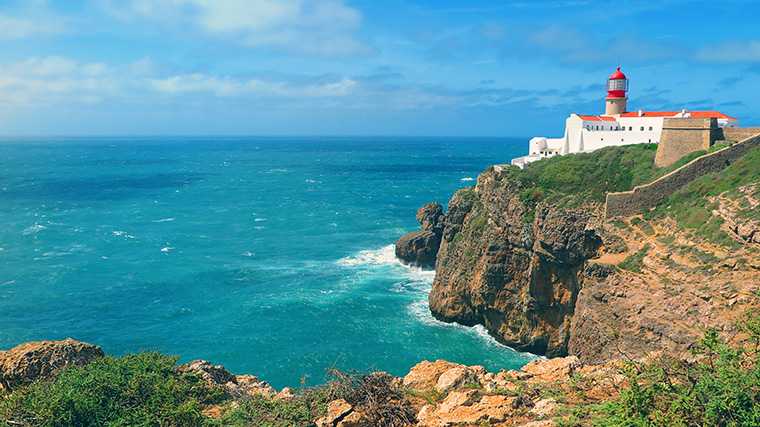
Drive along the entire southern coast of Portugal, from Vila Real de Santo António near the Spanish border to Sagres on the Atlantic Ocean.
Distance: 165 km (if you don’t take any side roads)
Driving time: 3 hours (without stops), 3–5 days to fully enjoy the route
Rental car pickup:
Faro Airport (FAO)
Highlights:
Tavira: the Algarve’s most authentic town, featuring a Roman bridge, whitewashed churches, and the Ria Formosa lagoon.
Praia da Marinha: Often voted one of the most beautiful beaches in Europe, with amber-colored cliffs, hidden coves, and crystal-clear water.
Sagres & Cabo de São Vicente: the southwesternmost point of continental Europe. A fortress, a lighthouse, impressive cliffs, and the rugged Atlantic Ocean.
Please note: there are a large number of fixed speed cameras on the N125. Speed limits are strictly enforced: 50 km/h in built-up areas and 90 km/h outside of them.
Tip: The Costa Vicentina north of Sagres is completely different: wilder, cooler, windier, and features high Atlantic waves.
Car class: Rent a compact car or SUV, but avoid a large vehicle, as it’s difficult to maneuver through the narrow streets of the towns and along the paths to remote beaches.
Best time to visit: May–June and September–October if you want to avoid the biggest crowds. If you enjoy hiking, winter is also a great option.
Read our tips for road trips through the Algarve.
4. Côte d’Azur (RN98), France
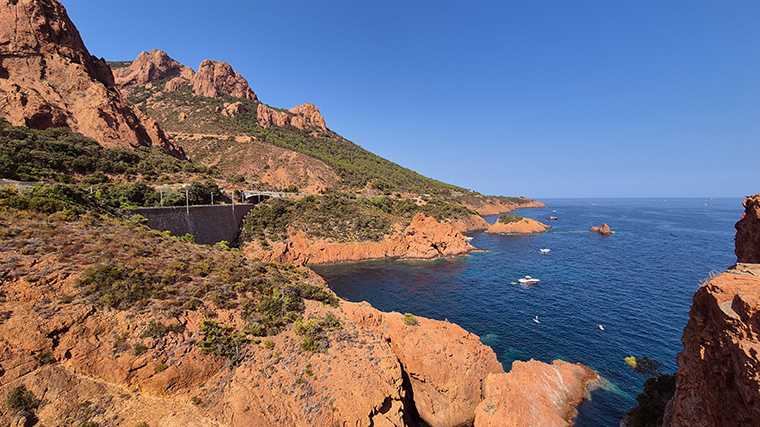
The historic Route Nationale 98 now consists of the D6098 and the D559 and passes, among other sights, along the rugged cliffs of the Esterel Massif, the famous Corniche d’Or.
Distance: ~120 km (Nice–St. Tropez), ~80 km (Cannes–St. Tropez)
Driving time: 2–3 hours (without stops), 1–2 days recommended
Rental car pickup:
Nice Airport (NCE)
Cannes Airport (CEQ)
Highlights:
Antibes: the best-preserved old town on this coast, with fortified walls overlooking the sea and a Picasso Museum.
Corniche d’Or: a route running along blood-red volcanic cliffs on one side and the blue sea on the other; the most photogenic stretch of coastline between Nice and Saint-Tropez.
Fréjus: features impressive Roman ruins, including an amphitheater and an aqueduct.
Note: The coastal road along the Esterel Massif is winding, narrow in places, and you’ll undoubtedly want to stop frequently. Allow at least 90 minutes for this 25-km stretch—it’s not a road to rush along.
Tip: The D98A road to Saint-Tropez is often congested in July and August. Take the ferry (navette maritime) from Saint-Raphaël (45 min).
Car type: This route is perfect for a convertible; a drive through the Esterel Massif with the top down is truly one of the most beautiful driving experiences. Otherwise, a compact hatchback or SUV will do just fine.
Best time to visit: spring or fall, but winter is also very pleasant with quiet roads and towns—though some beach bars are closed.
The French Riviera has much more to offer—check out our tips for a Côte d’Azur road trip.
5. Costa Brava, Spain
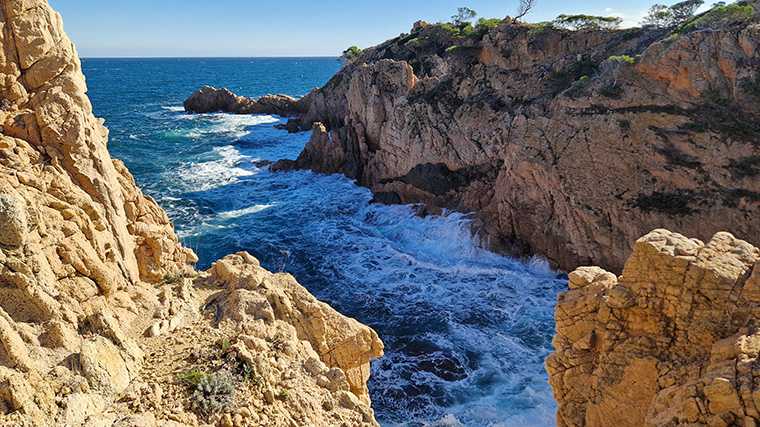
There is no continuous coastal road along the Costa Brava, as the rugged cliffs make this impossible. The GI–682 (from Tossa de Mar to Sant Feliu) and the roads around Begur and Palafrugell are the most scenic routes. Be sure to prepare well and read our guide to traffic rules in Spain.
Distance: ~180 km
Driving time: 3–4 hours (without stops); 3–4 days recommended
Rental car pickup:
Highlights:
Tossa de Mar: the most picturesque town on the Costa Brava, featuring the medieval walled Vila Vella perched on a rocky headland, with crystal-clear turquoise waters below.
Begur: a castle town perched on a hilltop above a cluster of perfect little coves that are accessible on foot and by car.
Cadaqués: the most remote town on the Costa Brava. Salvador Dalí lived in nearby Portlligat for decades. Cap de Creus features a wild, moon-like landscape.
Please note: The GI–614 to Cadaqués is a narrow mountain road with sharp hairpin turns and steep cliffs. It’s perfectly manageable in a small car, but requires your full attention.
Tip: The Casa-Museu Dalí in Portlligat admits only 8 people every 10 minutes and is fully booked weeks or months in advance during the summer. Reserve online.
Vehicle class: Small SUVs/crossovers such as the Seat Arona and Dacia Duster have sufficient ground clearance for roads in the valleys but are still narrow enough for the road to Cadaqués.
Best time to visit: September is the best month—the sea is 24°C and the light on the cliffs of Cap de Creus is extraordinary. Spring is also great. Summer is very crowded, and in winter a cold wind (Tramuntana) can blow.
Want to explore more of northern Catalonia? Read our blog about 18 top destinations around Girona.
Compare rental cars in Barcelona
6. Dalmatian Coast (Jadranska Magistrala D8), Croatia
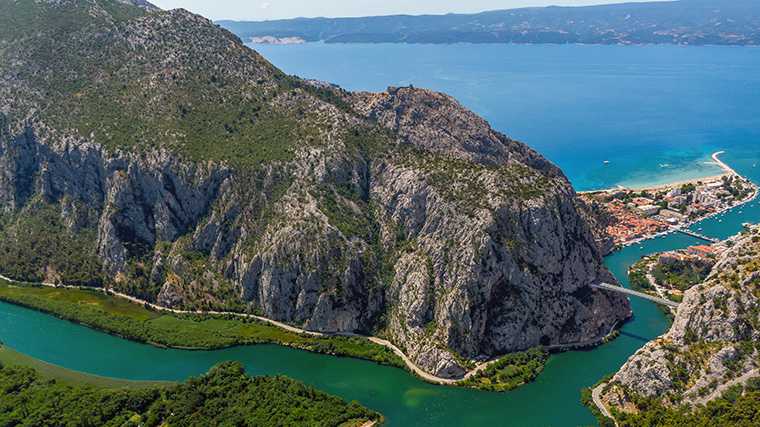
One of Europe’s most beautiful routes: the Adriatic Highway. The views are breathtaking, but don’t let that distract you!
Distance: 220 km
Driving time: 4–5 hours (without stops), 3–4 days recommended
Rental car pickup:
Split Airport (SPU)
Dubrovnik Airport (DBV)
Highlights:
Omiš: Here, the Cetina River flows into the sea through an impressive gorge, with the ruins of a pirate fortress towering high above.
Makarska Riviera: pebble beaches with the Biokovo mountain range in the background, crystal-clear turquoise water, and lively promenades.
Biokovo Nature Park: Drive to the summit of Mount Biokovo (1,228 m) and walk across a glass-bottomed skywalk that juts out over a cliff.
Please note: This road gets crowded in July and August, with traffic jams between Split and Ploče. The total travel time can be up to 8 hours.
Tip: The Trsteno Arboretum is one of Europe’s most beautiful classical gardens, featuring ancient plane trees, a Neptune fountain, and terraces overlooking the Adriatic Sea.
Car class: A compact or midsize rental car is maneuverable on winding roads and easy to park in narrow village streets. Opt for a small SUV if you want to take a detour through the mountains.
Best time to visit: May, September, and early October (no traffic jams, beautiful light). April and November are perfectly fine for driving, but many beach facilities are closed during those months.
Also read about 5 other routes through Dalmatia starting from Split (plus information if you want to drive via the Bosnian Neum Corridor).
7. Brittany & Côte de Granit Rose, France
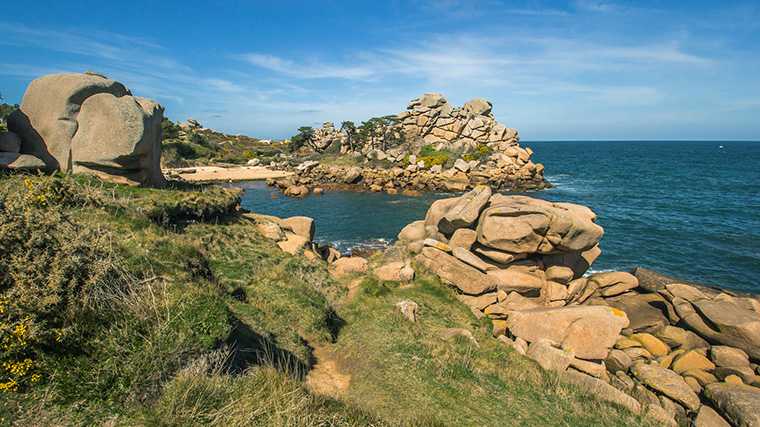
The beautiful route from Saint-Malo to Brest takes you along three coastlines, each with its own unique character: the Emerald Coast, the Pink Granite Coast, and the Coast of Legends.
Distance: ~400 km
Driving time: 5–7 hours (without stops); 3–5 days recommended
Rental car pickup:
Highlights:
Cap Fréhel & Fort la Latte: From the 70-meter-high cliffs of Cap Fréhel, a hiking trail leads to a 14th-century castle with dramatic views of the ocean.
Côte de Granit Rose: 300-million-year-old pink granite boulders, sculpted into surreal shapes. The Sentier des Douaniers is a popular coastal hike.
Roscoff: a beautifully preserved harbor town with 16th-century houses. Take a boat trip to Île de Batz, home to 3,000 species of subtropical plants and sweeping views of the sea.
Please note: This scenic route follows small departmental roads (D-roads) that wind through villages and along cliffs. The roads can be very narrow, especially between Paimpol and Ploumanac’h.
Tip: Cairn de Barnenez is Europe’s oldest and largest megalithic burial mound (about 6,000 years old), situated on a cliff above Morlaix Bay.
Car Class: A compact rental car is the clear winner for this route along narrow Breton D-roads. Opt for a compact SUV if you need more trunk space.
Best time to visit: May–June and September–October (less crowded and lower prices). However, the weather in Brittany can change suddenly at any time of year.
8. Atlantic Road + Trollstigen, Norway
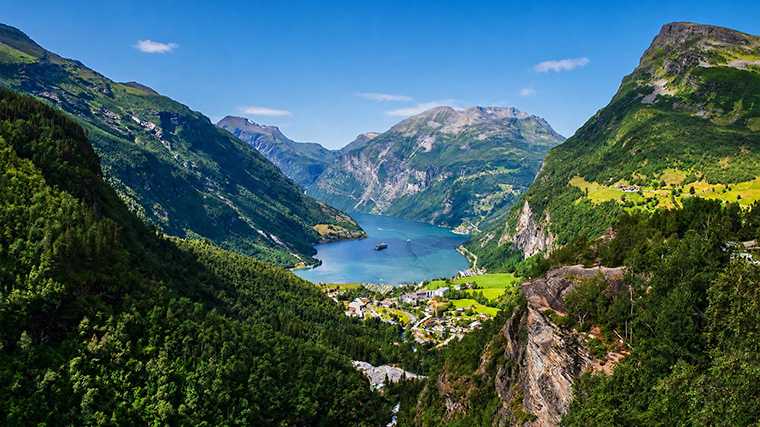
This route, one of the most beautiful drives in Northern Europe, combines impressive fjords, bridges over the ocean, mountain passes, and classic Norwegian coastal towns.
Distance: ~600 km (from Trondheim), 155 km (Ålesund → Trollstigen → Geiranger)
Driving time: 12–14 hours (without stops), 4–6 days recommended
Rental car pickup:
Ålesund Airport (AES)
Trondheim Airport (TRD)
Highlights:
Atlanterhavsveien: the Atlantic Road near Kristiansund, featuring several bridges, the most famous of which is the Hulvågbrua (nicknamed the “Drunken Bridge”).
Trollstigen: one of Europe’s most famous mountain roads, featuring 11 spectacular hairpin turns, steep mountain cliffs, and waterfalls, as well as a breathtaking viewing platform.
Geirangerfjord: a UNESCO-protected fjord and the perfect finale to the route. Take a boat trip to the Seven Sisters waterfalls.
Note: Be prepared for strong gusts of wind on the Atlantic Road, even in the summer.
Vehicle type: A compact SUV or a mid-size car is ideal, as these are stable on mountain roads and comfortable for long drives. An automatic transmission is a great choice if you have no experience driving in mountainous terrain.
Best time to visit: June (long days, most powerful waterfalls) and September/October (fewer crowds, fall colors). It can get crowded in the summer, and from November through May, there’s a chance of snow and road closures.
You can also rent a car for a longer trip along the Norwegian fjord coast.
Compare rental cars in Trondheim
9. Northern Spanish Coast (N-634 from the Basque Country to Galicia), Spain
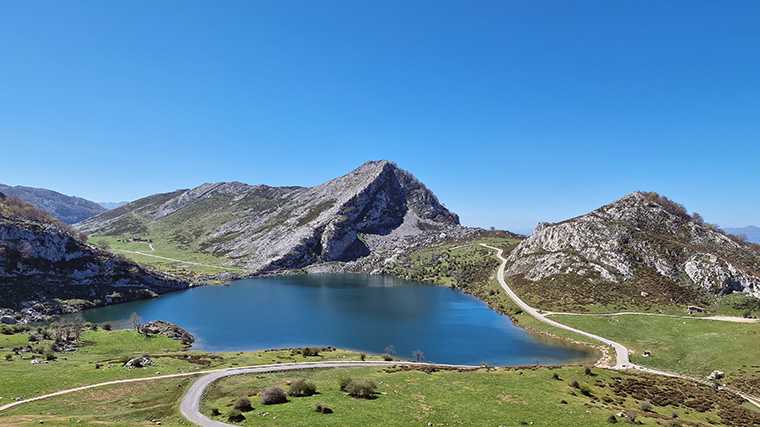
Compared to Mediterranean Spain, this route is cooler, greener, and much less crowded: rugged Atlantic coastlines, green mountains, surfing beaches, fishing villages, and some of the best Spanish cuisine.
Distance: ~750 km (without detours)
Driving time: 12–15 hours (without stops), 5–8 days recommended
Rental car pickup:
San Sebastián Airport (EAS)
Bilbao Airport (BIO)
Highlights:
Bilbao: Spain’s cultural hotspot, home to the Guggenheim Museum and rich culinary traditions.
Picos de Europa: From Unquera, take a detour through one of Spain’s most spectacular mountain regions.
Asturian Coast: Between Llanes and Ribadeo, the route becomes wilder and greener, featuring authentic fishing villages, secluded beaches, and natural blowholes (bufones) near Playa de Guadamía.
Note: San Sebastián is called Donostia in Basque; both names are indicated on the road signs. The N-634 runs mostly parallel to the AP-8, but the AP-8 is a toll road.
Tip: The small beach of Playa del Silencio near Castañeras is surrounded by dramatic, amphitheater-like cliffs.
Car class: a compact SUV or hatchback, as the roads are generally good, parking in historic towns is easier, and these rental cars are comfortable for detours in the mountains.
Best time to visit: May, June, and September (pleasant temperatures and lush, green scenery). The summer months are nowhere near as crowded as in eastern and southern Spain, so they’re also a great choice.
Bilbao is a fantastic starting point for a road trip through the Basque Country in a rental car.
10. Apulia & Salento (Adriatic + Ionian coasts), Italy
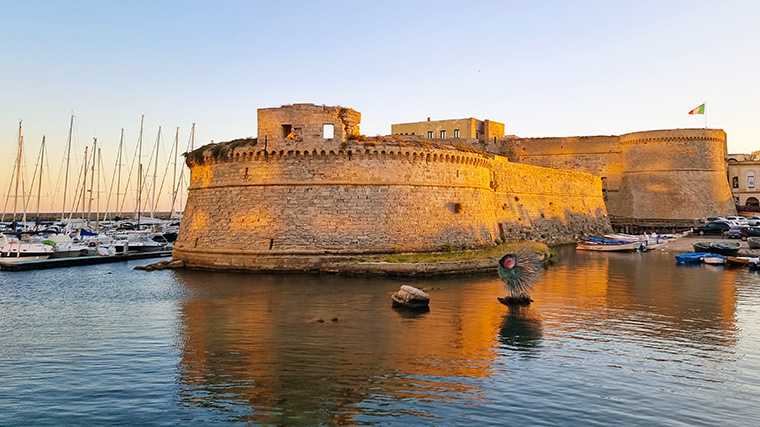
A road trip in a rental car through “the heel of the Italian boot” combines whitewashed towns, cliffs along the Adriatic Sea, turquoise beaches, olive groves, and charming, authentic fishing villages.
Distance: 340–450 km
Driving time: 7–9 hours (without stops), 5–8 days recommended
Rental car pickup:
Highlights:
Lecce: a city brimming with Baroque architecture, which is why it’s often called the “Florence of the South.”
Otranto: a beautiful coastal fortified town with a historic harbor and an impressive mosaic floor in the cathedral. Baia dei Turchi Beach is nearby.
Gallipoli: a unique combination of what is perhaps the most beautiful historic center in Southern Italy, along with stunning beaches and a vibrant nightlife in the surrounding area.
Note: Never just drive into the historic center of a town, as there’s a good chance it’s a so-called ZTL zone, where you’re not allowed to drive your rental car. Park outside the center.
Tip: Take the coastal road (SP-358) from Castro Marina to Santa Maria di Leuca—a stunning drive along rocky coves and sea caves, including the Ponte Ciolo viewpoint.
Car class: A small rental car or compact SUV is easy to park in the narrow streets and is still comfortable for drives along the coast.
Best time to visit: May–June and September–October are the best months (pleasant weather, fewer crowds, and excellent swimming conditions).
We’ve got plenty of tips in our blog about the most beautiful destinations in Southern Italy.

Where would you like to rent a car?
- 24000+ pick-up locations
- Free cancellation
- Independent comparator

Useful tips for a well-prepared trip
Which insurance should I choose, and what's the deal with the deposit? Read our articles with useful information and tips to ensure you choose the right rental car for you.