- Popular countries
- Popular regions
- Popular cities
- Popular airports
- Car Rental Italy
- Car Rental Spain
- Car Rental United States
- Car Rental Portugal
- Car Rental South Africa
- Car Rental France
- Car Rental Netherlands
- Car Rental Greece
- Car Rental Germany
- Car Rental United Kingdom
- Car Rental Belgium
- Car Rental Croatia
- Car Rental Switzerland
- Car Rental Austria
- Car Rental Denmark
- Car Rental Norway
- Car Rental Australia
- Car Rental Ireland
- Car Rental Cyprus
- Car Rental Canada
- Car Rental Florida
- Car Rental Sicily
- Car Rental California
- Car Rental England
- Car Rental Sardinia
- Car Rental Mallorca
- Car Rental Ibiza
- Car Rental Crete
- Car Rental Tenerife
- Car Rental Rhodes
- Car Rental Madeira
- Car Rental Corsica
- Car Rental Gran Canaria
- Car Rental Malta
- Car Rental Scotland
- Car Rental Azores
- Car Rental Fuerteventura
- Car Rental Lanzarote
- Car Rental Corfu
- Car Rental Zakynthos
- Car Rental Amsterdam
- Car Rental Milan
- Car Rental Miami
- Car Rental Lisbon
- Car Rental Malaga
- Car Rental Porto
- Car Rental Rome
- Car Rental Cape Town
- Car Rental Barcelona
- Car Rental Faro
- Car Rental Alicante
- Car Rental Nice
- Car Rental Bari
- Car Rental Naples
- Car Rental Johannesburg
- Car Rental Brussels
- Car Rental Bergamo
- Car Rental Orlando
- Car Rental Palma de Mallorca
- Car Rental Vienna
- Car Rental Amsterdam Schiphol Airport
- Car Rental Miami International Airport
- Car Rental Lisbon Airport
- Car Rental Malaga Airport
- Car Rental Porto Airport
- Car Rental Milan Malpensa Airport
- Car Rental Rome Fiumicino Airport
- Car Rental Faro Airport
- Car Rental Alicante Airport
- Car Rental Bari Palese Airport
- Car Rental Nice Airport
- Car Rental Barcelona Airport
- Car Rental Cape Town Airport - International Terminal
- Car Rental Bergamo Airport
- Car Rental Orlando International Airport
- Car Rental Mallorca Airport
- Car Rental Catania Airport
- Car Rental Johannesburg International Airport
- Car Rental Ibiza Airport
- Car Rental Athens Airport

From Johannesburg to steep cliffs, deep gorges, and wild animals
Rent a Car in Johannesburg to Enjoy the Most Beautiful Panoramic Views
South Africa is a very diverse country and is at the top of many people’s vacation wish lists. Breathtaking landscapes, encounters with wildlife, and delicious food are the ingredients for a perfect vacation. Johannesburg is South Africa’s largest city and the gateway to wildlife parks and the natural beauty of the country’s eastern region. The city is a great starting point for exploring the region in a rental car.
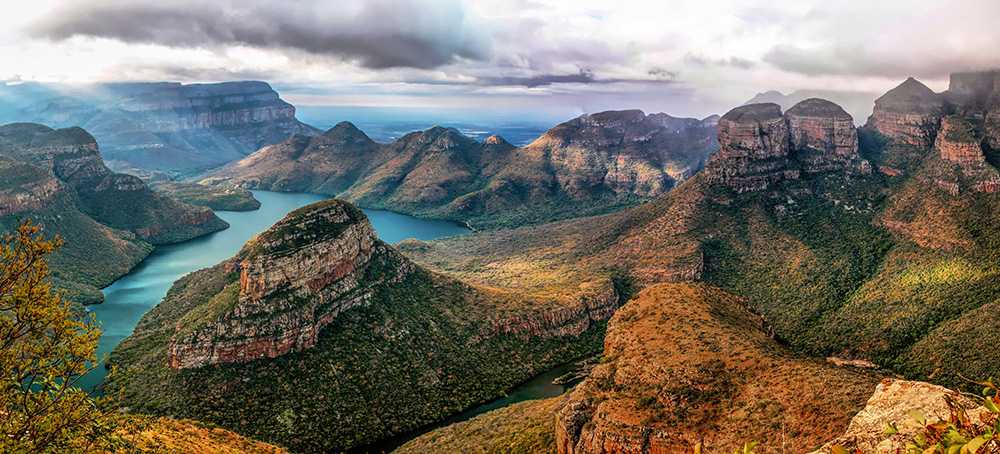
Below, we describe road trips by rental car through eastern South Africa. Highlights include the Panorama Route, the Blyde River Canyon, the Drakensberg, and, of course, Kruger National Park. You can complete these routes in about two weeks. Do you have more time? Then read our tips for a longer trip to and along the south coast.
Johannesburg
You often don’t need a rental car in a big city, but Johannesburg is an exception. While there is a train, the Gautrain, it only connects a few locations, and the rest of the public transportation leaves much to be desired. The best way to explore Johannesburg itself and the surrounding area is to rent a car.
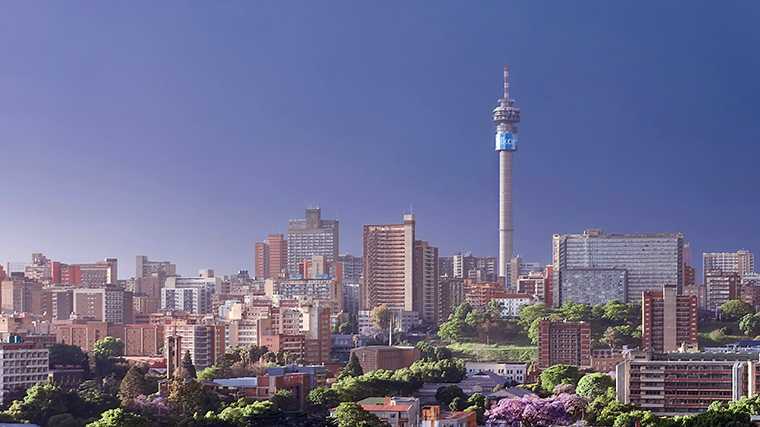
Every neighborhood in this city has its own style and identity, depending on the predominant nationality. In some neighborhoods, it feels as if you’re in Cameroon or Nigeria; in others, the atmosphere is unmistakably Ethiopian or Sudanese. The largest and best-known Black neighborhood in Johannesburg is Soweto, short for South Western Township. It was a place of fierce resistance against apartheid, which was in effect in South Africa until the 1990s. Today, this township is a tourist attraction.
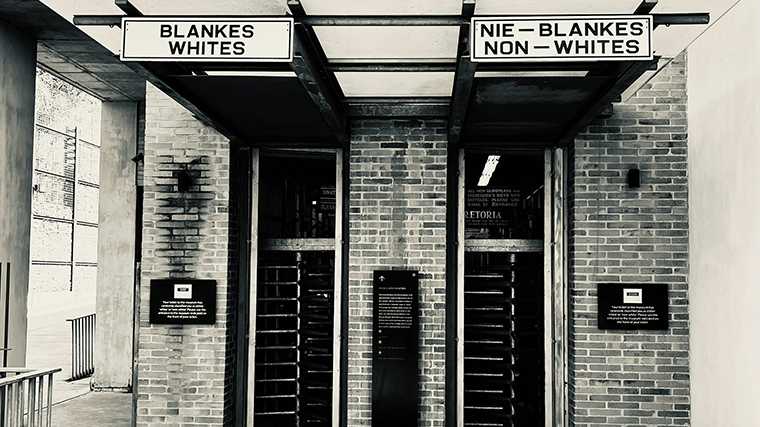
Apartheid has been abolished, but there is one building that still has separate entrances for “whites” and “non-whites”: the Apartheid Museum in Johannesburg. Your admission ticket indicates which entrance to use. This forces you to confront the reality of apartheid firsthand. Inside is an impressive exhibition featuring photos, films, and videos about the impact of apartheid on daily life.
Newtown is the vibrant cultural heart of Johannesburg. Coming from the north, you can drive there in a rental car across the Nelson Mandela Bridge. The former fruit and vegetable market now houses Museum Africa, where you can learn about the role of different ethnic groups in South Africa’s history. Nearby, children will have a great time at the Sci-Bono Discovery Center.
Sterkfontein Caves
Before heading east, you can visit some interesting sights near Johannesburg. Just northwest of the city lie the Sterkfontein Caves. Guided tours are led by students and staff from Wits University, and we recommend booking in advance or calling to check on availability.
Here, you’ll descend not only into vast underground passages and chambers with impressive limestone formations, but also to the origins of humanity. In these caves, full of mysterious crevices, valuable fossil remains have been found, including skulls of Australopithecus africanus, one of the first hominids to walk upright.
The tour through the caves involves climbing steep, sometimes slippery steps and navigating narrow passages. This tour is not recommended for people with limited mobility or those who are claustrophobic.
Cradle of Humankind
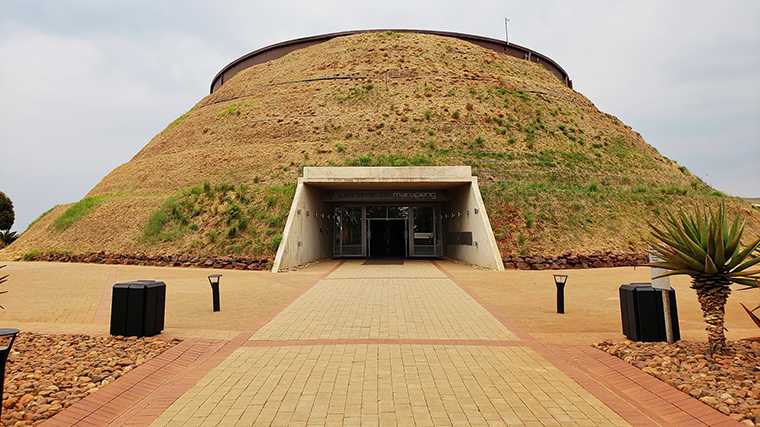
The Sterkfontein Caves are part of a larger area known collectively as the Cradle of Humankind. The visitor center in Maropeng looks quite small from the outside—a grass-covered dome modeled after ancient burial mounds—but don’t let that fool you. It’s a very extensive and fascinating museum, with various interactive exhibits that will also appeal to children. Once inside, the tour begins with a boat ride through a recreated underground stream before you enter the exhibition hall. Here, displays explore questions about how our brains evolved, where language originated, when we first used fire, and what risks our species faces in the future.
Look back as you exit, and you’ll see that the burial mound has been transformed into a futuristic building of glass and steel, symbolizing how far we’ve come as a species. From the back of the building, you’ll enjoy a stunning view of the rolling hills stretching toward the Magaliesberg mountain range.
Magaliesberg
The Magaliesberg features deep gorges and crystal-clear waterfalls and is a popular weekend destination for Johannesburg residents. You can enjoy beautiful hikes, mountain biking, and horseback riding there. The steep gorges also offer excellent opportunities for rock climbing. Between the Magaliesberg and Witwatersberg mountain ranges lies a reservoir, and the Harties Dam is an attraction in its own right. Built over a century ago, this dam features unique architecture. The access road passes through a triumphal arch inspired by the iconic Arc de Triomphe in Paris.
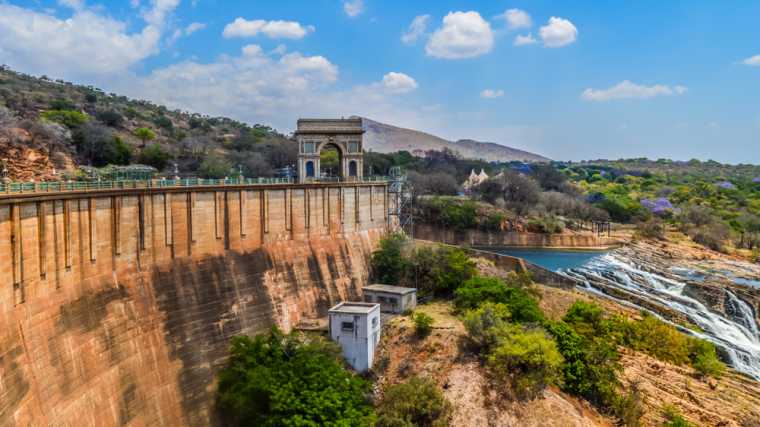
Not far from this dam, there’s a cable car to the highest point of Magaliesberg, 1,852 meters above sea level. That said, that elevation is somewhat relative, since the surrounding Hoogeveld lies about 1,500 meters above sea level. You can take a ride in a closed cabin or in an open two-seater chairlift. The latter is definitely not for people who are afraid of heights. The view is already fantastic along the way, but it’s truly spectacular once you reach the summit. There, you can scramble and zip-line high above the ground, but if you prefer solid ground beneath your feet, there’s a beautiful loop trail— the Dassie Loop —with incredible vistas.
Panorama Route
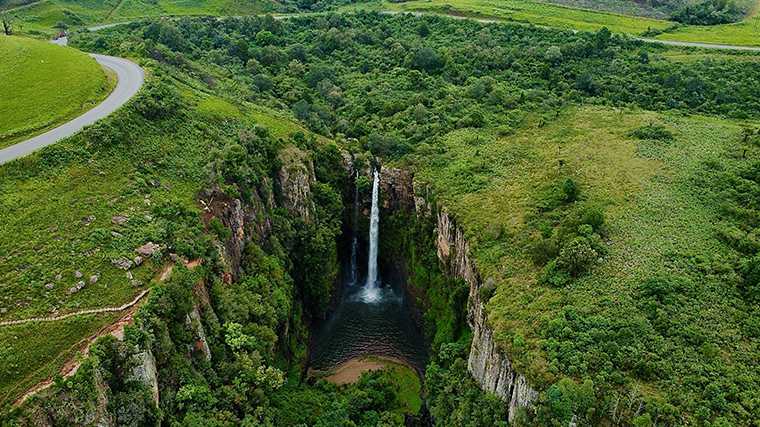
Before heading to Kruger National Park, the Panorama Route is an absolute must-see if you’ve rented a car in South Africa. Be sure to set aside plenty of time for this road trip. You *can* cover the 180-kilometer route in a single day, but you’ll miss a lot. Allow at least two, but preferably three days, so you can fully enjoy the sights at your own pace. Don’t forget to bring cash, as some stops don’t accept credit cards.
From Johannesburg, first take the N12 toward eMalahleni (Witbank) and then the N4 to Mbombela (Nelspruit). From Pretoria, you can take the N4 highway right away. The first part of this route isn’t particularly spectacular, but once you reach Emgwenya on the edge of the Drakensberg, the scenery becomes beautiful—especially if you turn off onto the R539 a little further on.
Sudwala Caves
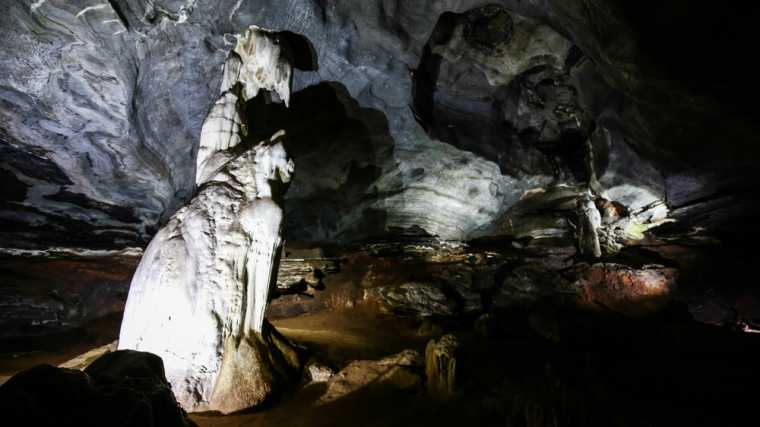
You’ll then drive toward the Sudwala Caves. To get there, continue straight ahead where the official Panorama Route turns right. There are signs, but they can sometimes be hard to see through the vegetation. In these caves, you can take a short tour lasting about an hour, during which you’ll see, among other things, the Screaming Monster —a colossal 180-million-year-old column formed by the fusion of a stalactite and a stalagmite. On the exciting, longer four-hour tour, you’ll crawl through narrow tunnels and muddy water to reach the dazzling Crystal Chamber. For an unforgettable adrenaline rush, go zip-lining just past the caves, high above a beautiful, green valley.
Sabie Falls
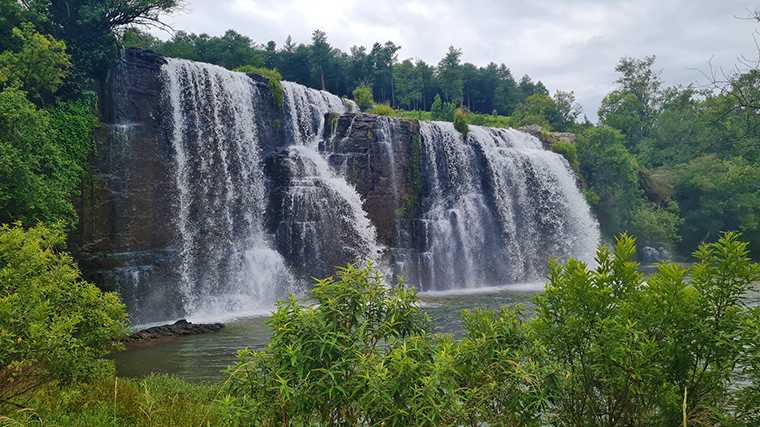
Further north, you’ll reach the town of Sabie. In addition to tourism, forestry is a major source of income here. The village is surrounded by one of the largest man-made forests in the world—and by stunning waterfalls! In the village itself, there are the Sabie River Falls, and ten kilometers to the west, you’ll find the popular, seventy-meter-high Lone Creek Falls. Opinions on this one are mixed, because the waterfall is fenced off, so you can’t get very close to it. The trail leading there runs through dense forest and is nicely paved, but it’s hardly an adventure. To reach Bridal Veil Falls, you’ll need to follow an unpaved trail through dense forest, and you can cool off in the pool at the base of the waterfall. There’s a trail leading up to Glyniss Falls and a third, smaller waterfall. You’ll definitely need good hiking boots for this one.
Other waterfalls near Sabie include Maria Shires Falls, Horse Shoe Falls, and the wide Forest Falls. Some waterfalls are only accessible via poorly maintained roads, but that’s not the case for Mac Mac Falls, just before the village of Graskop. It’s a five-minute walk from the parking lot along the R532 to this double waterfall. All of these waterfalls are at their most beautiful after a period of heavy rainfall.
Graskop Gorge
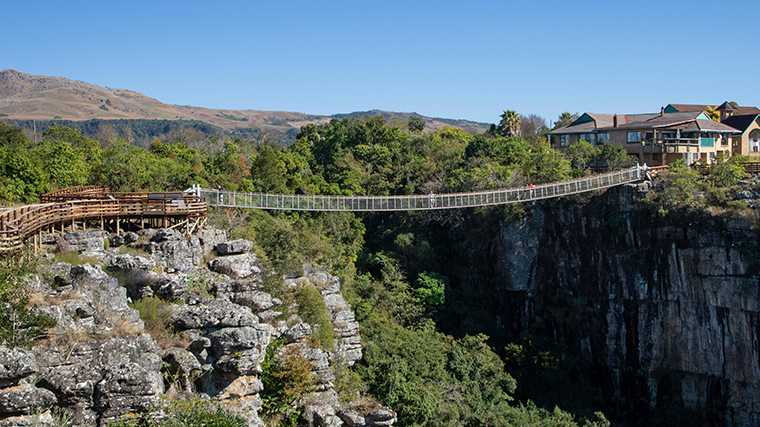
Have you always wanted to walk through a beautiful gorge, but are you put off by the almost inevitable climbing and scrambling? Then the Graskop Gorge Lift is for you! From the edge of the cliff, a lift descends to the bottom of the gorge, where a beautifully landscaped trail winds past the rock faces and a waterfall. Along the way, there are a few flights of stairs and a suspension bridge, but that’s all the effort required. A completely different experience is the zip line between the steep rock walls of the gorge, and for the truly daring, there’s bungee jumping into the forested abyss.
Pilgrim’s Rest
The scenic, winding R533 road leads to Pilgrim’s Rest, more than fifteen kilometers by car northwest of Graskop. Many of the original buildings from the late-19th-century gold rush have been restored, and the town is now a living museum of that era. You can even stay in a small hotel from that time or enjoy a beer in a restored pub. Every September, the national gold panning championships are held here.
Pinnacle Rock
Just north of Graskop stands a tall, freestanding rock pinnacle in a deep gorge— Pinnacle Rock—which is also surrounded by dense forests. There are two overlooks from which to view this monolith from different angles. It takes five to ten minutes to walk there. You can also hear the sound of a waterfall, but you can only see it if you walk a little further to the other side of the ravine.
God’s Window
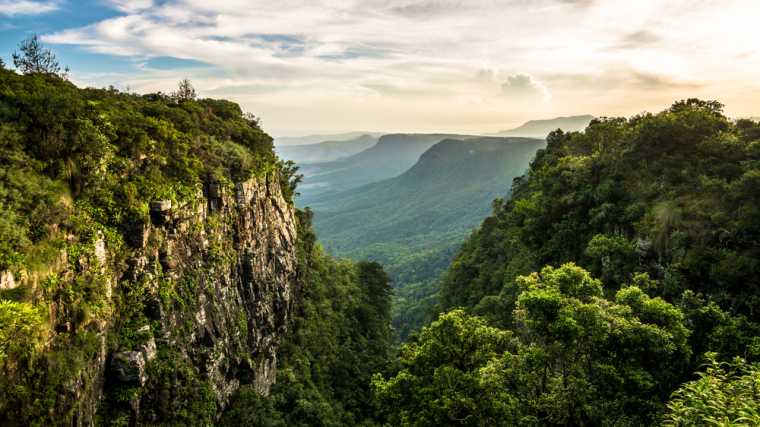
One of the most popular viewpoints along the Panorama Route is God’s Window. It’s located on the edge of the Great Escarpment and offers an unbeatable view of the Lowveld below. On a clear day, you can see all the way to Kruger National Park. From the parking lot, there’s a short trail to the first viewpoint. Walk a little further uphill through the woods, because there you’ll find an even more expansive view.
Lisbon Falls / Berlin Falls
A little further on, you’ll pass two waterfalls named after European capitals. This is because Portuguese and Germans settled here in the 18th century, searching for gold. The most spectacular waterfall is Lisbon Falls, where the water plunges 94 meters down.
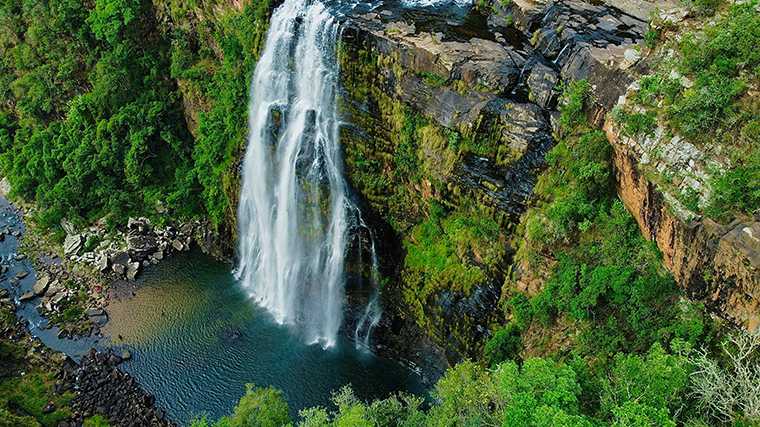
Right next to the parking lot are easily accessible viewing platforms at the top of the waterfall. You used to be allowed to swim in the pool at the bottom, but that’s no longer permitted. Drive back a short distance to the little bridge over the river (Lisbon Bruggie). There, you can swim or wade in the water. It’s also a great spot for a picnic!
Nearby are the Berlin Falls, whose shape is often compared to a giant candle. The narrow part at the top is the “wick” of the candle, and as the water falls from that point, it fans out to form the rest of the candle.
Bourke’s Luck Potholes
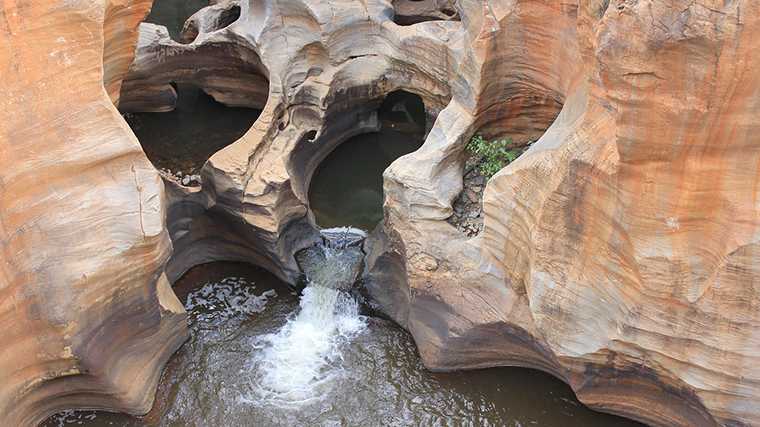
Bourke’s Luck Potholes are a series of strange rock formations at the confluence of two rivers, the Blyde and the Treur. Over the centuries, the rapid swirling motion of the water has created circular holes. Several small bridges span the ravine high above, offering a clear view of the oddly shaped pools. The name is associated with a certain Tom Bourke, who predicted that gold could be found in this area. He was right, though he himself never found a single gram.
Blyde River Canyon
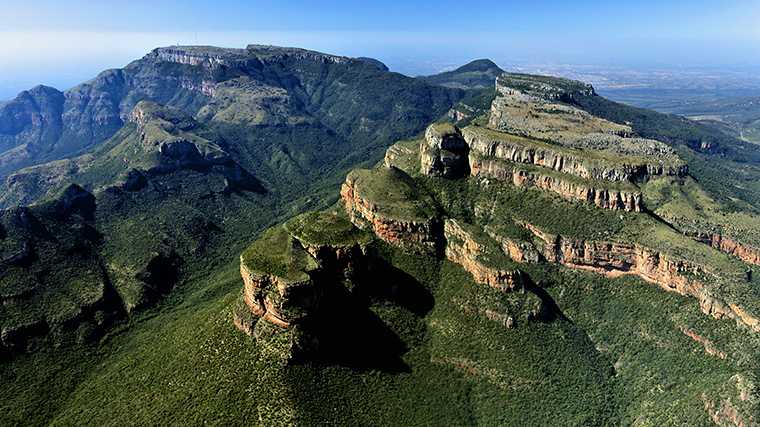
The northernmost part of the Blyde River Canyon is truly spectacular, but only in dry, sunny weather. It can sometimes be foggy here, and when it is, much of its beauty is lost. Don’t forget to stop at a viewpoint that many people overlook, Lowveld View, right off the R532. Before you know it, you’ll drive past the sign that simply says “Uitsigpunt/View Point.” From there, you’ll have a magnificent view of the Blyde River Canyon and the flattened Mariepskop Mountain across the way.
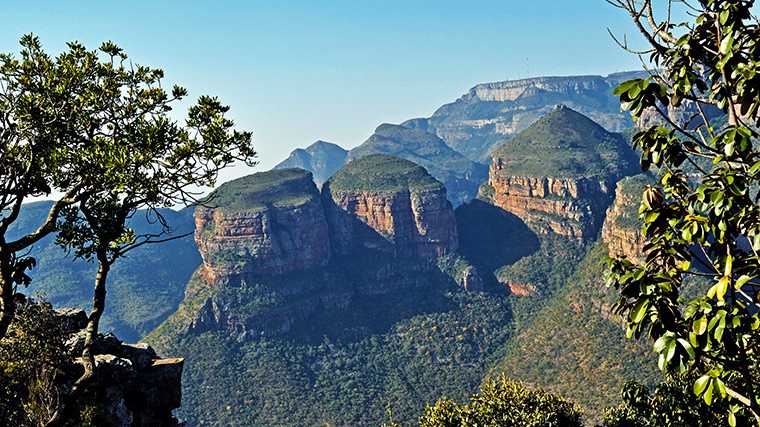
Five kilometers further on is the turnoff to the Three Rondavels. From the parking lot, two trails lead to lookout points. From one viewpoint, you have a clear view of three “rock islands” that resemble rondavels—the traditional round huts with pointed roofs that the indigenous people have been building for centuries. From the other viewpoint, you have a clear view of the reservoir on the Blyde River and the deep gorge that the river has carved out. You can take a boat tour on that reservoir, but it’s about an hour and a half drive to get to the departure point.
Kruger National Park
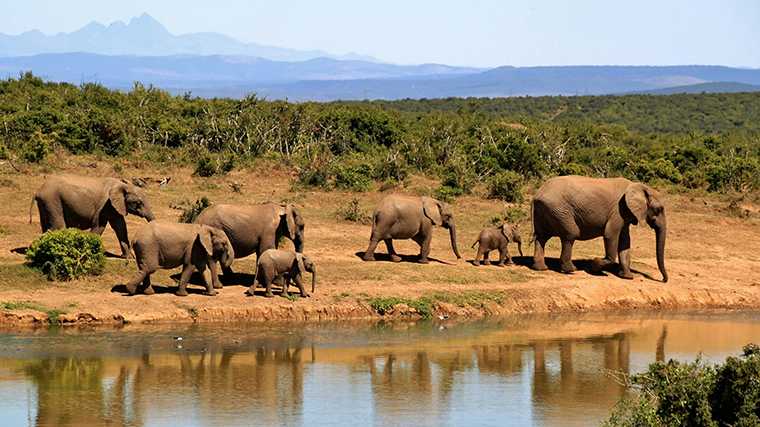
From the end of the Panorama Route, drive via the Abel Erasmus Pass to Phalaborwa, one of the gateways to Kruger National Park. If you’re heading to Kruger National Park from Graskop, it’s better to drive to Hazyview. Or you can fly from Johannesburg to Kruger Airport to rent a car there. Although that airport is labeled “international,” it only handles domestic flights. The entrances on the western side of the park are quite busy. Looking for some peace and quiet? Then drive your rental car to one of the two northern entrances: Pafuri Gate or Punda Maria Gate. The tourist roads in Kruger National Park are either paved or well-maintained gravel roads.
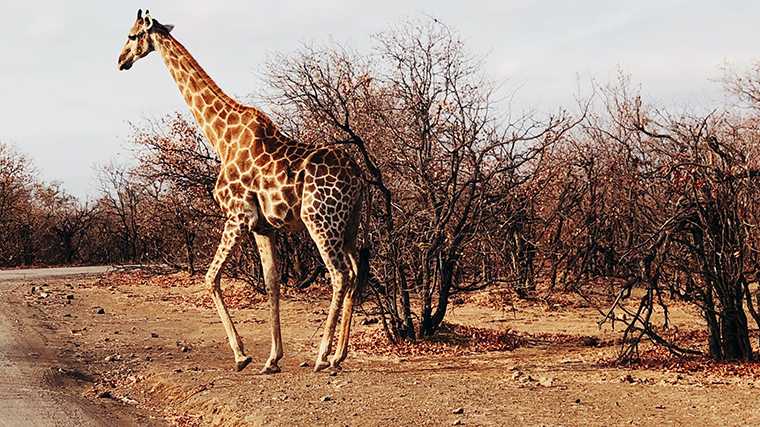
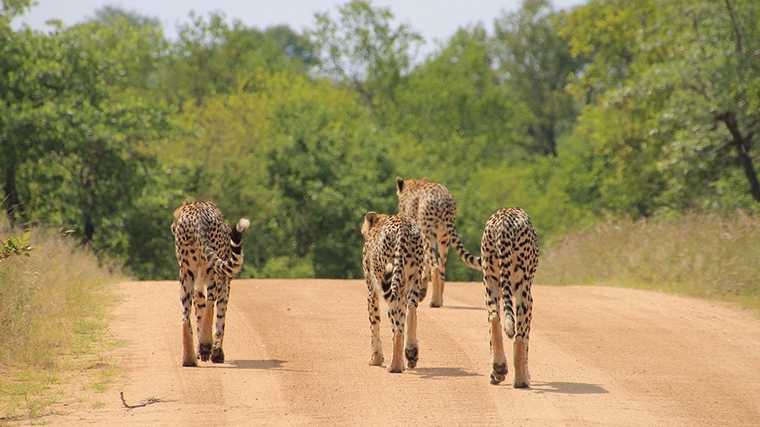
From the various rest camps, you can explore on your own in your rental car, but you can also leave it behind for a day and go on a guided tour. The guides know exactly where to find the wildlife in the vast park, including the Big 5 (elephant, buffalo, lion, rhino, and leopard). In Kruger National Park, you’ll also see zebras, giraffes, jackals, wildebeests, antelopes, and hippos, among other animals. There are also many different species of birds. It’s a park where you can spend days exploring and discover something new every day.
Eswatini
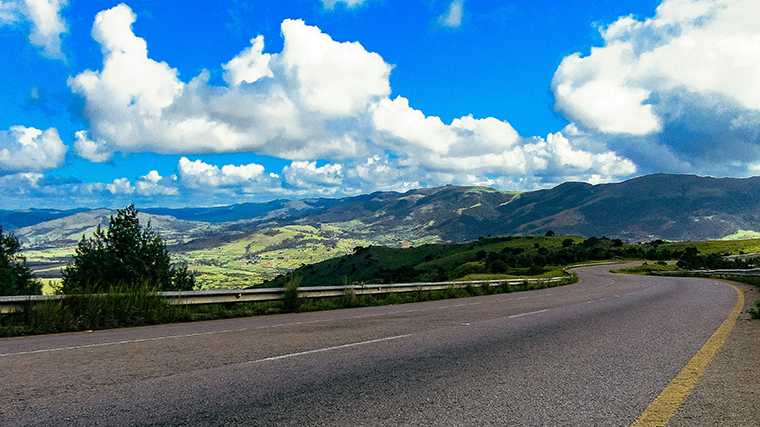
From the southern Crocodile Bridge Gate of Kruger National Park, it’s about 80 kilometers to Mananga, where you can cross the border into Eswatini, formerly known as Swaziland. Most car rental companies in South Africa allow this, but you must specify that you ’ll be crossing the border when you reserve your rental car. Because various paperwork needs to be processed, there are additional fees involved. You don’t pay these fees at the time of reservation, but on-site when you pick up your rental car.
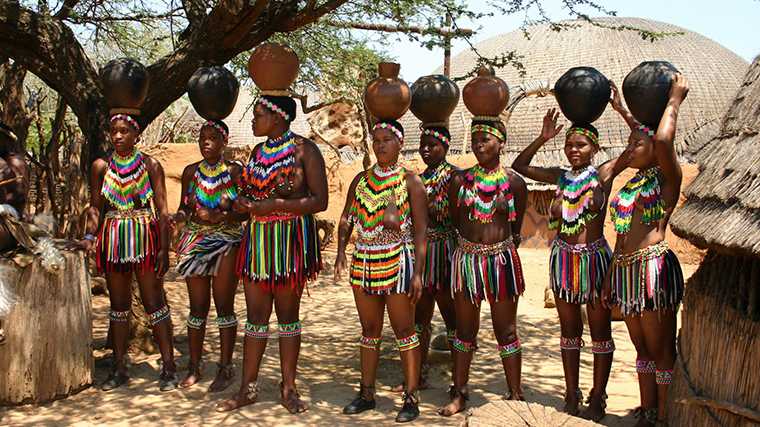
Eswatini is one of the smallest countries in Africa (less than 200 kilometers from north to south and 130 kilometers from east to west), but it boasts a rich culture and beautiful, lush natural scenery. It may be a small country, but it has no fewer than 17 protected areas where you can go on stunning hikes and spot wildlife. A particularly remarkable sight is the smooth, rounded Sibebe Rock in the northwest of the country. The Swazi people are also known for their hospitality and pride in their culture. Eswatini has deep-rooted traditions and a number of colorful festivals, including the annual Reed Dance.
From Johannesburg to Durban
Did you know that it’s very common in South Africa to rent a car in one place and return it somewhere else? This is called one-way car rental and is very easy to arrange by specifying a different drop-off location on our search form. You’ll then only see rental cars for which that combination of pickup and drop-off locations is possible, including the “one-way fee.” By the way, you’ll need to pay that fee on-site.
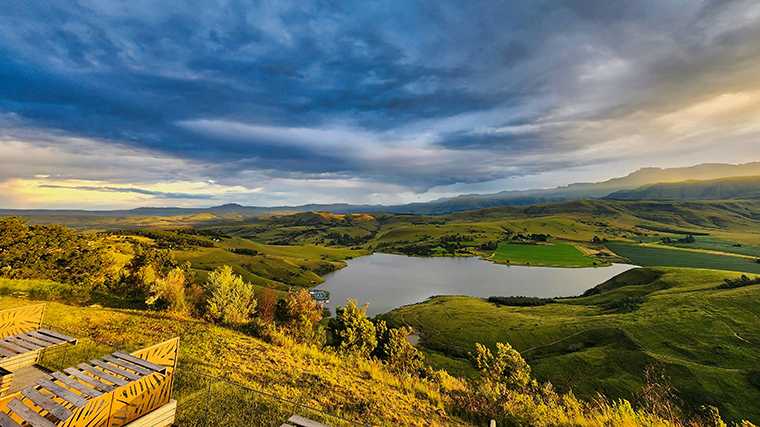
A popular one-way trip from Johannesburg is to Durban on the Indian Ocean. That city is known for its beautiful sandy beach and high waves, making it a surfer’s paradise. But of course, you don’t want to cover the entire distance in one go, so we’ve put together a list of the best sights between Johannesburg and Durban for you.
Golden Gates National Park
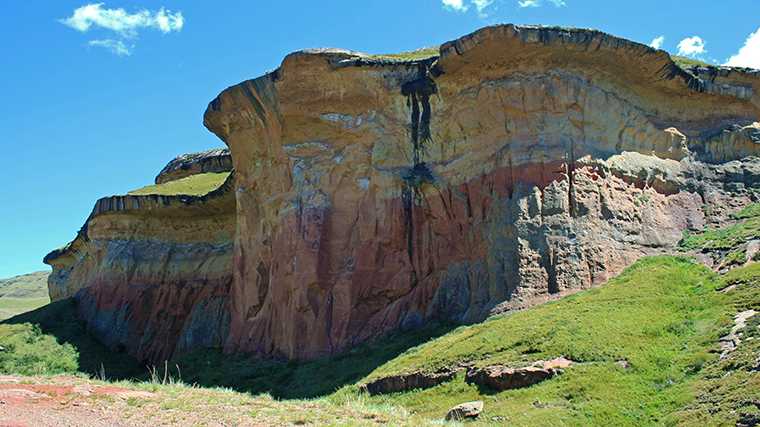
If you’re driving south on the N3 in your rental car, turn off at Warden toward Bethlehem and then on to Clarens. Just before you reach that town, you’ll see a massive rock— Titanic Rock—that you can climb. Be careful at the highest point, though. Many more unique rock formations await you in Golden Gates National Park. The ochre-colored cliffs, shaped by erosion, have distinctive shapes and are often called mushroom rocks. You can also admire ancient rock paintings in this park. Purchase a permit, which allows you to turn off the main (through) road and drive two beautiful loops in your rental car. The unique landscape is home to zebras, elands, wildebeests, and baboons, among other animals.
Drakensberg / Tugela Falls
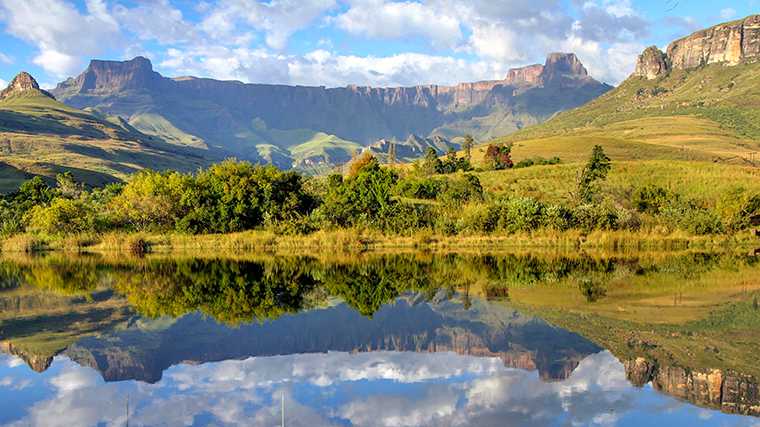
The Drakensberg is a 1,000-kilometer mountain range in eastern South Africa, but its most dramatic section is where these cliffs form the border with Lesotho. Take a hike to the impressive “amphitheater,” a rock face that soars about 1,000 meters into the sky. There are trails leading to the top, but part of the route involves chain ladders. When you’re climbing up, it doesn’t seem too bad, but you’ll have to go back down those same ladders…
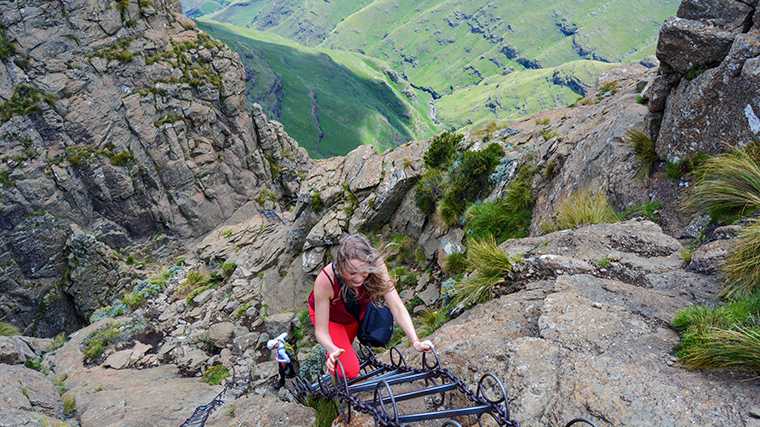
From that peak, you can see the Tugela River plunging 983 meters from the edge, making it the highest waterfall in the world. You don’t have to go up to the high plateau to see the waterfall. A trail to the base of the waterfall starts in the Royal Natal National Park and runs through the Tugela Gorge. However, even here, at the end of the trail, you’ll have to climb over a massive boulder using a chain ladder.
Howick Falls
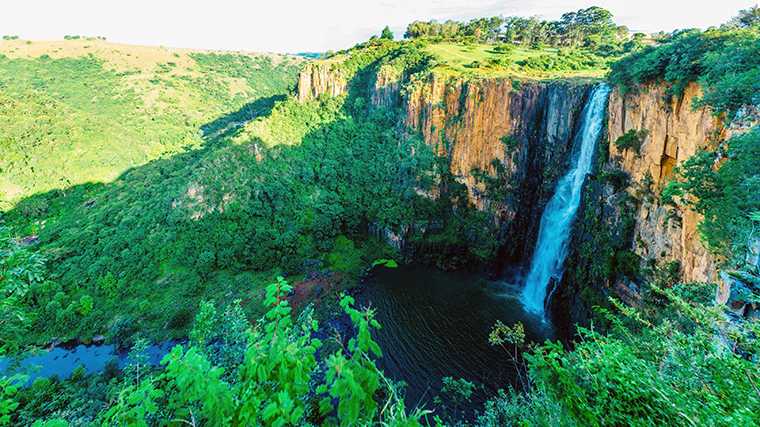
After a waterfall over nine hundred meters high, a ninety-meter waterfall might be a bit of a letdown, but this one near the town of Howick is much easier to reach. According to local legend, a giant, serpent-like creature lives in the pool at the bottom. There are several other waterfalls near Howick, such as the 100-meter-high Karkloof Falls, just over 15 kilometers to the north.
Durban
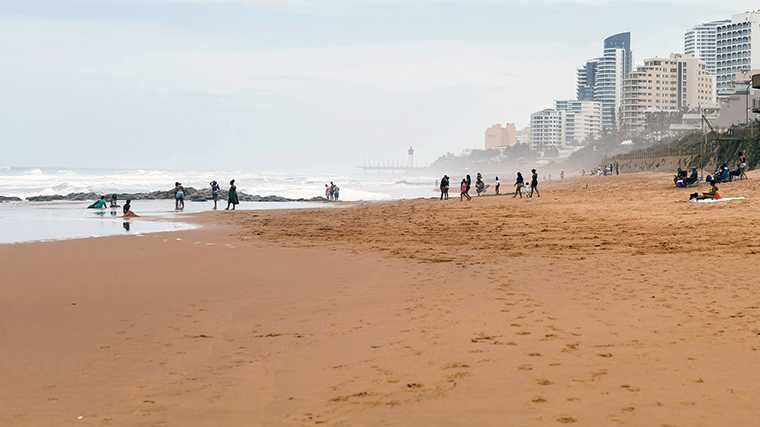
And then there’s the final destination, Durban. The city’s biggest draw is its wide sandy beaches along the Indian Ocean. If you visit around Christmas (summer in South Africa), it gets incredibly crowded, but if you go outside of peak season, there’s plenty of space on the massive beach. The waves here are a favorite among surfers. By the way, you’re not limited to Durban—there are also long beaches further north.
Or even further, to Cape Town?
If you have plenty of time in South Africa, you can even rent a car for a one-way trip from Johannesburg to Cape Town. In that case, you’ll probably find our blog post about the Garden Route between Gqeberha (Port Elizabeth) and Mossel Bay helpful.
When should you rent a car in Johannesburg?
South Africa has a pleasant climate year-round, but there is a clear difference between the northeast and the southwest. If you’re staying only around Johannesburg (the northeast) and plan to visit Kruger National Park or other wildlife parks, the best time to travel is between May and September. It’s cooler then, and the vegetation is less dense, making it easier to spot wildlife.
If you’re planning a longer trip, for example to Cape Town, keep in mind that the South African spring and summer (September through March) are actually the most pleasant times to visit there. The summer school break (and thus the busiest time) in South Africa falls in December and January.
Driving a Rental Car in South Africa
A road in eastern South Africa. (Photo: https://unsplash.com/@sharkiekzn)
If you’re used to driving on the right, driving on the left in South Africa will take some getting used to. You might want to consider renting an automatic car, so at least you won’t have to think about shifting gears.
The road network in South Africa is generally well-developed, and the highways are certainly a pleasure to drive on. If you want to see more of the countryside, you’ll often find yourself driving on secondary roads, where it’s not uncommon to see signs warning of potholes. In such cases, drive more slowly, as you don’t want to damage your rental car. In built-up areas, there are often speed bumps, but they aren’t always clearly visible. Also, be on the lookout for animals (and people!) on the road.
Many colonial place names have been replaced by their original names in recent decades. We list the colonial names in parentheses above, but please keep in mind that the official names are the ones shown on road signs.
What kind of car should you rent in Johannesburg?
If you’re only driving the Panorama Route and won’t be straying from the main roads, a “regular” car will suffice. If you’re heading to Kruger National Park and the Drakensberg Mountains, you’re better off choosing an SUV, since it has higher ground clearance. Always opt for a rental car with sufficient engine power, because no matter where you drive in South Africa, you’ll always encounter steep inclines, and it’s nice to be able to climb them smoothly.
Book your rental car well in advance
Most people rent a car at the Johannesburg airport, but you can also book a rental car in the popular northern district of Sandton. If you’re planning a longer trip through South Africa—for example, flying from Johannesburg to the south coast—you can book a rental car at the Port Elizabeth airport (officially: Gqeberha).
No matter where you rent a car, we recommend booking well in advance. South Africa is a popular vacation destination, and demand for rental cars is high. Use our site to compare the various offers at your leisure and choose a rental car that perfectly suits your vacation plans.

Where would you like to rent a car?
- 24000+ pick-up locations
- Free cancellation
- Independent comparator

Useful tips for a well-prepared trip
Which insurance should I choose, and what's the deal with the deposit? Read our articles with useful information and tips to ensure you choose the right rental car for you.


