- Popular countries
- Popular regions
- Popular cities
- Popular airports
- Car Rental Italy
- Car Rental Spain
- Car Rental United States
- Car Rental Portugal
- Car Rental South Africa
- Car Rental France
- Car Rental Netherlands
- Car Rental Greece
- Car Rental Germany
- Car Rental United Kingdom
- Car Rental Belgium
- Car Rental Croatia
- Car Rental Switzerland
- Car Rental Austria
- Car Rental Denmark
- Car Rental Norway
- Car Rental Australia
- Car Rental Ireland
- Car Rental Cyprus
- Car Rental Canada
- Car Rental Florida
- Car Rental Sicily
- Car Rental California
- Car Rental England
- Car Rental Sardinia
- Car Rental Mallorca
- Car Rental Ibiza
- Car Rental Crete
- Car Rental Tenerife
- Car Rental Rhodes
- Car Rental Madeira
- Car Rental Corsica
- Car Rental Gran Canaria
- Car Rental Malta
- Car Rental Scotland
- Car Rental Azores
- Car Rental Fuerteventura
- Car Rental Lanzarote
- Car Rental Corfu
- Car Rental Zakynthos
- Car Rental Amsterdam
- Car Rental Milan
- Car Rental Miami
- Car Rental Lisbon
- Car Rental Malaga
- Car Rental Porto
- Car Rental Rome
- Car Rental Cape Town
- Car Rental Barcelona
- Car Rental Faro
- Car Rental Alicante
- Car Rental Nice
- Car Rental Bari
- Car Rental Naples
- Car Rental Johannesburg
- Car Rental Brussels
- Car Rental Bergamo
- Car Rental Orlando
- Car Rental Palma de Mallorca
- Car Rental Vienna
- Car Rental Amsterdam Schiphol Airport
- Car Rental Miami International Airport
- Car Rental Lisbon Airport
- Car Rental Malaga Airport
- Car Rental Porto Airport
- Car Rental Milan Malpensa Airport
- Car Rental Rome Fiumicino Airport
- Car Rental Faro Airport
- Car Rental Alicante Airport
- Car Rental Bari Palese Airport
- Car Rental Nice Airport
- Car Rental Barcelona Airport
- Car Rental Cape Town Airport - International Terminal
- Car Rental Bergamo Airport
- Car Rental Orlando International Airport
- Car Rental Mallorca Airport
- Car Rental Catania Airport
- Car Rental Johannesburg International Airport
- Car Rental Ibiza Airport
- Car Rental Athens Airport

Dalmatia Road Trip from Split: Routes, Ferries, and the Neum Border
The 5 Most Beautiful Routes Through Dalmatia by Rental Car
Last updated: June 10, 2026 by the EasyTerra Editorial Team
Dalmatia without a car is Dalmatia from a distance. The most beautiful bays along the Makarska Riviera, the hinterland of Krka, and the small villages on the islands of Brač and Hvar are located exactly where buses or boats only go sporadically. In this guide: where to pick up a rental car in Split, how the Bosnian border crossing to Dubrovnik works, whether you can take your rental car on the ferry, and the 5 most beautiful routes from Split Airport.
Why You Need a Rental Car in Dalmatia
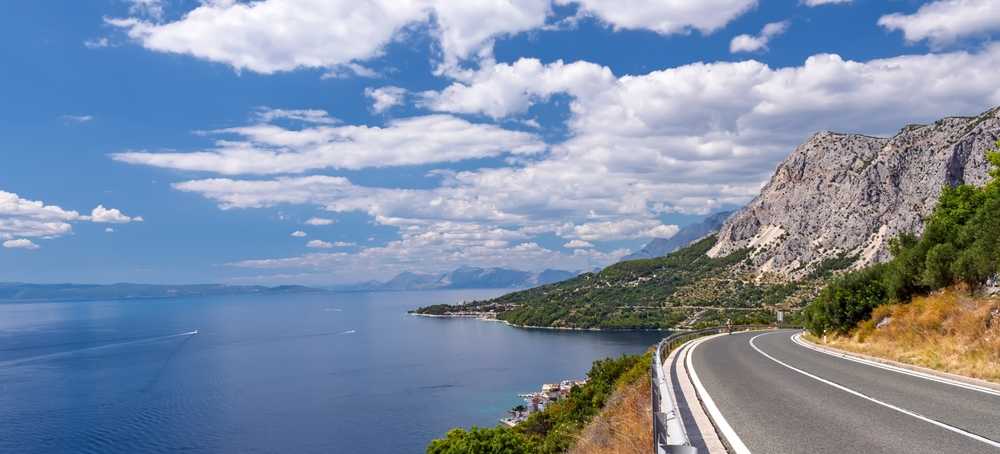
The most beautiful places in Dalmatia are either inaccessible or difficult to reach by public transportation. Think of the inland areas around Plitvice and Krka, the coastal route from Omiš via Pelješac to Dubrovnik, and the smaller island villages on Brač and Hvar. Renting a car for a road trip through Dalmatia gives you the flexibility to go swimming on Brač in the morning and dine on the coast of Makarska in the evening. On average, you’ll save 90–180 minutes per day compared to taking the bus and/or ferry.
Flexibility
If you’re only visiting larger cities, public transportation works just fine, but you’ll miss out on a lot. Inland, buses run only sporadically, and the authentic villages on the islands are also difficult to reach if you don’t have your own transportation. With a rental car, you’re much more flexible: drive wherever you want at a time that suits you best and stop wherever you please.
Save time
When you’re on vacation, you’re usually in no hurry, but you still don’t want to spend too long traveling to a destination. Let’s say you want to go from Split to the beautiful Plitvice Falls. Depending on the route, the bus ride can easily take 5.30u, whereas with your rental car, you can cover the distance in 3 hours. Not to mention the time you might have to wait at the bus station.
Cost Comparison
A round-trip bus ticket from Split to Plitvice costs about €55. This is a great option for solo travelers, but it becomes less cost-effective if you’re traveling with two or more people. If you take the A1, you’ll have to pay a toll, but you can avoid that by taking the D1 instead. That route is a bit slower, but also much more scenic. And it’s free!
(Source: Plitvice Lakes National Park)
Public transportation in Croatia is fine if you’re traveling from city to city (for example, from Split to Dubrovnik), but a rental car is essential for exploring Dalmatia in between.
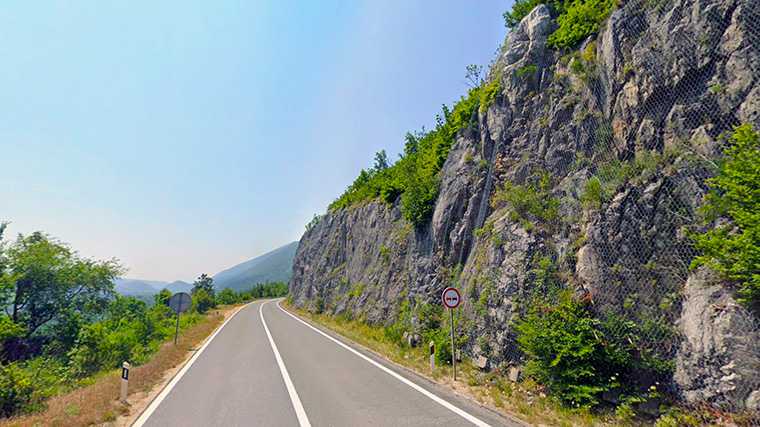
The most beautiful places in Dalmatia are either inaccessible or difficult to reach by public transportation. Think of the inland areas around Plitvice and Krka, the coastal route from Omiš via Pelješac to Dubrovnik, and the smaller island villages on Brač and Hvar. Renting a car for a road trip through Dalmatia gives you the flexibility to go swimming on Brač in the morning and have dinner on the coast of Makarska in the evening. On average, you’ll save 90–180 minutes per day compared to taking the bus and/or ferry.
Flexibility
If you’re only visiting larger cities, public transportation works just fine, but you’ll miss out on a lot. Inland, buses run only sporadically, and the authentic villages on the islands are also difficult to reach if you don’t have your own transportation. With a rental car, you’re much more flexible: drive wherever you want at a time that suits you best and stop wherever you please.
Save time
When you’re on vacation, you’re usually in no rush, but you still don’t want to spend too long traveling to a destination. Let’s say you want to go from Split to the beautiful Plitvice Falls. Depending on the route, the bus ride can easily take 5.30u, whereas with your rental car, you can cover the distance in 3 hours. Not to mention the time you might have to wait at the bus station.
Cost Comparison
A round-trip bus ticket from Split to Plitvice costs about €55. This is a great option for solo travelers, but it becomes less cost-effective if you’re traveling with two or more people. If you take the A1, you’ll have to pay a toll, but you can avoid that by taking the D1 instead. That route is a bit slower, but also much more scenic. And it’s free!
(Source: Plitvice Lakes National Park)
Public transportation in Croatia is fine if you’re traveling from city to city (for example, from Split to Dubrovnik), but a rental car is essential for exploring Dalmatia in between.
Where do you pick up your rental car?
Renting a car at Split Airport for a road trip through Dalmatia is by far the easiest option: all major rental companies have a counter there, and you can drive straight onto the D8 toward the coast. Choose a rental company in the city itself if you’re arriving by bus from Zagreb or catching the ferry to Hvar right away. Picking up your car in Zadar or Dubrovnik works well if you want a one-way rental.
Option A: Split Airport (Resnik / SPU)
From the terminal, walk via a sky bridge to the counters of Avis, Europcar, Hertz, Sixt, Budget, Enterprise, Oryx, Unirent, Green Motion, and others. The rental cars are parked in a lot right behind the terminal. The drive to the D8 (coastal road) or the A1 (highway) takes 2 to 5 minutes. Peak wait times are between 1:00 p.m. and 4:00 p.m.
Tip: Choose a pickup time outside of peak hours to reduce your wait time by 20–40 minutes.
Option B: Split City Center / Riva / Ferry Terminal
Convenient if you want to continue directly to Hvar or Brač via the Jadrolinija ferry. Ask the rental company for the best route to the ferry terminal (trajektna luka). Please note: the old town (Diocletian’s Palace) is a pedestrian zone, and many streets have one-way traffic with camera enforcement. Parking near the Riva and the palace is expensive (€4.00/hour); parking is much cheaper a little further away.
Option C: Zadar (ZAD) or Dubrovnik (DBV) as a one-way rental
Picking up a rental car at Zadar Airport and returning it at Dubrovnik Airport is a popular option, as it allows you to cover the entire coast. The one-way fee varies by rental company: Avis/Europcar/Hertz charge approximately €90–130, while Oryx and Unirent often charge slightly less: €70–110. Enter a different drop-off location in the search filter, and EasyTerra will immediately show you the total price, including the one-way fee.
Neum Corridor: from the Bosnian border to Dubrovnik
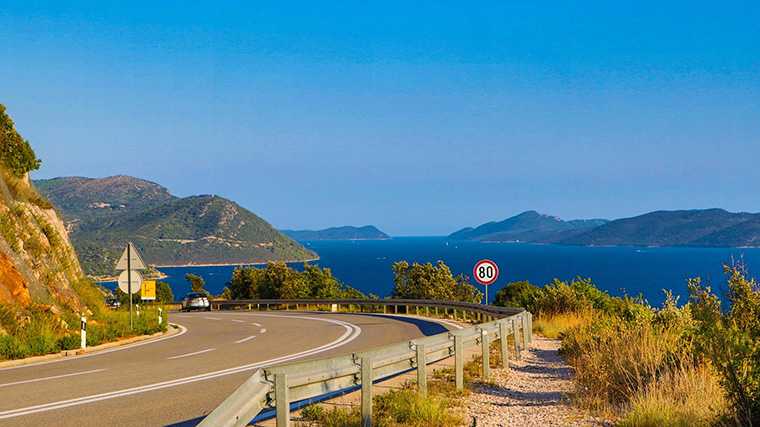
The most scenic route from Split to Dubrovnik follows the D8 coastal highway. However, this means you’ll have to cross the border with Bosnia and Herzegovina twice. You can bypass this border by taking a bridge to the island of Pelješac.
Classic Route via the D8
The D8 via Neum is the classic route and is still widely used, but it requires two border crossings through the Neum Corridor, a narrow strip of Bosnian coastline. Wait times at the border can be considerable during the summer. Because you ’ll be crossing the border, your rental agreement must explicitly state that you’re permitted to drive the rental car in Bosnia. You must also be able to present a valid passport (not an ID card), and a Green Card (international insurance card) is required for Bosnia. Keep all other documents for your rental car handy.
Via the Pelješac Bridge
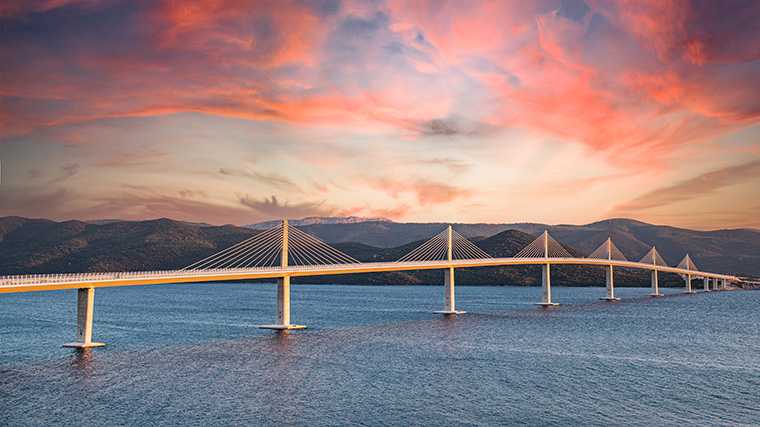
The Pelješac Bridge, which opened in 2022, was built specifically to allow travelers to bypass the Neum Corridor. Contrary to what you might expect, there is no toll for this bridge (Croatia only charges tolls on highways). The distance and travel time are comparable to the D8 coastal road, but without any border crossings. It’s a scenic route, though it doesn’t run directly along the coast.
Flight Split–Dubrovnik
Flying is the fastest option (only 45 minutes), but the total door-to-door travel time is roughly the same as driving when you factor in check-in, airport transfers, and baggage. Additionally, there are only two direct flights per week; other flights go via Zagreb and therefore take longer.
The 5 Most Beautiful Routes Through Dalmatia
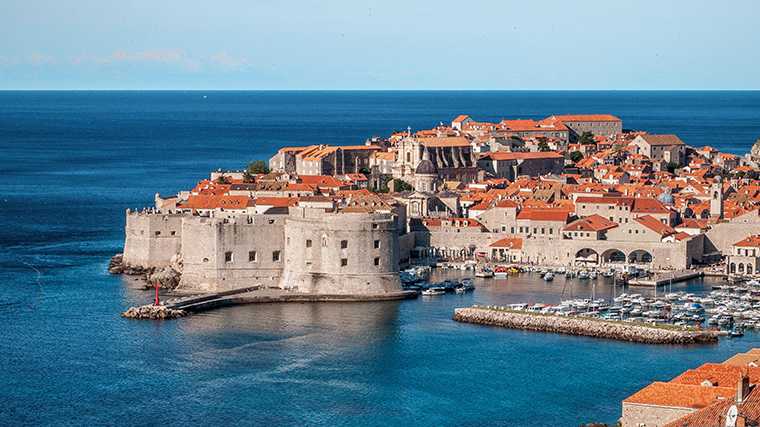
We’ve put together a list of the 5 most beautiful routes along the Dalmatian coast for you. Get inspired, mix and match to your heart’s content, and make the most of your road trip through Croatia in a rental car!
Route 1: Split → Omiš → Makarska → Dubrovnik
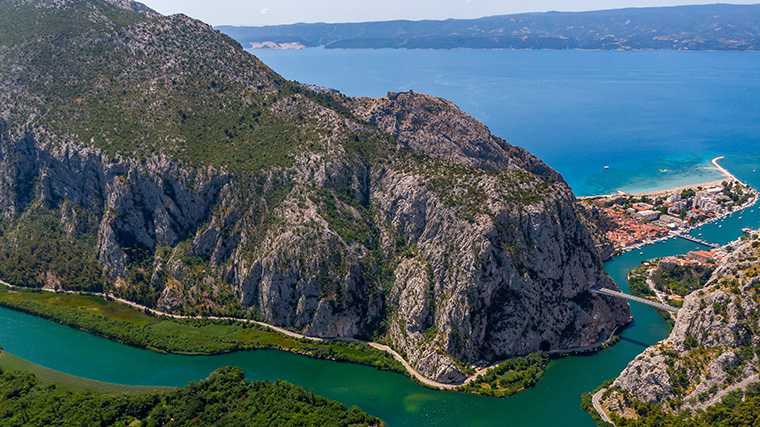
A classic road trip by rental car from Split to Dubrovnik along the incredibly beautiful Dalmatian coast
Distance: 230 km along the D8 coastal road.
Travel time: 1–2 days (depending on the number of stops).
Highlights:
Cetina River Gorge: the charming townof Omiš is situated near a deep river gorge, where you can go kayaking or rafting. There’s also a zip line across the river.
Makarska Beach Promenade: the heart of beach tourism. Or drive your rental car to quieter beaches, such as those near Drašnice.
Neum Corridor: If you want to continue along the coast, you’ll need to drive through Neum in Bosnia (don’t forget your passport!). The alternative is to take the Pelješac Bridge.
Dubrovnik: Drive to the Dubrovnik airport and then back for the best view of the city.
Tip: From Makarska, take a narrow, winding, and steep road to the highest point in Dalmatia: the Sveti Jure viewpoint (1,762 m) with a semicircular glass platform.
If you’re starting from Zagreb, also check out 9 must-see stops between Zagreb and Dubrovnik.
Route 2: Split → Plitvice → Zadar → Šibenik → Split
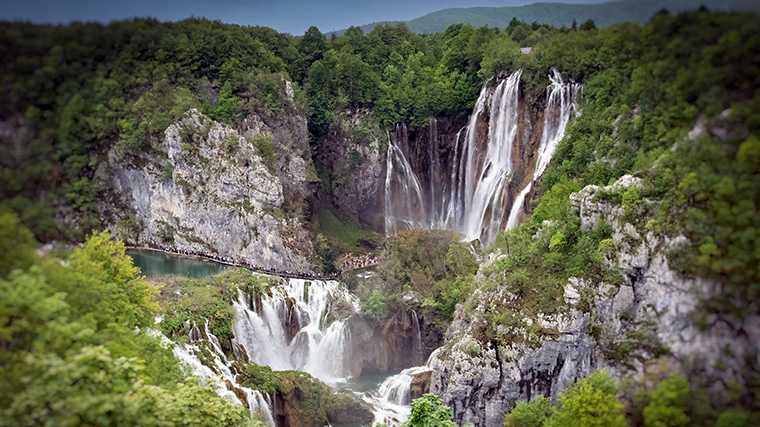
Through the interior and along the northern coast.
Distance: approximately 540 km.
Travel time: 2–3 days (depending on how often you stop).
Highlights:
Plitvice Lakes: a lake district with impressive waterfalls; it’s least crowded early in the morning (opens at 7:00 a.m.).
Zadar: a historic city with modern touches, such as the Sea Organ, an art installation that creates music from the waves of the sea.
Šibenik Canal: a walking trail runs along and across the water, offering surprising viewpoints.
Tip: Take a boat trip from Šibenik to the Kornati Islands: panoramic views, hiking, swimming, and snorkeling.
Route 3: Split → Krka National Park → Trogir
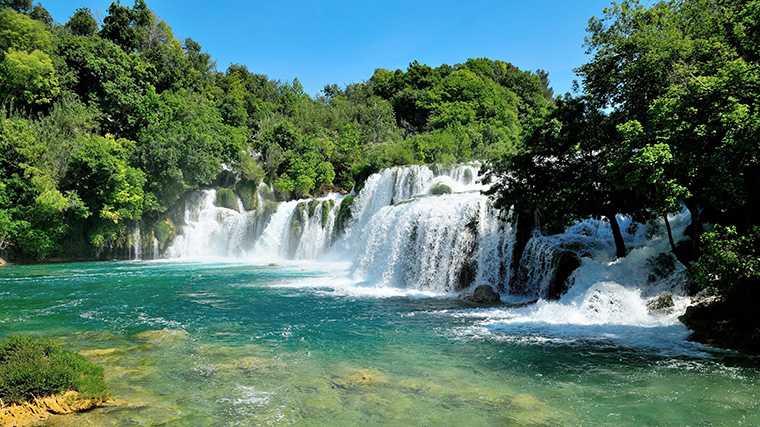
Waterfalls within easy reach: ideal for travelers with one free day.
Distance: 160 km (via N1/A1)
Travel time: 1 day
Highlights:
Skradinski Buk: a massive natural pool with towering waterfalls within Krka National Park.
Primošten: A peninsula town that looks like it came straight out of a postcard. You can swim off the rocks on the south side.
Trogir: This medieval town is a UNESCO World Heritage Site and is located on a small island. There’s a large parking lot on the mainland.
Tip: Shuttle buses run from the parking lot at the Lozovac entrance to Krka to the waterfalls, but you can also follow a scenic trail down.
Route 4: Split → Hvar → Brač
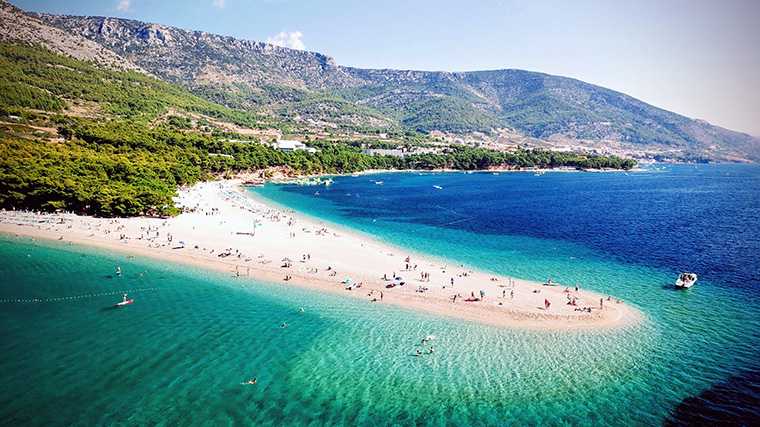
Island hopping off the coast of Dalmatia.
Duration: depends entirely on where you drive your rental car.
Travel time: at least 3 days.
Highlights:
Zlatni Rat: a beach near Bol on the island of Brač that constantly changes shape under the influence of the wind and the sea.
Lavender fields: the western side of the island of Hvar turns purple when the lavender is in bloom in June and July.
Sunset in Hvar Town: Climb up to the fortress—it’s the perfect spot to enjoy the sunset.
Tip: Don’t take the D116 from Stari Grad to Jelsa; instead, take the parallel backroad that winds right through the lavender fields.
Note: From Split, you can take your rental car on the Jadrolinija ferries to Supetar (Brač) and Stari Grad (Hvar). Only passenger ferries go to Hvar Town. There are no car ferries between Brač and Hvar. Take the ferry from Sumartin (Brač) to Makarska on the mainland, then drive to Drvenik and take the car ferry from there to Sucuraj (Hvar).
(Source: Ferry Croatia)
Route 5: Split → Mostar (Bosnia)
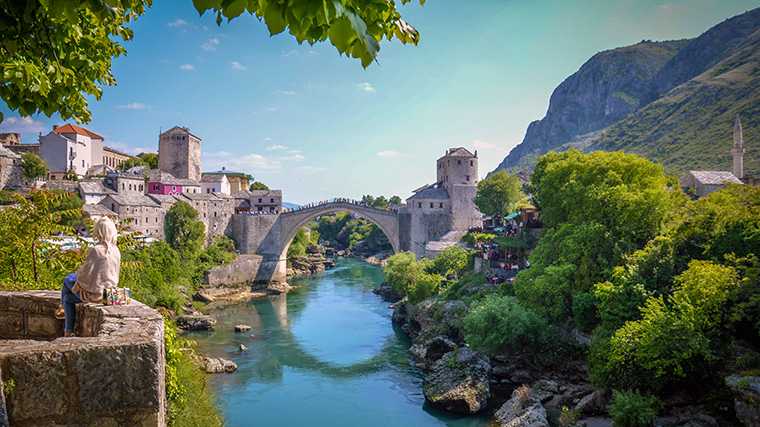
Cultural day trip to historic Mostar in Bosnia and Herzegovina.
Distance: 330 km, round trip (via the A1 and M17).
Travel time: approximately 2 hours and 15 minutes one way.
Highlights:
Stari Most: The Old Bridge is the main attraction of Mostar, if not of all of Bosnia.
Ottoman-style houses: In the historic part of the city, you’ll still find many houses dating back to the Ottoman era.
Blagaj: a picturesque village southeast of Mostar, best known for its 16th-century monastery on the Bune River.
Tip: Leave Split early (before 7:30 a.m.); at the Nova Sela border crossing, you’ll only have to wait 10 minutes instead of an hour in the afternoon.
Please note: for this route, your rental agreement MUST specify that you have permission to drive your rental car in BiH (Bosnia and Herzegovina). A passport and green card are also required.
Taking a Rental Car on the Ferry: What’s Allowed and What Isn’t
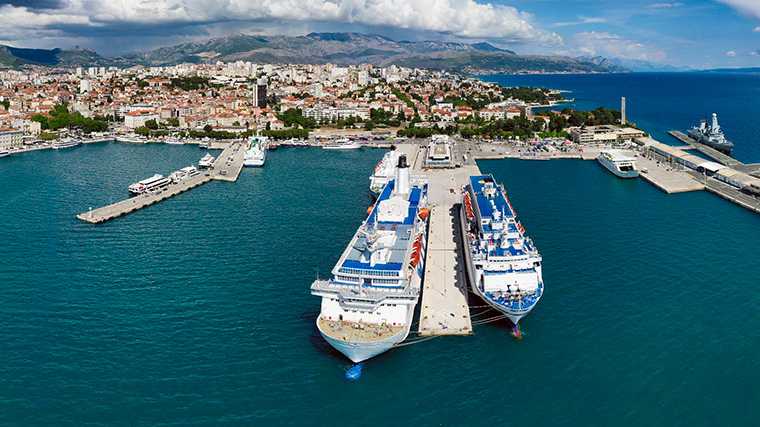
When picking up your rental car, specifically ask if you’re allowed to take it on the ferry and have that included in the contract.
Which ferries carry cars?
Only Jadrolinija ferries carry cars. From Split, there are car ferries to the islands of Brač, Hvar (Stari Grad—only passenger ferries go to Hvar Town), Korčula, and Vis.
Reserve your spot
In June and July, the ferries fill up quickly, especially on weekends. Buy tickets in advance at the ticket office on the north side of the harbor (near the Riva promenade) or online.
Please note: For the car ferry to Brač, you can buy a ticket for a specific day and time, but that departure time is not guaranteed. Cars are loaded in the order they arrive at the harbor. If you want to catch a specific departure, you must arrive at the harbor well in advance.
Passenger Ferries
The high-speed catamarans operated by Krilo (also known as Kapetan Luka) do not carry cars, only passengers. If you want to spend the night in Hvar Town: park on Brač (near the Stari Grad ferry) or leave your rental car in Split and take the catamaran.
Estimated ferry fares from Split
| Ferry Route | Travel time | Bringing a car? | Cost* | Reservations |
|---|---|---|---|---|
| Split → Supetar (Brač) | 50 min | Yes | €26–40 | Jadrolinija |
| Split → Milna (Brač) | 25 min | No | €10 per person | Krilo |
| Split → Stari Grad (Hvar) | 2 hours | Yes | €47–81 | Jadrolinija |
| Split → Hvar Town (Hvar) | 1 hour | No | €25 per person | Krilo |
| Split → Vela Luka (Korčula) | 3.5 hours | Yes | €73–122 | Jadrolinija |
| Split → Vela Luka (Korčula) | 2h 20m | No | €30 per person | Krilo |
| Split → Bol (Brač) | 55 min | No | €25 per person | Krilo |
*) One-way trip. If a rental car is allowed, this is the price for the car and driver; most compact rental cars fall under the lower rate. Passengers must pay separately.
(Sources: Jadrolinija Ferries & Krilo Fast Ferries – May 2026)
Toll Roads, Fuel, and Parking in Croatia
Tolls (Croatian: cestarina) are charged on all highways in Croatia. Gas stations are widely available; major brands include INA, Petrol, Tifon, and Crodux. Parking in cities is organized by zones.
Toll Roads
There is only one toll highway running through Dalmatia: the A1. You take a ticket at the toll gate and pay when you exit the highway. A trip from Zagreb to Split costs €26.40 (source: Hrvatske autoceste – May 2026).
Starting March 1, 2027, an electronic toll system (Crolibertas) will be introduced on all highways throughout Croatia. Tolls will then be paid fully automatically via a toll badge or the rental car’s license plate.
Fueling
At gas stations in Croatia, you can fill up your own car and pay with a credit card. You can order hot meals at virtually every gas station along the highway. On smaller islands (Vis, Lastovo), there are only 1 or 2 pumps, so expect wait times during peak season. Always keep your last gas receipt before returning the rental car.
You can check current fuel prices in Croatia online.
Parking in Split, Dubrovnik, and Hvar Town
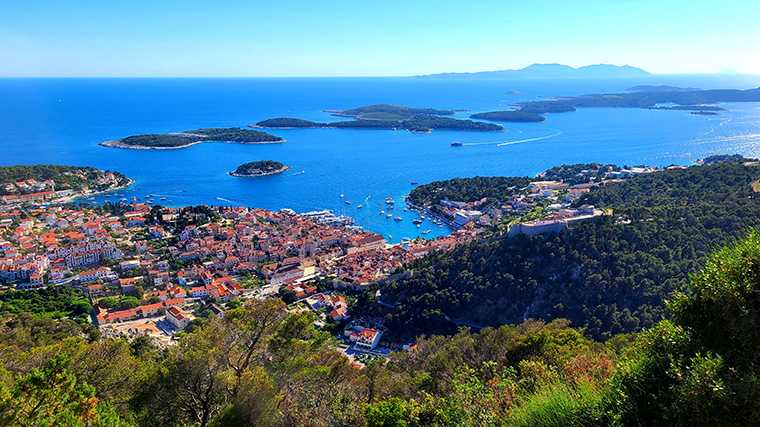
The center of Split is divided into parking zones. Zone 1 (near the Riva promenade) is the most expensive (€4.00/hour). A little further away, it quickly becomes much cheaper. Pay via the Splitparking app or the blue parking meters.
The historic part of Dubrovnik is car-free. Park your rental car in the Ilijina Glavica parking garage or at the port (Gruž Port) and take the shuttle bus.
The old part of Hvar Town is also car-free. There are a few paid parking lots around the center, a 5–10-minute walk from the old town.
Please note: illegal parking will result in a fine of €25–70; if your car is towed, you can expect a fine of €100 or more.
Which rental car is best for Croatia?
For your road trip through Dalmatia by car, you can choose from various rental car classes. For couples, a car from the compact segment (Fiat Tipo, VW Polo, Renault Clio) is sufficient. For families of four with luggage, a compact SUV is suitable (Peugeot 2008, Hyundai Bayon, VW T-Cross). Avoid large SUVs, as roads in the interior and on the islands are often narrow and winding. Villages on the islands have very narrow streets and small parking spaces. An automatic transmission is 20–30% more expensive, but in the hilly Pelješac or the Biokovo Mountains, it’s highly recommended for those who aren’t used to shifting gears.
Driving in Croatia: 5 Rules You Really Need to Know
Traffic rules in Croatia aren’t much different from those in the Netherlands, but there are a few exceptions. We’ve listed the five most important ones for you.
Low beams: required from November 1 through March 31 (outside this period, required in poor visibility and in tunnels).
Child safety seat: required for children under 1.50m (same as in the Netherlands).
Blood alcohol limit: 0.5 per mille, but 0.0 per mille for young drivers under 25.
Speed limits:
in built-up areas: 50 km/h
outside built-up areas: 90 km/h
highways: 110 km/h
Expressways: 130 km/h
For drivers under 25, the speed limits are 10 km/h lower!
No passing: Just like in the Netherlands, you are not allowed to pass where there is a solid white line, but enforcement is strict in Croatia.
(Source: ANWB)
How EasyTerra Makes Renting a Car at Split Airport Easy
EasyTerra compares all car rental companies with a counter at Split Airport in a single search and always shows the all-inclusive price. You can filter by a low deposit, a favorable fuel policy, or the rental company’s reputation (based on real reviews per location). No more clicking around on 10 different websites and losing track of everything. Set your travel dates, filter by what matters most to you, and click through to the best deal.
100% free comparison
You’ll never pay more than you would directly through the rental company.All-inclusive rates for Split Airport (SPU)
Airport surcharges, insurance, any one-way fee to Dubrovnik (DBV), or youth surcharges are immediately visible.Reviews by pickup counter
Our reviews are not general evaluations of the brand, but of the specific counter at Split Resnik Airport.Dutch-language customer service
We’re here to help with any questions about the Neum border, taking the rental car on the ferry, or handling damage claims.
Step-by-Step Guide: Book a Rental Car in Croatia in 5 Steps
1. Choose dates + locations
Select the start and end dates of your vacation in Croatia. Choose Split (SPU), Dubrovnik (DBV), or Zadar (ZAD) Airport as your pickup location, or combine two locations for one-way car rental.
2. Select filters
You can filter by options such as “low deposit” (or a maximum deposit amount), “unlimited mileage,” or “excess coverage.” Or simply choose the Worry-Free option, which already includes these filters.
3. Compare prices
At EasyTerra, rental car prices are always all-inclusive: there are no additional costs (unless you order extras like a child seat, which you’ll pay for on-site).
4. Reviews
Found the perfect rental car? Read the latest 5 reviews for that specific rental company. You can also filter by customer satisfaction right in the search results.
5. Booking
Read the terms and conditions and book the perfect rental car for a worry-free road trip in Dalmatia! Keep in mind that with EasyTerra, you can always cancel free of charge up to 48 hours before pickup.
Frequently Asked Questions
Is a rental car necessary in Dalmatia?
Yes, to reach the inland areas (Plitvice, Krka), the smaller coastal villages (Omiš, Makarska), and the inland parts of Brač and Hvar. Buses provide transportation between major cities, such as Split and Dubrovnik, but you’ll be dependent on the schedule. A rental car saves you 60–180 minutes per travel day, and it makes island hopping easy.
Do I pick up my rental car at Split Airport or in the city?
In the terminal at Split Airport (SPU, Resnik), you’ll find counters for the 10 largest car rental companies (Avis, Europcar, Hertz, Sixt, Budget, Enterprise, Oryx, Last Minute, Uni Rent, Green Motion), and you can be on the D8 or A1 within 5 minutes. Renting a car in the city center is only convenient if you want to head straight to the ferry.
Can I cross the Bosnian border at Neum with my rental car?
Yes, provided your rental company explicitly permits travel to Bosnia and Herzegovina in your contract. Ask about this when you pick up the car and have “BiH permitted” noted on your contract. A passport is required (not an ID card), as is the Green Card (international insurance). Alternatively, you can drive to Dubrovnik via the Pelješac Bridge, without crossing the border.
How much does a rental car cost in Dalmatia?
For a week in June 2026, you’ll pay an average of €280–420 all-inclusive at Split Airport for a compact car (e.g., Fiat Tipo). Renting a car in Zadar is often 5–10% cheaper. Book at least 4 weeks in advance; last-minute prices in July are 30–50% higher.
Can I take my rental car on the ferry to Hvar or Brač?
Yes, on the Jadrolinija car ferries from Split to Supetar (Brač, 50m) and from Split to Stari Grad (Hvar, 1.45u). The high-speed catamarans operated by Kapetan Luka to Hvar Town do not carry cars. Book in advance in June–July via the Jadrolinija app (iPhone / Android) or at the office at the harbor. One-way fare for car + driver Split–Supetar: €26–40.
What’s the best car for Dalmatia?
A compact car or compact SUV (Fiat Tipo, VW Polo, Peugeot 2008, Hyundai Bayon). The narrow streets in downtown Split, on Hvar and Brač, and small parking spaces in the old villages make large SUVs impractical. Rent an automatic if you’re not used to shifting gears in hilly terrain (Biokovo, Pelješac).
Are there toll roads in Croatia?
Yes, all Croatian highways (with an “A” number) are toll roads. You take a ticket at the entrance and pay when you exit the highway with a credit card or in cash (euros). A fully electronic system will be introduced in 2027. The D8 coastal road and all inland roads are free and often offer more scenic views, but they are slower.
Where can I park in Split, Dubrovnik, and on Hvar?
Split: 4 parking zones with different rates (€1.00–1.80/hour). Dubrovnik: The Old Town is car-free; park in the Ilijina Glavica garage or at Gruž Port and take the shuttle bus. Hvar Town: Several paid parking lots, a 5–10-minute walk to the center. Fines for illegal parking range from €25 to €70.
Can I drive a rental car outside of Croatia?
Generally, yes, within the European Union (Slovenia, Hungary, Austria, Italy), but be sure to mention this when booking online. You’ll then see if this is possible with your rental car, or EasyTerra will check with the local rental company first. For Bosnia and Montenegro, separate permission is required (this must be clearly stated on the rental agreement). The surcharge for crossing the border is €20–80 per trip. Be sure to read the terms and conditions carefully before booking.
When are the roads in Croatia busy?
The busiest times are on Saturdays in July and August. These are changeover days at the vacation resorts, which causes traffic jams heading toward Makarska and at the Neum border. The Monday morning rush hour (7:30–9:00 a.m.) is often very busy around Split, and on Sunday evenings, residents of the capital travel back from the coast to Zagreb via the A1. The inland areas around Plitvice and Krka are also relatively quiet during the high season. If you arrive early (before 9:00 a.m.), you’ll have the waterfalls almost to yourself.
———————————————————————————————-
Toll, ferry fares, and border regulations checked on June 10, 2026. EasyTerra updates this information whenever regulations change.

Where would you like to rent a car?
- 24000+ pick-up locations
- Free cancellation
- Independent comparator

Useful tips for a well-prepared trip
Which insurance should I choose, and what's the deal with the deposit? Read our articles with useful information and tips to ensure you choose the right rental car for you.