- Popular countries
- Popular regions
- Popular cities
- Popular airports
- Car Rental Italy
- Car Rental Spain
- Car Rental United States
- Car Rental Portugal
- Car Rental South Africa
- Car Rental France
- Car Rental Netherlands
- Car Rental Greece
- Car Rental Germany
- Car Rental United Kingdom
- Car Rental Belgium
- Car Rental Croatia
- Car Rental Switzerland
- Car Rental Austria
- Car Rental Denmark
- Car Rental Norway
- Car Rental Australia
- Car Rental Ireland
- Car Rental Cyprus
- Car Rental Canada
- Car Rental Florida
- Car Rental Sicily
- Car Rental California
- Car Rental England
- Car Rental Sardinia
- Car Rental Mallorca
- Car Rental Ibiza
- Car Rental Crete
- Car Rental Tenerife
- Car Rental Rhodes
- Car Rental Madeira
- Car Rental Corsica
- Car Rental Gran Canaria
- Car Rental Malta
- Car Rental Scotland
- Car Rental Azores
- Car Rental Fuerteventura
- Car Rental Lanzarote
- Car Rental Corfu
- Car Rental Zakynthos
- Car Rental Amsterdam
- Car Rental Milan
- Car Rental Miami
- Car Rental Lisbon
- Car Rental Malaga
- Car Rental Porto
- Car Rental Rome
- Car Rental Cape Town
- Car Rental Barcelona
- Car Rental Faro
- Car Rental Alicante
- Car Rental Nice
- Car Rental Bari
- Car Rental Naples
- Car Rental Johannesburg
- Car Rental Brussels
- Car Rental Bergamo
- Car Rental Orlando
- Car Rental Palma de Mallorca
- Car Rental Vienna
- Car Rental Amsterdam Schiphol Airport
- Car Rental Miami International Airport
- Car Rental Lisbon Airport
- Car Rental Malaga Airport
- Car Rental Porto Airport
- Car Rental Milan Malpensa Airport
- Car Rental Rome Fiumicino Airport
- Car Rental Faro Airport
- Car Rental Alicante Airport
- Car Rental Bari Palese Airport
- Car Rental Nice Airport
- Car Rental Barcelona Airport
- Car Rental Cape Town Airport - International Terminal
- Car Rental Bergamo Airport
- Car Rental Orlando International Airport
- Car Rental Mallorca Airport
- Car Rental Catania Airport
- Car Rental Johannesburg International Airport
- Car Rental Ibiza Airport
- Car Rental Athens Airport

15 Day Trips Around Barcelona by Rental Car
The Middle Ages, nature, the Romans, and wines
The capital of Catalonia hardly needs any introduction. If it’s your first time in the city, you’ll of course want to admire the masterpieces of architect Antoni Gaudí, including the Sagrada Familia, Parc Güell, and Casa Battló. You can also enjoy wandering through the old town of Ciutat Vella, the Modernist Eixample district, or the trendy Gràcia neighborhood. A trip to the top of Montjuïc is a must. Once you’ve seen all of Barcelona’s highlights, the city still has plenty to offer: a huge selection of outdoor cafes, restaurants, and tapas bars, which are especially enjoyable in less touristy neighborhoods like Sant Antoni. It’s a great base for taking a rental car to explore the sights around Barcelona.
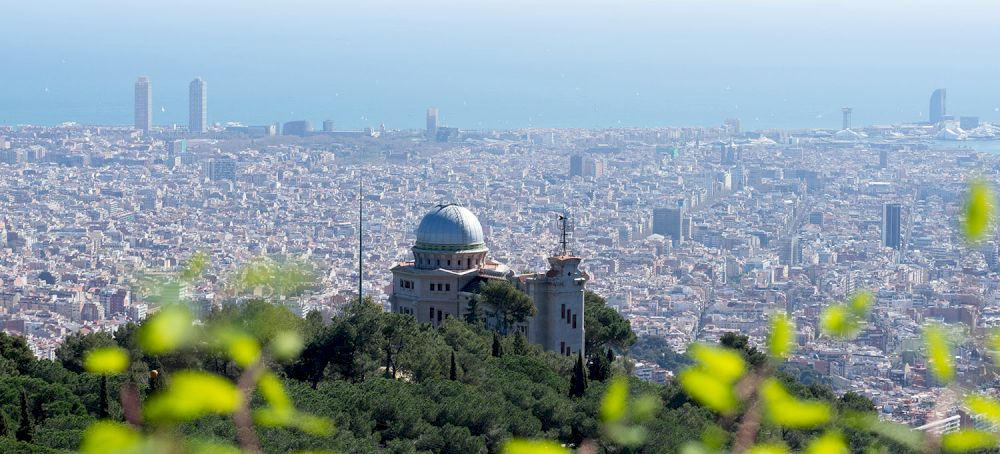
Barcelona may be the star of the Catalan show, but the unique region surrounding it also has a lot to offer: mountains, river valleys, vineyards, castles, monasteries, charming towns, and plenty of nature. Oh, and of course, a whole range of beaches along the Mediterranean Sea. Rent a car and take day trips from Barcelona, or use the city as a starting point for a road trip through Catalonia. Your options for day trips expand significantly when you rent a car, since many of the smaller towns in Catalonia are barely accessible by public transportation. Read our tips for beautiful destinations around Barcelona.
Parc Natural de Collserola
The green hills northwest of Barcelona form the vast Collserola Natural Park, where Barcelonans love to escape the hustle and bustle of their city. The stunning natural beauty isn’t the only thing that makes the park so appealing. The forests, shrublands, and small lakes are interspersed with old farmhouses, churches, and castle ruins. You can drive various routes through the park in your rental car, but for a truly immersive experience, go for a hike or bike ride. One of the best-known trails is the Carretera de les Aigües. The park has many lookout points (miradors) offering breathtaking views of Barcelona and the surrounding area. The most popular are the Mirador l’Arrabassada and the Mirador Sarrià, but you can also enjoy the panoramic views from many other (less crowded) peaks, such as the high-altitude Castell de Torre Baró in the far east of the park. Old farmhouses (masies) have been transformed into restaurants, often with terraces and surrounded by wooded hills. At the highest point, Mount Tibidado, children can have fun at the amusement park that has been there for over a hundred years. In addition to roller coasters, a Ferris wheel, bumper cars, funhouse mirrors, and carousels, there is a walking promenade open to the public free of charge, the Área Panorámica. At the information point along the Carretera de l’Església just outside Vallvidrera, you can get more information about what there is to see and do in the park, as well as where to park your rental car.
Canet de Mar
To the northeast of Barcelona lies a variety of seaside resorts. A lesser-known gem on that coast is Canet de Mar, which was home to the Modernist architect Lluís Domènech i Montaner. If we mention that he designed the epic Palau de la Música Catalana in Barcelona, that might ring a bell. He also left his mark on Canet de Mar. His most impressive work there is the medieval Castell de Santa Florentina, which he restored and embellished. As a result, this castle has become a masterful blend of Catalan Gothic and Modernism. Be sure to order tickets online in advance, as the number of guided tours is limited. To see other Modernist buildings, follow the Modernist Route. After your stroll through town, you can relax on Platja Canet beach. A little further north lies Platja de les Roques Blanques, nestled among low rock formations.
Girona
First, a quick explanation. You’ll see the name of this beautiful old town spelled differently: Gerona is the Spanish spelling, Girona the Catalan one. The Catalans naturally prefer the latter, and that’s how you’ll see it on the road signs. It’s about a hundred kilometers from Barcelona by rental car and is a fantastic destination for a day trip. Or two days, because there’s so much to see and admire in Girona. Many people know the name because the airport for budget airlines is nearby, but they’ve never actually visited the town. That’s a shame, because the old town of Girona is exceptionally beautiful and is really a must-see when you’re in Catalonia. Built between the 11th and 18th centuries , Girona Cathedral is a patchwork of styles: it features the widest Gothic nave in the world, a Romanesque cloister and tower, while the staircases and façade are Baroque. The Tapestry of the Creation (Tapís de la Creació) dates back to the 11th century. Be sure to admire the beautiful, soaring stained-glass windows as well. The Basílica de Sant Feliu is a lovely complement to the cathedral.
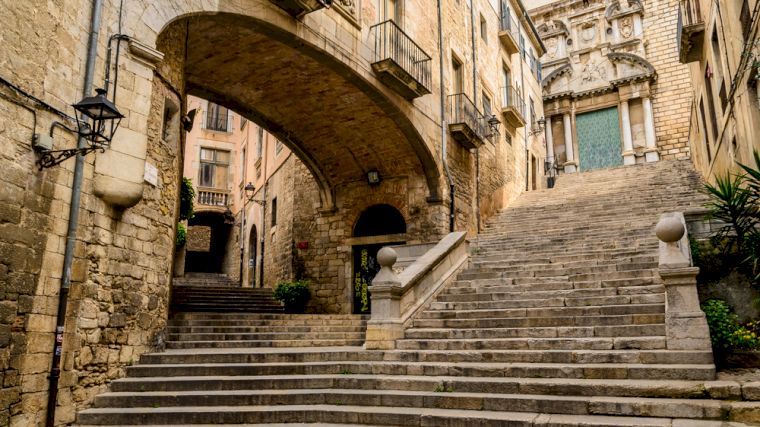
For another glimpse into history, visit the Banys Àrabs (Arab Baths) from the 12th century. In the Old Town (Barri Vell), you’ll go from one surprise to the next. In the narrow streets, alleys, and stairways, you’ll truly feel as if you’ve stepped back in time. No wonder this was the perfect setting for the TV series Game of Thrones. The old Jewish quarter, El Call, has even narrower cobblestone alleys, stairways, and stone arches, if that’s possible. Until the expulsion of the Jews in 1492, Girona had a large Jewish community. The Museu d’Història dels Jueus tells their story.
From the bridges over the Onyar River, you have a beautiful view of the colorfully painted houses clinging to the banks. The iron bridge, built by none other than Gustave Eiffel, is particularly popular. That bridge leads to the newer part of the city, where you can end the day with a drink and a bite to eat at one of the many tapas bars.
Cadaqués and Cap de Creus
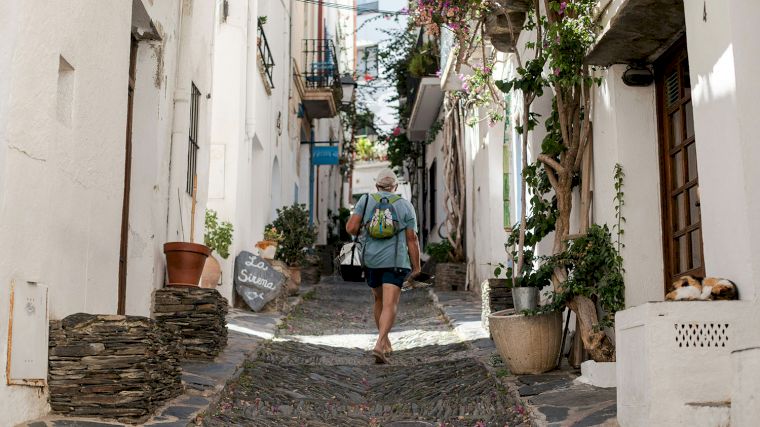
According to some, Cadaqués—the most beautiful village on the Costa Brava—is a romantic little town nestled in a quiet bay with green hills in the background. Pablo Picasso and Salvador Dalí found inspiration here, so Cadaqués can truly be called picturesque. It still attracts artists, and you’ll find many art galleries there. Fortunately, this laid-back village has been spared the ugly commercialization found in other parts of Catalonia. The whitewashed houses with azure-blue doors are, almost without exception, adorned with bougainvillea or other colorful flowers. For a panoramic view of Cadaqués, climb up to the Iglesia de Santa María. Drive your rental car a short distance north, and at the Far del Cap de Creus lighthouse, you’ll have a stunning view of the cliffs, rock formations, coves, and pebble beaches. The coves of Cala Jugadora and Cala Culip are very photogenic, and you can also take a dip in the sea or go snorkeling there.
The east coast attracts the most tourists, but don’t forget the rest of the peninsula, most of which is a nature park. In the Parc Natural del Cap de Creus there are many fantastic hiking trails of varying lengths and difficulty levels. You can also go kayaking and hang gliding there.
Lleida
Lleida is located 160 kilometers from Barcelona, and you can drive there in less than two hours in a rental car. It’s a laid-back town on the banks of the Segre River, with a majestic castle (and a cathedral) atop a hill. To the southwest of the city lies Catalonia’s fruit-growing region. Once a year, the rolling plains around the villages of Aitona, Alcarràs, Soses, and Torres del Segre transform into a fantastic spectacle. The many fruit trees create endless fields tinged with pink. March and April are the perfect months to admire the fruit fields in full bloom.
Montserrat
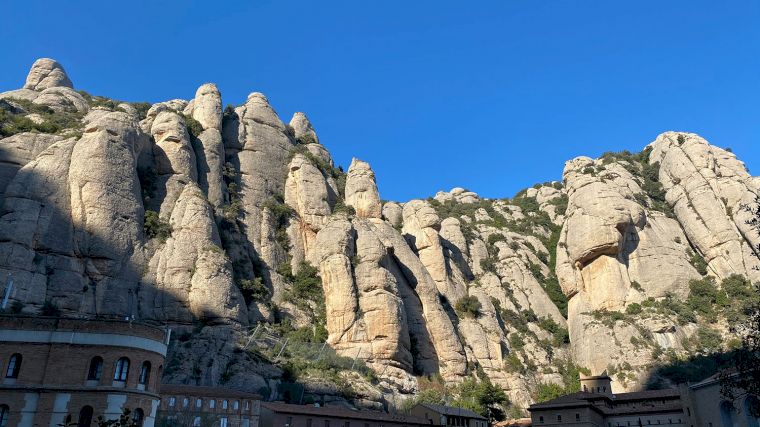
The Montserrat mountain range and the monastery spectacularly perched atop it together form one of the top attractions near Barcelona. It combines the natural beauty of the mysterious mountains with the magnificent architecture of the abbey. From Monistrol de Montserrat, you can drive a rental car all the way to the monastery via the winding BP-1121, but it’s also fun to reach the summit by cable car (aeri) or by cog railway (cremallera). The cable car station is located south of Monistrol, and the cog railway departs just north of that town. You can park your rental car for free at both stations; near the monastery, however, you’ll have to pay for parking. The monastery features an impressive basilica, intricate ceilings, and a massive pipe organ. The museum next door houses an extensive art collection, including a painting by Caravaggio depicting Saint Jerome in meditation. The rugged mountains in the surrounding protected nature reserve Muntanya de Montserrat are a paradise for hikers and nature lovers.
The Salvador Dalí Triangle
The town of Figueres isn’t particularly remarkable in and of itself, but because it’s home to the most important museum dedicated to Salvador Dalí, it still draws crowds of tourists. If you’re a fan of the surrealist artist, you should definitely take a drive in your rental car along the so-called Dalí Triangle: Figueres, Port Lligat, and Púbol. In his hometown of Figueres, Dalí converted a former theater into a surrealist palace, protected by high red walls topped with giant eggs. The artist is buried there in the crypt beneath a large glass dome. In the Toy Museum (Museu del Joguet), you can see, among other things, the toys the artist played with as a boy. In Port Lligat, Dalí lived for nearly fifty years in a row of fishermen’s cottages, which he converted into one large house. In Púbol, Dalí bought a castle for his muse, Gala. It was in poor condition at the time, but Dalí had it renovated into a little paradise with an incomparably romantic atmosphere. Púbol is a tiny village, but very beautiful and an oasis of tranquility. Walking through the nearly deserted narrow streets, you feel as if you’ve stepped back into the Middle Ages.
Vic
The city of Vic is only seventy kilometers north of Barcelona, but it feels like a world apart. The heart of the old town is the central square, Plaça Major, lined with medieval, Baroque, and Modernist mansions. On Saturdays, an atmospheric, lively market is held here, where you can buy, among other things, the sausages Vic is famous for: fuet, botifarra, and salchichón. The first stones for the Catedral de Sant Pere were laid in the 11th century, but sections were added or rebuilt in the centuries that followed. As a result, you’ll see a mix of styles: Romanesque, Neoclassical, and Baroque. The church features beautiful murals and impressive columns that support the nave. The Museu d’Art Medieval boasts an enormous collection of medieval art: paintings, sculptures, wood carvings, and altarpieces. In a room with a massive screen, you’ll be taken on a virtual journey to a world from a thousand years ago. Highly recommended, even for children, to learn more about Catalan history and culture. After visiting this museum, wander through the medieval city and discover charming little squares, alleys, and bridges, such as the old Pont de Queralt over the Mèder River—which is really more of a stream.
Montblanc
Another beautiful old town is Montblanc, about an hour and a half’s drive from Barcelona. In the center, most of the medieval houses are well-preserved, and the city wall surrounding it is also largely intact. Take the time to admire the beautifully restored watchtowers and gateways. Within those walls, you’ll find, among other things, a simple 13th-century Romanesque church, the grand Església de Santa Maria with its elegant Baroque façade, and the particularly charming, tree-lined Plaça Major. Just outside the city walls are several parking lots where you can park your rental car, including one at Muralla de Sant Jordi. You’ll come across references to Sant Jordi everywhere in Montblanc, as the legend of Saint George and the Dragon is said to have taken place in this town. Around Saint George’s feast day (April 23), the legend is reenacted in Montblanc.
La Ruta de Cister: Monasteries and Wines
Montblanc is worth a visit in its own right, but the surrounding area is also stunning. It’s a great starting point for La Ruta de Cister. This route takes you past three magnificent monasteries founded in the 12th century by the Cistercian Order: Poblet, Vallbona de les Monges, and Santes Creus. These monasteries were built after the Moors were driven out, much like castles, to defend Christianity. During your trip past monasteries and castles, you’ll drive through a varied landscape and fantastic wine regions. The La Ruta del Cister website describes various routes you can take by rental car, depending on your interests: monasteries, castles, vineyards, medieval villages, or nature reserves.
Visiting Nature Reserves with Your Rental Car
Did you know that nearly a third of Catalonia is designated as protected nature reserves? As you drive along the back roads in your rental car, you’ll notice that the natural beauty is incredibly diverse.
The La Garrotxa Nature Park La Garrotxa has more than forty extinct volcanoes. The highest volcano, Volcà del Croscat (786 m), was the last to erupt, but that was already eleven thousand years ago. Near this volcano lies La Fageda d’en Jordà, a forest consisting almost exclusively of large beech trees. The volcanic cones in the landscape are interspersed with deep, forested ravines and misty valleys. Two distinct lava flows formed the impressive basalt cliff of Castellfollit de la Roca. No fewer than 28 hiking trails have been marked out in the area, and with your rental car, you can take a trip through medieval villages such as Vall d’en Bas, Santa Pau, and Besalú.
Between Vic and Girona lie the densely forested mountains of Les Guilleries, which are crisscrossed by countless small rivers that flow into the Sau and Susqueda reservoirs. There are a few small beaches along the shores of the Pantà de Sau, where you can go kayaking or paddleboarding. This area, too, is dotted with charming, rural villages. To name just a few: Osor, Amer, and Sant Julià. Various small towns are connected by old little bridges, and there are churches and monasteries—or their ruins—everywhere.
South of Les Guilleries lies the Montseny Natural Park, dominated by two high peaks: the Turó de l’Home (1,706 m) and the Matagalls (1,697 m). The park is rich in springs, streams, and waterfalls. The Pantà de Santa Fe reservoir is teeming with fish. Be sure to visit the picturesque villages of Viladrau, El Brull, and Hostalric.
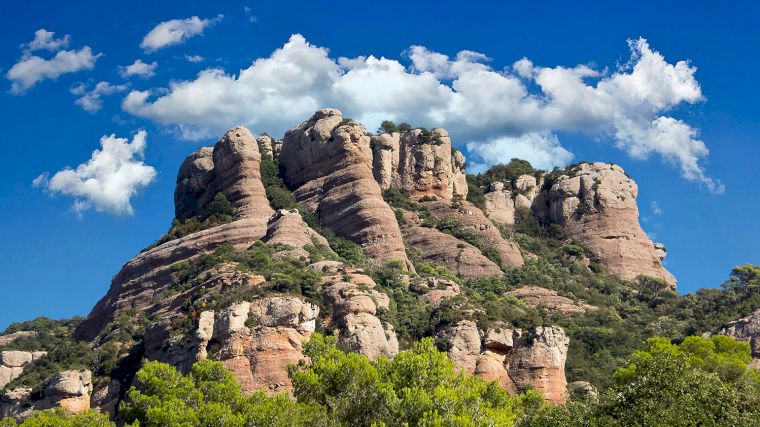
If you go straight through the nature park Sant Llorenç del Munt i l’Obac , you’ll feel as if you’ve stepped into another world. The rocks here sometimes take on deep red hues. Park your rental car at the Coll d’Estenalles parking lot, and at the information center there, you can ask about the various hiking trails. One of them leads to the summit of La Mola (1,103 m), where a Romanesque monastery stands.
If you drive an hour east, you’ll arrive at the dramatic mountain range Sant Miquel del Fai, where nature and culture go hand in hand. River water, rain, and meltwater have created a unique landscape here: caves with stalactites and stalagmites, remarkable rock formations, pools, and waterfalls plunging from great heights. You’ll also find the spectacular cliffs of Les Cingles de Bertí and a Romanesque monastery that seems to float between heaven and earth and is partially carved into the rocks. Unfortunately, this monastery has limited visiting hours, and you must request a ticket in advance, as well as a permit to park your rental car at the monastery.
Close to Tarragona, about a two-hour drive from Barcelona, lies the rugged nature park Serra de Montsant. It is characterized by steep rock faces, including the Fraguerau Gorge. The river that formed this gorge is fed, in part, by spectacular waterfalls. In addition to unique rock formations, caves, gorges, and valleys, you’ll find small chapels and hermitages in this area. The villages of Ulldemolins and La Morera are good starting points for a hike through these mountains.
Rent a Car to Visit Wine Regions
Excellent wine is produced in the Montsant mountains, and just south of them lies the famous wine region Priorat. It is best known for its deep-red, high-quality wines—which come with a price tag to match. The vineyards are situated not only on rolling slopes but also on terraces along deep valleys, sometimes surrounded by steep cliffs. You don’t have to be a wine lover to appreciate the beauty of this region. Take a hike or bike ride along centuries-old trails to quiet villages with “catedrals del vi” (wine cathedrals), hidden chapels, and interesting bodegas.
Closer to Barcelona—and therefore more heavily visited—is the wine region Penedès, which is best known for producing cava, the Catalan version of champagne. Incidentally, excellent red and white wines are also produced there. There are countless wineries that organize tours and tastings. Just make sure the driver of your rental car exercises restraint during the tastings. They can buy a few bottles to evaluate after returning home. Or book an overnight stay in the wine region, as many wineries offer rooms for rent.
Drive a rental car through medieval heritage sites
We’ve already mentioned medieval villages, towns, and castles a few times above. Catalonia is richly blessed with places where history comes to life, especially around Girona.
If you drive northwest from Girona, you’ll reach the town of Besalú. Park your rental car before entering the town and walk to the original entrance, an impressive 12th-century Romanesque bridge. You can take beautiful photos of it from the modern bridge. The narrow streets lined with old houses, the fortifications, a beautifully restored Jewish bathhouse, a synagogue, and a Romanesque church all combine to paint a picture of life in the Middle Ages. Book a hotel room to soak up the authentic atmosphere in the evening, once the day-trippers have left.
If you follow the Fluvia River further west, you’ll see Castellfolit de la Roca, perched on the edge of a cliff. The best view is from the other side of the river, on a road parallel to the GIV-5221, just behind the Mont-Rock hotel.
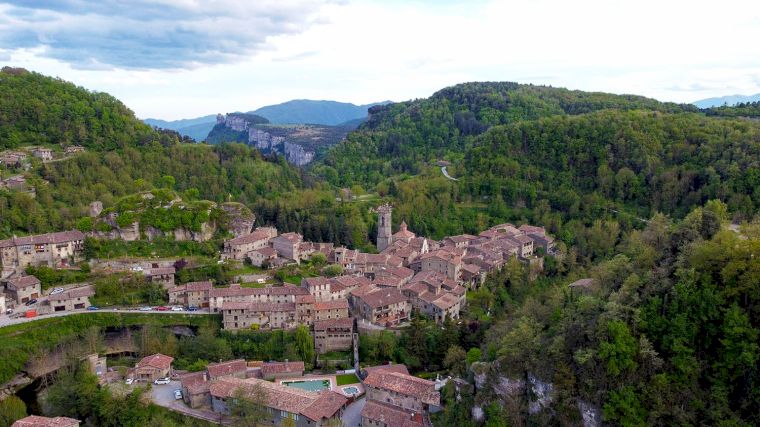
From this point, it’s about an hour’s drive along winding roads to Rupit, yet another gem of an old village perched on a cliff. The oldest houses date back to the 10th century, and especially along the narrow street Carrer del Fossar, you can almost feel the history. A rickety suspension bridge connects the two parts of Rupit. Near the village, there are several spots offering dramatically beautiful views of cliffs and waterfalls in the rugged Collsacabra nature reserve, including Mirador dels Bassis, Salt de Sallent, and Sant Joan de Fàbregues, which is also home to a small Romanesque church.
The direct road to Tavertet is a very narrow and only partially paved path branching off the C-153. If you’ve rented a car, it’s better to take the (longer) route via the C-153 and BV-5207. Tavertet is quite isolated and therefore attracts fewer tourists. Park your rental car just outside the village and walk along the beautifully cobblestone-paved main street, Carrer del Mig, to the Mirador de Tavertet viewpoint. From the edge of the cliff, you’ll have an incredibly beautiful view of Les Guilleries and the Sau reservoir.
Don’t assume you can cover the route described above in a single day. You’ll need at least two days—but ideally even longer. The distances between the villages aren’t that great, but you’ll be driving slowly along winding roads, and there’s plenty to see both in the villages themselves and along the way.
Tarragona
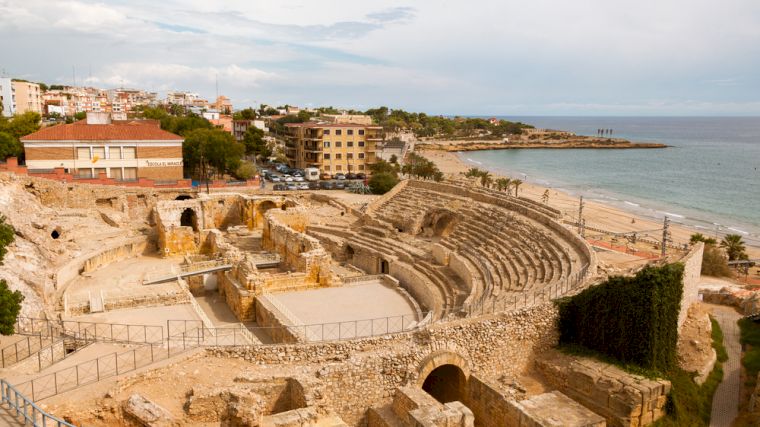
In Roman times, Tarragona was the capital of the province of Hispania Tarraconensis, which covered the northern, eastern, and central parts of present-day Spain. You can still see that it was an important city from the enormous amphitheater right by the sea and other Roman ruins, such as sections of the city wall, the Fòrum Provincial, the Circ Romà racetrack, and underground tunnels. Four kilometers outside the city lies a magnificent aqueduct. The Museu Nacional Arqueològic offers a comprehensive look into Tarragona’s impressive Roman past.
Tarragona also boasts a massive cathedral, which stands on the site where the Romans once had a temple and the Moors a mosque. El Serrallo is a historic and still-active fishing neighborhood. The restaurants along the palm-lined promenade serve the finest seafood dishes.
Terres de l’Ebre
From Barcelona, it’s just a two-hour drive to the Ebro River delta. It’s an area where you’ll hardly see any tourists—especially outside the summer vacation season—and where you can truly unwind. It’s an endlessly flat nature reserve, but it’s anything but boring. From the various fishing villages, you can take trips on traditional barques de perxar and admire flamingos, black-winged stilts, herons, and other bird species up close. La Ràpita is located in the southwest, in the flat area of the delta, but the mountains of the Serra de Montsià rise up in the background. The hike to the Foradada viewpoint is steeper than you might think at first glance, and from there you’ll have a panoramic view of the surrounding mountain range and the Ebro Delta.
Rent a car in Barcelona and explore Catalonia
The above is just a selection of the sights around Barcelona. You’ll likely have a hard time choosing which ones to visit by rental car. We’ve by no means listed everything worth seeing in Catalonia, as the region is so incredibly diverse that you can never really get enough of it. You can immerse yourself in culture, history, nature, or outdoor sports. With a rental car, you can easily reach remote medieval villages, monasteries, mountains, rugged cliffs, beautiful wine regions, nature parks, and valleys. Oh, and of course, the various beaches along the Costa Brava and the Costa Dorada. If you’ve mainly visited those beaches so far, we’re sure you’ll see Spain in a whole new light once you rent a car and travel along the country’s back roads.
By the way, did you know that it’s very easy to rent a car for a one-way trip from Barcelona? That means you pick up the rental car in Barcelona but drop it off in, say, Valencia, Alicante, or Madrid. Just enter a different final destination on our search form, and we’ll show you only cars for which that one-way option is available.

Where would you like to rent a car?
- 24000+ pick-up locations
- Free cancellation
- Independent comparator

Useful tips for a well-prepared trip
Which insurance should I choose, and what's the deal with the deposit? Read our articles with useful information and tips to ensure you choose the right rental car for you.


- Renting a Car with Kids: The Best Routes and Stops
- La Palma by Rental Car: Routes, Day Trips, and Tips
- Explore 18 top destinations around Girona in a rental car
- The Best Road Trips Around Madrid in a Rental Car
- 15 Tips for the Best Vacation in Menorca
- The 11 Best Day Trips in the Valencian Community