- Popular countries
- Popular regions
- Popular cities
- Popular airports
- Car Rental Italy
- Car Rental Spain
- Car Rental United States
- Car Rental Portugal
- Car Rental South Africa
- Car Rental France
- Car Rental Netherlands
- Car Rental Greece
- Car Rental Germany
- Car Rental United Kingdom
- Car Rental Belgium
- Car Rental Croatia
- Car Rental Switzerland
- Car Rental Austria
- Car Rental Denmark
- Car Rental Norway
- Car Rental Australia
- Car Rental Ireland
- Car Rental Cyprus
- Car Rental Canada
- Car Rental Florida
- Car Rental Sicily
- Car Rental California
- Car Rental England
- Car Rental Sardinia
- Car Rental Mallorca
- Car Rental Ibiza
- Car Rental Crete
- Car Rental Tenerife
- Car Rental Rhodes
- Car Rental Madeira
- Car Rental Corsica
- Car Rental Gran Canaria
- Car Rental Malta
- Car Rental Scotland
- Car Rental Azores
- Car Rental Fuerteventura
- Car Rental Lanzarote
- Car Rental Corfu
- Car Rental Zakynthos
- Car Rental Amsterdam
- Car Rental Milan
- Car Rental Miami
- Car Rental Lisbon
- Car Rental Malaga
- Car Rental Porto
- Car Rental Rome
- Car Rental Cape Town
- Car Rental Barcelona
- Car Rental Faro
- Car Rental Alicante
- Car Rental Nice
- Car Rental Bari
- Car Rental Naples
- Car Rental Johannesburg
- Car Rental Brussels
- Car Rental Bergamo
- Car Rental Orlando
- Car Rental Palma de Mallorca
- Car Rental Vienna
- Car Rental Amsterdam Schiphol Airport
- Car Rental Miami International Airport
- Car Rental Lisbon Airport
- Car Rental Malaga Airport
- Car Rental Porto Airport
- Car Rental Milan Malpensa Airport
- Car Rental Rome Fiumicino Airport
- Car Rental Faro Airport
- Car Rental Alicante Airport
- Car Rental Bari Palese Airport
- Car Rental Nice Airport
- Car Rental Barcelona Airport
- Car Rental Cape Town Airport - International Terminal
- Car Rental Bergamo Airport
- Car Rental Orlando International Airport
- Car Rental Mallorca Airport
- Car Rental Catania Airport
- Car Rental Johannesburg International Airport
- Car Rental Ibiza Airport
- Car Rental Athens Airport

Top Attractions Around Bordeaux: 20 Tips
Reserve a rental car at the airport or at the TGV station
France is the most visited country in the world, but that doesn’t mean it’s impossible to escape the crowds. Outside of tourist hotspots like Paris and Provence, there are plenty of less crowded places that are just as fascinating. Immerse yourself in nature, explore historic cities, and savor delicious regional cuisine. In other words: discover the real France!
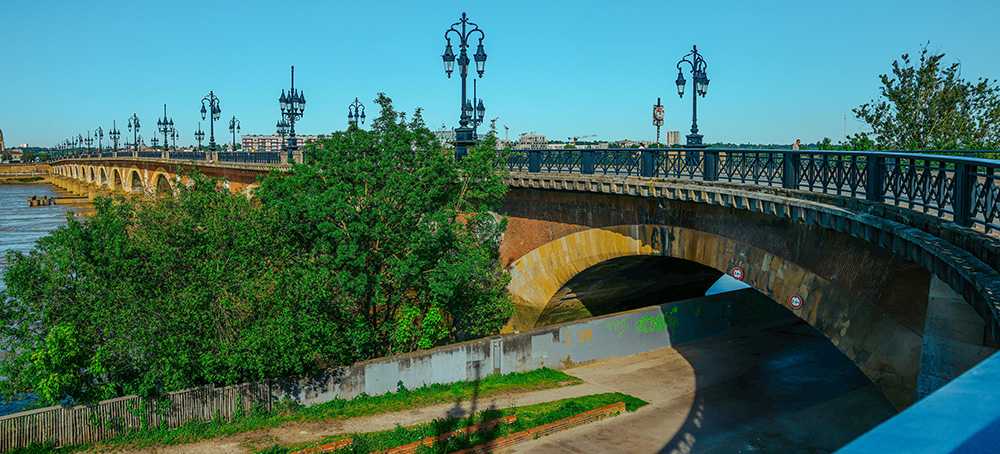
Bordeaux is the beautiful capital of the Gironde department on the Atlantic coast in southwestern France. The sandy beaches along that coast are major attractions, but there’s much more to see and do around Bordeaux. Of course, there are the famous vineyards, but also impressive castles and picturesque towns and villages where you can get a taste of French country life. We’ve put together a list of the best sights around Bordeaux. Take your pick, rent a car, and hit the road!
1. Bordeaux
Bordeaux is usually overshadowed by the French capital, Paris, but it’s certainly no less impressive. Why do you think the entire historic heart of the city is listed as a UNESCO World Heritage Site? Exactly—because it’s a fantastic city, brimming with architectural treasures. The old town is also known as Port de la Lune (Moon Harbor), because it lies like a crescent moon along a bend in the Garonne River.
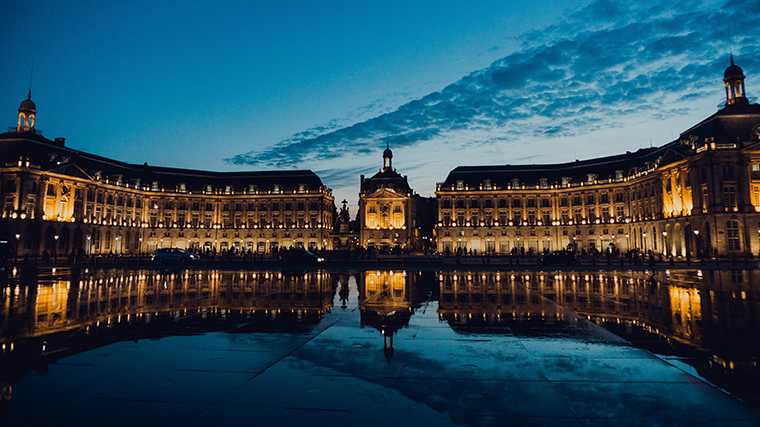
It’s wonderful to stroll along the riverfront promenades— Les Quais —along the river. You’ll pass the Place de la Bourse with its famous water mirror— Miroir d’Eau —where elegant 18th-century buildings are beautifully reflected, especially at night. Behind it lies the charming Place du Parlement, surrounded by outdoor cafés. The majestic Saint-André Cathedral was built between the 12th and 14th centuries and wasn’t given a separate bell tower—the Tour Pey Berland—until later. It takes 233 steps to climb to the top, where you’ll enjoy a fantastic view of the cathedral and the rest of historic Bordeaux. Across from the cathedral stands City Hall, which has a rather grand appearance. It was originally the Palais Rohan, the residence of the archbishop.
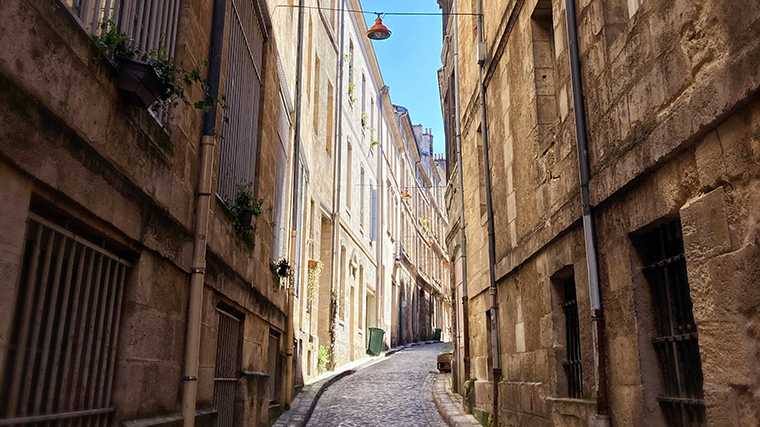
Bordeaux’s largest fresh market is the Marché des Capucins, where you’ll find a wide variety of local products at the colorful stalls—from fruits and vegetables to seafood, artisanal cheeses, deli meats, and, of course, regional wines. There are also a few small restaurants serving traditional dishes and local specialties. The market is closed on Sundays and Mondays.
The southwest of France is also known as Aquitaine, and at the Musée d’Aquitaine, you can explore the history of this region: from archaeological finds dating back thousands of years, through the Gallo-Roman era and the Middle Ages, to the present day. The Musée des Beaux-Arts has a beautiful collection of classical paintings and sculptures. For modern art, head to the CAPC. You can see how a wealthy resident of Bordeaux decorated his home at the Musée des Arts Décoratifs et du Design.
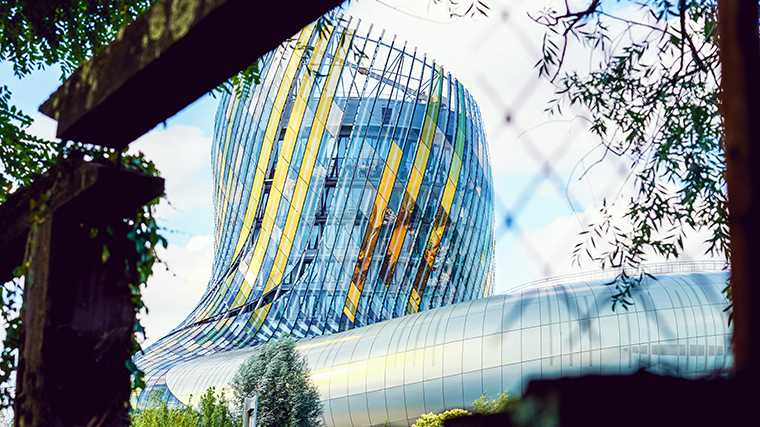
When you say Bordeaux, you say wine, and the city is home to two museums dedicated exclusively to this grape-based beverage. The Musée du Vin et du Négoce is the best place to learn more about the origins of the wine industry in Bordeaux, ancient trade routes, and historical and modern winemaking techniques. The Cité du Vin is housed in a uniquely designed building made of aluminum and glass. Here, you can immerse yourself in the world of wine through interactive displays. On the top floor, you can not only enjoy a glass of wine but also take in the view of Bordeaux.
2. Castles near Bordeaux
If you drive out of Bordeaux in your rental car, it won’t be long before you come across one of the many ancient castles. The Château de la Brède, just a thirty-minute drive south of Bordeaux, is particularly impressive. Not only is it a well-preserved 14th-century castle, but it’s also where the philosopher Montesquieu was born, lived, and worked. He was the founder of the idea that the legislative, executive, and judicial branches of government must be separate. Guided tours are offered from March through November, and you must register in advance.
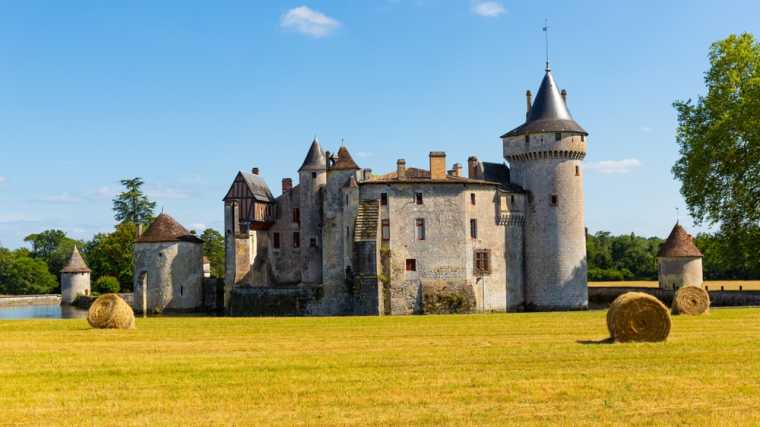
The stately Château ducal de Cadillac has been beautifully restored, and inside you’ll find remarkable ceilings and grand French-style fireplaces, richly painted shutters, and a collection of tapestries from the 16th and 17th centuries. During the French Revolution, the castle served as a prison, and you can tour the cells.
The Château Fort de Roquetaillade has been in the same family’s possession for over seven hundred years and is still inhabited today. Within its walls are actually two castles: the old one from the twelfth century and the “new” one from the fourteenth century.
A little further south stands the imposing Château de Vayres on the banks of the Dordogne River. This castle, too, can only be visited by appointment. It boasts an impressive wine collection in its cellars, and you’re welcome to have a picnic in the gardens.
3. La Réole
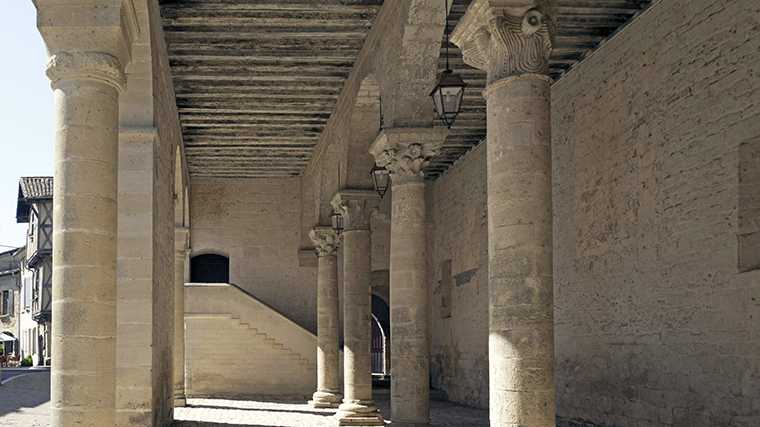
If you’ve rented a car in Bordeaux, it’s about an hour’s drive to the historic town of La Réole. It grew up around a monastery that stood on the hills on the north bank of the Garonne in the tenth century. Nothing remains of that original monastery; it was rebuilt in the eighteenth century and is now used as the town hall. The monastery’s church, however, has been preserved: the Église Saint-Pierre. La Réole’s original town hall dates back to the 12th century and served as a prison in the 18th century. Later, it became a market hall, which explains why the lower section is open. In the narrow streets surrounding this former town hall, you’ll see half-timbered houses. Behind the current town hall stands the Château des Quat’Sos (Castle of the Four Sisters). The best view of this castle is from across the river. Unfortunately, you can no longer drive there via the Pont du Rouergue—designed by Gustave Eiffel—because that imposing suspension bridge is closed to all traffic.
4. Blaye
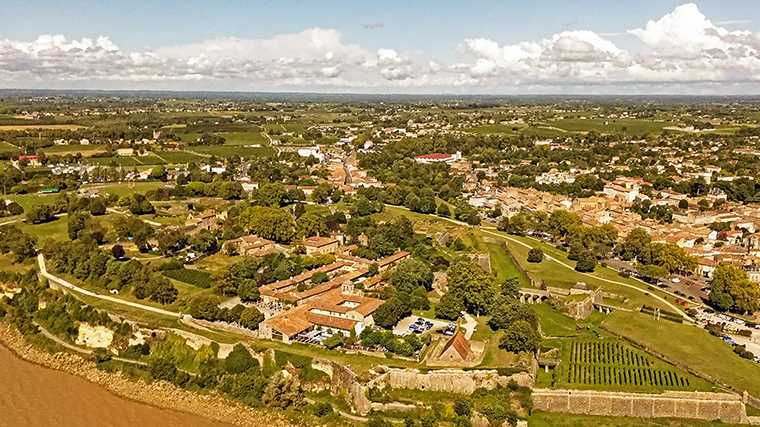
Another picturesque town is Blaye, located fifty kilometers north of Bordeaux. It is best known for its impressive Citadel, which was built in the seventeenth century by the famous military engineer Vauban. Defensive structures had stood at this strategic location on the Garonne as far back as ancient times. Vauban’s star-shaped defense system features one and a half kilometers of fortification walls, gates, and underground passages, as well as buildings necessary for a well-functioning garrison, such as barracks for 1,500 soldiers, a church, a prison, and, of course, the powder magazine. Part of the citadel has been converted into an archaeological museum. From the defensive walls, you have a beautiful view of the Garonne. You can also see the circular Fort Paté on a small island in the river and Fort Médoc on the opposite bank. Together with the citadel, these forts protected the commercially important city of Bordeaux from attacks via the river.
The many vineyards surrounding the town produce a wide variety of wines, primarily reds. The Maison du Vin in Blaye houses the region’s largest collection of wines.
5. Arcachon / Dune du Pilat
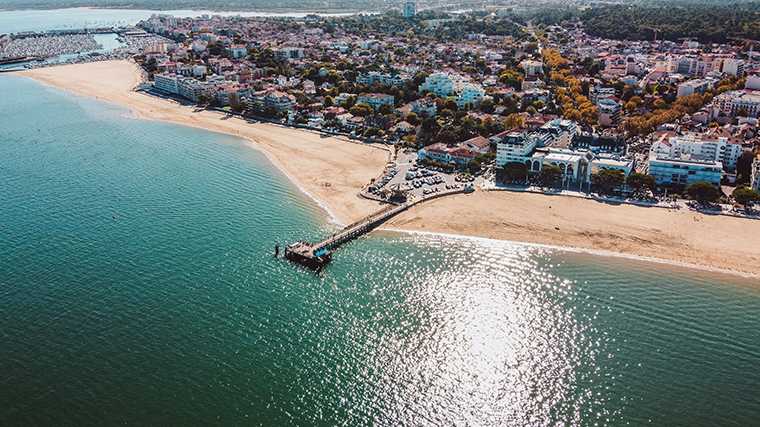
Less than an hour’s drive from Bordeaux lies the seaside resort of Arcachon on the Atlantic Ocean. Keep in mind, however, that it gets very crowded there during the French vacation month of August. Incidentally, the resort’s beach isn’t actually on the ocean, but on the Bassin d’Arcachon, a bay that’s open to the ocean. Along the beachfront promenade, you’ll find many restaurants serving seafood, including the oysters for which this region is famous. You can also enjoy them at the market, Les Halles, where many other fresh products are available for purchase. Take a walk up the hill to the villas in the Quartier de la Ville d’Hiver. Most of the villas were built in the nineteenth century and feature a unique blend of architectural styles. The Dune du Pilat is an amazing, must-see sand dune south of Arcachon. It’s an enormous, towering sand dune. You’ll be impressed by it, and the view of the ocean from the top is breathtaking.
6. Cap Ferret
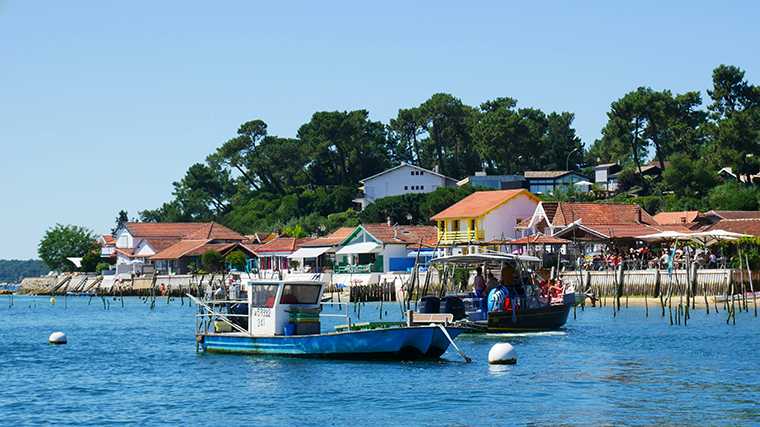
From the pier in Arcachon, you can take a ferry to Cap Ferret. It’s quieter there because there’s no public transportation to the area. Of course, you can get there by rental car, and you’ll also be able to visit other towns along the way, such as Le Canon and Les Jacquets. In all these villages, you’ll find restaurants along the bay where you can enjoy fresh oysters. The Cap Ferret peninsula boasts beautiful, wide sandy beaches along the Atlantic coast.
7. Freshwater or saltwater swimming: Biscarrosse
Further south lies Biscarrosse, nestled between two large lakes. Running between these lakes is the Canal du Littoral, a navigable canal. Beaches are mainly found along the shallow northern lake, such as Plage de Navarrosse and Plage de Caton on the eastern shore near the town of Sanguinet. Near Plage Maguide is the Aquapark, which features water slides and other inflatable play structures. Fun for both kids and adults.
On Lac Sud, you can enjoy water sports such as stand-up paddleboarding, canoeing, sailing, water skiing, and wakeboarding. On the shores of this southern lake stands the Musée de l’Hydraviation, where historic seaplanes are on display and you can learn a lot about the development of these aircraft and their uses. For example, there’s an American Albatross, an amphibious aircraft that was used for rescue operations in open water. In addition to the restored seaplanes, the museum features uniforms, memorabilia from famous pilots, engines, propellers, archival documents, flight logs, trophies, flight suits, photographs, and paintings.
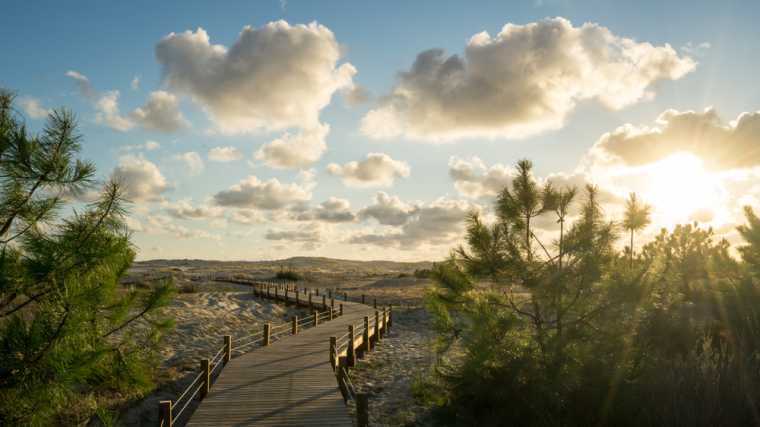
In the area around Biscarosse, you can go hiking or biking through forests and dunes.
There are many hiking and biking trails around the two lakes and through the surrounding pine forests, including paths leading to the beaches along the coast, if you prefer swimming in saltwater. Biscarrosse-Plage is situated on a long, sandy beach along the Atlantic coast. It’s also a great spot for surfing.
8. The Leyre Valleys
From the heart of the Landes Regional Nature Park, the small Leyre River flows toward the Arcachon Basin. Before reaching its final destination, it offers nearly 100 kilometers of waterways winding through the forest. You’ll paddle beneath a canopy of alders and oaks, and giant royal ferns grow along the banks. A canoe or kayak trip down this river is an unforgettable experience. You can take a half-day or full-day trip, or cover the entire distance in five days, camping along the river as you go.
Rent a canoe or kayak only from officially recognized companies bearing the “Valeurs Parc Naturel Régional” label. These companies are committed to environmental protection and play a role in monitoring the fragile natural environment around the river. You’ll find these companies in Le Teich and Biganos, at the river’s mouth, and in Moustey and Pissos, a good distance upstream. There’s also an adventure park near Pissos, where you can climb and scramble through the woods, go mountain biking, and try archery.
9. Angoulême – street art
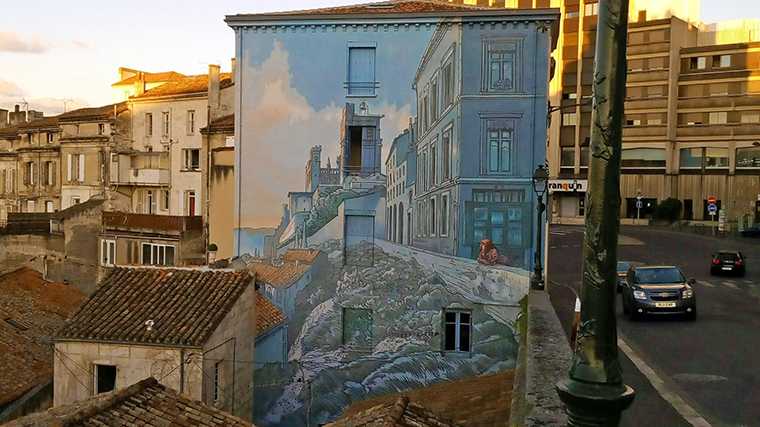
Are you a fan of street art? Then you absolutely must visit Angoulême, the French capital of comics and street art—or, as they say in France, *art urbain*. Every year at the end of January, Europe’s largest comic book festival— the Festival International de la Bande Dessinée —takes place, but there are other activities and competitions centered around comics and street art throughout the year. You’ll see reminders of this all over the city. In addition to large and amazing murals, mailboxes, trash cans, and other street furniture are also colorfully painted. There’s something to see on every street corner, and you’ll hardly be able to stop taking pictures. It’s not just this open-air museum that’s worth a visit; the Musée de la Bande Dessinée also features rotating exhibitions by comic artists.
10. Périgord-Limousin Regional Nature Park
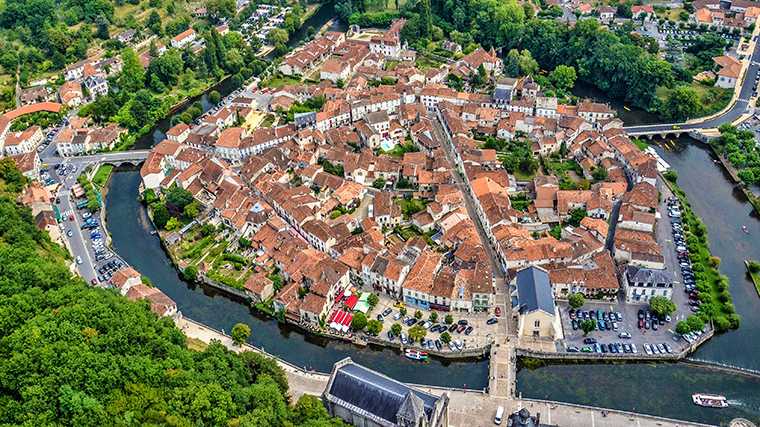
Located between Angoulême and Limoges is the Périgord-Limousin Nature Reserve, which is known for its heathlands but also consists largely of forest. You can take beautiful walks through the woods, especially along the many streams and small rivers. In the summer, these waterways provide a refreshing respite, as does the small lake at Nantheuil, where you can swim and paddle. In the fall, you can enjoy the spectacular display of colors in the deciduous forests. It’s the perfect season for spotting deer and roe deer. The nature reserve is also home to badgers, pine martens, minks, otters, foxes, and wild boars, as well as a vast variety of bird species.
Every year, the Périgord-Limousin Regional Nature Park publishes a tourist guide with up-to-date information about the region: hiking and biking trails, nature activities, history, and heritage. You can pick up this guide at the various Tourist Offices or at the Maison du Parc northeast of La Coquille.
11. Labastide d’Armagnac
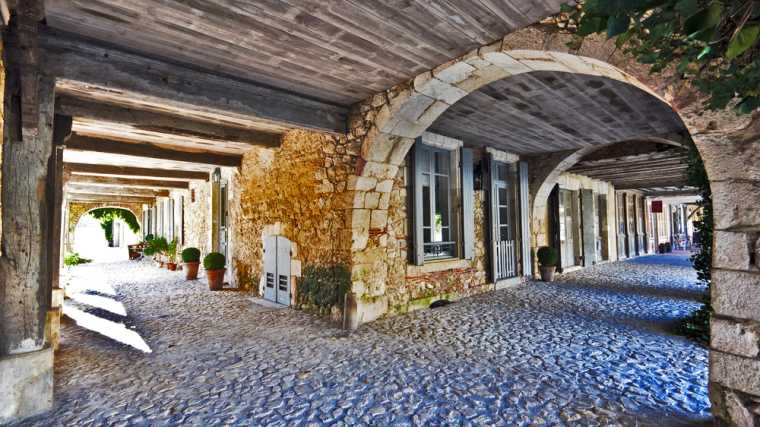
Bastides are small towns founded in the thirteenth or fourteenth century that are notable for their grid-like street layout. One of the most beautiful is undoubtedly Labastide d’Armagnac, whose charm has remained completely intact. The central square is surrounded by half-timbered houses, columns, arches, and an imposing church. You can fully enjoy the atmosphere while relaxing with a drink or a snack at one of the terraces. Many artists have settled in the medieval streets surrounding the square. The town is also a popular destination for cyclists, not least because the Chapelle des Cyclistes is located just southeast of Labastide. The medieval chapel is adorned with hundreds of jerseys worn by cycling champions, and it also houses several antique (racing) bicycles, including one used in the first Tour de France in 1903!
Armagnac is not only the name of the region but also of the famous spirit. You can get a glimpse into the secrets of its production at the Château et Domaine de Ravignan in the hamlet of Perquie. Not far from there, the oldest still in Gascony stands in the historic cellar of the Domaine d’Ognoas. Whichever distillery you choose, a tour is always followed by a tasting of various vintages of the house’s Armagnac.
From Labastide d’Armagnac, several hiking and biking trails have been marked out through the surrounding area, including one leading to the magnificent Château de Fondat.
12. La Romieu
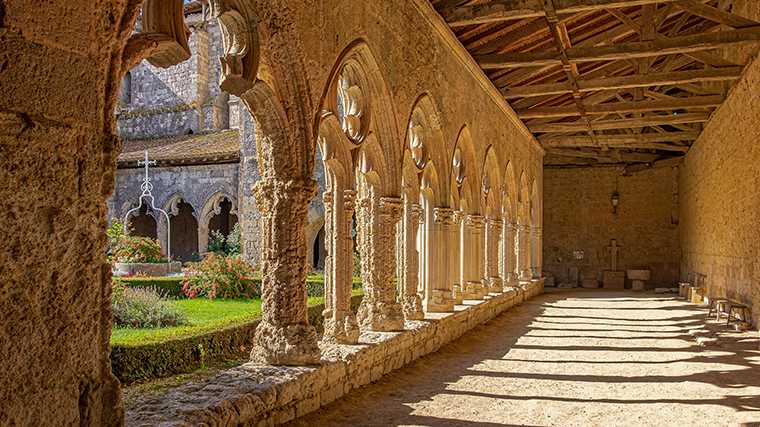
It takes about an hour to drive from Labastide to La Romieu in a rental car. If you start in Bordeaux, it will take twice as long. It’s a beautiful, historic town and is therefore listed among Les Plus Beaux Villages de France. It is known for its magnificent Collégiale St. Pierre, which is an entire complex featuring a 14th-century church, a cloister, two towers, and the remains of a palace. The church is flanked by two towers: the square one is the bell tower, while the octagonal one houses the sacristy, the former chapter house, and the archive room. You can climb both to enjoy the panoramic view.
All over La Romieu, you’ll see carved cats, large and small, and this is linked to a medieval legend. When famine struck, the people tried to survive by eating whatever animals were available, including cats. A farm girl loved cats and secretly hid a few of them. When the land once again yielded enough food, a new problem arose: the harvest was being devoured by rats, because there were no longer any cats to hunt them. The girl revealed her secret, thereby preventing another famine.
13. Bergerac / Château de Monbazillac
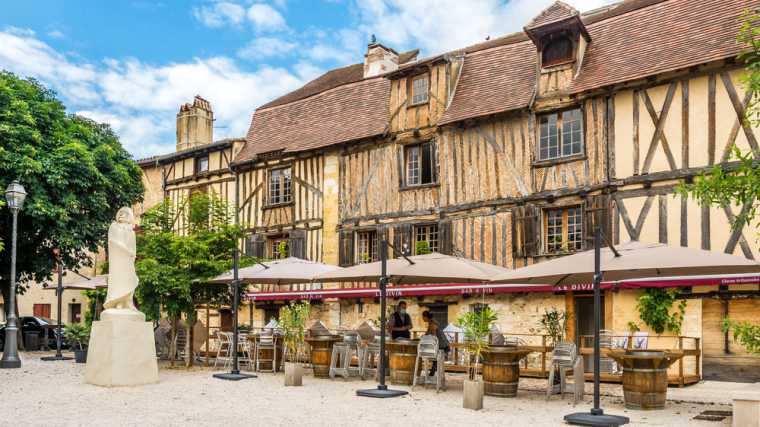
An hour and a half’s drive east of Bordeaux lies the beautiful medieval town of Bergerac on the Dordogne River. There are several places to park your rental car around the old town. The large Foirail parking lot on the east side of the town center is free.
Bergerac has been designated a “Ville d’art et d’histoire” (City of Art and History), and there is certainly no shortage of cultural attractions. Wander through the winding medieval streets and across charming little squares lined with half-timbered houses and projecting facades, flanked by colorful flower beds. You can pick up a map at the Tourist Office for a walk past the most beautiful spots. Among other things, you’ll pass the statue of Cyrano de Bergerac, even though he never actually lived in the town. The Musée du Tabac is housed in a beautiful four-story historic building, where you’ll learn all about the history—including its trade—of the tobacco plant and its use. And no, smoking isn’t allowed inside! Take a stroll along the river and enjoy the view and the peace and quiet (motorboats are prohibited on the Dordogne).
The Dordonha Museum is dedicated to the history, architecture, and heritage of Bergerac. Here, you’ll learn how the Dordogne River played a fundamental role in the town’s founding and development. The basement features an exhibition of bronze sculptures. Les Maisons des Vins is located on the river in the beautiful 17th-century Cloître des Récollets. In the evening, the wine bar opens, and you can enjoy a delicious glass of local wine in the historic courtyard.
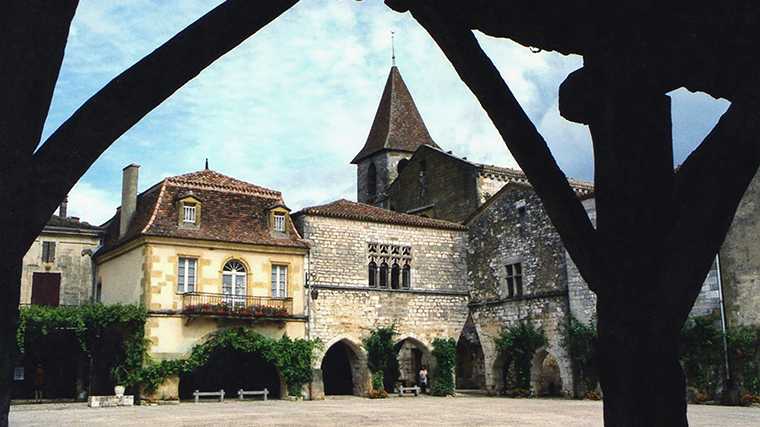
Bergerac is the perfect base for day trips in your rental car to one of the many surrounding vineyards. For example, to Château de Monbazillac, which is about a twenty-minute drive from the city. The guided tour of this 16th-century castle concludes with a wine tasting. In the Périgord Pourpre region around Bergerac, you’ll also find charming villages such as Monpazier, Eymet, and Issigeac. The latter boasts one of the best markets in the region.
14. Château des Milandes
It’s quite a long drive from Bordeaux, but if you’re already in Bergerac, you really shouldn’t miss the Château des Milandes —especially if you’re a fan of Josephine Baker. From Bergerac, it’s about an hour’s drive through the beautiful and historic Dordogne Valley. Josephine Baker was an American-French dancer, entertainer, World War II resistance fighter, and civil rights activist. She lived in this imposing Renaissance castle for over thirty years. There’s an interesting exhibition dedicated to her turbulent life, featuring stage costumes and other artifacts. The castle is surrounded by meticulously landscaped French-style gardens. During the summer months, there is a bird show featuring owls, falcons, hawks, and other birds of prey.
15. Château de Beynac
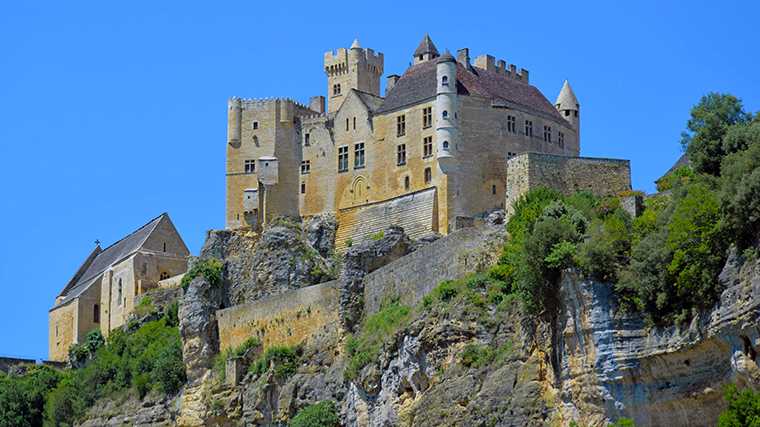
Are you more interested in the architecture of an old castle than in who lived there? Then drive your rental car a little further east. On the northern bank of the Dordogne, perched atop a limestone cliff, stands the imposing Château de Beynac, one of the best-preserved castles in this region. A visit takes you on a journey through five centuries of French history, following in the footsteps of Richard the Lionheart, Eleanor of Aquitaine, and Simon de Montfort. As is often the case, the castle was built in several phases. The oldest parts are the 12th-century keep and the 13th-century kitchen. The Hall of States is also impressive. From the top, you’ll enjoy an unforgettable view of the Dordogne Valley.
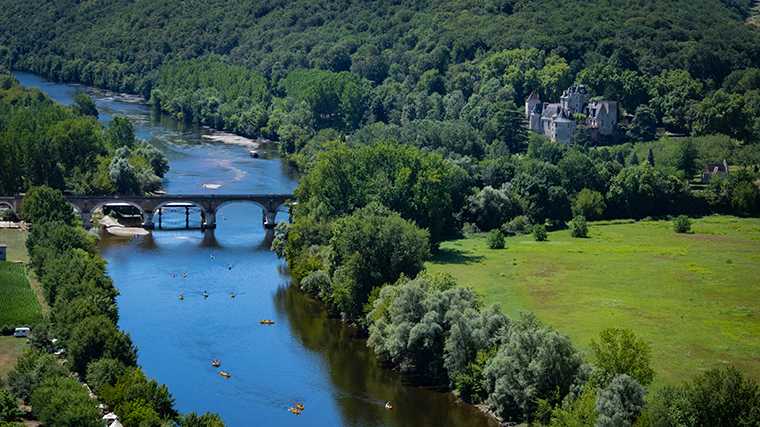
Don't miss the village at the foot of the castle. Beynac-et-Cazenac is a charming little village steeped in history.
16. La Roque-Gageac
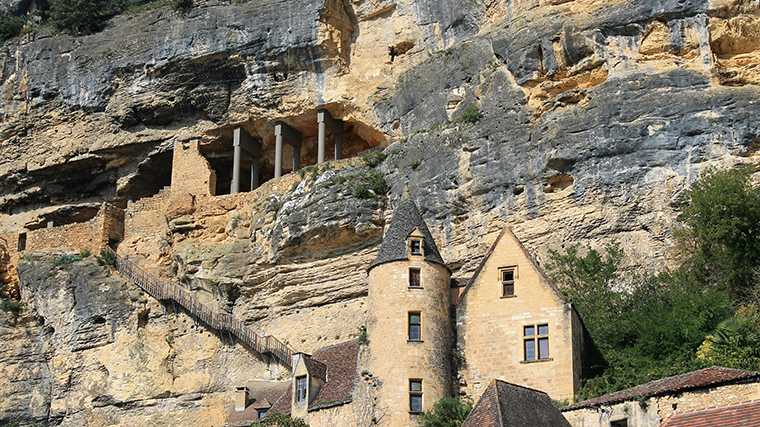
La Roque-Gageac is a fairytale village nestled between the Dordogne River and a sheer cliff. In the Middle Ages, La Roque-Gageac was a walled town with fortifications. The church, with its slate roof, dates from this period. Not far from here, flanked by a round tower, stands the country house of a prominent family, right up against the rock face. Most spectacular are the remains of the Fort de la Roque, which was carved into the rocks in the twelfth century. You reach it by climbing a metal staircase and then steps carved out of the rock face. This is not recommended for people who are afraid of heights.
For the best view of the cliffs, leave your rental car behind for a moment and take a short canoe or kayak trip on the Dordogne. You can choose a short trip from La Roque-Gageac or a longer route starting from Carsac or Vitrac. As you drift down the river, the breathtaking view of the fort will gradually come into view. Canoeing and kayaking on the Dordogne are very popular during the summer months, so we recommend reserving your boat in advance.
17. Aubeterre-sur-Dronne
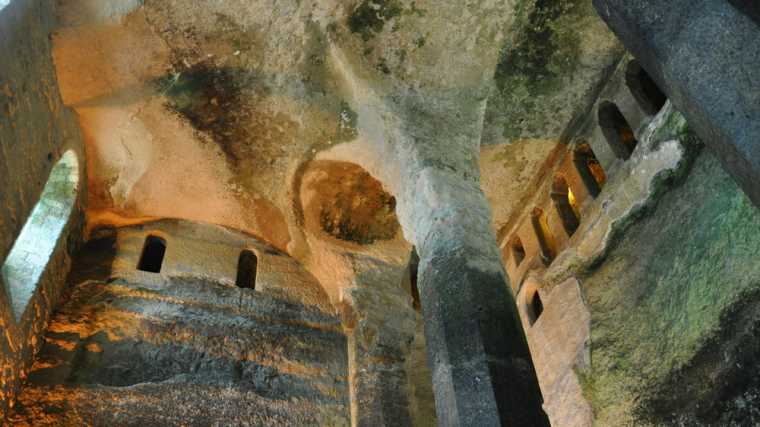
Aubeterre-sur-Dronne is a small village located over 100 kilometers from Bordeaux, and it, too, is on the list of France’s most beautiful villages. It offers a charming mix of historic monuments, picturesque houses, art galleries, and lively restaurants and cafés. Aubeterre lies on the Dronne River and stretches across both a hilltop and a valley, connected by narrow, winding streets. The main attraction is the impressive underground church, the Église Souterraine Saint-Jean. This remarkable monolithic church was carved out in the seventh century and later expanded in the twelfth century. The church extends to a depth of twenty meters, and at the very bottom there is a necropolis with stone coffins.
If you’re in Aubeterre on a hot day, you can cool off at the local beach. To get there, cross the river on the east side of the village and turn right immediately afterward. The turn-off (Plage) is clearly marked on a sign. In addition to swimming, you can also go kayaking and paddleboarding there.
18. Cahors
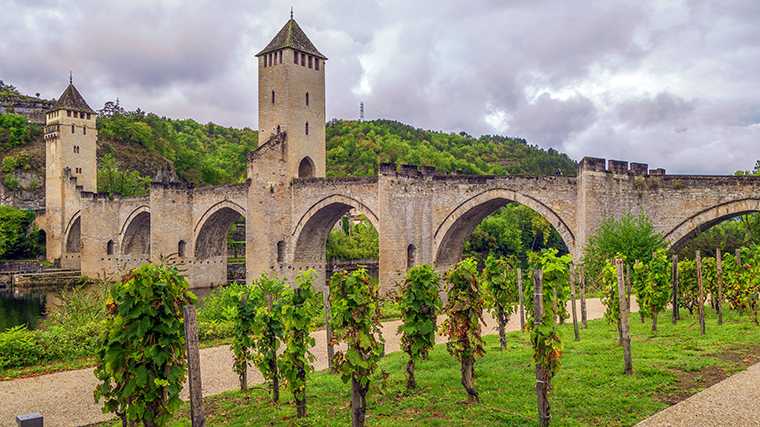
It’s a three-hour drive from Bordeaux to Cahors, but if you’ve driven your rental car to Bergerac first, it’s less than a two-hour drive from there. It’s a beautiful old town that’s almost entirely surrounded by the Lot River. The imposing Cathédrale St-Étienne was built in the Gothic and Romanesque styles and features centuries-old frescoes.
The highlight of a visit to Cahors is the medieval Pont Valentré bridge with its three towers, which is the subject of a charming anecdote. Work on the bridge took no less than seventy years, and one master builder was so angry about the slow progress that he sold his soul to the devil in exchange for ensuring that all his tasks would be completed more quickly. Once the bridge was finished, he regretted his decision and gave the devil one final task: to fetch water for the workers using a sieve. In revenge, the devil caused a stone to fall from the central tower every night, ensuring the bridge would never be finished. When the bridge was restored in the nineteenth century, the stone in question was adorned with a small statue of a devil.
19. Toulouse
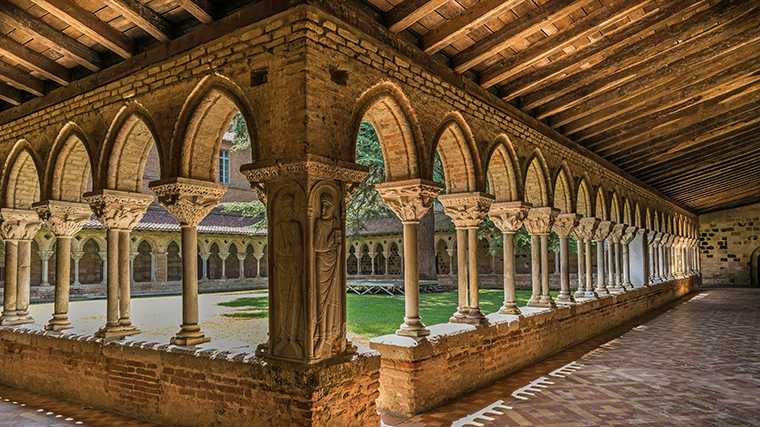
Toulouse is a little over a three-hour drive from Bordeaux, but you can make a stop at the impressive Abbaye Saint-Pierre in Moissac. The church and monastery date back to the 12th century, but it has not been a monastery since the French Revolution. Fortunately, the complex was included in France’s first list of protected buildings shortly thereafter.
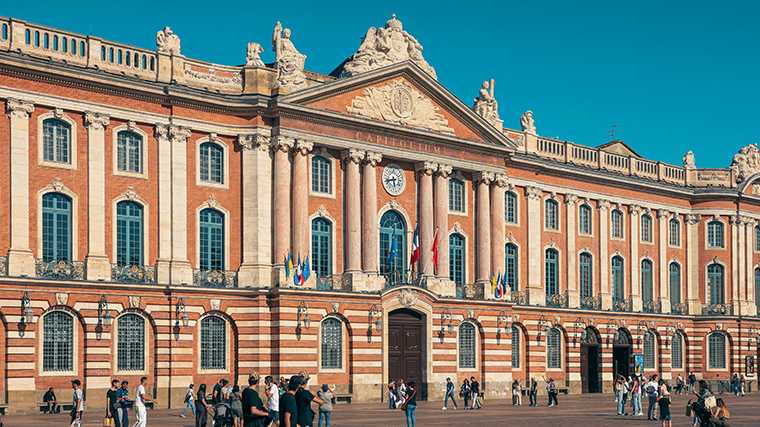
Toulouse owes its nickname, La Ville Rose (The Pink City), to the many buildings constructed from light-red terracotta bricks. This is particularly evident on the Place du Capitole, the city’s historic center. The square is dominated by City Hall (Le Capitole), a magnificent building in the neoclassical style. The architecture is impressive, but you should definitely explore the interior, which features magnificent frescoes, colorful tapestries, and richly decorated ceilings.
The city has been very prosperous for centuries, as evidenced by the mansions that wealthy merchants had built in the fifteenth and sixteenth centuries. Many of these hôtels particuliers feature extraordinary courtyards, and some are open to the public. The most beautiful of them all is the Hôtel d’Assézat, located near Pont Neuf. That means “new bridge,” but it is actually the oldest bridge in Toulouse.
Place Saint George is the perfect spot for a drink, brunch, or dinner. The square is especially bustling with life in the evening. Surrounding it are streets lined with designer shops and art galleries.
20. Wine Routes Around Bordeaux
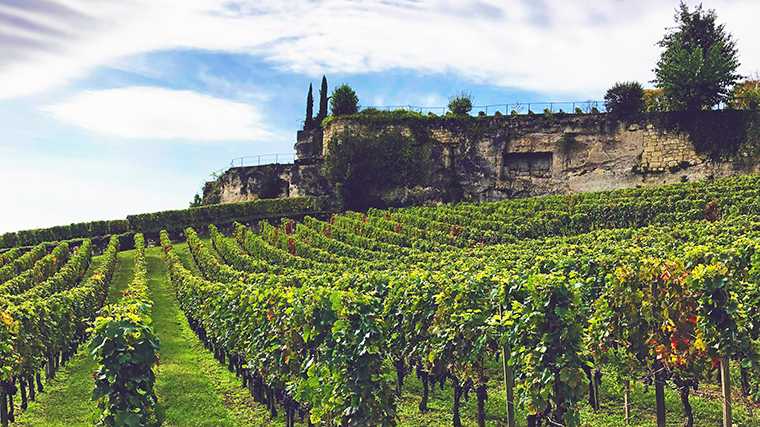
With thousands of wineries in the Bordeaux region, it’s hard to choose. Fortunately, many appellations organize “Portes Ouvertes” events—or open houses—between spring and fall, featuring free tastings, guided tours, and family-friendly activities. You can get information about the participating wineries and exactly when they open their doors from the Tourism Office.
The most famous wine region in Bordeaux is the area around Saint-Émilion. You don’t just go there to delight your taste buds—the village itself is incredibly beautiful. It offers a unique combination of world-famous wineries and stunning architecture. Every corner of this village exudes history. The Romanesque Tour du Roy may not look like much, but from the top you’ll enjoy a beautiful view of Saint-Émilion and the surrounding vineyards.
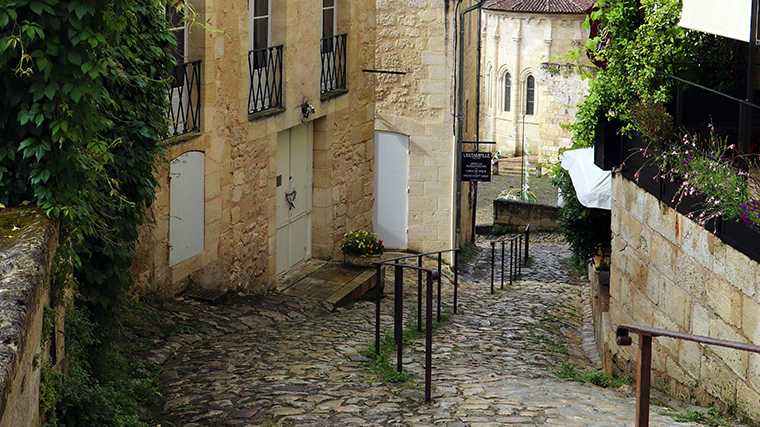
If you want to go out on your own to taste wines, you often have to make an appointment in advance with the various wineries. Plus, of course, you can’t get behind the wheel after having a drink. It’s much better to leave your rental car behind for a day and take an organized wine tour. Because let’s face it: what’s a wine route without an extensive tasting?
Renting a Car in Bordeaux
We hope we’ve inspired you to explore the area around Bordeaux. You can reserve a rental car through our site at the Bordeaux airport, but if you take the high-speed train into the city, there are cars available for rent at the TGV station. Incidentally, the TGV station is part of the same complex as the Bordeaux Saint-Jean train station.

Where would you like to rent a car?
- 24000+ pick-up locations
- Free cancellation
- Independent comparator

Useful tips for a well-prepared trip
Which insurance should I choose, and what's the deal with the deposit? Read our articles with useful information and tips to ensure you choose the right rental car for you.


