- Popular countries
- Popular regions
- Popular cities
- Popular airports
- Car Rental Italy
- Car Rental Spain
- Car Rental United States
- Car Rental Portugal
- Car Rental South Africa
- Car Rental France
- Car Rental Netherlands
- Car Rental Greece
- Car Rental Germany
- Car Rental United Kingdom
- Car Rental Belgium
- Car Rental Croatia
- Car Rental Switzerland
- Car Rental Austria
- Car Rental Denmark
- Car Rental Norway
- Car Rental Australia
- Car Rental Ireland
- Car Rental Cyprus
- Car Rental Canada
- Car Rental Florida
- Car Rental Sicily
- Car Rental California
- Car Rental England
- Car Rental Sardinia
- Car Rental Mallorca
- Car Rental Ibiza
- Car Rental Crete
- Car Rental Tenerife
- Car Rental Rhodes
- Car Rental Madeira
- Car Rental Corsica
- Car Rental Gran Canaria
- Car Rental Malta
- Car Rental Scotland
- Car Rental Azores
- Car Rental Fuerteventura
- Car Rental Lanzarote
- Car Rental Corfu
- Car Rental Zakynthos
- Car Rental Amsterdam
- Car Rental Milan
- Car Rental Miami
- Car Rental Lisbon
- Car Rental Malaga
- Car Rental Porto
- Car Rental Rome
- Car Rental Cape Town
- Car Rental Barcelona
- Car Rental Faro
- Car Rental Alicante
- Car Rental Nice
- Car Rental Bari
- Car Rental Naples
- Car Rental Johannesburg
- Car Rental Brussels
- Car Rental Bergamo
- Car Rental Orlando
- Car Rental Palma de Mallorca
- Car Rental Vienna
- Car Rental Amsterdam Schiphol Airport
- Car Rental Miami International Airport
- Car Rental Lisbon Airport
- Car Rental Malaga Airport
- Car Rental Porto Airport
- Car Rental Milan Malpensa Airport
- Car Rental Rome Fiumicino Airport
- Car Rental Faro Airport
- Car Rental Alicante Airport
- Car Rental Bari Palese Airport
- Car Rental Nice Airport
- Car Rental Barcelona Airport
- Car Rental Cape Town Airport - International Terminal
- Car Rental Bergamo Airport
- Car Rental Orlando International Airport
- Car Rental Mallorca Airport
- Car Rental Catania Airport
- Car Rental Johannesburg International Airport
- Car Rental Ibiza Airport
- Car Rental Athens Airport

Car Rental in Nice: Tips for a Côte d’Azur Road Trip
The Côte d’Azur by Rental Car: Routes from Nice Airport
The Côte d’Azur is one of the most iconic coastlines in the world. From the glamorous marinas of Monaco to the rustic fishing villages of the Var, this part of southern France offers a wealth of experiences. The best way to truly explore this region? With a rental car, at your own pace, with the wind blowing through the window and the Mediterranean Sea by your side.

Nice Airport is officially called Aéroport Nice Côte d’Azur and is the perfect starting point for a road trip like this. It’s the third-busiest airport in France, well-connected to the rest of Europe, and is literally right on the coast. Step off the plane, pick up your rental car, and five minutes later you’ll already be driving along the Promenade des Anglais. Sounds great, doesn’t it? In this guide, you’ll find helpful tips to make it an unforgettable—and above all, worry-free—vacation.
Renting a Car at Nice Airport: Practical Tips
Where do you pick up your rental car?
Nice Airport has two terminals: Terminal 1 and Terminal 2. Check in advance where your flight lands, as that determines how you’ll get to the rental location. The Rental Car Center is located at Terminal 2. You can easily reach it from the other terminal, as there’s a free tram running continuously that covers the distance in 5 minutes.
The major car rental companies also have counters in the arrivals hall of Terminal 1, but these are only for handling paperwork. You’ll need to pick up the rental car itself at the parking lot near Terminal 2. With a bit of luck, you might find a rental company willing to drive the car to Terminal 1, but that’s not guaranteed.
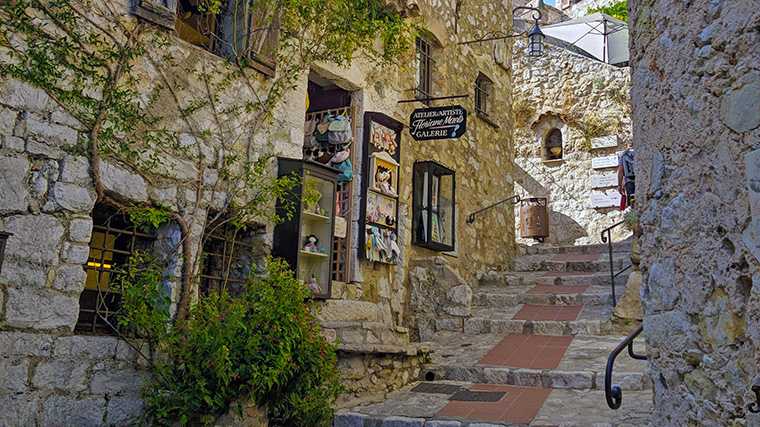
How can you avoid the crowds?
Nice Airport gets particularly busy during the summer months. July and August are peak months, and the lines at the car rental counters can get quite long during that time. Here are a few tips to help you avoid most of the crowds.
Book online well in advance
The sooner you book, the better—not only for the price, but also because the local rental company will already have your information on file, allowing for a quick and smooth check-in process.Choose early morning or late evening
The quietest times are early in the morning (before 9 a.m.) and late in the evening (after 7 p.m.). The busiest periods coincide with the arrival of major flights from European capitals, usually between 10 a.m. and 3 p.m.Book outside of school holidays
If possible, book a rental caroutside of school holidays and be sure to avoid the French vacation month of August. You can find the exact dates when French schools close on the Jours fériés website.
Use the EasyTerra car rental comparison platform to book a rental car at Nice Airport.
Which rental car should you choose for the Côte d’Azur?
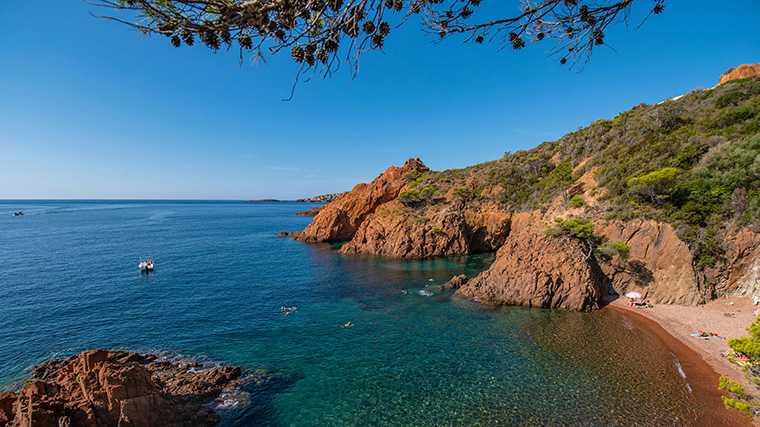
A compact rental car is ideal for a road trip along the French Riviera. In towns and villages like Monaco, Antibes, and Èze, the streets are narrow and parking spaces are limited. Do you have a fixed place to stay and therefore don’t have much luggage to bring along in the car? Rent a convertible in Nice!
If you want to explore the mountain passes and narrow mountain roads of the hinterland, you’ll need a rental car with sufficient engine power. But for the classic coastal routes, any compact car will do just fine.
Always get insurance that covers your deductible. Parking dents, minor fender-benders in narrow alleys, or on winding roads: these are realistic risks on the Côte d’Azur.
Driving on the French Riviera
Parking Your Rental Car
Parking on the Côte d’Azur is a challenge in itself. During the summer months, finding free parking in popular beach towns is virtually impossible. Here are the most important things to know:
Paid parking in blue zones
In all coastal towns, blue lines mark zones where you pay for parking at parking meters. These machines accept coins, debit cards, and credit cards.Underground parking garages
In Nice, Cannes, Antibes, and Monaco, there are several parking garages that are reliable and relatively affordable. In Monaco, the underground garages are impressively well-organized.Park Outside the City Center
In Nice, you can easily park on the outskirts of the city and reach thecenter by tram or on foot. In Cannes, parking near the train station is a good starting point.Watch out for yellow lines
Ayellow line indicates an absolute no-parking zone. Any car parked there will be towed without exception.
For more detailed information, see our guide to parking in Europe.
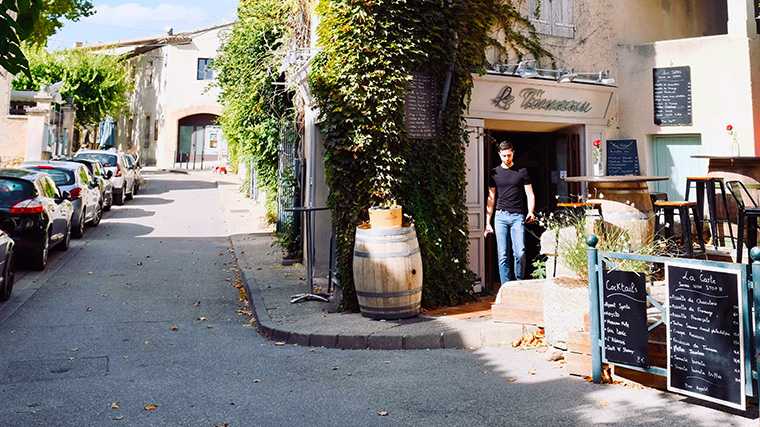
Toll Roads
The A8 highway, also known as La Provençale, runs from the Italian border through Nice, Cannes, and Aix-en-Provence toward Marseille. This is the fastest route along the coast, but it is a toll road. There are also shorter toll roads, such as the A50 between Marseille and Toulon, the A52 between Aix-en-Provence and Aubagne, and the A57 between Toulon and Le Luc.
Paying tolls: cash, credit card, or electronically?
Toll booths almost always accept credit cards, but it’s handy to have some change on hand as well. Some rental companies can activate an electronic toll device (Télépéage) in the rental car, but that’s only worth it if you use the toll roads frequently.Can you avoid toll roads in southern France?
Yes, you can, but expect heavier traffic and longer travel times. N-roads (routes nationales) and D-roads (routes départementales) are beautiful alternatives that wind through villages and along the coast.
Where can you find the cheapest gas on the Côte d’Azur?
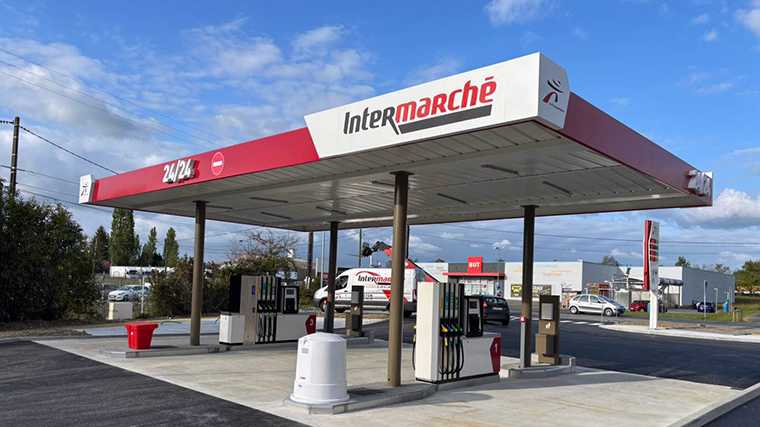
Gas stations along toll roads charge by far the highest prices for gasoline and diesel. Gas stations in small villages are cheaper. However, these are often family-run businesses that are sometimes closed. You’ll find the cheapest gas at supermarket chains like Intermarché, Carrefour, and Leclerc.
Renting a Car on the Côte d’Azur: A Practical Checklist
Before you hit the road with your rental car from Nice Airport, here’s a quick checklist:
When picking up the rental car, check the entire exterior for dents, scratches, and other damage. Don’t forget to inspect the roof, side mirrors, and tires as well. Take photos and/or videos.
Thoroughly inspect the interior for things like tears or stains in the upholstery.
Verify that the fuel level and odometer reading match what’s listed in the rental agreement.
If any damage isn’t listed on the contract or other details don’t match: don’t drive away until the rental agreement has been updated.
What are the most scenic driving routes along the Côte d’Azur?
Nice → Menton: Les Trois Corniches
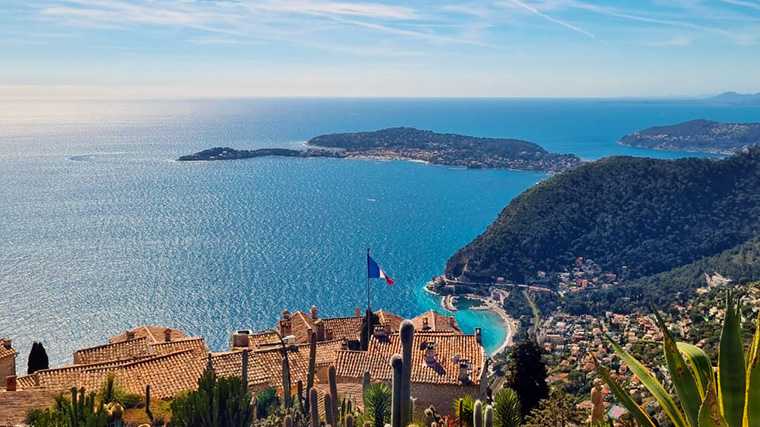
The most famous routes on the Côte d’Azur are Les Trois Corniches: three parallel roads that wind through the foothills of the Alps between Nice and the Italian border.
The Grande Corniche (D2564) is the highest road and offers spectacular views of the Mediterranean coast. One of the most impressive sections is around Col d’Èze, a mountain pass 512 meters above the ancient village of Èze.
The Moyenne Corniche (D6007) was the preferred route from Nice to Italy before the opening of the A8 highway. This picturesque road runs through the hilltop village of Èze-Village and along the upper reaches of Monaco. After Beausoleil, the road descends to the Cap Martín peninsula.
The Corniche Inférieure (D6098) is the lowest road and is therefore also known as the Basse Corniche. The road runs along the coast through a virtually unbroken urban area. Along the way, you can admire countless villas built during the Belle Époque.
Tip: Drive the Grande Corniche from Nice to Menton for the grandeur, and take the Corniche Inférieure back for the coastal atmosphere.
Nice → Saint-Tropez: the Golden Coast
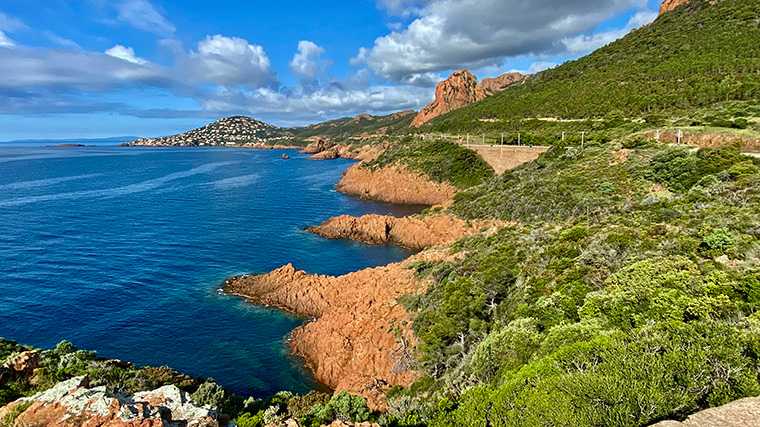
From Nice, take the D6098 west. You’ll drive past Cagnes-sur-Mer and Antibes on your way to Cannes. Then follow the beautiful coastal route to the glamorous town of Saint-Tropez. The total distance is about 120 kilometers, but it will easily take you a whole day if you stop at the most beautiful spots.
Highlights between Nice and Saint-Tropez:
Antibes – A must-see: the walled old town, the harbor full of superyachts, and the Musée Picasso are all within walking distance of each other.
Le Sentier du Littoral – A hiking trail along the rugged coast of Cap d’Antibes.
Cannes – Drive down the Boulevard de la Croisette in a convertible or with the windows down—perhaps the most cinematic city boulevard in Europe.
Corniche de l’Esterel – Between Mandelieu-la-Napoule and Fréjus, you’ll be amazed by the stunning contrast between the red-hued mountains, the green trees, and the azure-blue sea.
Nice → Mercantour National Park
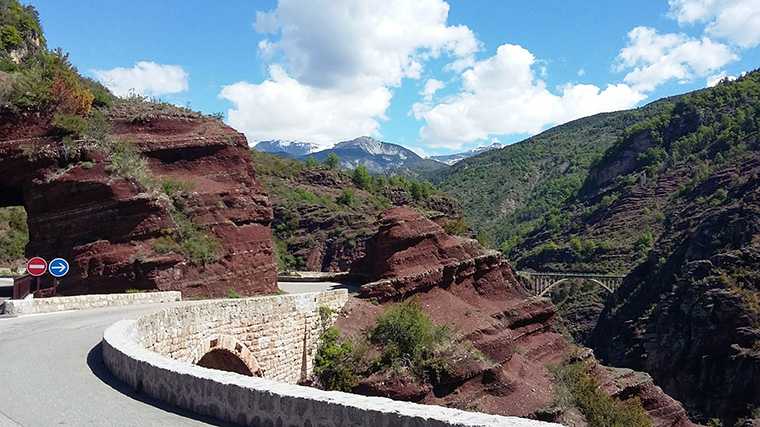
Don’t just stick to the coast. A rental car gives you the freedom to explore the interior of beautiful Provence, such as the mountainous Mercantour National Park. The drive there alone takes you past impressive mountains, picturesque villages, river valleys, and steep cliffs.
Highlights:
Gorges de Daluis – A steep sandstone gorge with hiking trails and views of red rock formations and waterfalls.
Saorge – One of the Plus Beaux Villages de France, and the surrounding area offers beautiful hiking trails through deep valleys.
Rock Art – In Tende, you can book a tour at the Musée des Merveilles to view mysterious rock art with a guide.
Mercantour National Park – In addition to hikes of varying difficulty levels, this park offers opportunities for canyoning, rock climbing, and paragliding.
A Worry-Free Vacation with EasyTerra’s Worry-Free

Rental cars with our Worry-Free label are slightly more expensive, but offer you much greater peace of mind. You won’t have to worry about a thing and can enjoy a carefree vacation on the Côte d’Azur, because these cars include:
Full damage coverage
Unlimited mileage
The best fuel policy
No high deposit
Reliable rental companies
Book your rental car at Nice Airport now
The best way to experience the Côte d’Azur is at your own pace, following routes you choose yourself, with stops wherever you want. A rental car isn’t just convenient for this—it’s actually indispensable. Whether you’re driving between Nice and Monaco for a weekend or traveling from Menton to Marseille for a week: with the right car and the right preparation, the drive itself becomes part of a carefree vacation!

Where would you like to rent a car?
- 24000+ pick-up locations
- Free cancellation
- Independent comparator

Useful tips for a well-prepared trip
Which insurance should I choose, and what's the deal with the deposit? Read our articles with useful information and tips to ensure you choose the right rental car for you.


