- Popular countries
- Popular regions
- Popular cities
- Popular airports
- Car Rental Italy
- Car Rental Spain
- Car Rental United States
- Car Rental Portugal
- Car Rental South Africa
- Car Rental France
- Car Rental Netherlands
- Car Rental Greece
- Car Rental Germany
- Car Rental United Kingdom
- Car Rental Belgium
- Car Rental Croatia
- Car Rental Switzerland
- Car Rental Austria
- Car Rental Denmark
- Car Rental Norway
- Car Rental Australia
- Car Rental Ireland
- Car Rental Cyprus
- Car Rental Canada
- Car Rental Florida
- Car Rental Sicily
- Car Rental California
- Car Rental England
- Car Rental Sardinia
- Car Rental Mallorca
- Car Rental Ibiza
- Car Rental Crete
- Car Rental Tenerife
- Car Rental Rhodes
- Car Rental Madeira
- Car Rental Corsica
- Car Rental Gran Canaria
- Car Rental Malta
- Car Rental Scotland
- Car Rental Azores
- Car Rental Fuerteventura
- Car Rental Lanzarote
- Car Rental Corfu
- Car Rental Zakynthos
- Car Rental Amsterdam
- Car Rental Milan
- Car Rental Miami
- Car Rental Lisbon
- Car Rental Malaga
- Car Rental Porto
- Car Rental Rome
- Car Rental Cape Town
- Car Rental Barcelona
- Car Rental Faro
- Car Rental Alicante
- Car Rental Nice
- Car Rental Bari
- Car Rental Naples
- Car Rental Johannesburg
- Car Rental Brussels
- Car Rental Bergamo
- Car Rental Orlando
- Car Rental Palma de Mallorca
- Car Rental Vienna
- Car Rental Amsterdam Schiphol Airport
- Car Rental Miami International Airport
- Car Rental Lisbon Airport
- Car Rental Malaga Airport
- Car Rental Porto Airport
- Car Rental Milan Malpensa Airport
- Car Rental Rome Fiumicino Airport
- Car Rental Faro Airport
- Car Rental Alicante Airport
- Car Rental Bari Palese Airport
- Car Rental Nice Airport
- Car Rental Barcelona Airport
- Car Rental Cape Town Airport - International Terminal
- Car Rental Bergamo Airport
- Car Rental Orlando International Airport
- Car Rental Mallorca Airport
- Car Rental Catania Airport
- Car Rental Johannesburg International Airport
- Car Rental Ibiza Airport
- Car Rental Athens Airport

Lanzarote's Unique Attractions
Discover the “different” Canary Island with a rental car
Lanzarote is the northeasternmost of the Canary Islands and lies close to the African mainland. It is only 130 kilometers from Morocco, while Spain, its mother country, is more than a thousand kilometers away. All the islands in the archipelago are of volcanic origin, but this is particularly evident on Lanzarote, because volcanoes here suddenly became active again just three hundred years ago. This is what gave rise to the Timanfaya Nature Reserve. The black color of some of the beaches is also the result of volcanic activity, but Lanzarote also boasts beautiful, golden-yellow sandy beaches.
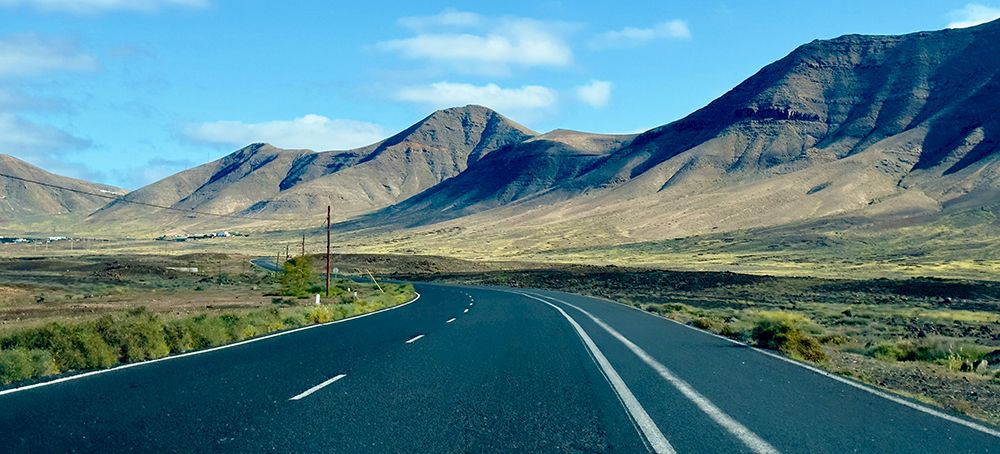
The island’s culture has been preserved thanks to the efforts of one man, César Manrique, an artist who was concerned about the rise of mass tourism. Thanks to him, high-rise buildings are banned, and a large part of the island is a protected nature reserve. As a result, there is still plenty of authentic charm to be found on Lanzarote outside the tourist centers. Go eat at a “sociedad” in a small village to literally taste the essence of the island. How do you get there? By renting a car in Lanzarote! Hop in a rental car and explore this amazing island.
Below, we describe a road trip by rental car starting from Lanzarote Airport, but you can also rent a car at other locations along the route, such as in the tourist centers of Costa Teguise, Playa Blanca, and Puerto del Carmen. The island isn’t large, so you can easily discover Lanzarote’s sights on day trips from a single base.
1. Arrecife
It’s less than a ten-minute drive from the airport to the capital, Arrecife. You can park your rental car for free in a large parking lot right next to the access road. To get there, drive almost all the way around the large roundabout toward Avenida Fred Olsen. Paid parking is available a little further down the road in the Gran Hotel’s parking garage, which was completed before the ban on high-rise buildings went into effect. This makes it the only high-rise building on Lanzarote. Although César Manrique detested it, the restaurant on the top floor offers a beautiful view of Arrecife Beach.
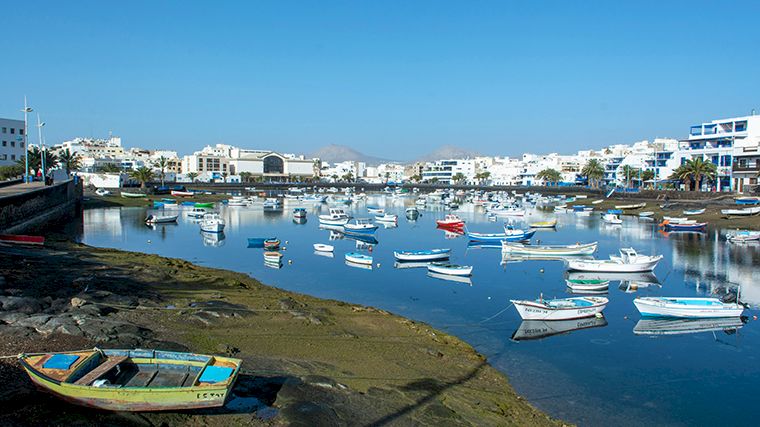
Ironically, right across from the Gran Hotel lies a small island designed by César Manrique himself: Islote de Fermina. It had been neglected for years but reopened after a renovation in 2023. Although there is a small pool, swimming in it is not allowed. There is, however, a restaurant offering beautiful views of the sea and the beach. A wooden pier leads to the islet, which is intended to be a quiet oasis.
Two stone piers lead to another small island, on which stands the Castillo de San Gabriel. The oldest crossing, featuring a small drawbridge, is the Puente de las Bolas. The historical museum in the castle provides a good overview of the history of Lanzarote, which was often targeted by pirates, as well as by ships from the Netherlands, England, and France en route to their respective colonies. The more recent fortress, Castillo de San José, houses a museum of modern art.
For an authentic meal in Arrecife, head to the Cofradía de Pescadores at the harbor. You’ll find a cofradía in every harbor on the Canary Islands; originally, these were community centers for fishermen. These days, tourists are also welcome, and the food is fantastic.
2. Fundación César Manrique
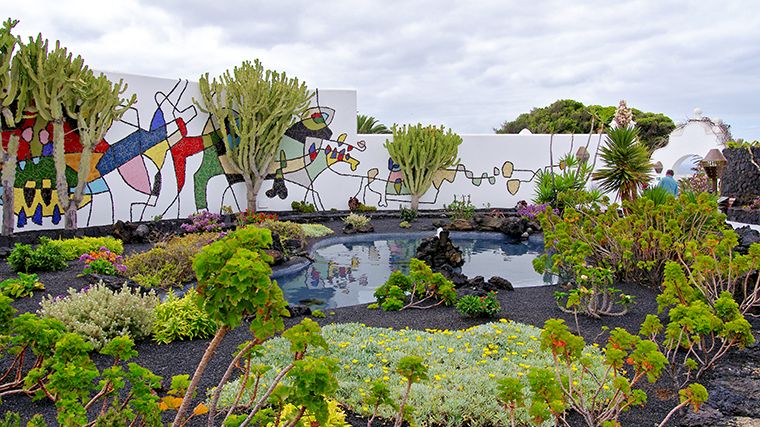
Just outside Arrecife, in the village of Tahiche, you can discover the ideas and work of César Manrique. This painter, sculptor, and architect left a profound mark on his beloved native island. He had a clear vision for the development of Lanzarote, in which the landscape—shaped by volcanic eruptions and unique geological features—would be preserved as a key part of the island’s identity. This philosophy formed the basis for his work, in which he combined art, architecture, and nature in innovative ways.
For example, large hollow spaces in the lava are an integral part of the house he built in Tahiche. The result is an architectural gem that, despite its size, feels very cozy and intimate. The building itself is worth the visit, but it also houses an impressive collection of contemporary art, including works by Manrique himself, as well as by Pablo Picasso and Joan Miró. The various spaces are connected by small staircases and corridors. Manrique painted the wall surrounding the courtyard in his characteristic style, and the blue swimming pool set against a snow-white backdrop is also a hallmark of his work. Whether you’re an art lover or just looking for something different to see, this place has a wonderful atmosphere.
2. Antigua Rofera
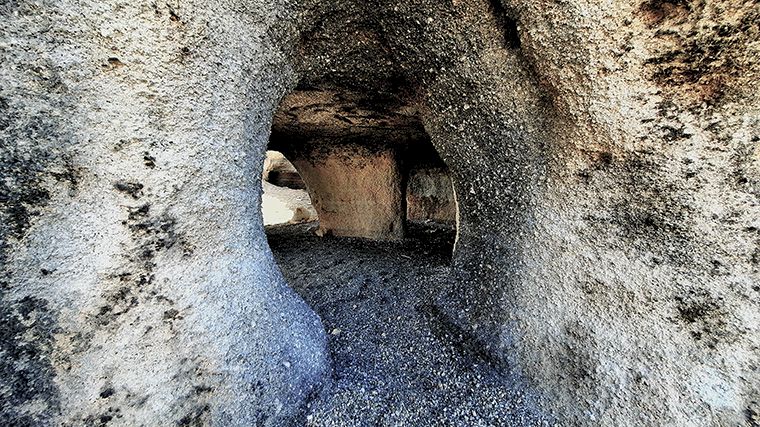
If you want to see some unique rock formations, you’ll need to turn off the LZ-1 main road between Tahiche and Guatiza. Take the exit for Costa Teguise, and at the bottom of the exit ramp, don’t head toward that beach town—instead, turn left. At the second roundabout, go straight through, then turn right immediately afterward and continue along the service road. Please note: this is part of a cycling route across Lanzarote, so be mindful of cyclists and don’t drive too fast. About one and a half kilometers further on, there’s a left turn (LZ-404). After a few hundred meters, you’ll see some very unusual formations. It looks as if Manrique had a hand in this too, but no—this is truly the work of nature. They are mysterious black rocks with dark cavities. There’s plenty of parking, but drive your rental car carefully off the road, as there’s a slight drop.
3. Jardín de Cactus / Montaña las Pinedas
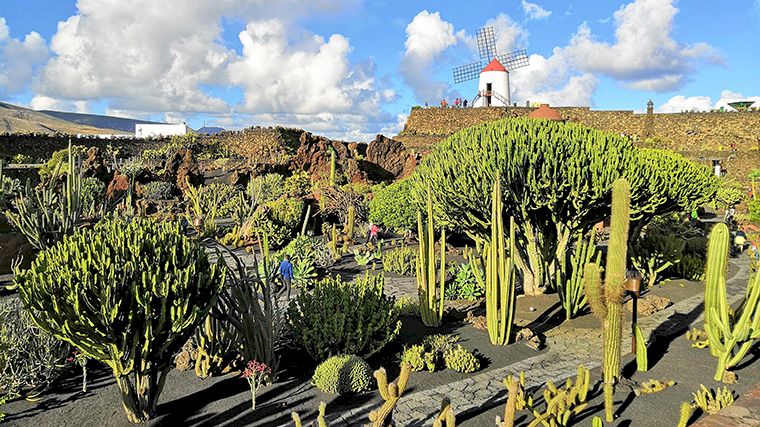
Cacti are everywhere on Lanzarote, but if you want to admire these prickly plants in all their glory, we recommend the Jardín de Cactus. This unique spot, on the north side of Guatiza, is also a creation of César Manrique. He transformed an old quarry into a beautiful garden featuring more than a thousand species of cacti from all over the world. There, you’ll see prickly beauties of all shapes and sizes set against a backdrop of volcanic rock. You’ll be surrounded by vibrant colors and fascinating shapes that stand in striking contrast to the arid landscape. Ponds and streams teeming with waterfowl, small bridges, artistic sculptures, and a restored windmill frame this extraordinarily beautiful spot. The cactus garden is a perfect example of how Manrique transformed everyday spaces into captivating works of art.
Just east of Guatiza lies the Montaña las Pinedas volcano. The northern slope features relatively easy hiking trails leading to the 220-meter summit. From there, you’ll enjoy a beautiful view of the prickly pear plantations, with the Cactus Garden’s windmill prominently visible among them.
4. Piscinas Naturales de Punta Mujeres
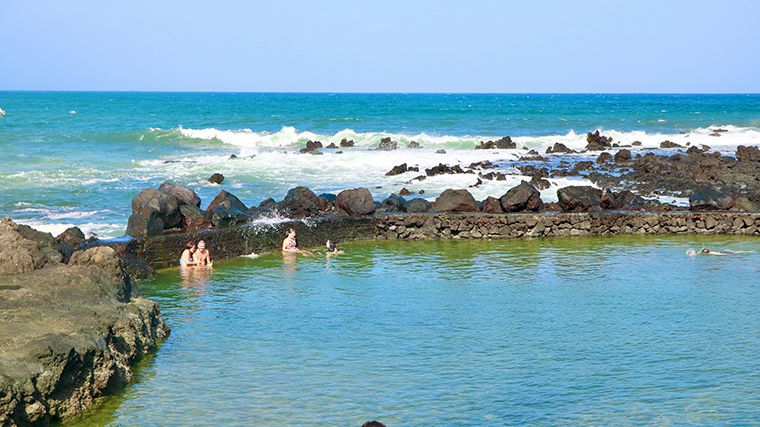
If you drive north from Guatiza, you’ll pass the seaside resort of Arrieta. Just beyond that lies the quiet and charming fishing village of Punta Mujeres. Since there are no wide sandy beaches in the immediate vicinity, the area has remained largely undeveloped for tourists, with the exception of a few villas along the waterfront. You can still swim there, though—in natural pools, some of which were actually created artificially by piling up a wall of boulders. Near the original Piscinas Naturales, you’ll also find the village’s most photographed house, Casa Carmelina. If there are no more free parking spots here, you can park your rental car for free on a gravel lot along Calle los Molinos. Other natural pools include Las Rosas and Las Nieves.
5. Jameos del Aqua
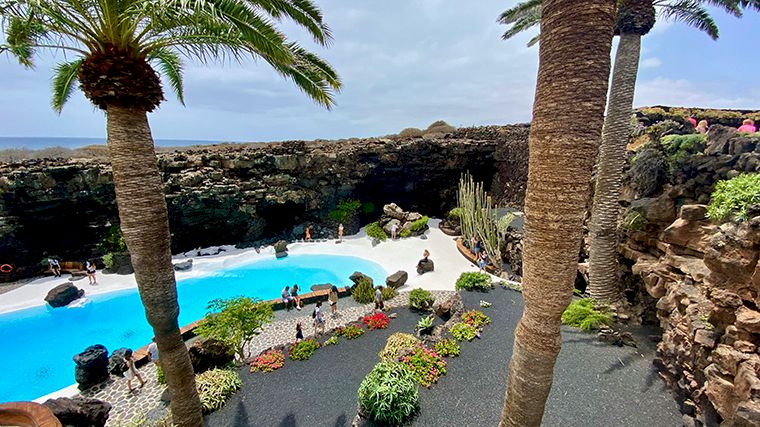
The Jameos del Agua are part of a six-kilometer-long lava tunnel that formed about four thousand years ago when Montaña La Corona erupted. These tunnels were created as molten lava continued to flow while the surface hardened. The Canarian word “jameo” refers to the large openings that formed when parts of the tunnel ceiling collapsed. It was these open-air caves that César Manrique used in the 1960s to create a colorful attraction.
As the name suggests, the Jameos del Agua are partially flooded. The first cave— Jameo Chico —has been converted into a bar/restaurant, overlooking a lagoon with extremely clear saltwater. A small, blind white crab lives here that is found only on Lanzarote. In the Jameo Grande, you’ll see Manrique’s signature feature: a bright blue swimming pool where swimming is prohibited, surrounded by dazzling white and the greenery of tropical plants. In the final section of the volcanic tunnel is an auditorium where concerts are regularly held. The acoustics in this underground concert hall are exceptionally clear. There is also a museum that provides insight into the volcanic origins of the Canary Islands.
6. Cueva de los Verdes
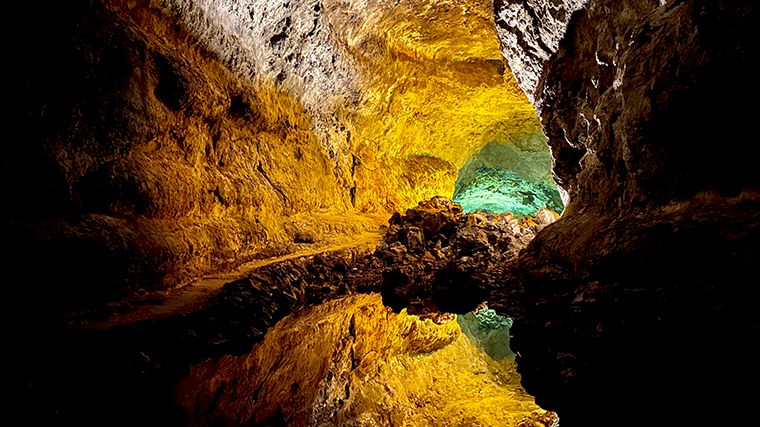
Across the main road from Jameos del Aqua, you’ll find caves that are part of the same underground system: Cueva de los Verdes. In the past, Lanzarote was frequently attacked by pirates, and the local population would flee to these caves. There’s even a chamber in the tunnel that’s known to have been used frequently as a hiding place. You’ll need to book a tour online in advance; the tour takes you along winding paths, slopes, and stairs, following the same route where molten lava once flowed. You’ll need to be fairly agile on this rugged terrain—some passages are very narrow, and you’ll have to duck several times. As early as the 1960s, an amazing lighting system was installed, which showcases the enchanting rock formations exceptionally well. As you walk along the path, you’ll be captivated by the vibrant colors, the magical interplay of light and shadow, and the optical illusions they create.
7. Cueva de la Corona
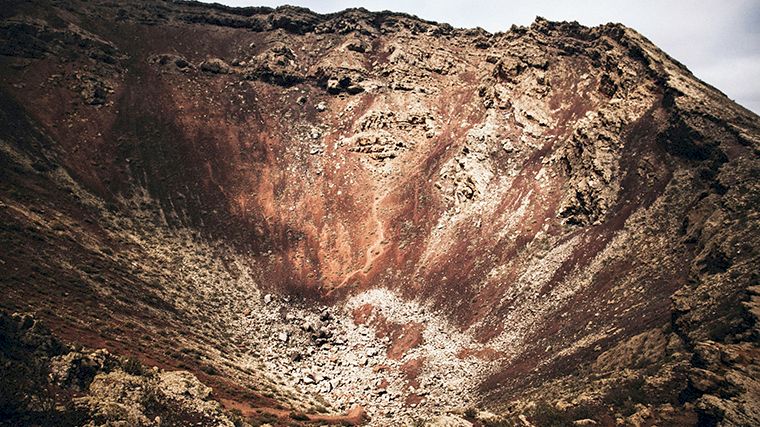
The main road LZ-1 ends at Órzola on the north coast. From that village, drive along the scenic, winding roads LZ-204 and LZ-201 to Yé. On the latter road, you’ll see the crater of the Corona Volcano on your left. Park your rental car at the little church along the main road and walk about 150 meters further to the start of the trail leading to the volcano. At first, you’ll walk across flat land past vineyards, but further on, the path naturally gets a bit steeper. Still, this isn’t a difficult hike—you’ll reach the crater rim in thirty to forty minutes. It’s a special feeling to look deep into the crater on one side and enjoy a sweeping view of northern Lanzarote and the sea on the other. Very few people hike up here, so it’s never crowded.
Much busier is the viewpoint on the north coast that many consider a must-see: Mirador del Río. Not only is it very crowded there, but you also have to pay to enter. As far as we’re concerned, the best option after your volcano hike is simply to drive past that viewpoint and take the coastal road south from there. That way, you can enjoy the same view for free.
8. Haría / LZ-10 Panoramic Road
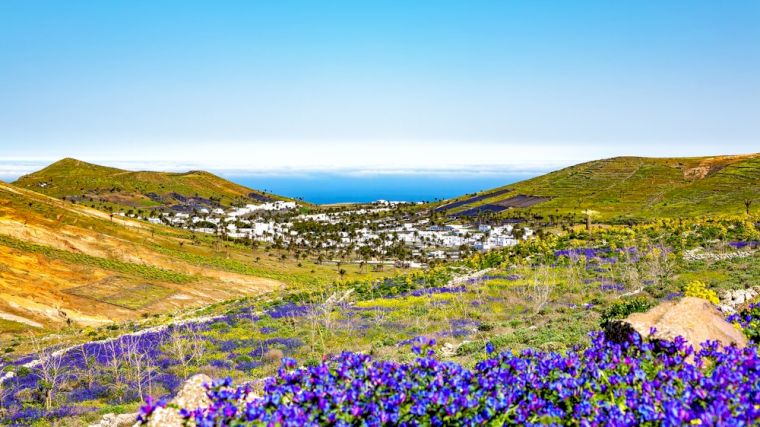
Haría is a charming little village in the north of Lanzarote. Stroll through the narrow streets and enjoy a bite to eat or a drink at one of the restaurants around Plaza León y Castillo, where old trees provide welcome shade. The closer you get to Haría, the more palm trees you’ll see. It’s located in the fertile “Valley of a Thousand Palm Trees.” Especially in the spring, Haría and its surroundings form a green oasis in the midst of the black lava.
The spirit of César Manrique lingers here as well, for he lived here until his death, and his grave can be found in the municipal cemetery. His home is now a museum, but it’s very different from the foundation in Tahiche. It’s as if the artist has just stepped out and could return at any moment, because everything has been left in its original state.
South of Haría, the beautiful, winding LZ-10 road climbs toward Teguise. There’s a special lookout point at one of the hairpin turns. Pay close attention, because before you know it, you’ll have driven right past it. If you’re coming from Haría, you’ll see a white house in the bend just past the “km18” sign. There’s a glass platform there that juts out over the valley— the Mirador de Malpaso. There’s a small parking lot with space for only four cars. The viewpoint is open from 11:00 a.m. to 3:00 p.m.
9. Teguise / Lagomar
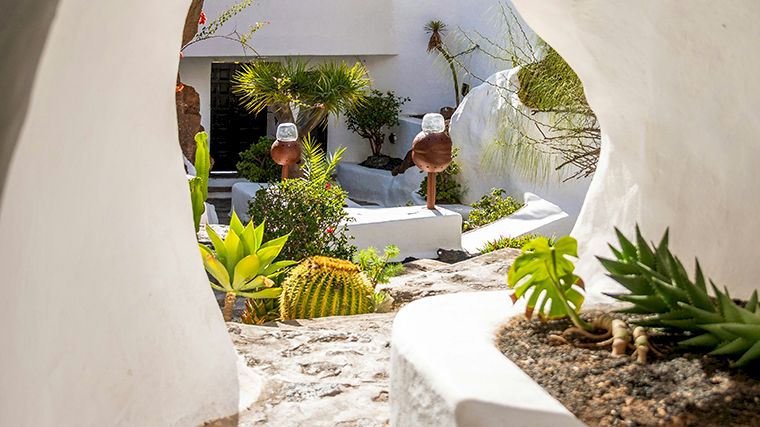
Teguise is the former capital of Lanzarote. It was built so far from the coast because the island was frequently attacked by pirates. It’s a charming little town with whitewashed houses, but on market day (Sunday), it’s overrun by tourists who are brought there by large buses from the resorts.
Here, too, the ever-present Manrique has transformed a quarry into an intriguing museum, Lagomar. It’s a labyrinth of caves, tunnels, and gardens. The winding white walls contrast with the volcanic rocks, the lush greenery, and the blue water features. According to legend, it was once owned by the actor Omar Sharif—but for only one day, because he lost it in a card game to the man who had just sold it to him. Is it true? Sharif did have a serious gambling addiction…
10. Timanfaya National Park / Mountains of Fire
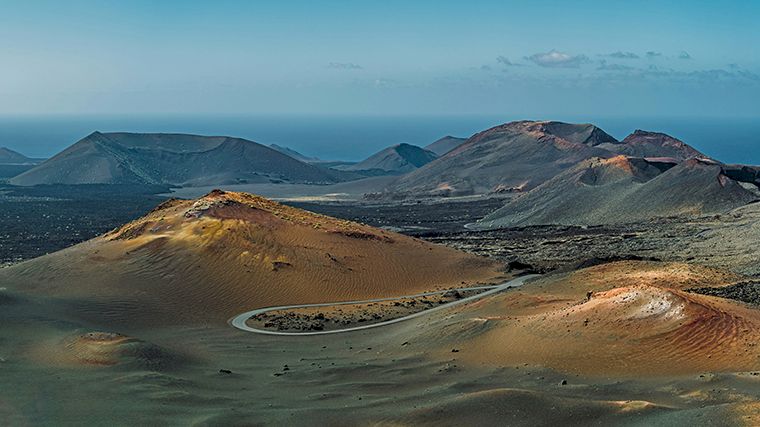
The number one attraction on Lanzarote is the Timanfaya National Park, which covers the southwestern part of the island. Nearly three hundred years ago, volcanoes there suddenly erupted and spewed lava for six years. The result is a landscape of craters and impressive volcanic rock formations. The rugged terrain, the variety of colors, the silhouettes of the volcanoes, and the jagged coastline—all of this makes Timanfaya exceptionally beautiful.
The Ruta de los Volcanes is a road about fourteen kilometers long that runs through the heart of the area, where it’s still very hot beneath the surface. You’re not allowed to drive this route through the Montañas del Fuego on your own. You can park at the visitor center along the LZ-67 and then board a bus. Please note: this is Lanzarote’s top attraction and gets extremely crowded during peak season. It’s not uncommon for cars on the main road to be stuck in traffic for an hour just to enter the park. That said, the bus tour is the only way to see the unique sites of this volcanic area and, for many people, the highlight of their visit to Lanzarote. You might want to consider leaving your rental car behind and booking a guided tour for this attraction. Tour buses are given priority over passenger cars!
11. Caldera Blanca / Caldera de los Cuervos
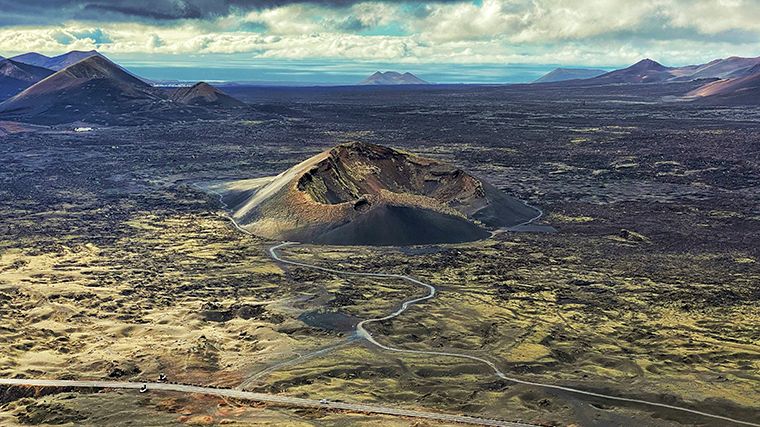
To climb two other volcanoes, you don’t have to wait in line at the visitor center. For the Caldera Blanca, drive to the parking lot just west of Mancha Blanca. The hike first takes you past the smaller Montaña Caldereta and then to the crater of the Caldera Blanca, which has a diameter of no less than 1,200 meters. Start this hike early to avoid the biggest crowds.
The hike to the Caldera de los Cuervos is easier. To hike to this volcano, you can park next to the LZ-56, south of Mancha Blanca. Unlike many other volcanoes on Lanzarote, you can walk right through the crater here. From the crater rim, there’s a gently sloping path to the other side.
12. Volcanic landscape from the rental car
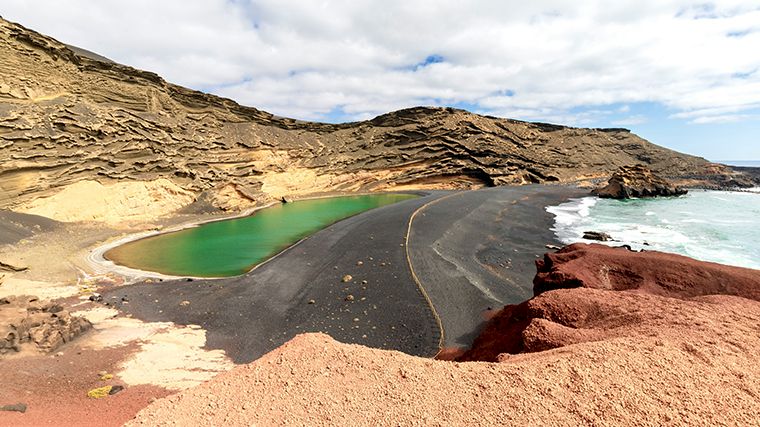
In the southwestern part of Timanfaya Park, you can follow a triangular route in your rental car. Just outside Yaiza, take the LZ-704 and then the LZ-703 along the coast. From the top of El Nesto, you’ll have a beautiful view of the volcanic landscape. Further along, you’ll pass Montaña El Golfo and the beach of the same name, made of black volcanic sand. Note that you can only admire it from above, as the path down is unstable. From the Charco de Los Clicos viewpoint, you’ll see a black lava beach with a green lagoon, Lago Verde, behind it. Further south, the waves crashing against the rocky coast of Los Hervideros are worth seeing. Please note: The LZ-703 between Los Hervideros and La Hoya was closed in 2021 due to instability. According to plans, repairs are scheduled to be completed by 2025, but check on-site to see if the road has reopened. If not, you’ll have no choice but to take the same route back to Yaiza.
13. La Geria Wine Region
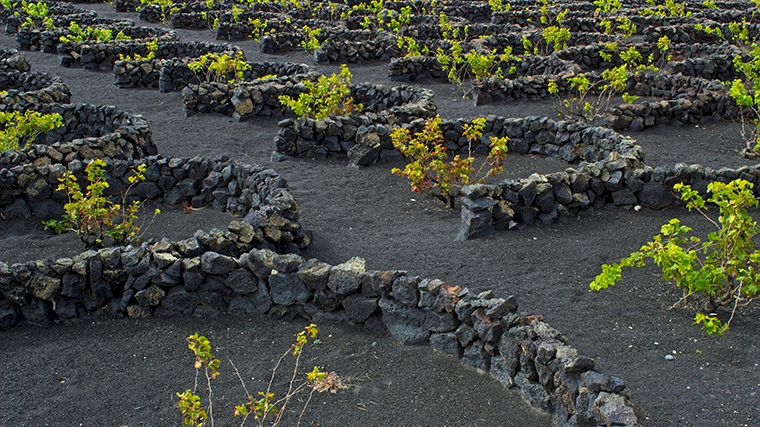
From Yaiza, it’s an easy drive to some of the most beautiful beaches along the coast of Lanzarote, but be sure to visit the La Geria wine region first. Grape cultivation on the island is done in a way you won’t see anywhere else. The vines are planted in a pit filled with small lava stones that retain moisture well. The northern side of the pit has a low wall made of larger stones to protect the plants from the trade winds.
The main road, LZ-30, runs right through this wine region, and you can visit various bodegas. The wines are rarely exported, as the local population consumes nearly the entire production. So you’ll almost never find wines from Lanzarote outside the island itself. This makes it a unique opportunity to taste them right there! In addition to wines, some bodegas sell other local products, such as goat cheese.
14. The Most Beautiful Beaches of Lanzarote
If you’re vacationing in Lanzarote, you’ll have a wide selection of beaches to choose from—ranging from golden-yellow sandy beaches to stretches of black lava coastline and pebble coves. The beaches near the major tourist resorts are, of course, quite crowded, but if you’ve rented a car, you can easily drive to quieter beaches. Here’s a list of some of the best beaches in Lanzarote.
Playa de Papagayo (plus nearby coves)
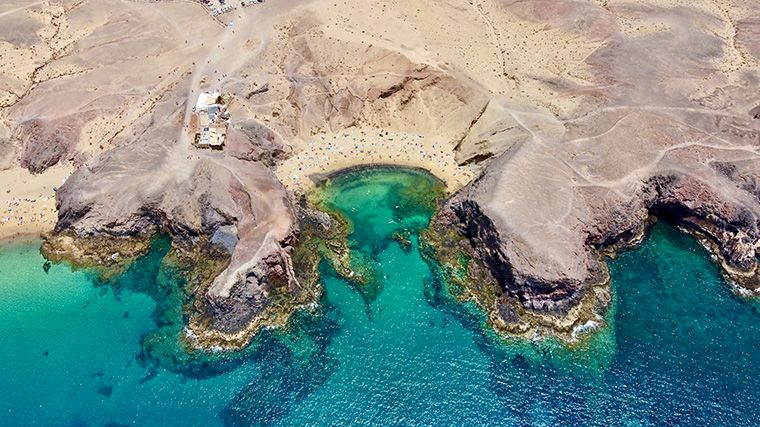
From the large roundabout north of Castillo del Aguila, a six-kilometer-long unpaved road leads to the parking lot for Playa de Papagayo. It actually provides access to a total of six beaches in the Los Ajaches Nature Reserve. Papagayo is the busiest beach—and gets very crowded in the summer—but there are other coves nearby. The further to the right (as seen from the end of the road)—or the further north—you go, the quieter it gets.
Caletón Blanco
On the other side of Lanzarote, near Órzola on the north coast, you’ll find Caletón Blanco, a beach with fine sand and lava boulders. Some of these boulders are arranged in a semicircle (just like in the La Geria wine region) to shield you from the wind. As beautiful as the beach is, the downside of the north coast is that it’s often very windy. On the other hand, you can enjoy the high, crashing waves.
Caleta de Famara
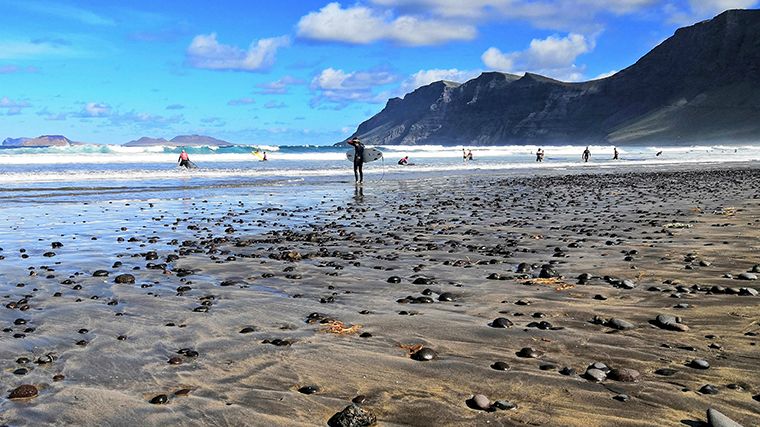
Speaking of waves. Are you a surfer? Then Famara Beach on the northwest coast is the place for you. The village has surf shops and schools, so renting gear or booking surf lessons is no problem. You can drive your rental car right up to this beach. The surrounding area, with its steep black cliffs, is also stunning. Viewpoints overlooking those cliffs are easily accessible from the LZ-10 scenic road (see above).
Playa del Risco
This is without a doubt the hardest-to-reach beach on Lanzarote, which is why it’s often virtually deserted. The trail starts from the LZ-202, where you’ll drive along a small cobblestone road to a parking lot. Don’t leave anything of value in your rental car! That cobblestone path leads to a lookout point, where you’ll have a beautiful view of the islet of La Graciosa. From there, the trail becomes unpaved and zigzags steeply downhill. If you’re not very fit, you’ll likely find this hike challenging, but you’ll be rewarded with the softest sand and the most beautiful views.
La Graciosa
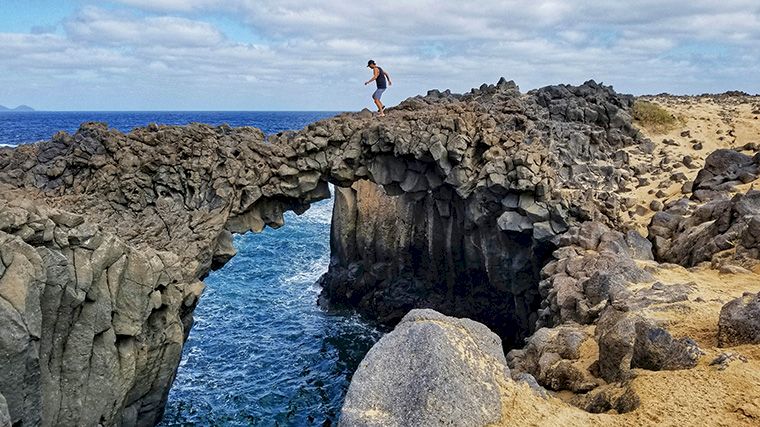
You can’t reach the little island we mentioned above by rental car, but if you’re looking for beautiful beaches, it’s definitely worth a visit. Ferries to La Graciosa depart from Órzola, and there are also day trips by boat that stop at beaches like Playa Francesca. The beautiful Playa de las Conchas is a quieter option. On the island’s north coast, you’ll see jagged formations of basalt blocks, including natural bridges: Los Arcos de los Caletones.
When to Visit Lanzarote
Lanzarote has pleasant weather all year round. For some people, the summer months are too hot, but thanks to the wind, it almost never feels truly hot. That same wind means the north of the island is generally a bit cooler and receives slightly more rain than the south. This is especially noticeable in winter, when the south can be five degrees warmer than the north. It never gets truly cold, so the winter months are a great time to visit Lanzarote if you want to avoid the crowds of tourists. However, some hotels and restaurants may be closed during this time.
Driving a Rental Car in Lanzarote
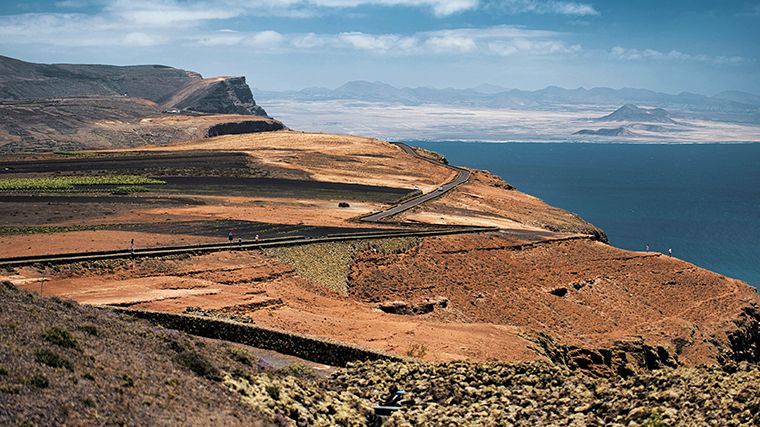
Driving on Lanzarote is very easy. Most roads are in excellent condition and the signage is good. On this beautiful island, the greatest danger lies in being distracted by the impressive landscape of solidified lava and volcanoes. You’ll quickly find yourself wanting to slow down, but that annoys local drivers on their way to work. Lanzarote is also a popular island for cycling. It’s not just tourists who enjoy exploring Lanzarote on two wheels—locals do too (especially on weekends). Be sure to give cyclists plenty of space when passing them. Also, be aware that cyclists can reach high speeds going downhill.
From Lanzarote to Fuerteventura in a rental car?
From Playa Blanca, it’s just a short ferry ride to Corralejo on Fuerteventura. Tempted to take your rental car on the ferry? Unfortunately, most rental companies don’t allow you to take their car on the ferry, and if they do, they usually require you to return the rental car in Lanzarote. If you want to combine a trip to Lanzarote with one to Fuerteventura, it’s much better to rent a car on each island separately. After all, don’t forget that taking the ferry as a pedestrian is a lot cheaper than taking it with a car.

Where would you like to rent a car?
- 24000+ pick-up locations
- Free cancellation
- Independent comparator

Useful tips for a well-prepared trip
Which insurance should I choose, and what's the deal with the deposit? Read our articles with useful information and tips to ensure you choose the right rental car for you.