- Popular countries
- Popular regions
- Popular cities
- Popular airports
- Car Rental Italy
- Car Rental Spain
- Car Rental United States
- Car Rental Portugal
- Car Rental South Africa
- Car Rental France
- Car Rental Netherlands
- Car Rental Greece
- Car Rental Germany
- Car Rental United Kingdom
- Car Rental Belgium
- Car Rental Croatia
- Car Rental Switzerland
- Car Rental Austria
- Car Rental Denmark
- Car Rental Norway
- Car Rental Australia
- Car Rental Ireland
- Car Rental Cyprus
- Car Rental Canada
- Car Rental Florida
- Car Rental Sicily
- Car Rental California
- Car Rental England
- Car Rental Sardinia
- Car Rental Mallorca
- Car Rental Ibiza
- Car Rental Crete
- Car Rental Tenerife
- Car Rental Rhodes
- Car Rental Madeira
- Car Rental Corsica
- Car Rental Gran Canaria
- Car Rental Malta
- Car Rental Scotland
- Car Rental Azores
- Car Rental Fuerteventura
- Car Rental Lanzarote
- Car Rental Corfu
- Car Rental Zakynthos
- Car Rental Amsterdam
- Car Rental Milan
- Car Rental Miami
- Car Rental Lisbon
- Car Rental Malaga
- Car Rental Porto
- Car Rental Rome
- Car Rental Cape Town
- Car Rental Barcelona
- Car Rental Faro
- Car Rental Alicante
- Car Rental Nice
- Car Rental Bari
- Car Rental Naples
- Car Rental Johannesburg
- Car Rental Brussels
- Car Rental Bergamo
- Car Rental Orlando
- Car Rental Palma de Mallorca
- Car Rental Vienna
- Car Rental Amsterdam Schiphol Airport
- Car Rental Miami International Airport
- Car Rental Lisbon Airport
- Car Rental Malaga Airport
- Car Rental Porto Airport
- Car Rental Milan Malpensa Airport
- Car Rental Rome Fiumicino Airport
- Car Rental Faro Airport
- Car Rental Alicante Airport
- Car Rental Bari Palese Airport
- Car Rental Nice Airport
- Car Rental Barcelona Airport
- Car Rental Cape Town Airport - International Terminal
- Car Rental Bergamo Airport
- Car Rental Orlando International Airport
- Car Rental Mallorca Airport
- Car Rental Catania Airport
- Car Rental Johannesburg International Airport
- Car Rental Ibiza Airport
- Car Rental Athens Airport

How do you pay for toll roads in a rental car?
About toll roads, toll gates, electronic tolls, and toll vignettes
In many European countries, you have to pay to use the highways. You can often pay with cash or a credit card; sometimes tolls are collected electronically only; and in a few countries, you must purchase a toll sticker to be allowed to drive on the highways. But how does that actually work if you’ve rented a car?
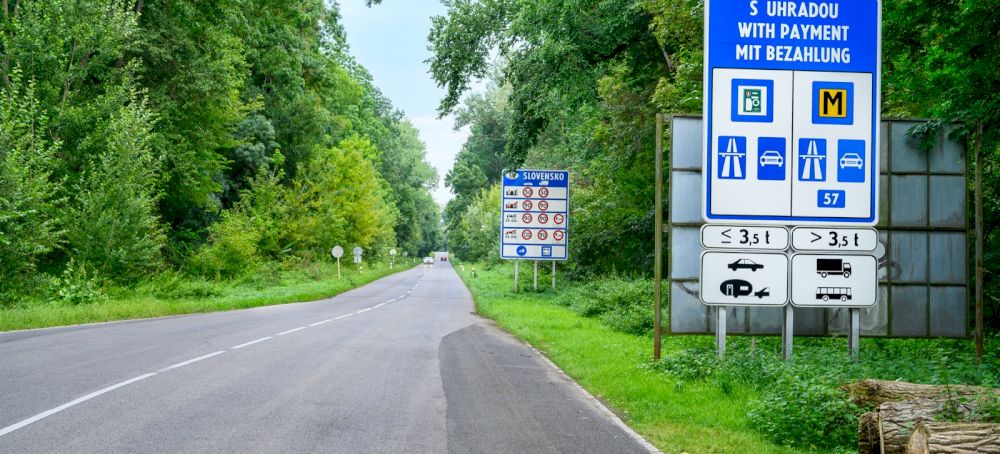
Incidentally, residents of all countries pay for road construction and maintenance; it’s just the method that differs. In countries with toll roads or where a toll sticker is required, car owners pay no road tax—or much less—than in countries without toll roads.
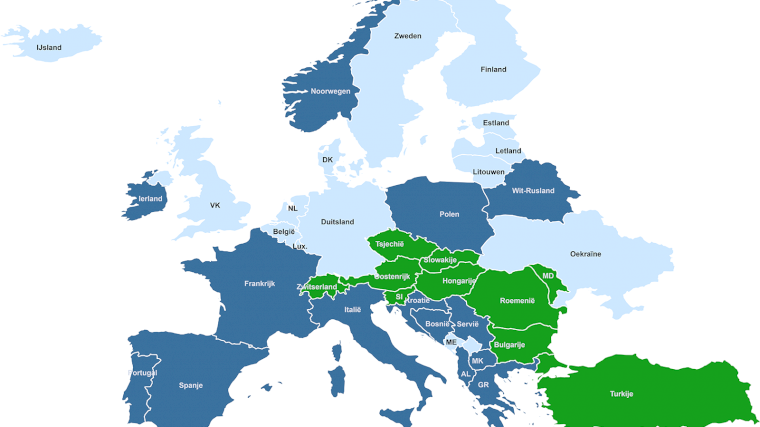
The map below shows which European countries have toll roads (dark blue) and which countries require a toll sticker (green) for passenger cars. Countries where you only have to pay tolls sporadically—for example, for bridges or tunnels—are shown in light blue on the map below.
Driving a Rental Car on Toll Roads
In most countries with toll roads, payment is handled at large toll plazas with various lanes, separated by payment method. For example, there are separate lanes for paying with cash, credit card, or debit card, as well as for electronic toll collection. In the latter case, an electronic device (toll badge) is mounted behind the windshield, which automatically pays the toll. If you’ve rented a car and will only be driving on a toll road very occasionally (for a short distance), paying with cash or a credit card is by far the easiest option. The situation is different if you plan to drive frequently on toll roads with your rental car or on highways where electronic toll payment is the only option.
Renting a Car with an Electronic Toll Device
In Norway and Belarus, you can only pay electronically for using toll roads; in Portugal, this is the case on most highways. If you want to drive on toll roads in those countries, you can ask the local car rental company to install an electronic toll device in the rental car, which automatically collects the toll payment. Sometimes such a device (also called a toll badge) is already included as standard in the car you’ve rented, and you only need to pay a small fee to activate it. The toll fee will be charged to your credit card when you return the rental car.
As described above, toll plazas in other countries usually have separate lanes for cars with a toll badge. This means you don’t have to stop to pay the toll; instead, you drive slowly through the lane so your license plate can be registered. It’s very convenient, so you can also ask the car rental company in those countries to install an electronic toll device in your rental car.
You cannot order an electronic toll device in advance when booking a rental car online. You’ll always have to arrange this on-site. Often, this is no trouble at all and is done in a flash.
“Invisible” Toll Roads
Please note: electronic-only payment is being introduced on an increasing number of routes in other countries. If you don’t have an electronic tag in your rental car and you don’t pay on time (after the fact), you could face a hefty fine. These “invisible” toll roads have cameras mounted above the highway and a sign with text that indicates this in a somewhat cryptic way. In Italy, the sign reads—strangely enough, in English—“free flow”; in France,“péage, flux libre”; and in Spain,“flujo libre.” Well, there’s nothing “free” about these highways—you definitely have to pay for them. So even in those cases, having an electronic toll device in your rental car is quite handy.
As mentioned above, on many highways in Portugal, you can only pay tolls electronically, and this system will only continue to expand in the coming years. That’s why we’ve written a separate article about paying tolls in Portugal if you’ve rented a car there.
Rental Car and Toll Vignette
In 1985,Switzerland became the first European country to introduce a toll vignette. That example was quickly followed by neighboring Austria, after which other countries in Central and Southeastern Europe followed suit: the Czech Republic, Slovakia, Hungary, Slovenia, Romania, Bulgaria, Moldova, and Turkey. It’s a much easier way to pay than going through toll gates: you purchase a vignette for a specific period and don’t have to worry about it after that.
If you rent a car in a country where a vignette is required, most rental cars already come equipped with one. Often, the cost is included in the rental price, but sometimes it isn’t. If you have to pay for the vignette separately, this will be stated in the terms and conditions, which you should, of course, always read carefully before booking a rental car online.
Be sure to take note if you’re driving your rental car to another country where a toll sticker is required. You’ll need to purchase one separately. Toll stickers are often available at special sales points or gas stations just before the border crossing. Stores in border areas also frequently sell toll stickers for the neighboring country. By the way, you must have permission to cross the border in a rental car.
Should you avoid toll roads when you’ve rented a car?
If you’re driving in a country where toll vignettes are required, there’s no reason to avoid highways, since you already have the vignette. The situation is different (perhaps) in a country where tolls are collected via toll gates. Often, there are (older) roads running parallel to the toll roads that don’t require a fee. These roads frequently pass right through villages and towns (which may have speed bumps or other restrictions), are less well-maintained, and have heavy traffic, increasing the likelihood of traffic jams.
If you want to take it easy during your vacation, avoiding toll roads might be an option. But decide for yourself whether it’s worth it. Heavy traffic can cause extra stress, and you’ll also spend more money on fuel.
Paying Tolls Outside Europe with a Rental Car
Just as European countries have different systems for electronic toll payment, so do the various U.S. states. We describe exactly how this works and where you can use which system in the article “Toll Roads in the United States.”

Where would you like to rent a car?
- 24000+ pick-up locations
- Free cancellation
- Independent comparator

Useful tips for a well-prepared trip
Which insurance should I choose, and what's the deal with the deposit? Read our articles with useful information and tips to ensure you choose the right rental car for you.


