- Popular countries
- Popular regions
- Popular cities
- Popular airports
- Car Rental Italy
- Car Rental Spain
- Car Rental United States
- Car Rental Portugal
- Car Rental South Africa
- Car Rental France
- Car Rental Netherlands
- Car Rental Greece
- Car Rental Germany
- Car Rental United Kingdom
- Car Rental Belgium
- Car Rental Croatia
- Car Rental Switzerland
- Car Rental Austria
- Car Rental Denmark
- Car Rental Norway
- Car Rental Australia
- Car Rental Ireland
- Car Rental Cyprus
- Car Rental Canada
- Car Rental Florida
- Car Rental Sicily
- Car Rental California
- Car Rental England
- Car Rental Sardinia
- Car Rental Mallorca
- Car Rental Ibiza
- Car Rental Crete
- Car Rental Tenerife
- Car Rental Rhodes
- Car Rental Madeira
- Car Rental Corsica
- Car Rental Gran Canaria
- Car Rental Malta
- Car Rental Scotland
- Car Rental Azores
- Car Rental Fuerteventura
- Car Rental Lanzarote
- Car Rental Corfu
- Car Rental Zakynthos
- Car Rental Amsterdam
- Car Rental Milan
- Car Rental Miami
- Car Rental Lisbon
- Car Rental Malaga
- Car Rental Porto
- Car Rental Rome
- Car Rental Cape Town
- Car Rental Barcelona
- Car Rental Faro
- Car Rental Alicante
- Car Rental Nice
- Car Rental Bari
- Car Rental Naples
- Car Rental Johannesburg
- Car Rental Brussels
- Car Rental Bergamo
- Car Rental Orlando
- Car Rental Palma de Mallorca
- Car Rental Vienna
- Car Rental Amsterdam Schiphol Airport
- Car Rental Miami International Airport
- Car Rental Lisbon Airport
- Car Rental Malaga Airport
- Car Rental Porto Airport
- Car Rental Milan Malpensa Airport
- Car Rental Rome Fiumicino Airport
- Car Rental Faro Airport
- Car Rental Alicante Airport
- Car Rental Bari Palese Airport
- Car Rental Nice Airport
- Car Rental Barcelona Airport
- Car Rental Cape Town Airport - International Terminal
- Car Rental Bergamo Airport
- Car Rental Orlando International Airport
- Car Rental Mallorca Airport
- Car Rental Catania Airport
- Car Rental Johannesburg International Airport
- Car Rental Ibiza Airport
- Car Rental Athens Airport

A Road Trip with 20 Unforgettable Stops in Corsica
Explore Île de Beauté with a rental car
There’s certainly no shortage of beautiful places in France, but the island of Corsica stands out and is called Île de Beauté (Island of Beauty) for good reason. This gem, surrounded by the azure waters of the Mediterranean Sea, offers a unique blend of stylish seaside resorts, rugged mountains with high peaks and deep gorges, prehistoric sites, rugged calanques, quaint villages, and beautiful sandy beaches. Corsica offers a fantastic variety of natural and cultural attractions, as well as a wide range of activities—from challenging hiking trails to enchanting diving or snorkeling adventures. If you rent a car in Corsica, don’t be daunted by the winding roads, as the island is very mountainous, with more than a hundred peaks over two thousand meters.
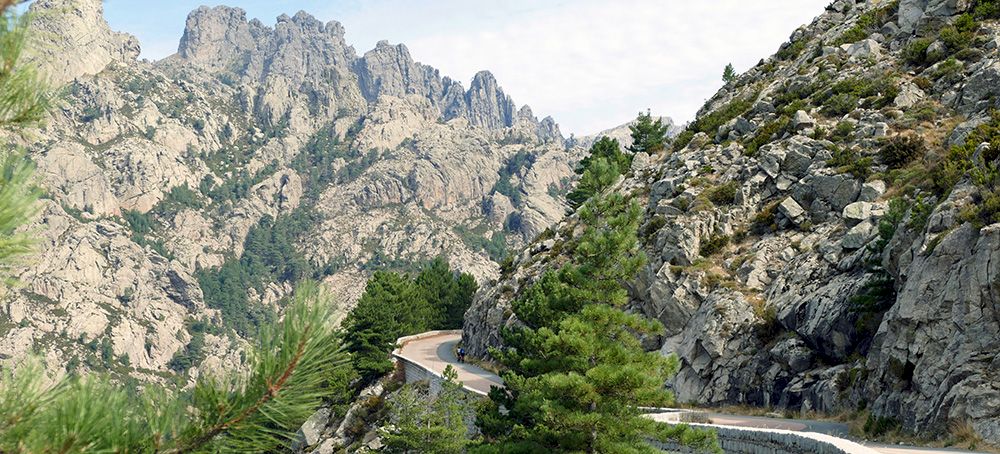
There are no fewer than four international airports in Corsica. The busiest are Ajaccio Airport, near the capital on the west coast, and Bastia Airport in the northeast of the island. You can also rent a car at one of the two smaller airports: Calvi Airport in the northwest and Figari-Sud Corse Airport, which—as the name suggests—is located in the south. Our road trip through Corsica starts in Ajaccio but passes through all of these places, so you can start from any airport.
Don’t try to do this entire road trip if you’re only on the island for a week. It’s simply not possible to see all of Corsica’s sights in such a short time. In that case, choose either the northern or the southern part of Corsica.
1. Ajaccio
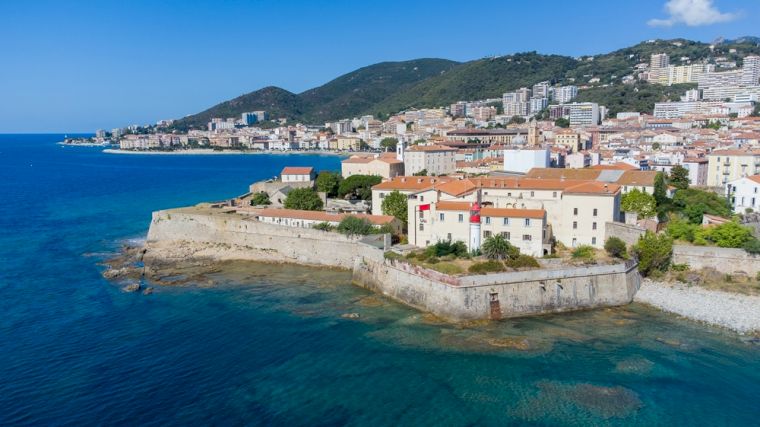
The legendary French military leader and emperor Napoleon Bonaparte was born in Ajaccio, and the Corsican capital makes sure everyone knows it. His birthplace is a museum; a towering marble statue of him stands in the central Place Foch; and on the renovated Place du Diamant, he and his brothers are depicted in bronze. Beneath that last square is a large parking garage where you can park your rental car. On the outskirts of the city, you can park at the Miséricorde lot, where a free shuttle bus will take you to the center.
Ajaccio’s defensive walls are impressive, but access to the citadel itself is very limited. The military base that used to be there has been decommissioned, and renovation work is now underway, though it may take years to complete. In the harbor next to it, fishermen bring their fresh catch ashore, which is then sold at the nearby Place du Marché.
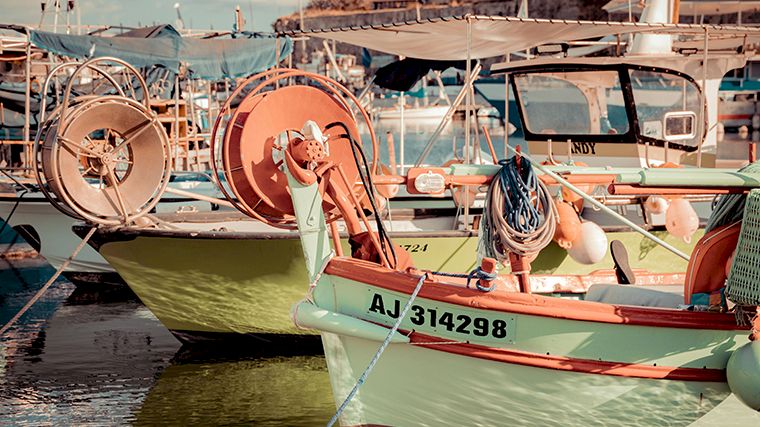
There’s a fresh produce market every day in the covered section of that square, except on Mondays. All around it, you’ll find cozy bars, restaurants, and outdoor cafes, just like in the charming narrow streets behind it. The Musée Fesch houses a large collection of Italian Renaissance paintings.
To the west of Ajaccio lies the Les Crêtes nature reserve, where several hiking trails have been marked out. The Sentier des Crêtes trail runs along a mountain ridge and offers stunning panoramic views.
2. Mont Gozzi
About a thirty-minute drive from Ajaccio lies Mont Gozzi, an impressive 700-meter-high rock formation. The trail to the summit begins at the Chapelle San Chirgu, just outside the village of Appietto. Although you’ll have to climb over rocks here and there, it’s not a difficult hike. Be sure to wear good hiking shoes and apply sunscreen, as there’s no shade. Don’t hike with bare legs, as the trail is overgrown with brush in places. You’ll enjoy fantastic views along the way, but at the summit, you’ll be treated to a truly breathtaking panoramic view of the valley and the Bay of Ajaccio.
3. Les Îles Sanguinaires / Tour de la Parata
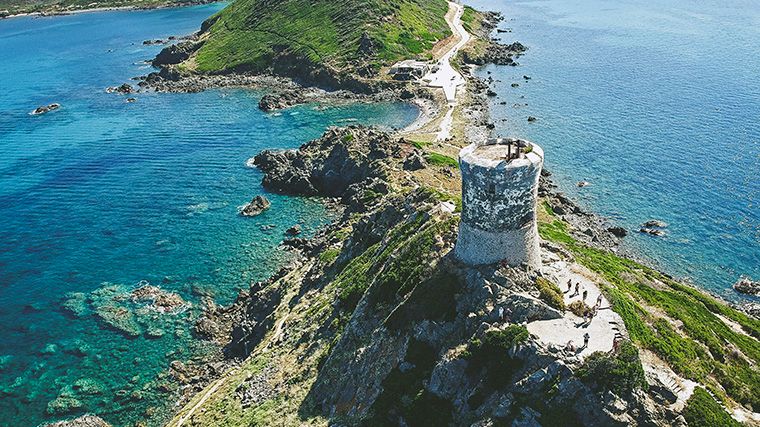
You can drive west along the coast of Ajaccio via the Route de Sanguinaires, but we personally prefer the route through the hills (D11B). Whichever road you choose, the Sanguinaires islets are a must-see in Corsica. Just before the headland that juts into the Mediterranean Sea, there’s a large parking area where you can park your rental car. Then walk to the Tour de la Parata, a Genoese tower like many you’ll see in Corsica. From the thirteenth to the eighteenth century, the island was part of the Republic of Genoa. These watchtowers were built to protect the island from pirates. From there, you’ll have a fantastic view of the Sanguinaires Islands, especially at sunset when the rocks turn red. A watchtower was also built on the farthest island, Mezu Mare, but the lighthouse at its highest point is more prominent. Boat tours to these islands are organized from Ajaccio and Porticcio.
4. Capu Rossu
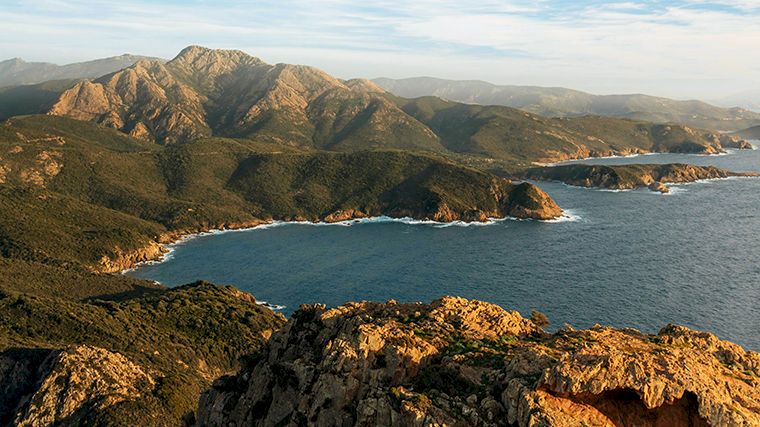
On the way from Ajaccio to Porto (via the D81), you’ll drive right along the rugged west coast of Corsica, except at Capu Rossu. You can take a seven-kilometer circular hike around this cape, which starts at the A Guardiola cafeteria. There’s a large parking area for your rental car. Once you reach the coast, you’ll have a view of the spectacular Calanques de Piana. These calanques (which the Corsicans call calanches ) are jagged inlets formed by towering cliffs of red rock.
5. Calanques de Piana
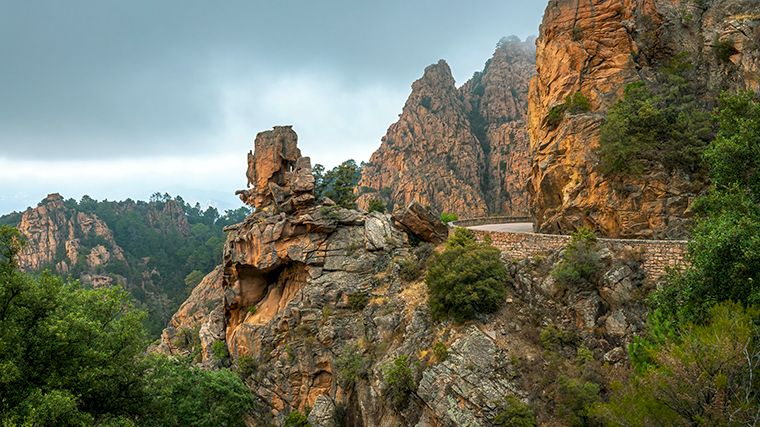
Further along, the D81 cuts right through this impressive landscape, which has been shaped by millions of years of rock erosion. Wind, water, and other forces of nature have created the unique and bizarre shapes of the red granite cliffs. You’ll have a hard time keeping your eyes on the road, but luckily there are coves here and there where you can pull over to take a closer look at the most beautiful spots and snap some stunning photos. There’s a bit more space for cars at the Tête du Chien parking lot, as this is the starting point for a hike to a small plateau overlooking the Mediterranean Sea and the calanques along the coast. The rock formations are at their most beautiful—and reddest—at sunset.
6. Scandola Nature Reserve
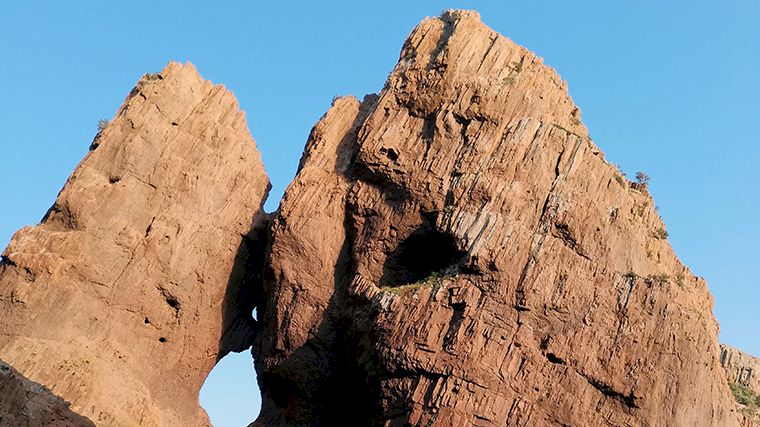
Porto is a small coastal town and the main departure point for excursions to the Scandola Nature Reserve. You’ll have to leave your rental car behind for this, as this fantastic nature reserve is accessible only by boat. It is part of the Parc naturel régional de Corse, which encompasses not only these coastal areas but also the entire interior of Corsica. The inland area is very rugged and inaccessible. Yet the Genoese managed to build a tower here as well—the Tour de Gargalo—at the westernmost tip of Corsica. You’ll see this tower during the boat trip to the rugged rocky coast. Opt for a small boat rather than a large tour boat. The small boats can navigate narrower coves and caves, offering a more enjoyable experience.
7. Plage de Tuara

Many boat tours stop at the village of Girolata, which is accessible only by water or on foot. The village is popular mainly because of its isolated location; otherwise, there isn’t much to see: cows lie on the pebble beach, and the fortress is closed to the public while it’s being restored. It is, however, a nice viewpoint.
Between Girolata and Osani lies a small beach that is also accessible only by boat or on foot. The starting point for the shortest route there is the spacious Col de la Croix parking lot, right next to the D81 and just outside Osani. This hiking trail is called the Sentier du facteur, because the local mail carrier used to walk this route every day to deliver the mail to Girolata. On the first part of the trail, you’ll enjoy stunning views of the coastline; later, you’ll walk through dense forests. After about half an hour, you’ll reach Plage de Tuara, a beach of coarse sand and pebbles. It’s often wonderfully peaceful there, though there can be quite a few boats moored during peak season.
8. Gorges de Spelunca / Evisa
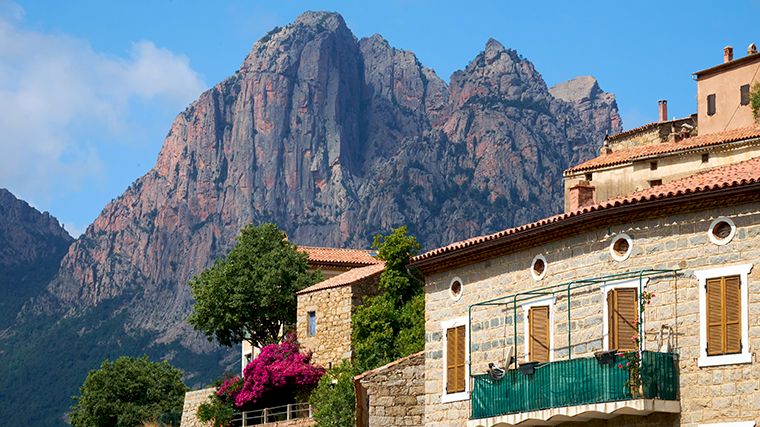
A few kilometers inland from Porto lie two enchanting mountain villages: Ota and Evisa. Between these villages lies the famous Spelunca Gorge, which offers a wonderful hiking experience. You can park your rental car along the D124, just before the bridge over the Porto River. From there, you’ll find yourself right at the most beautiful part of the Gorges de Spelunca. From this spot, a well-marked hiking trail leads to the Genoese arch bridge, Pont de Zaglia. The trail winds through forests and along steep rock faces, with a few elevation changes, but it’s manageable, even for children. You can wade in the water at the little bridge. The same goes for another bridge, the Ponte Vecchiu, which isn’t far from the starting point. To get there, don’t head straight back to the parking lot; instead, walk a short distance toward Ota.
An alternative route—though much longer—is the old mule trail through the dwarf forest between Ota and Evisa. It takes about three hours to complete, and if you don’t want to walk back, you’ll need to arrange for a taxi, as there are no buses. It’s definitely worth the effort, as Evisa is a beautiful little town surrounded by densely forested mountains. So if you have the time to complete the entire route, it’s definitely recommended.
9. Calvi
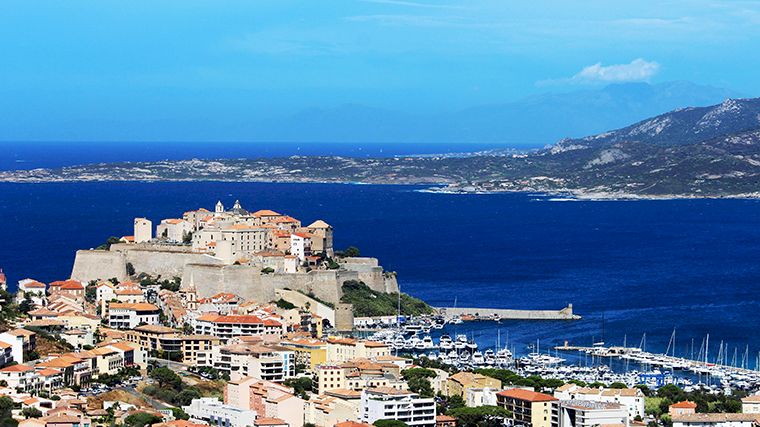
Calvi, on the northwest coast of Corsica, has a majestic citadel, a lively marina, and a long sandy beach. That beach isn’t the most beautiful on the island, but it’s still popular because it’s easily accessible.
The historic citadel was built at the end of the fifteenth century, and it’s a delight to stroll through its narrow alleys. Climbing the many stairs and steps up to the top is quite a workout, but fortunately there are plenty of outdoor cafes where you can take a breather. The view from the citadel is simply amazing, especially at sunset. Just outside the citadel stands the small, round Baroque church of Sainte-Marie. The best spot to take an evening stroll or grab a table at a terrace is the Quai Landry along the harbor, with a view of the illuminated citadel.
10. The Villages of La Balagne
Calvi is the perfect starting point for a route through the picturesque villages and stunning landscapes of the Balagne region in northwestern Corsica. The villages in this fertile region have changed little over the centuries, and the viewpoints along the way are truly breathtaking. In the villages, with their narrow streets winding around old churches and small local cafés, you’ll feel as if you’ve stepped back in time.
Along the coastal road from Calvi to L’Île Rousse, the first village you’ll come across is the picturesque village of Lumio. From the higher parts of the village, you’ll have a fantastic view of Calvi Bay. It gets even more beautiful when you follow the hiking trail to the ruins of the village of Occi. The last resident died in 1918. The restored little church is still used regularly. After this hike, you’ll probably want to cool off in the sea. To do so, follow the route to Plage de l’Arinella, a beach that slopes very gently into the water.
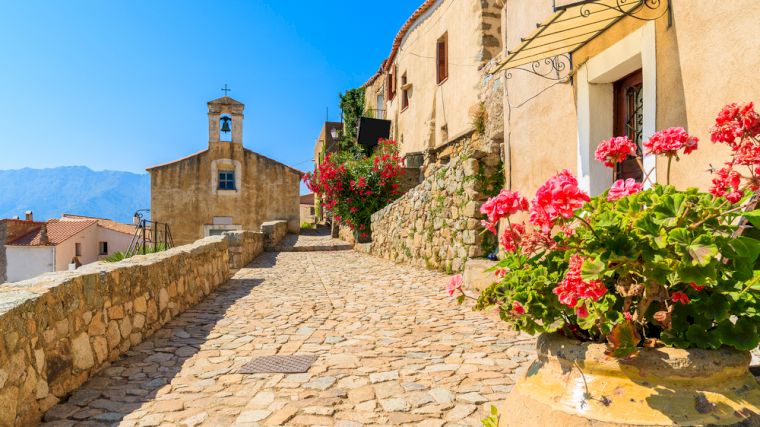
You’ll also enjoy fantastic views during the drive up to the hilltop village of Sant’Antonino. There’s plenty of space to park your rental car near the church. Sant’Antonino is considered the most beautiful village in Corsica. The village is a maze of narrow streets, steep paths, stone stairways, and arched passageways. From the Piazza a l’Olmu or one of the café terraces, you’ll have a beautiful view of the village and the surrounding hills.
The next charming mountain village is Pigna, best known for its artists’ and artisans’ studios. This village has been beautifully restored and stands out from afar thanks to its bright blue shutters. A former stable has been transformed into an auditorium with fantastic acoustics.
From Pigna, take the beautiful road via Santa-Reparata-di-Balagna and Monticello to L’Île-Rousse. With its straight streets, this town is less “Corsican” than the villages described above. It is, in fact, a relatively young town, founded in the mid-18th century by Pasquale Paoli, who led the resistance against Genoa. The town is named after the small red rocky islet off the coast, which isn’t actually an island but is connected to the town by a narrow spit of land.
11. Cap Corse
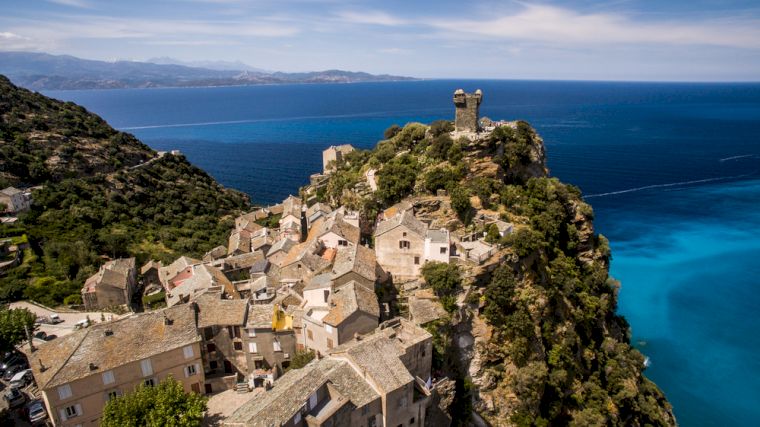
From L’Île-Rousse, it takes just over an hour to drive your rental car along the winding D81 to Saint-Florent. This is a popular seaside resort, as there are many beautiful beaches nearby: Plage de la Roya, Plage du Loto, and the snow-white Plage de Saleccia. The resort serves as the gateway to the Cap Corse peninsula in the northwest, also known as “the Finger of Corsica.” It’s only forty kilometers long and ten kilometers wide, but there’s so much to see and do: beautiful beaches, stunning natural scenery in the mountains, and one charming village after another. A winding coastal road circles the peninsula and offers—especially on the western side—constant views of steep mountain peaks rising out of the Mediterranean Sea.
Nonza is a village built on one of these steep, high cliffs, with the Paoline Tower at its highest point. There’s a fun military anecdote associated with that tower, but you’ll learn more about it on the spot as you enjoy the dramatic view. Further along the western coast, you’ll also find towers, including those near Pino and Morsiglia.
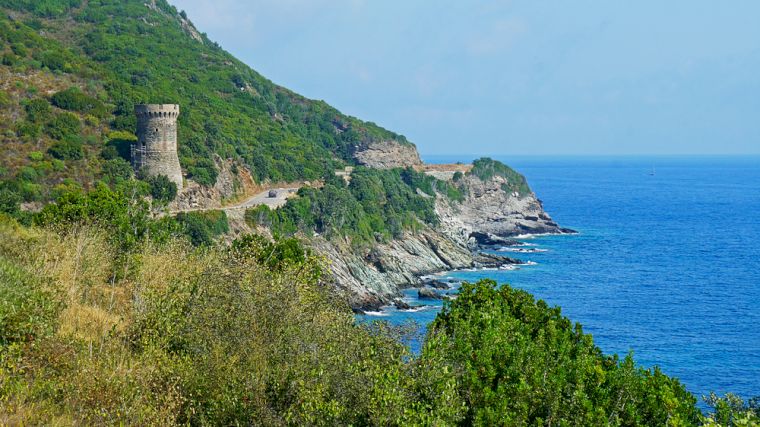
The D80 does not run along the northern coast of Cap Corse, but turns east at Centuri. That northern section is rarely visited, but is well worth exploring, with picturesque villages such as Tollare and Barcaggio.
Macinaggio, on the eastern side of the cape, is the starting point of a historic hiking trail, the Sentier des Douaniers. This trail, with panoramic views of the Mediterranean Sea, was once used by customs officers to catch smugglers in the act. The trail is nearly twenty kilometers long in total, but it’s only a one-and-a-half-kilometer walk to the beautiful Plage de Tamarone. There is also a dirt road leading to this beach, but you’re not officially allowed to drive a rental car on it.
Further south, the coastal road runs right past the Torra di l’Osse (Tower of Bones), which owes its name to the discovery of skeletons in its foundation. You’ll need to explore the quaint fishing village of Erbalunga on foot. Park your rental car in a small square right next to the main road.
12. Bastia
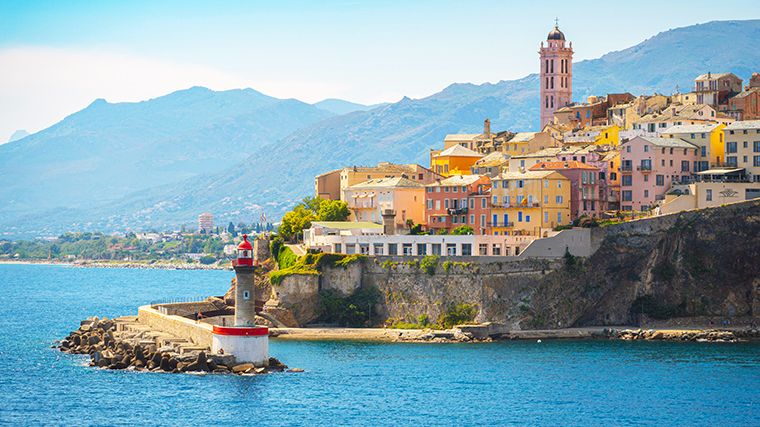
Bastia is a lively city, especially in the evening around the Vieux Port, the old harbor. It used to be filled with fishing boats, but nowadays luxury (sailing) yachts dominate the scene. Behind the colorful houses along the harbor, you’ll find charming, narrow streets in the oldest part of the city. There you’ll also find the Église Saint Jean-Baptiste, which features an impressive interior, including beautiful frescoes. Bastia also has a citadel, built during the time when Genoa was in charge. You can climb up to it via the Jardin Romieu. Inside the citadel, you’ll find a museum dedicated to the history of Bastia, housed in the former governor’s palace.
Just north of the old harbor lies Bastia’s passenger port, where ferries and cruise ships dock. Did you know that Bastia is one of the busiest ferry ports in France? From there, you can take a boat to French ports such as Nice, Toulon, and Marseille, as well as to Genoa and Livorno in Italy.
13. Corte
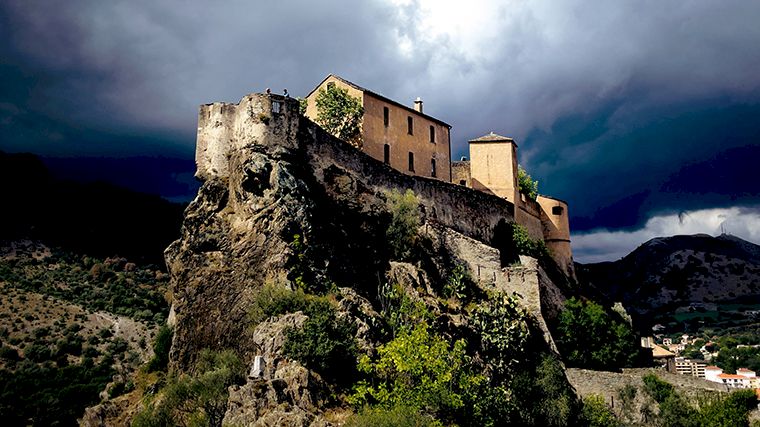
In 1755, Corte was proclaimed the capital of an independent Corsica by the rebel leader Paoli. That didn’t last long, because fourteen years later, the island was captured by the French. Anti-French sentiment has not disappeared here. You won’t find a statue of the pro-French Corsican Napoleon here, but you will find one of Paoli.
The citadel is spectacularly perched atop a narrow rock, but the best view is from the nearby Belvédère observation deck. A ticket to the citadel also grants access to the Musée de la Corse, which covers the island’s history and the struggle for independence.
Corte is a perfect base for visiting two of the most beautiful valleys in Corsica.
14. Restonica Valley
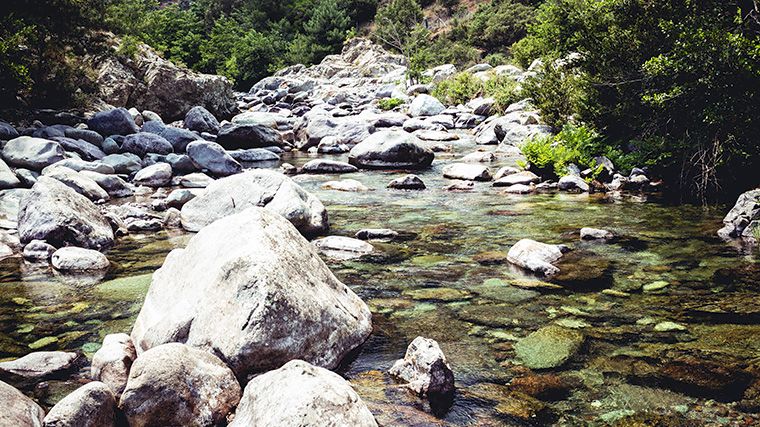
The Restonica River valley, southwest of Corte, is extremely popular but is now closed to traffic from the Tuani campground. The most scenic part can only be reached by booking a ticket in advance for the shuttle bus that runs between Corte and Frasseta. Please note: You cannot buy a ticket on the bus itself; you must reserve your seat via an app. There are well-marked hiking trails in the valley, and you can also swim in various spots along the river, but keep in mind that the water is very cold. From the Bergeries de Grotelle inn, it’s about a one-hour walk to the glacial lake Lac de Melo. Lac de Capitellu is located higher up and is accessible via a much more challenging trail.
15. Vallée du Tavignano
At least as beautiful, but less crowded, is the Vallée du Tavignano, just north of Restonica. Park your rental car along Rue Saint-Joseph in Corte. A short distance further on, the hiking trail begins, leading to a simple footbridge over the small river in the gorge. You don’t have to walk all the way to that bridge to go swimming. Pretty soon you’ll come to spots where you can get into the water, and the big advantage is that there are far fewer people here than in the Restonica Valley. The water here is just as cold, though!
16. Lac du Nino

The Tavignano River originates in the glacial lake Lac du Nino. You can’t hike there through the valley, but you can start from the parking lot at the Maison Forestière de Poppaghia along the D84. This mountain hike is especially popular for its beautiful views of Corsica’s highest peaks, such as Monte Cinto (2,706 m) and Monte Rotondo (2,622 m).
17. Mountain Villages and a Waterfall in Fiumorbu
If you head inland from Ghisonaccia, you’ll enter the watershed of the small Fiumorbu River, dotted with picturesque mountain villages. The first village you’ll encounter in the foothills is Prunelli-di-Fiumorbu. While Corsica is generally very mountainous, this village offers a fantastic view of the plain along the east coast. Just outside the village stand the ruins of the Saint-François monastery.
Between the villages of Isolaccio-di-Fiumorbu and San-Gavino-di-Fiumorbu , you’ll pass the Cascade de Bugja waterfall , but it’s quite hard to find because there are no signs. You can park your rental car near this little bridge. The trail to the waterfall starts right next to it. Further along, yellow arrows mark the route, but you’ll need to look closely, as they’re quite small. After crossing a small stream, you have the choice of continuing to follow the yellow arrows or taking more challenging routes, marked by blue and red arrows. The tall waterfall plunges into a pool where you can swim if you’re not afraid of cold water.
18. Beautiful driving route along the Aiguilles de Bavella
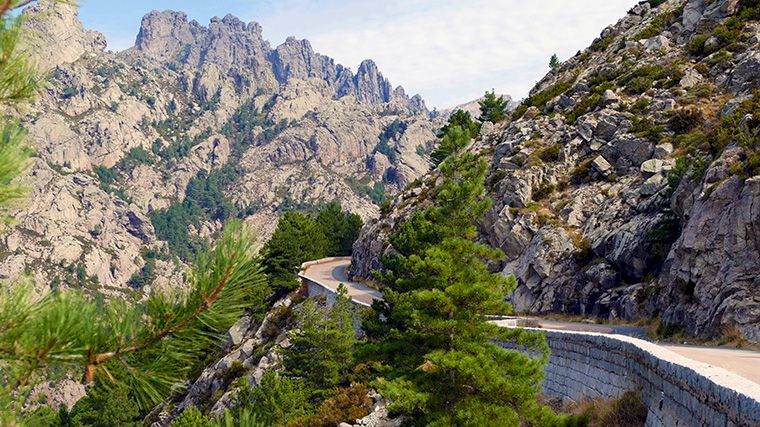
The small Solenzara River forms the border between Haute-Corse and Corse-du-Sud. The village of the same name on the east coast is the starting point for what is perhaps Corsica’s most iconic mountain route along the D268 and D368. These roads wind along the river, through dense forests, over high mountain passes, and past deep gorges and granite peaks known as the Aiguilles de Bavella. There are countless beautiful viewpoints, but the highlight is the Col de Bavella, nestled between towering granite cliffs that glow red at sunset. Along the way, there are plenty of stops for hiking, swimming in natural pools, and picnicking amidst spectacular natural surroundings. You’ll pass waterfalls and the stunning Lac de L’Ospédale. The route ends in the old port town of Porto-Vecchio on the southeast coast. There, you can relax on one of the stunning sandy beaches in the area, such as those along the bays of Santa-Giulia and Rondinara.
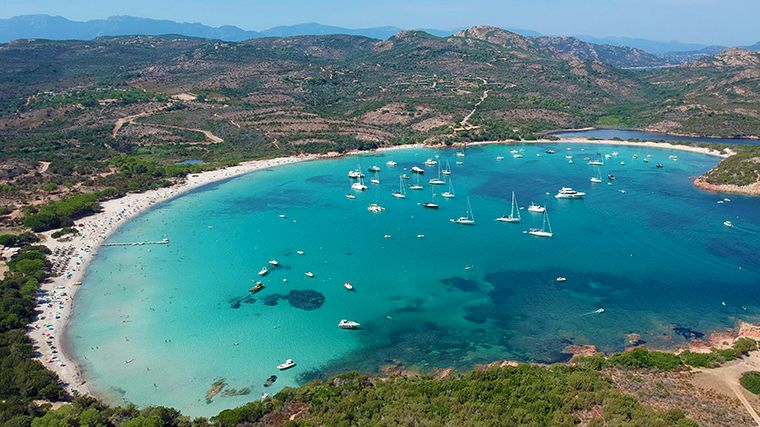
19. Bonifacio
There are many towns and villages perched high up in Corsica, but Bonifacio’s location is truly spectacular. The old town sits high on a jagged, white limestone cliff that juts out far over the Mediterranean Sea. Parking your rental car can be a challenge. There’s a parking lot (Les Vallis) well before Bonifacio, where a free shuttle bus runs to the town.
https://www.pexels.com/photo/an-aerial-photography-of-houses-between-the-ocean-and-mountains-4294980/
Bonifacio is situated on a high rocky coast in southern Corsica. (Photo: https://www.pexels.com/@bastien-neves-2459695/)
From the Bastion de l’Étendard, you naturally have a beautiful view, but you’ll get an even better view of this fortress from the hills across the way. Beneath the westernmost tip lies a tunnel system called Le Gouvernail. From here, searchlights were used at night to illuminate the harbor entrance and the strait between Corsica and Sardinia. The Cimetière Marin is a bit unusual, as it’s a sort of village where the deceased are buried in small houses.
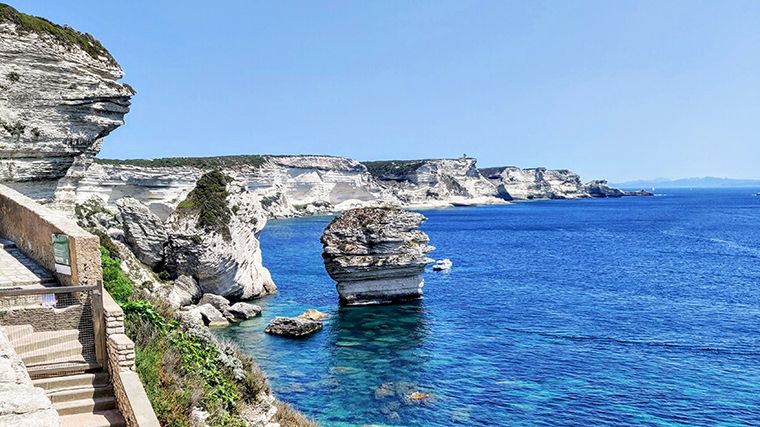
You’ll never tire of looking at the white cliffs along Corsica’s southern coast. You can see them up close by descending the steep stairs of the Escalier du Roy d’Aragon.
20. Prehistoric Sites
If you’re driving from Bonifacio to Propriano in your rental car, you’ll pass the prehistoric sites of Cauria about halfway along the route, but it’s not until just before Sartène that there’s a turnoff (D48) leading to these menhirs and dolmens. A walking trail has been marked out along two rows of menhirs (upright stones, the purpose of which is unclear) and the dolmen (burial site), and along the way you’ll also pass a unique rock formation.
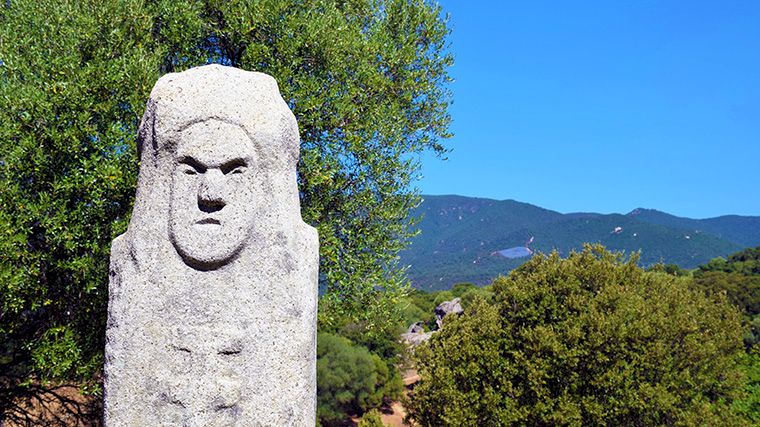
Even more interesting is the prehistoric site of Filitosa, just north of Propriano. Here, too, there are menhirs, but with distinct human faces. It remains a mystery why these statues were created.
Driving in Corsica with a Rental Car
With the exception of the plains along the east coast, Corsica is distinctly mountainous and features numerous winding roads with some steep sections. That’s why we recommend renting a car with sufficient engine power. These zigzagging roads require your full attention when you’re behind the wheel of your rental car. Plus, you can’t drive fast. Keep this in mind when estimating your travel time. In Corsica, you generally won’t exceed an average speed of about forty kilometers per hour. Only on the stretch between Bonifacio in the south and Bastia in the north (T10 and T11) can you drive faster.
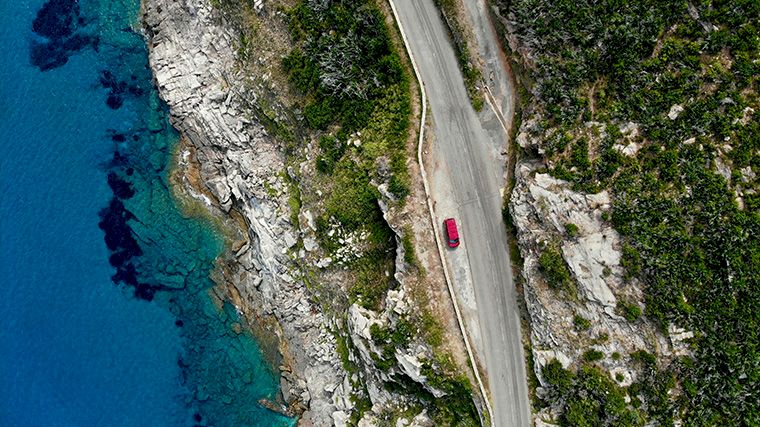
You should also watch out for animals on the road. Throughout most of Corsica, it’s not uncommon to see cows, pigs, and goats along the roadside, and they may occasionally cross the road.
We hope we’ve inspired you to rent a car in Corsica for an unforgettable vacation. The winding roads make the island a true paradise for scenic drives. With a rental car, you can fully enjoy dramatic mountain landscapes, inviting beaches, and fascinating historical monuments.

Where would you like to rent a car?
- 24000+ pick-up locations
- Free cancellation
- Independent comparator

Useful tips for a well-prepared trip
Which insurance should I choose, and what's the deal with the deposit? Read our articles with useful information and tips to ensure you choose the right rental car for you.


