- Popular countries
- Popular regions
- Popular cities
- Popular airports
- Car Rental Italy
- Car Rental Spain
- Car Rental United States
- Car Rental Portugal
- Car Rental South Africa
- Car Rental France
- Car Rental Netherlands
- Car Rental Greece
- Car Rental Germany
- Car Rental United Kingdom
- Car Rental Belgium
- Car Rental Croatia
- Car Rental Switzerland
- Car Rental Austria
- Car Rental Denmark
- Car Rental Norway
- Car Rental Australia
- Car Rental Ireland
- Car Rental Cyprus
- Car Rental Canada
- Car Rental Florida
- Car Rental Sicily
- Car Rental California
- Car Rental England
- Car Rental Sardinia
- Car Rental Mallorca
- Car Rental Ibiza
- Car Rental Crete
- Car Rental Tenerife
- Car Rental Rhodes
- Car Rental Madeira
- Car Rental Corsica
- Car Rental Gran Canaria
- Car Rental Malta
- Car Rental Scotland
- Car Rental Azores
- Car Rental Fuerteventura
- Car Rental Lanzarote
- Car Rental Corfu
- Car Rental Zakynthos
- Car Rental Amsterdam
- Car Rental Milan
- Car Rental Miami
- Car Rental Lisbon
- Car Rental Malaga
- Car Rental Porto
- Car Rental Rome
- Car Rental Cape Town
- Car Rental Barcelona
- Car Rental Faro
- Car Rental Alicante
- Car Rental Nice
- Car Rental Bari
- Car Rental Naples
- Car Rental Johannesburg
- Car Rental Brussels
- Car Rental Bergamo
- Car Rental Orlando
- Car Rental Palma de Mallorca
- Car Rental Vienna
- Car Rental Amsterdam Schiphol Airport
- Car Rental Miami International Airport
- Car Rental Lisbon Airport
- Car Rental Malaga Airport
- Car Rental Porto Airport
- Car Rental Milan Malpensa Airport
- Car Rental Rome Fiumicino Airport
- Car Rental Faro Airport
- Car Rental Alicante Airport
- Car Rental Bari Palese Airport
- Car Rental Nice Airport
- Car Rental Barcelona Airport
- Car Rental Cape Town Airport - International Terminal
- Car Rental Bergamo Airport
- Car Rental Orlando International Airport
- Car Rental Mallorca Airport
- Car Rental Catania Airport
- Car Rental Johannesburg International Airport
- Car Rental Ibiza Airport
- Car Rental Athens Airport

9 Must-See Stops Between Zagreb and Dubrovnik
Road Trip Through Croatia in a Rental Car
Croatians love to sing the praises of their country’s beauty, with the stunning coastline taking center stage. They may tend to exaggerate a bit, but the fact is that Croatia offers a wide range of attractions and sights. Of course, there’s the Adriatic coast with its lovely beaches and countless islands, but there are also historic and charming old towns, ruins, breathtaking natural scenery, and a rich cultural history influenced by the Romans, Byzantines, Venetians, Austrians, and Hungarians.
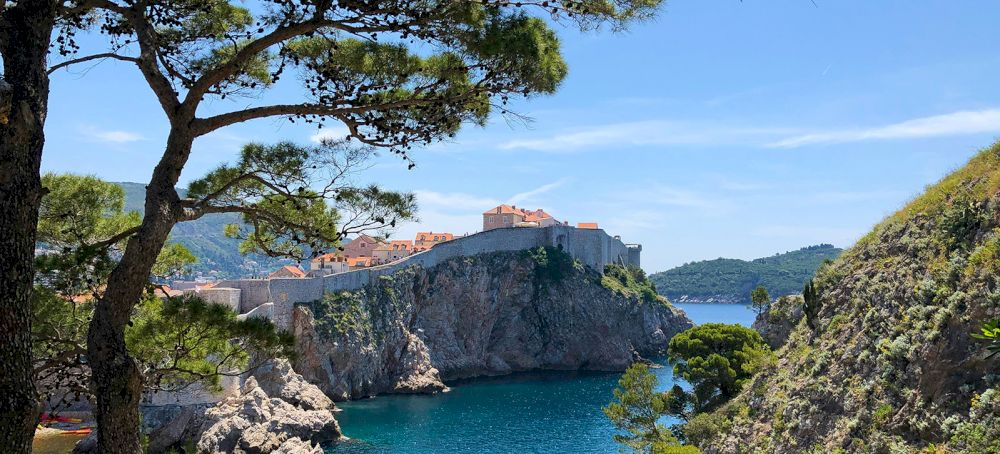
Because of Croatia’s shape—with a long, narrow stretch along the coast—it’s best to rent a car for a one-way trip. That means you pick up the rental car in one place and return it somewhere else. You’ll pay a so-called “one-way fee” for this. Since this type of car rental is very common in Croatia, the fee will be quite reasonable. Enter a different drop-off location on our search form, and we’ll show you the cars available for rent between those two locations. The price shown includes the fee, but it’s listed separately on the cost breakdown.
Below, we describe a road trip in a rental car from Zagreb, through the beautiful nature reserves south of the Croatian capital and along the impressive Dalmatian coast to historic Dubrovnik. Of course, you can also take the trip in the opposite direction. We’ll also highlight interesting sights on several islands off the coast. You can combine these fantastic destinations in various ways. For example, by driving a rental car from Dubrovnik along the coast to Zadar, or by traveling from Zagreb to Split. The choice is yours—because when you rent a car, you have complete freedom!
Zagreb
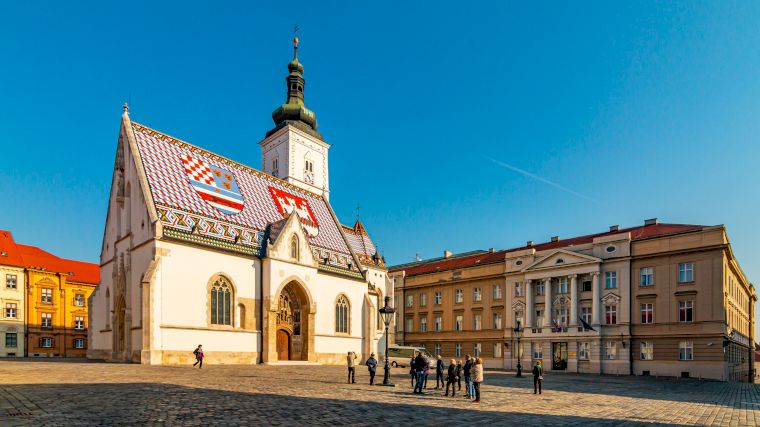
In the Croatian capital itself, you don’t need a rental car, because all the sights are within walking distance. Zagreb consists of two parts: the Upper Town (Gornji Grad) and the Lower Town (Donji Grad). The Upper Town is the medieval core, featuring, among other things, the imposing cathedral and St. Mark’s Church, which is known for its colorful roof tiles bearing the coats of arms of Croatia and Zagreb. The Lower Town is dominated by Austro-Hungarian architecture from the 18th and 19th centuries, with Ban Jelačić Square as its radiant centerpiece. This square and its surroundings are teeming with cafés, outdoor terraces, restaurants, coffee shops, stores, and art galleries. Nearby is the daily Dolac open-air market. Especially on weekends, the selection is vast, and you can enjoy the colors, scents, and aromas of fresh fruit, vegetables, various types of cheese, and much more. Zagreb also has two unusual but fun museums: the Museum of Broken Relationships and the Hangover Museum (no, not the cats—in English: Museum of Hangovers)…
Not quite within walking distance is the Mirogoj Cemetery in the northern part of the city. Be sure to visit it on the day you drive out of Zagreb in your rental car to begin your road trip. But… visit a cemetery? Yes, because this is a beautiful park with monumental tombs, a domed church, lush vegetation, and surrounded by imposing arcades. There’s also a gallery featuring sculptures by Croatian artists.
Karlovac
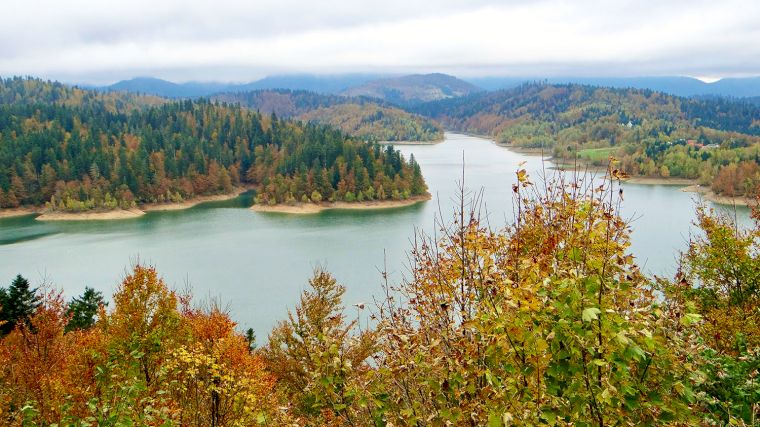
Karlovac is located less than an hour's drive southwest of Zagreb. The city originated as a hexagonal fortress at the confluence of four rivers, built in the 16th century to halt the advancing Ottomans. According to some residents, there is yet another “river”—the river of beer. The country’s largest brewery is, in fact, located in Karlovac. The old fortified city was severely damaged by an earthquake in 2020. In recent years, many streets and buildings have been restored, allowing the historic center to regain its former grandeur.
Karlovac and the surrounding area were on the front lines during the Croatian War of Independence in the early 1990s. You can learn all about the history and background of that conflict at the Muzej Domovinskog Rata in the southern suburb of Turanj. There is an open-air section featuring aircraft and artillery; the indoor section is housed within the remains of an Austrian defensive structure.
Drive your rental car along small roads west of Karlovac toward the Dobra River, and you’ll arrive at the beautifully restored ruins of a 14th-century castle, Frankopan Dvorac. From this castle, the road leads to an old stone bridge spanning the crystal-clear waters of the Dobra. This bridge was built in 1730 as part of the Karolinska cesta, the first modern road of its time connecting Karlovac to the coastal town of Bakar. You can still travel along this historic road toward Rijeka —a beautiful and relaxing alternative to the modern A6 highway and a wonderful way to traverse the mountainous region of Gorski Kotar.
Plitvice Lakes Nature Park
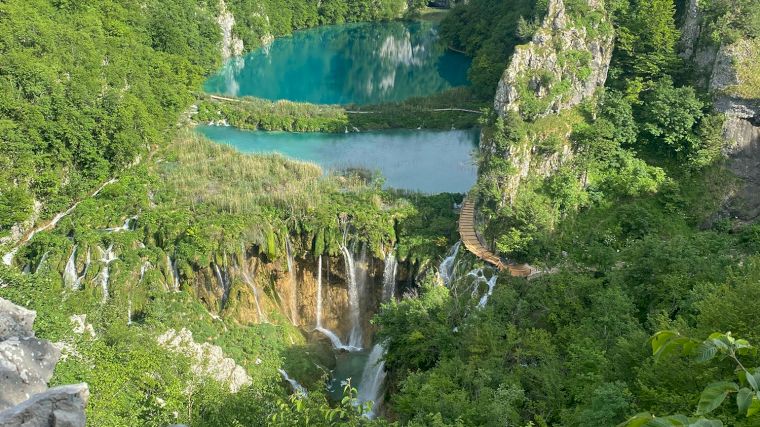
Croatia’s largest national park consists of dense forests and no fewer than sixteen lakes at various elevations, connected by hundreds of large and small waterfalls. In some places, the water seems to flow right out of the trees. Plitvice Lakes National Park is unique, and it’s no wonder it’s such a major tourist attraction. From Karlovac, it’s about an 80-kilometer drive by rental car to the park’s first entrance. Entrance 2 is four kilometers further on. With easy hiking trails, boardwalks suspended above the turquoise water, stunning viewpoints, and photogenic waterfalls, this is a park you won’t want to miss. Around every bend, there’s another breathtaking view, and the rushing sound of flowing water all around you is a truly special experience. From Entrance 1, you’ll walk toward the higher lakes, facing the waterfalls as you go.
Due to its popularity, the park gets very crowded—especially during peak season. Try to avoid the summer months and visit Plitvice in the spring (powerful waterfalls) or fall (stunning colors). If you have to visit during the high season, try to arrive well before 10 a.m., when there are still few other visitors. In the summer, the park opens at 7:00 a.m. Order tickets online in advance.
Zadar
The next stop is the coastal town of Zadar. If you avoid toll roads, it’s about a two-hour drive from Plitvice (and taking the toll roads is only twenty minutes faster). The same goes for all Croatian coastal towns: don’t try to find a parking spot for your rental car in the city center. Even if there is a spot available, you’ll pay a premium for it. Plus, navigating the narrow streets is a nightmare and will only cause you stress. So find a parking spot for your rental car on the outskirts of town and continue on by public transportation. Or on foot, because sometimes a good parking spot is surprisingly close to the old part of town. For example, there are two parking lots right next to Zadar’s bastion. You can walk through the bastion park to the old town.
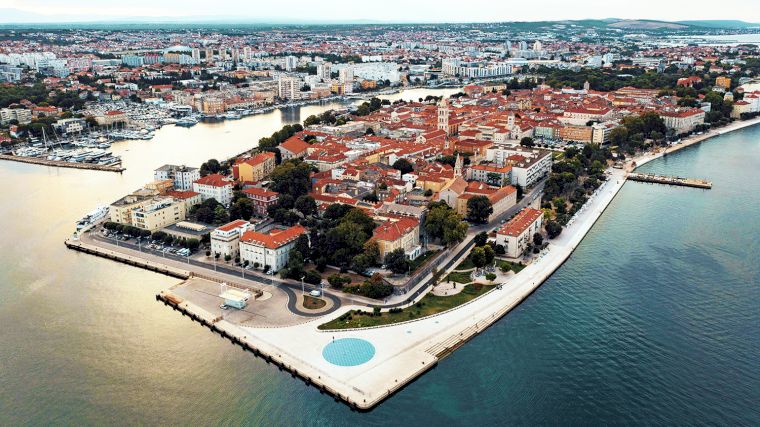
Although the city isn’t quite as charming as Dubrovnik, Zadar is definitely worth a visit. In fact, thanks to its vibrant culinary scene and lively nightlife, Zadar has earned a reputation as “Croatia’s coolest city.” It’s home to two attractions you won’t find anywhere else: the Sea Organ and the Sun Salutation. The Sea Organ is an architectural sound art installation. At first glance, they look like nothing more than stairs, but they actually create music using the waves of the sea. The Sun Salutation next to it is a solar-powered installation that creates an enchanting light show at sunset. Together, they produce magical light and sound effects along Zadar’s promenade as you watch the sun sink into the sea.
Narodni trg (People’s Square) is the heart of the old town, which took shape in the fifteenth century when Zadar was under the rule of the Republic of Venice. The bell tower of the former city guard dominates the small square; across the way, important decisions were announced in the loggia.
In various places throughout the city, you can see remnants from Roman times, especially at the Forum, which remains a gathering place to this day. The only column still completely intact was once a place where criminals were tied up to be jeered at and humiliated. Next to the Forum stands the circular Church of St. Donatus, built in the ninth century on Roman foundations. Adjacent to it is the cathedral’s bell tower, from which you have a magnificent view of the old town and the Adriatic Sea.
Want to take a refreshing dip after exploring the city? Zadar has some nice city beaches, such as the small Kolovare (just south of the old town) and the larger Borik in the north.
Krka National Park
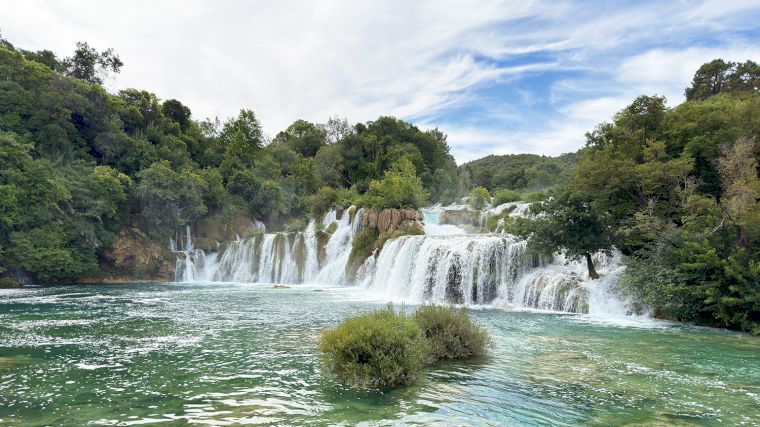
From Zadar, take the stunning coastal highway (Jadranska Magistrala) southeast toward Šibenik. The Cathedral of St. James in this beautiful old city features unique decorations: several heads are carved into its exterior. Apparently, these were random passersby who were thus immortalized. From the coastal highway, then drive toward the entrance to Krka National Park. Just like at the Plitvice Lakes, the main attractions in this nature park are the large waterfalls. Because Krka is closer to places like Zadar and Split, it’s even more crowded here than at Plitvice. If you’ve already visited that park, you can skip Krka—unless you just can’t get enough of cascading water. Or you can deliberately choose a less crowded part of the park, which we’ll discuss later.
The most popular waterfall is Skradinski Buk, where the water cascades over several terraces. You can reach it by parking your rental car at the Lozovac entrance, near the village of the same name. A shuttle bus runs from the reception area to the waterfall. If you want to fully enjoy nature, you can follow a hiking trail that climbs 850 meters. We recommend visiting the waterfall as early as possible (the park opens at 8:00 a.m. in the summer) to beat the large crowds. From the waterfall, several trails lead along boardwalks. Boats also run to Roški Slap waterfall in the northern part of the park.
That other waterfall is also accessible by car. From Skradin, take the road to Dubravice and Rupe, and turn off at the latter hamlet for a phenomenal view of the lake and an old monastery on the islet of Visovac. You can’t miss it, as there’s a large sign along the road that reads“Viewpoint Rogovo.” The first part is paved; after that, it becomes a gravel road that ends at a clearing where you can park your rental car. From there, it’s a ten-minute walk to the viewing platform. Back at your rental car, it’s another 15-minute drive to the Roški Slap entrance to the nature park, which is much less crowded than the one in the south. Further north is the Burnum entrance, where a trail leads to the impressive Manojlovački waterfalls, the highest in Krka National Park.
Primošten and Trogir
You can drive to Split in an hour via the A1 highway, but why rush when you’re on vacation and in no hurry? From Šibenik, take the D8 again—a winding coastal route through Primošten and Trogir to Split—and breathe in the fresh sea air along the way!
Primošten was originally located on a small island, separated from the mainland by a narrow channel. A drawbridge spanned the channel, which was replaced by a connecting road after the Ottomans withdrew. The historic town center (Raduča), situated on a hill, is now a popular tourist destination in Dalmatia. Right next to the old town, you can take a dip in the sea at Mala Raduča Beach, often considered one of the best beaches in the country. It’s a cove with sand and small pebbles, offering a beautiful view of Primošten across the water. For safety, the swimming area is protected by nets.
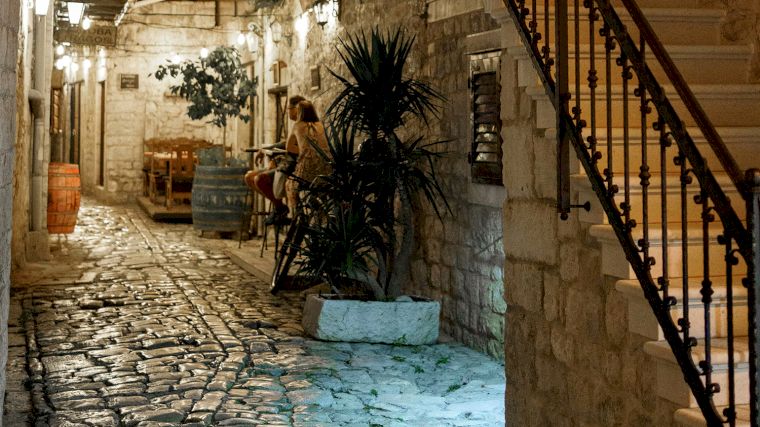
If you drive about thirty kilometers further in your rental car, you’ll arrive in Trogir, a city best known for its oldest part, located on a small island off the coast. It is connected to the mainland and the larger island of Čiovo by bridges. A main road runs along the eastern side of Old Trogir. This historic part of the city is fantastic: exceptionally narrow alleys wind through the enchanting town, which is surrounded by well-preserved medieval walls. On the western side stands the imposing 15th-century Venetian fortress Kaštel Kamerlengo. Even older is the Cathedral of St. Lawrence, which features a variety of architectural styles: Romanesque, Gothic, and Renaissance. The bell tower, in particular, is a bit of a mishmash, and of course, you’ll enjoy a sweeping view from the top. Cars cannot drive through Trogir’s narrow streets, so it’s best to park your rental car on the mainland. However, parking rates are on the high side by Croatian standards. Boats depart from the ferry terminal on Čiovo to the islets of Drvenik Mali and Drvenik Veli, which feature beautiful bays and beaches.
Split
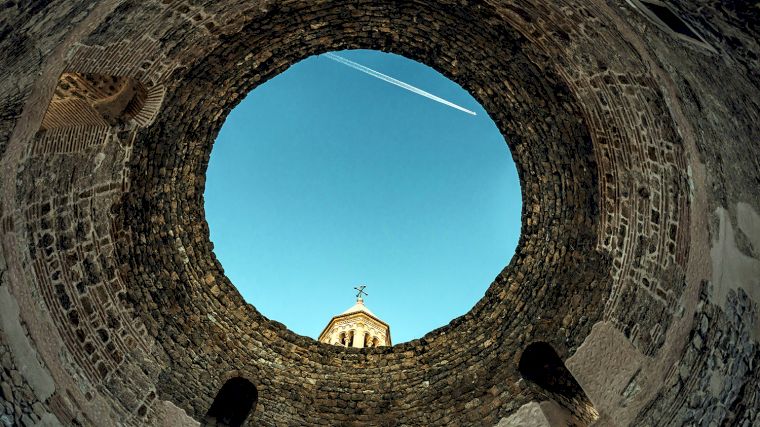
From Trogir, it’s a 30-minute drive past Split Airport to the city center. Split was founded by the Greeks, but has had many rulers over the centuries. After the Greeks came the Romans, followed by the Venetians and the Habsburgs. France also ruled the city for a time, and it is to them that the city owes its Riva promenade, Split’s premier gathering place. This promenade lies directly in front of the most important structure from the Roman era, the Diocletian’s Palace. Commissioned by the Roman Emperor Diocletian, it is much more than just a palace; the complex encompasses nearly half of historic Split. At its heart is the lively Peristil Square, where concerts are held during the summer months. St. Domnius Cathedral was originally the mausoleum of the Roman emperor, but was later converted into a Catholic church. There’s some symbolism in that, since Diocletian was a fanatical persecutor of Christians. From the bell tower, you have a magnificent view of Split, the sea, the islets, and Marjan Hill to the west.
You’ll also enjoy a panoramic view from that green hill. Cars aren’t allowed there, so you’ll need to park your rental car on one of the access roads and walk up. At the foot of Šuma Marjan lies the charming old neighborhood of Varoš. In the past, this was home to poor fishermen; today, the small, narrow streets are lined with many cozy bars, cafés, and restaurants.
Hvar / Brač
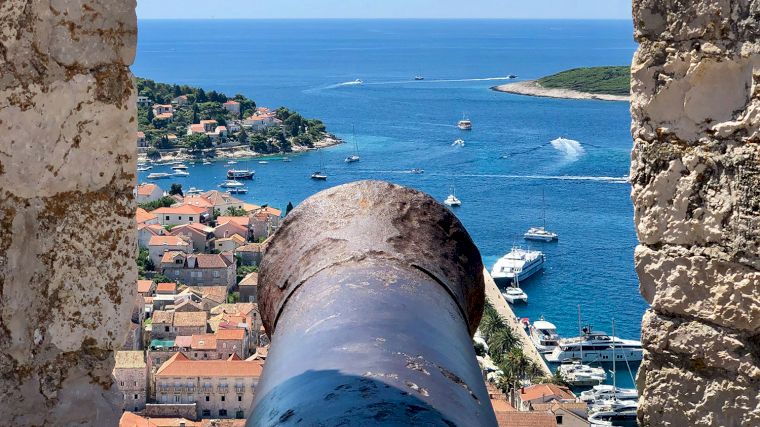
You can drive your rental car to Kasjuni Beach on the south side of Marjan Hill, but both the road leading there and the beach itself are very crowded. For better beaches, take the car ferry to Hvar or Brač. Since there’s no direct car ferry between these two islands, it’s best to choose one. But which one? Although they’re close to each other, these two islands are distinctly different.
The ferry to the island of Hvar docks at Stari Grad, which means “Old Town.” And old this town at the end of a long, sheltered bay certainly is—founded in the fourth century B.C. by Greeks from the island of Paros. Take the time to explore this beautiful old town, centered around the idyllic Škor Square. Most tourists head straight from the ferry to Hvar Town, which is dominated by a hilltop fortress offering magnificent views of the town and the Pakleni Islands. Hvar Town has become a hotspot for young partygoers, but beyond it, endless fields of lavender and rosemary dominate the landscape, filling the air with a delightful scent. The ferry takes about two hours to sail from Split to Stari Grad. The trip from Sucuraj, the port on the eastern side of the island, to Drvenik on the mainland takes just half an hour.
https://unsplash.com/photos/people-on-beach-during-daytime-WCT5HX4IEpI
The idyllic Zlatni Rat beach on the Croatian island of Brač. (Photo: https://unsplash.com/@rabbit_in_blue)
Brač is a quieter island that captivates with its enchanting natural beauty—a mecca for outdoor enthusiasts. There are countless hiking and biking trails through breathtaking landscapes. You can also climb mountains there, such as to the summit of Vidova Gora, which, at 778 meters, is the highest peak of all the Adriatic islands. Incidentally, you can drive your rental car up to 150 meters from that summit. The idyllic Zlatni Rat beach is located nearby. Brač also features charming old villages, such as Pučišća and Milna. The ferry ride from Split to Supetar on the northern side of the island takes just over an hour. The same applies to the ferry connection between Sumartin on the eastern side of Brač and Makarska on the mainland.
Makarska Riviera
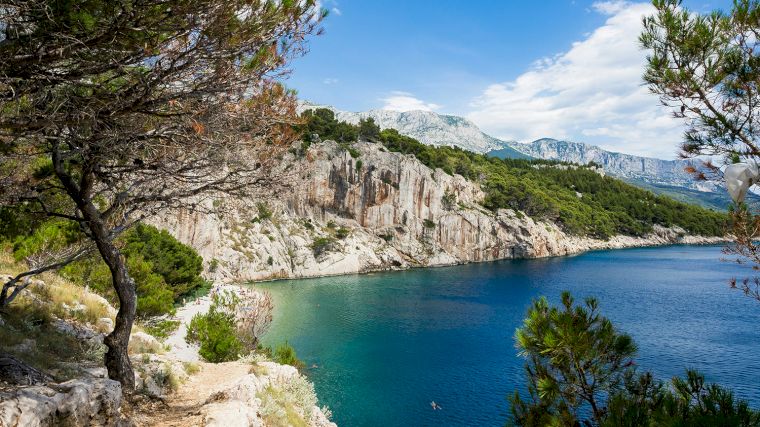
Makarska is the hub of the beaches along the Dalmatian coast, also known as the Makarska Riviera, which stretches over sixty kilometers. The beaches in and around Makarska get very crowded during the summer months, but since you’ve rented a car, you can easily drive to quieter beaches. You’ll find some of these between Drasnice and Igrane. During peak season, Makarska’s nightclubs feature performances by national and international DJs, singers, and bands. In the Biokovo Mountains near Makarska, you can walk across the Skywalk, a semicircular glass platform more than 1,200 meters above sea level. It’s recommended to buy a ticket online in advance. You can drive there in your rental car, but the last part of the road is extremely narrow, with passing spots for oncoming traffic only every 300 meters. If that’s too scary for you, leave your rental car behind and book an excursion by minibus.
Phenomenal D8 Coastal Road
We’ve already recommended taking the coastal road a few times above, and we’re doing so again for the stretch between Split and Dubrovnik. The first part isn’t all that spectacular yet, and for that reason alone, we recommend returning to the mainland via one of the islands we mentioned above. You’ll have a hard time keeping your eyes on the road—that’s how beautiful the route along the D8 is, with towering mountains and fantastic views of the sea.
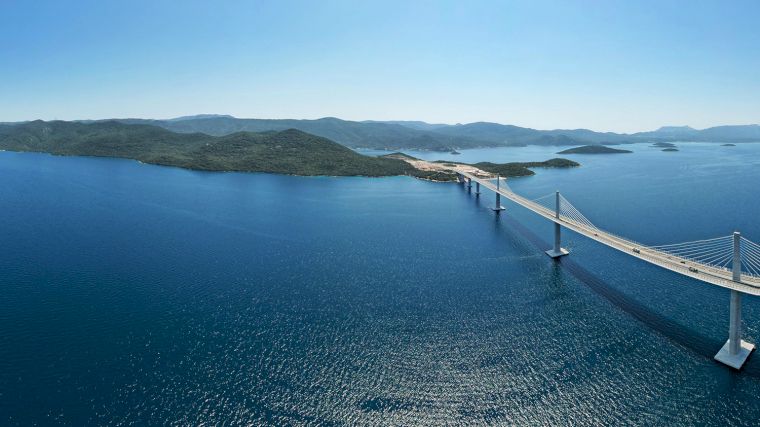
In the past, you had to travel a short distance through Bosnia and Herzegovina to reach Dubrovnik, but since the opening of the Pelješac Bridge, that’s no longer necessary. This cable-stayed bridge—with no fewer than six cables—connects the Croatian mainland to the Pelješac Peninsula. The D8 then runs through mountainous terrain to Dubrovnik.
Dubrovnik
Well, what else can we say about Dubrovnik? The pearl of the Adriatic Sea is a major tourist magnet. On the one hand, that’s a shame (because it gets very crowded), but on the other hand, it’s completely understandable. The best time to visit the city is in early spring or late fall, when the large crowds of tourists have disappeared. Or even during the winter months, since Dubrovnik has the mildest winters of all Croatian cities and snow is very rare.
As in any old city, the best way to experience its charm is simply to walk around. Wander through the maze of alleys and streets and admire the centuries-old architecture. For a better understanding of Dubrovnik, book a guided walking tour. Or take a kayaking tour for a completely different perspective on the city. Dubrovnik is surrounded by two kilometers of city walls that are among the best-preserved in the world and are fully accessible to walkers. From there, you’ll have a fantastic view of the city and the surrounding Adriatic Sea.
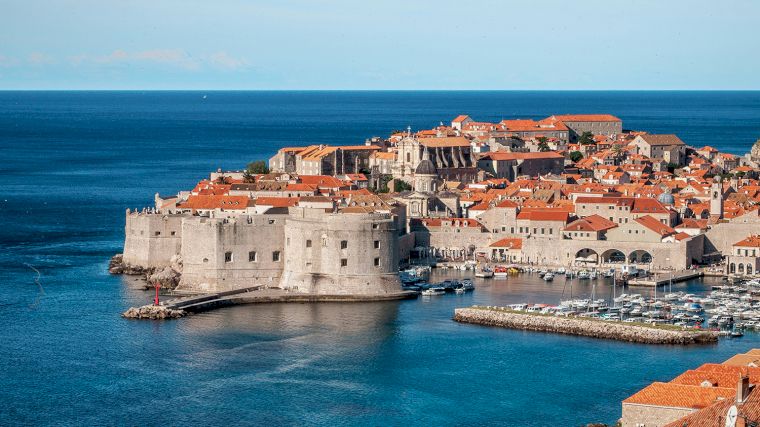
The view from Mount Srđ is even more panoramic. There’s a cable car that goes up there, and the view from the summit is breathtaking. The cable car isn’t cheap, but for another beautiful view of the city, drive your rental car along the D8 toward the southeast, in the direction of Dubrovnik Airport. The route itself is well worth the trip, and on the way back, you’ll pass the fortress and city walls of Dubrovnik.
Driving a Rental Car in Croatia
Croatia’s main roads are generally in excellent condition and well maintained. Secondary roads are also in good condition; you’ll only encounter potholes in very remote areas. Keep in mind, however, that Croatia—except for a narrow strip along the coast—is a mountainous country, and roads can be very narrow or steep.
It’s also good to know that the speed limit isn’t the same for everyone. Are you under 25? Then outside built-up areas and on highways, the speed limit for you is 10 kilometers per hour lower than what’s indicated on the signs!
Above, we’ve included, among other things, a route that takes you to islands accessible only by ferry. Many rental companies in Croatia don’t mind if you take your car on a domestic ferry, but be sure to check this when you pick up your rental car—at least if a ferry crossing is part of your travel plans.
Toll Roads in Croatia
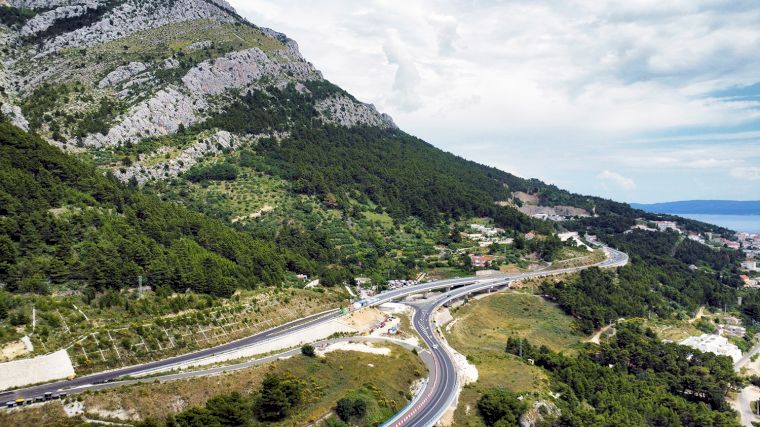
Most highways (the A-roads) in Croatia require you to pay a toll, and increasingly, this can only be done electronically. If you plan to use the highways, an electronic toll device—which automatically processes the toll—is quite convenient. Many rental cars come with such a device installed as standard, and it simply needs to be activated. If the car you rent does not have an electronic device, the toll will be charged based on the license plate number and will be included in your final rental bill. Be sure to ask the local rental agency which system they use. Incidentally, it’s fairly easy to avoid toll roads in Croatia. The situation is different for some tunnels and bridges, for which you must pay a separate toll that can be paid with cash or a credit card.
Why Rent a Car in Croatia
We’re almost certain that after reading about this road trip through Croatia, you’ll want to rent a car to explore the country on your own. With a rental car, you can see much more in less time. Plus, Croatia has many roads that wind through stunning scenery. So what are you waiting for? Rent a car today for a fantastic road trip starting from Zagreb, Zadar, Split, or Dubrovnik!

Where would you like to rent a car?
- 24000+ pick-up locations
- Free cancellation
- Independent comparator

Useful tips for a well-prepared trip
Which insurance should I choose, and what's the deal with the deposit? Read our articles with useful information and tips to ensure you choose the right rental car for you.


