- Popular countries
- Popular regions
- Popular cities
- Popular airports
- Car Rental Italy
- Car Rental Spain
- Car Rental United States
- Car Rental Portugal
- Car Rental South Africa
- Car Rental France
- Car Rental Netherlands
- Car Rental Greece
- Car Rental Germany
- Car Rental United Kingdom
- Car Rental Belgium
- Car Rental Croatia
- Car Rental Switzerland
- Car Rental Austria
- Car Rental Denmark
- Car Rental Norway
- Car Rental Australia
- Car Rental Ireland
- Car Rental Cyprus
- Car Rental Canada
- Car Rental Florida
- Car Rental Sicily
- Car Rental California
- Car Rental England
- Car Rental Sardinia
- Car Rental Mallorca
- Car Rental Ibiza
- Car Rental Crete
- Car Rental Tenerife
- Car Rental Rhodes
- Car Rental Madeira
- Car Rental Corsica
- Car Rental Gran Canaria
- Car Rental Malta
- Car Rental Scotland
- Car Rental Azores
- Car Rental Fuerteventura
- Car Rental Lanzarote
- Car Rental Corfu
- Car Rental Zakynthos
- Car Rental Amsterdam
- Car Rental Milan
- Car Rental Miami
- Car Rental Lisbon
- Car Rental Malaga
- Car Rental Porto
- Car Rental Rome
- Car Rental Cape Town
- Car Rental Barcelona
- Car Rental Faro
- Car Rental Alicante
- Car Rental Nice
- Car Rental Bari
- Car Rental Naples
- Car Rental Johannesburg
- Car Rental Brussels
- Car Rental Bergamo
- Car Rental Orlando
- Car Rental Palma de Mallorca
- Car Rental Vienna
- Car Rental Amsterdam Schiphol Airport
- Car Rental Miami International Airport
- Car Rental Lisbon Airport
- Car Rental Malaga Airport
- Car Rental Porto Airport
- Car Rental Milan Malpensa Airport
- Car Rental Rome Fiumicino Airport
- Car Rental Faro Airport
- Car Rental Alicante Airport
- Car Rental Bari Palese Airport
- Car Rental Nice Airport
- Car Rental Barcelona Airport
- Car Rental Cape Town Airport - International Terminal
- Car Rental Bergamo Airport
- Car Rental Orlando International Airport
- Car Rental Mallorca Airport
- Car Rental Catania Airport
- Car Rental Johannesburg International Airport
- Car Rental Ibiza Airport
- Car Rental Athens Airport

5 day trips and 2 tours departing from Marrakech
Rent a car to see the best of Morocco
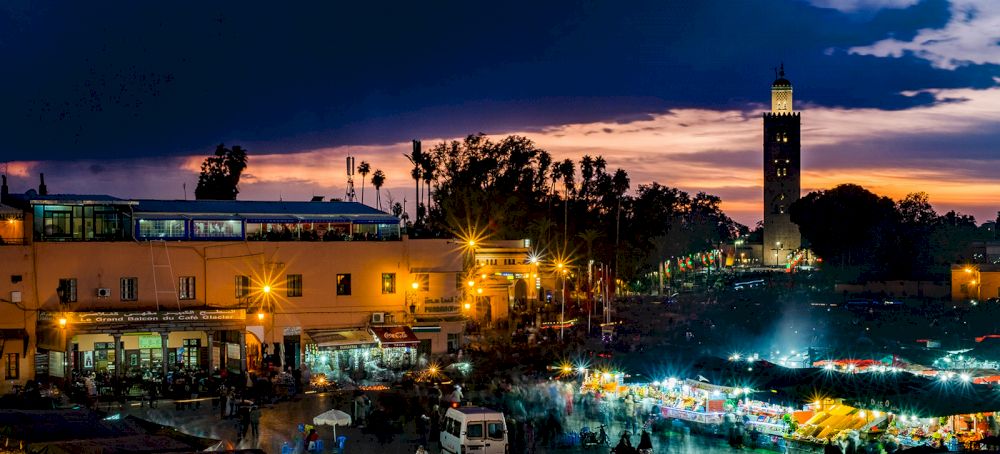
Marrakech has long held a great appeal for travelers. While it was mainly hippies who flocked to the city in the 1960s, today’s travelers are a very diverse group. This city in southern Morocco —the country’s name, incidentally, is derived from Marrakech—has a lot to offer, especially the old walled city. The medina is dominated by the tall minaret of the Koutoubia Mosque, located near the large Djemaa el-Fna Square. The square really comes alive in the evening with countless food stalls, snake charmers, storytellers, magicians, and musicians. Behind that square, it’s a delight to get lost in the colorful souk. Get lost, yes, because that’s part of the experience of strolling through these streets and alleys, where you’ll be amazed by the fragrant displays of herbs, spices, vegetables, fruit, and more. Many streets are dedicated to specific trades. For example, you’ll usually find tanners, butchers, blacksmiths, carpenters, and carpet sellers clustered together. Don’t forget to visit the Mechouar Kasbah, in the southern part of the old city.
1. Day Trips from Marrakech
Marrakech’s location makes it the ideal base for some of the most beautiful day trips you can take in Morocco. And there’s plenty of variety too: from stunning (surf) beaches to rugged mountains, authentic villages, fertile valleys, green oases, and desert excursions. Many of the day trips we describe below are less than a three-hour drive from Marrakech, but we’ve also included a few multi-day trips. Of course, you can combine these different trips into one big road trip. We hope to inspire you to rent a car in Marrakech, because believe us, with a rental car, you’ll discover delightful surprises while traveling through Morocco and experience a vacation full of life and color!
Agafay Desert / Lalla Takerkoust
Don’t have time for a long drive to the Sahara? You’ll find a vast desert area right near Marrakech, too. It takes about 45 minutes to drive from Marrakech to the village of Agafay, which lies on the edge of the desert of the same name. The barren, arid landscape is far from monotonous, thanks to the jagged rocks. In the spring (the “wet” season, from mid-March to late May), rainfall can even give rise to a vibrant display of flowers.
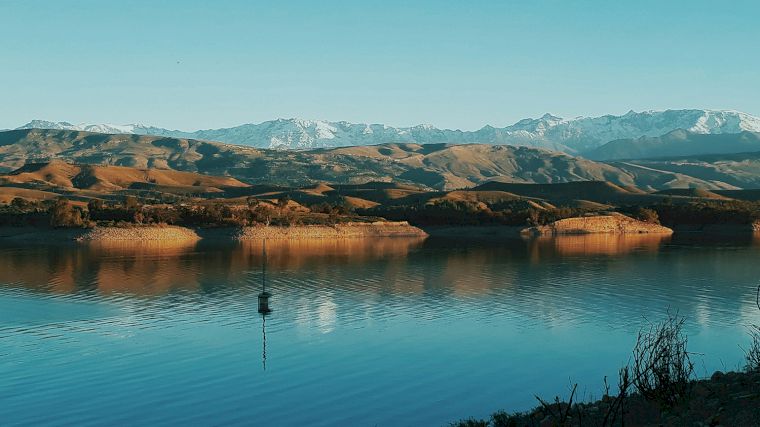
In addition to camel rides, quad biking is very popular. For that, it’s actually better to take the P2009 (Route d’Amizmiz), since there are many providers of quad tours along that road. Along the way, you’ll pass the Lalla Takerkoust Dam. The water of the reservoir offers a striking contrast to the surrounding desert and the snow-capped peaks of the Atlas Mountains in the background. There are plenty of water activities to enjoy: jet skiing, kayaking, and wakeboarding. On the shores of the lake, you’ll find various restaurants and hotels, including some very luxurious ones. Speaking of luxury: glamping is also very popular in the Agafay Desert. You have plenty of options for spending a night in the desert and enjoying the sunset and the starry sky.
Oued Ourika
It’s best to set out early in your rental car for a day trip to the beautiful Ourika Valley, just over an hour’s drive from Marrakech. The village of Ourika, only thirty kilometers from the city, is just the start of a journey through this lush valley filled with crystal-clear rivers, rapids, and waterfalls. As you drive along the main river, you’ll see several footbridges spanning the water. These lead to picnic areas, and you don’t even have to bring your own food—the local chefs will take care of that! While listening to the river flow, you can enjoy a delicious tagine and other Moroccan dishes. There are also opportunities for rafting (depending on the water level) between Oualmas and Asguine.
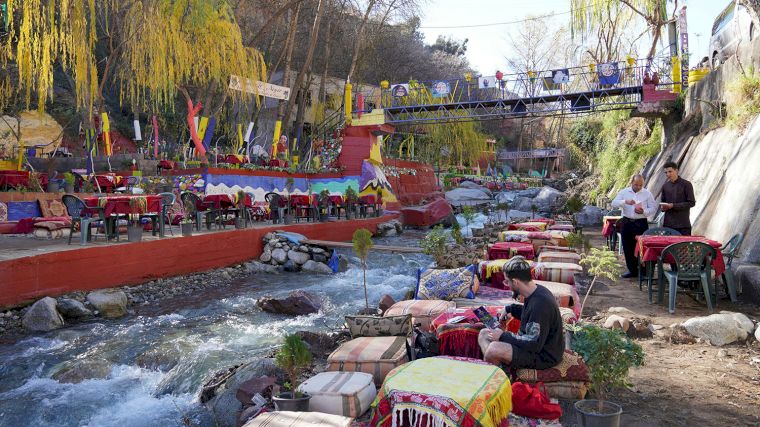
About an hour’s drive from Ourika, you’ll reach the village of Setti Fatma, which is best known for the seven waterfalls in the area. The climb to the highest waterfall is quite steep, and the trail consists mainly of boulders of various sizes, so it’s not exactly an easy walk. Be sure to wear good hiking shoes. Once back in Setti Fatma, you can, of course, enjoy Berber cuisine in this village as well, before driving back to Marrakech in your rental car. Or stop along the way in Oualmas, where it’s less crowded and you’ll find some great little restaurants right along the river.
If you love gardens, you should definitely visit the Anima Garden, just past Ourika as you drive toward Marrakech. It’s not just the wildflowers, cacti, palm trees, and water features that make this garden a paradise, but also the unique sculptures and other art installations by Austrian artist André Heller, set against the backdrop of towering mountains.
Jebel Toubkal / Oukaïmeden
From almost anywhere in Marrakech, you can see the majestic peak of Toubkal, which is covered in snow from December through May. At 4,167 meters, this mountain is the highest point in North Africa. You can’t complete the climb in a single day; you’ll need at least two days for it. However, it’s an easy one-and-a-half-hour drive in a rental car to the base camp in Imlil, which lies in a green valley. The climb to the summit of Jebel Toubkal isn’t technically difficult, but it’s a challenging hike that requires you to be in good physical condition. On the first day, you’ll hike to two mountain huts (Refuge du Toubkal and Refuge Les Mouflons); on the second day, you’ll climb the final 1,000 meters to the summit. At the summit, you’ll enjoy a magnificent panoramic view, and on a clear day, you can even see Marrakech, 65 kilometers away.
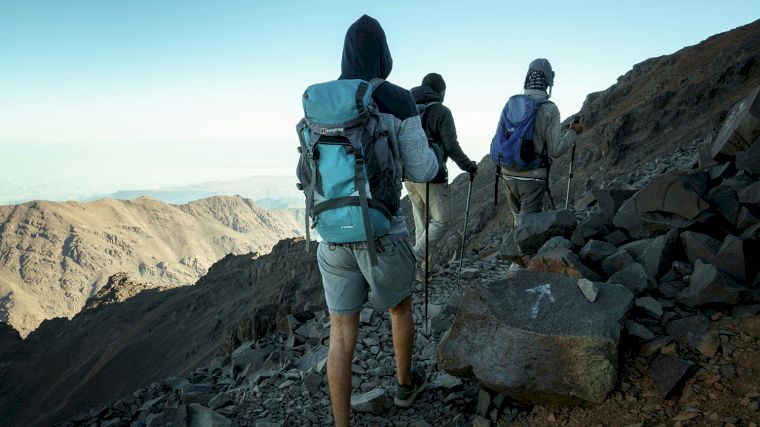
You can also opt for less strenuous mountain hikes near the village of Oukaïmeden. In the summer, this is a popular destination for Marrakech residents looking to escape the city’s heat. In addition to hiking trails that wind through picturesque Berber villages, there are various routes for bouldering, and you can also go paragliding there. Many Bronze Age rock carvings have been discovered in the area around Oukaïmeden. What makes these carvings unique is that they feature abstract motifs. In winter, the village transforms into a ski resort, with a lift taking you to the summit of Jebel Attar at an altitude of over 3,200 meters. January and February offer the best chance of good snow conditions.
Ouzoud Waterfalls
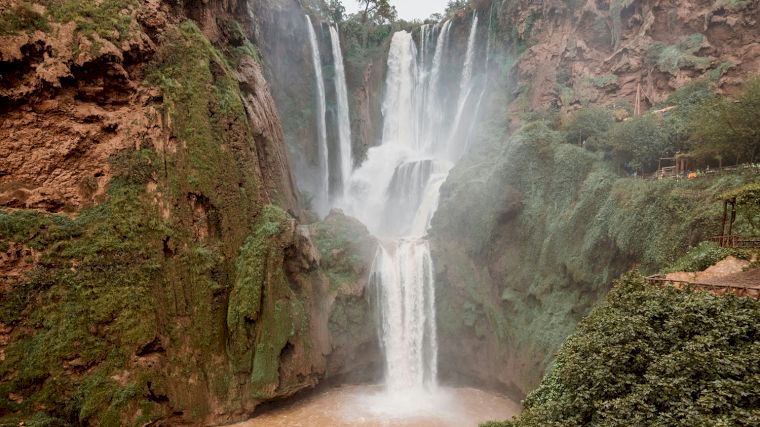
In your rental car, it takes about two and a half hours to drive to Ouzoud, which is known for an impressive waterfall that’s a whopping 110 meters high. It’s not a single curtain of water plunging downward; the waterfall consists of several streams and intermediate terraces. Around the cascading streams, there are several viewing points along two trails: the “natural” route and the paved route with stairs. You can take a small boat to get close to the lower part of the waterfall. Of course, the waterfalls are most impressive after a period of rain, which in Morocco means during the spring. At the end of summer and in the fall, the waterfalls are less crowded. We also recommend driving to Ouzoud as early as possible to avoid the biggest crowds. Or you can book an overnight stay so you can view the waterfalls first thing in the morning, before the organized tours from Marrakech arrive (around 11 a.m.). It’s also much quieter in the late afternoon, and the waterfalls are beautifully lit by the sun.
Aït Benhaddou / Ouarzazate
It’s a drive of just over three hours from Marrakech to Aït Benhaddou, but it’s absolutely worth it. In your rental car, you’ll drive along the winding N9 through the Atlas Mountains to a historic site: a ksar (fortified village) at the crossroads of ancient caravan routes from the Sahara. But even during the drive there, you’ll be treated to breathtaking views, such as at the Tizi N’Tichka Pass. Then, just before the village of Aguelmouss, take the left turn (P1506). You’ll drive through the valleys of Telouet and Ounila, with even more beautiful viewpoints along the way. Near Tazakhte, you’ll see cave dwellings. The kasbah of Aït Benhaddou is a magnificent example of Berber adobe architecture. It may look familiar to you, as the buildings have appeared in major films such as *Lawrence of Arabia*, *Gladiator*, *The Sheltering Sky*, and the TV series *Game of Thrones*. Climb to the top of the hill for a breathtaking view of the valley and admire the unique architecture.
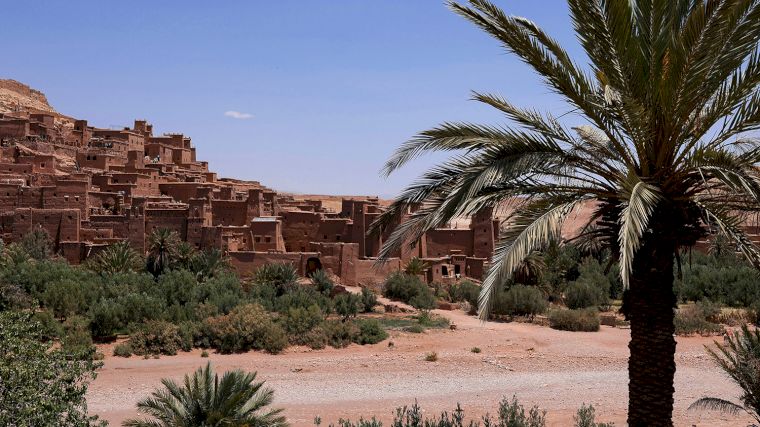
About thirty kilometers by car from Aït Benhaddou lies Ouarzazate (pronounced: Warzazaat), known as the gateway to the Sahara. This city also has an impressive kasbah (Taourirt), which has been used as a backdrop in several films. Only part of the kasbah is open to the public. Across from it is a small museum featuring old movie sets, props, and film equipment. The film history of Ouallywood really comes to life at Atlas Studios, about three kilometers west of the city (which you’ll have driven past in your rental car on your way from Aït Benhaddou). During the guided tour of the various film sets, you’ll learn about the development of the film industry in Morocco.
About forty kilometers northeast of Ouarzazate lies the oasis of Skoura. Not only does it have a beautifully restored kasbah (Amridil), but it’s also a very pleasant place to spend the night if you plan to continue your journey. There are many lovely boutique hotels and guesthouses, most of which have a swimming pool.
2. Multi-day trip to the Sahara
Thanks to the High Atlas Mountains, Marrakech is not a desert city, but beyond those mountains lies the gateway to the Sahara. Again, thanks to the High Atlas, rivers flow through this arid region, creating beautiful green valleys and oases. To visit these by rental car from Marrakech, you’ll need several days.
Draa Valley
As soon as you leave Ouarzazate in your rental car, you’ll drive through an immensely vast and arid landscape. Stop briefly at the Tizi’n-Tinifift Pass to enjoy the rugged landscape with its deep ravine. After crossing the pass at an elevation of 1,698 meters, you’ll descend into the fertile, green Draa Valley. To the east of the town of Agdz, there’s a viewpoint from which you can clearly see millions of palm trees growing in this valley. The villages in the Draa Valley flourished from the end of the sixteenth century onward thanks to the caravans crossing the Sahara that carried gold, salt, and spices. That wealth had to be defended, as evidenced by the kasbahs and ksour (fortified villages) nestled among the palm trees.
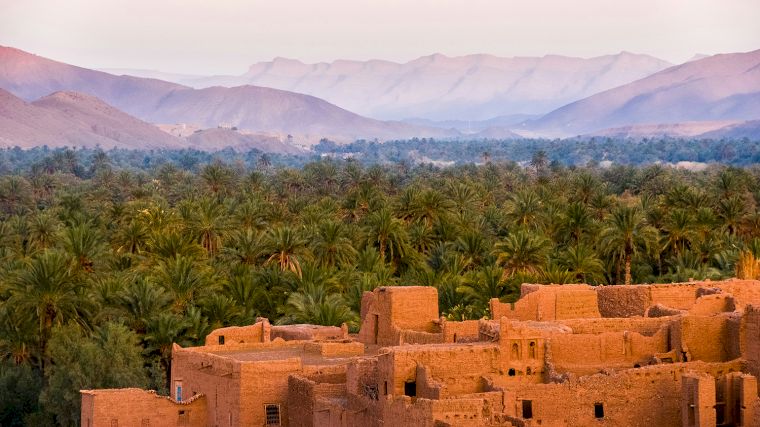
A good example is the kasbah of Tamnougalt and the adjacent fortified village. Not only Berbers lived here, but also Jews and Arabs, all of whom decorated their homes in their own unique ways. You can spend the night in the kasbah, but don’t expect any luxury. Other interesting old villages in the Draa Valley include Timidert and Tansikht, where the kasbah has been beautifully restored.
Zagora / Erg Chigaga
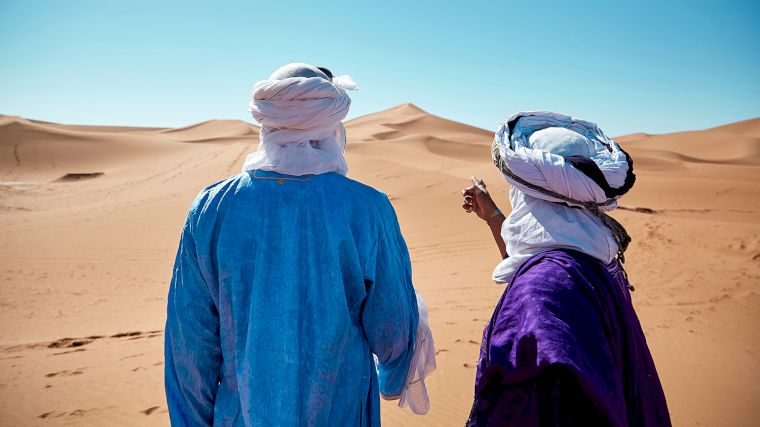
Near the end of the Draa Valley lies the town of Zagora, the gateway to the sand dunes of the Sahara. Caravans once set out from here on the journey to Timbuktu, a trip that took the camels 52 days, as depicted in the mural in the town center. Just a short distance in that direction lies M’Hamid El Ghizlane, not far from the sand dunes of Erg Chigaga. Note that you cannot drive there in your rental car unless it’s a 4×4. From M’Hamid, you can only reach the dunes by 4×4, camel, or off-road motorcycle, accompanied by a local guide. Spending the night in the desert is an amazing experience, and you’ll enjoy the sunset, the incredible starry sky, and the sunrise. Of course, you’ll be treated to delicious Moroccan food and freshly baked bread. Although the desert is scorching hot during the day, it cools down significantly in the evening and at night, so be sure to pack layers of clothing.
Rissani / Erg Chebbi
From Zagora, you can drive to Rissani in three and a half hours via the N12 in a rental car. Most people spend very little time in this town and drive on almost immediately to Merzouga, on the edge of the Erg Chebbi Desert. If you’ve already been to Erg Chigaga, you can skip the desert near Merzouga. Although the sand dunes here are higher, the town is—especially during peak season—very crowded and touristy. Of course, you can also spend the night in the desert here, ride a camel, or race through the sand on a quad bike. West of Merzouga lies Dayet Srji, a salt lake that only holds water during the rainy season and attracts rare desert birds.
Todra Gorge
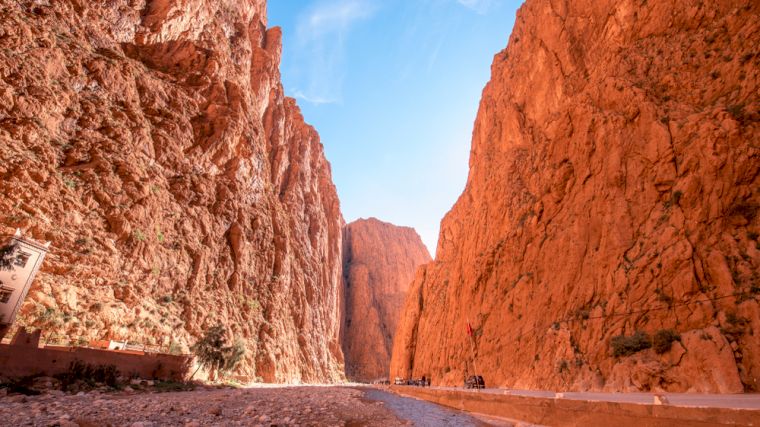
From Rissani, it’s about a two-hour drive to the town of Tinghir. From there, turn off the main road to visit the dramatic cliffs of the Todra Gorge (also known as the Todgha Gorge). If you’re in Tinghir on a Monday, you can visit the weekly market, where locally grown dates and olives are sold in abundance. The main road through the Todra Gorge is paved, but to truly experience the steep rock faces (reaching over 300 meters in height), it’s best to park your rental car at one of the parking lots near the entrance and walk the route. For rock climbers, these cliffs present a challenge they simply can’t resist.
The road from the Todra Gorge via Agoudal to the Dadès Valley (R704) is beautiful and mostly paved, but about twenty kilometers of it is gravel, and the road can be very narrow in those sections. So only take this route if you’ve rented a four-wheel-drive vehicle and aren’t afraid of narrow mountain roads. There are plans to pave those final kilometers as well, and once that’s done, you’ll be able to enjoy the view at an altitude of nearly three thousand meters even in a regular rental car.
Dadès Gorges
Most people drive via the N10 from Tinghir to the enchanting Dadès Valley, with its meandering river and oases dotted with date palms, interspersed with traditional Berber villages. The surrounding rocks are a mix of limestone and rust-colored sandstone, creating fascinating patterns. In the town of Boumalne Dadès, take the R704 mentioned above to follow the river and drive into the gorge.
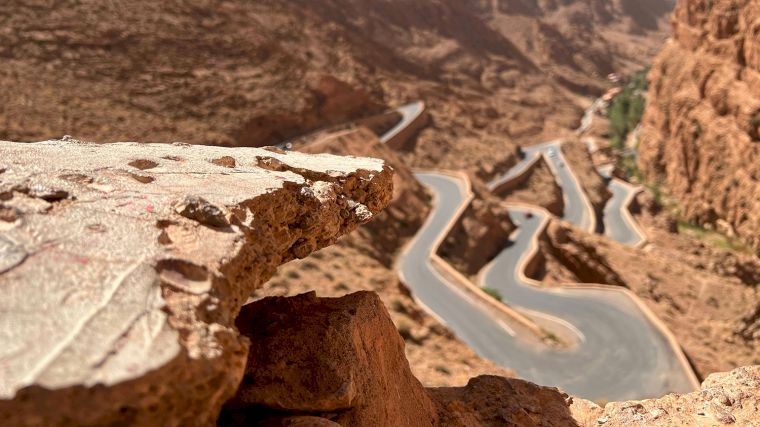
This section of the road is paved, but it does have quite a few spectacular hairpin turns. Stop at the many lookouts to enjoy the impressive scenery. The most famous viewpoint is at the Timzzillite restaurant, where you can clearly see how the road winds its way up out of the gorge. This is part of the so-called Route of the 1,000 Kasbahs, which winds through valleys and canyons in a constant alternation of arid landscapes and lush vegetation along the rivers.
Back to Ouarzazate
If you drive southwest on the N10, you’ll arrive in Kelaat M’Gouna, the capital of the Vallée des Roses. The blooming rose fields are a magnificent sight, especially in late spring. Over the centuries, the local people have devised countless ways to use roses: from fragrant rose water and luxurious rose oil to cosmetic products made from the flowers. The best way to explore the Valley of Roses is to drive north from Kelaat M’Gouna in a rental car, along the small Assif M’Goun River.
We already mentioned Skoura above as a nice place to stay overnight, but you should definitely also visit the Palmeraie de Skoura. The beautiful gardens are fed by a complex underground irrigation system, and various colorful birds flit about there. The date palms produce more than twenty different varieties of plump, sweet fruit.
3. Multi-day trip to the coast
Essaouira
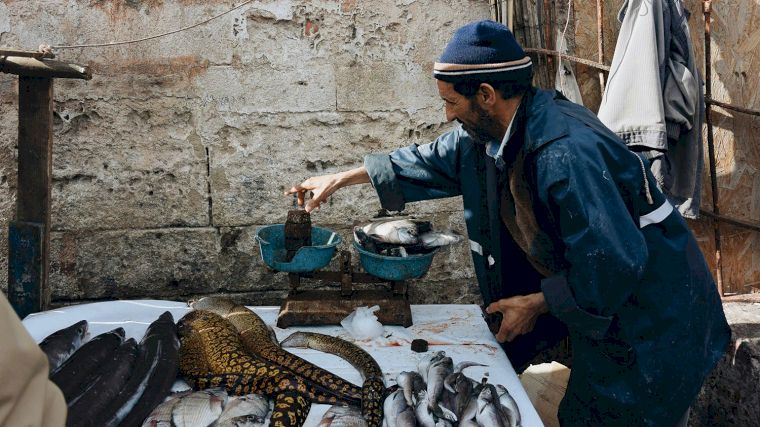
Did you know that Marrakech isn’t actually that far from the Atlantic coast? It’s only a two-and-a-half-hour drive to Essaouira, and once you’re there, you’ll find yourself in a whole different world, far away from the somewhat chaotic Marrakech. Within the city walls, you’ll find a medina, of course, but as evidenced by the many galleries, there’s also a vibrant artistic community. The harbor is bustling with activity in the morning as fishermen bring their catch from their bright blue boats to the market. Of course, you can sample that fresh fish right away at the various barbecue stands in the area, along with delicious freshly baked bread and Moroccan salads. Near the harbor, you’ll also find the Skala du Port bastion, complete with cannons, which the city once used to defend itself against pirates. Nowadays, it’s a beautiful spot to watch the sunset. You can also enjoy the view from the thick city wall, Skala de la Ville, which you can walk along. Thanks to the northwesterly winds, Essaouira is a paradise for windsurfers and kitesurfers, just like the more southerly towns of Taghazout and Tamraght. On the rugged coastline near Taghazout, the spot known as Killer Point is popular among experienced surfers. Incidentally, this spot isn’t particularly dangerous; it’s named that way because orcas (known as killer whales in English) are sometimes spotted there.
Agadir
Essaouira isn’t really a beach resort, but Agadir certainly is. That said, it’s only a good destination if you’re in the mood for some serious partying, dancing, and drinking. The town is full of hotels, and the beaches are very crowded, mainly with young people on vacation. There’s nothing wrong with that (we were all young once), but if that’s not your thing, you’re better off skipping Agadir. However, the seabed at this beach town slopes very gradually, making the beach ideal for children. And if you’re traveling with kids, they’re sure to be up for a day at the beach.
Vallée du Paradis
About an hour’s drive from Agadir lies the Vallée du Paradis (near Imouzzer Ida Ou Tanane), a breathtaking oasis in the Atlas Mountains: lush greenery, palm trees, waterfalls, and crystal-clear lakes. You can take long hikes along the mountain trails that lead you above the cliffs surrounding the Tamraght River. It’s wonderful to swim in the refreshing water of the rock pools—that is, if the water level is high enough, which can sometimes be disappointing toward the end of the dry season. You can’t miss the Vallée du Paradis if you’re driving your rental car along the P1001. The direction is clearly marked along the road on a sign that reads “La route d’Alma – Vallée du Paradis.”
Taroudant (Little Marrakech)
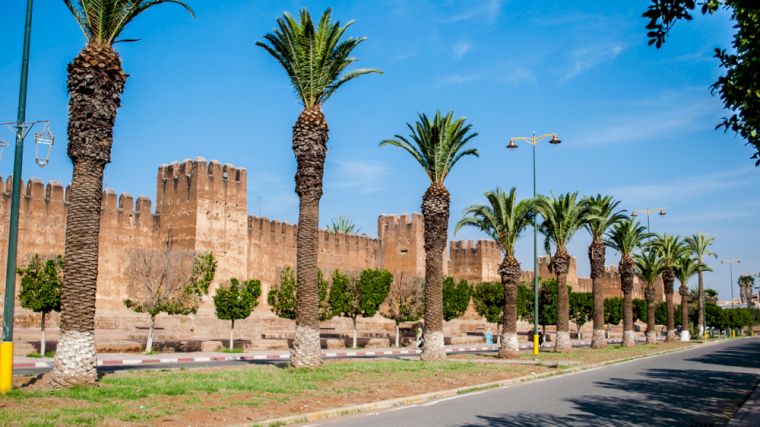
From Agadir, it’s less than an hour and a half’s drive to Taroudant, a beautiful, fully walled city nestled in the heart of the fertile Souss Valley. If, upon arrival, you think this little town has a certain Marrakech vibe, you’re right. Taroudant is also known as “Little Marrakech,” but without the hustle, chaos, and noise of its bigger brother. The ochre-yellow city walls alone are stunning, as they’re completely intact. You can take a horse-drawn carriage ride around them. Inside those walls are two large souks. In the Arab souk (known locally as Kissaria), you’ll mainly find handcrafted items made of ceramics, metal, and leather. The atmosphere here is much more laid-back than in Marrakech. Plus, prices are lower and the quality is higher. The Berber souk (Jnane Jamaa) mainly offers vegetables, fruit, herbs, spices, and kitchenware. You’ll also find beautiful, brightly colored jewelry there.
Tizi n’ Test
On the way back to Marrakech, you’ll pass through the spectacular Tizi n’ Test mountain pass. Dutch travelers sometimes jokingly call it “’t Is een Test” (It’s a Test ), because it’s a challenging route. The beginning is still easy; you’ll drive through the fertile Souss Valley with the peaks of the High Atlas on one side and the Anti-Atlas mountains on the other. Then the climb begins via a series of hairpin turns up to the mountain pass at over two thousand meters. Along the way, you’ll enjoy stunning views of deep valleys and rugged mountains. The Sunset Inn at the pass was destroyed during the 2023 earthquake, but the owner is working hard to rebuild it, and you can support him by ordering a tagine here.
Ouirgane Valley
The trip from Agadir to Marrakech takes at least five hours—and that’s if you don’t stop anywhere along the way. So it’s best to break up the drive somewhere, and Ouirgane is the perfect spot for that. It’s a somewhat sleepy Berber village at the foot of the High Atlas Mountains, nestled in a beautiful, green valley. You can easily spend several days here and enjoy the peace and quiet. There are several guesthouses, which serve as excellent bases for exploring the surrounding area.
One-way
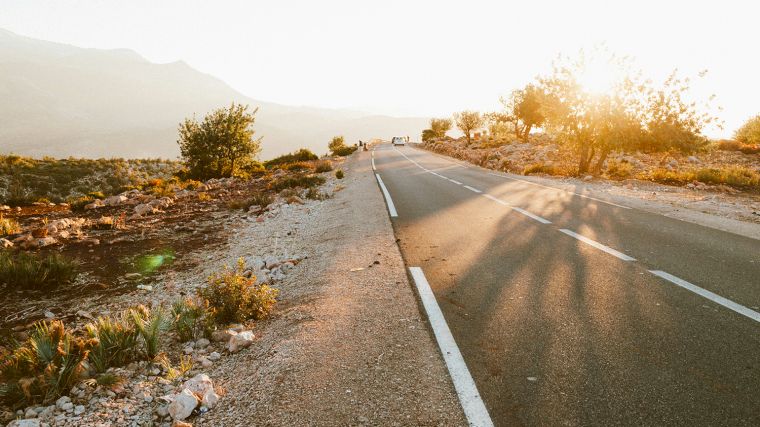
Marrakech is one of Morocco’s four imperial cities; the other three are Fez, Meknes, and Rabat. These cities are called “imperial” because all four were designated as capitals by a sultan at some point in history. Fez is the oldest former capital and a fantastic destination. The smaller and equally beautiful Meknes is located nearby, but both cities are about 500 kilometers from Marrakech, which is obviously too far for a day trip. The route through the Middle Atlas Mountains is stunning, but driving all the way back to Marrakech… Well, that’s not necessary at all, because in Morocco you can rent a car for a so-called one-way trip. That means you pick up the rental car in, say, Marrakech, and drop it off in Fez, Rabat, or even Tangier. That way, you can take a beautiful, extended trip through Morocco without having to drive back to your starting point. Select a different drop-off location on our search form, and we’ll show you only the rental cars for which that’s possible. You’ll pay a surcharge for this one-way car rental, but you’ll be pleasantly surprised by how reasonable it is.
When to Rent a Car in Marrakech?
The best times to visit Morocco are in the spring and fall: from early April through mid-June and from September through November. Temperatures are pleasant, and it’s a great time to hike and explore sights throughout the country. In the summer, it’s very hot almost everywhere in Morocco, except right along the coast. Many locals therefore head to destinations along the Atlantic Ocean or the Mediterranean Sea during the summer months. Although it can get quite chilly in the winter, Marrakech is still a great destination during the winter months. Daytime temperatures remain pleasant, and it’s much less crowded than in the spring or fall.
Why Rent a Car in Morocco
Although there is good public transportation between the larger cities in Morocco, you can only reach the most beautiful sights with a rental car. If you don’t rent a car, traveling between destinations takes a lot of time, which is a shame if you want to make the most of your vacation. Plus, you’ll miss out on the convenience that having your own transportation offers. So rent a car in Marrakech to enjoy the beautiful landscapes and the historic towns and villages. Don’t forget that traveling through Morocco is also a culinary adventure. As you journey through this enchanting country, don’t miss the chance to savor Moroccan cuisine, which is incredibly diverse and flavorful thanks to unique herbs and spices. And where can you find the best food? In the places where few tourists go. And how do you get there? That’s right—with a rental car!

Where would you like to rent a car?
- 24000+ pick-up locations
- Free cancellation
- Independent comparator

Useful tips for a well-prepared trip
Which insurance should I choose, and what's the deal with the deposit? Read our articles with useful information and tips to ensure you choose the right rental car for you.


