- Popular countries
- Popular regions
- Popular cities
- Popular airports
- Car Rental Italy
- Car Rental Spain
- Car Rental United States
- Car Rental Portugal
- Car Rental South Africa
- Car Rental France
- Car Rental Netherlands
- Car Rental Greece
- Car Rental Germany
- Car Rental United Kingdom
- Car Rental Belgium
- Car Rental Croatia
- Car Rental Switzerland
- Car Rental Austria
- Car Rental Denmark
- Car Rental Norway
- Car Rental Australia
- Car Rental Ireland
- Car Rental Cyprus
- Car Rental Canada
- Car Rental Florida
- Car Rental Sicily
- Car Rental California
- Car Rental England
- Car Rental Sardinia
- Car Rental Mallorca
- Car Rental Ibiza
- Car Rental Crete
- Car Rental Tenerife
- Car Rental Rhodes
- Car Rental Madeira
- Car Rental Corsica
- Car Rental Gran Canaria
- Car Rental Malta
- Car Rental Scotland
- Car Rental Azores
- Car Rental Fuerteventura
- Car Rental Lanzarote
- Car Rental Corfu
- Car Rental Zakynthos
- Car Rental Amsterdam
- Car Rental Milan
- Car Rental Miami
- Car Rental Lisbon
- Car Rental Malaga
- Car Rental Porto
- Car Rental Rome
- Car Rental Cape Town
- Car Rental Barcelona
- Car Rental Faro
- Car Rental Alicante
- Car Rental Nice
- Car Rental Bari
- Car Rental Naples
- Car Rental Johannesburg
- Car Rental Brussels
- Car Rental Bergamo
- Car Rental Orlando
- Car Rental Palma de Mallorca
- Car Rental Vienna
- Car Rental Amsterdam Schiphol Airport
- Car Rental Miami International Airport
- Car Rental Lisbon Airport
- Car Rental Malaga Airport
- Car Rental Porto Airport
- Car Rental Milan Malpensa Airport
- Car Rental Rome Fiumicino Airport
- Car Rental Faro Airport
- Car Rental Alicante Airport
- Car Rental Bari Palese Airport
- Car Rental Nice Airport
- Car Rental Barcelona Airport
- Car Rental Cape Town Airport - International Terminal
- Car Rental Bergamo Airport
- Car Rental Orlando International Airport
- Car Rental Mallorca Airport
- Car Rental Catania Airport
- Car Rental Johannesburg International Airport
- Car Rental Ibiza Airport
- Car Rental Athens Airport

4 Options for an Amazing Road Trip Through Yucatán
Don't just stay on the coast—rent a car in Cancún
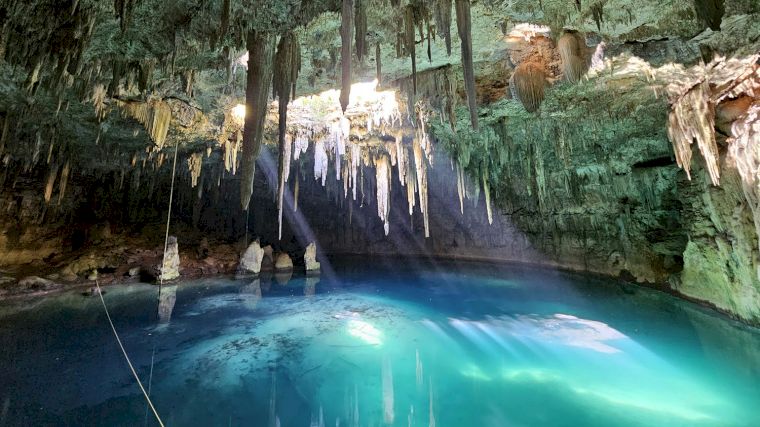
It’s wonderful to relax on Mexico’s Caribbean east coast, also known as the Maya Riviera. Beautiful, wide sandy beaches, rustling palm trees, an azure-blue sea—and all while sipping exotic cocktails. A paradise for beach lovers, snorkelers, and divers. Still, it would be a shame to spend your entire vacation just at a beachfront resort, because the Yucatán Peninsula has so much more to offer: impressive ancient ruins, charming colonial towns, dense jungle, mangrove forests, wetlands, and wonderful swimming spots in the many cenotes (freshwater springs). Get out and explore by renting a car as soon as you arrive at the Cancún airport or later in Playa del Carmen or Tulum.
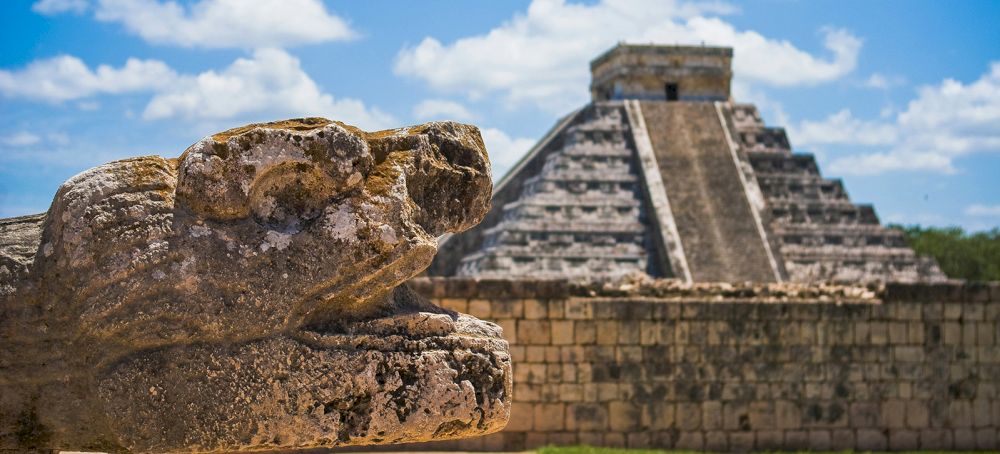
The question is which attractions you can visit. That depends, of course, on your interests, but above all on the time you have available. That’s why we’re describing a road trip through Yucatán in a rental car, plus three options for extending that trip. Of course, you can mix and match to your heart’s content and tailor the itinerary entirely to your preferences.
When we refer to “Yucatán” here, we mean the entire peninsula. There is also a federal state called Yucatán, but it covers only the northern part of the peninsula. The Caribbean coastline is located on the Yucatán Peninsula, but it’s part of the state of Quintana Roo. Some of the most important Mayan sites on the peninsula are located in the state of Campeche.
1. Two Weeks in Yucatán by Rental Car
This road trip is perfect if you want to experience Yucatán’s rich history and vibrant culture without spending too much time behind the wheel of your rental car. You’ll travel past major historical sites and charming towns while enjoying local culinary delights.
Tulum
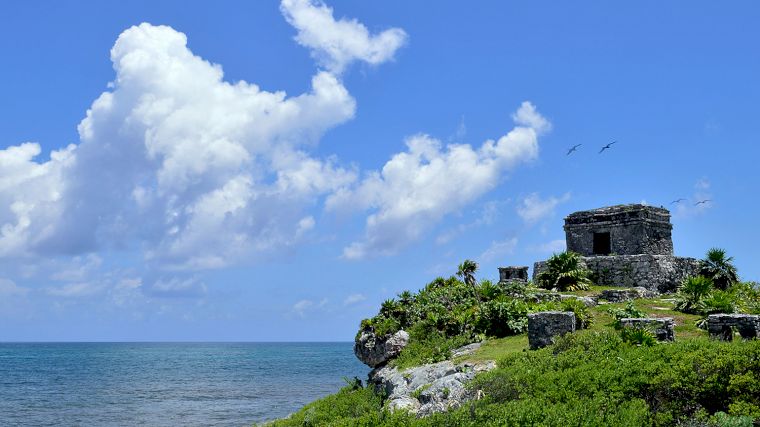
From the Cancún airport, it’s about a two-hour drive to the city of Tulum. It’s a great place to start your road trip because it offers a little bit of everything the Yucatán is known for: archaeological sites, wide sandy beaches, some of the best cenotes, nature reserves, and fantastic restaurants. Incidentally, Tulum’s international airport is becoming increasingly important, so if you fly there, you can skip the first leg of this road trip. Near Tulum lie the remains of the only Mayan city by the sea, built high atop cliffs. It’s best to visit the ruins with a guide so you can better understand the historical and cultural significance of these structures. Plus, you’ll avoid the high costs of parking your rental car at the Ruinas Tulum parking lot.
Just like Cancún, Tulum has become a hotspot for lovers of sun, sea, beach, and partying. The road along Tulum Beach, in particular, is lined with (rather pricey) cafés, bars, restaurants, shops, beach clubs, and hotels. The beaches near Xcacel, twenty kilometers northeast of Tulum, are quieter; some of them are occasionally closed temporarily to protect the sea turtles. In that case, about halfway between those beaches and Tulum, you can enjoy swimming and snorkeling in the Cenote Manatí, which resembles a river more than a small lake. The underwater caves between the two connected lakes known as Dos Ojes (Two Eyes) are also worth a visit, especially if you enjoy cave diving.
Sian Ka’an Biosphere Reserve
Just south of Tulum, but a world away from the crowded beaches and nightclubs, lies the vast Sian Ka’an Nature Reserve. Some people think they can catch a glimpse of the reserve by driving a rental car along the beach road. Don’t do it—you’ll see virtually nothing along the unpaved, potholed road. Moreover, many of the beaches are, unfortunately, quite polluted. For an amazing experience, book a boat tour from Muyil through crystal-clear blue-green lagoons and winding rivers, surrounded by mangrove forests. You can also go kayaking there, and from the water you’ll see monkeys, crocodiles, Caribbean manatees (sea cows), turtles, and crabs. Furthermore, hundreds of bird and fish species inhabit this beautiful nature reserve. Muyil (also known as Chunyaxché) is located along Highway 307 and is therefore very easy to reach if you’ve rented a car.
Cobá
With a rental car, it takes less than an hour to drive to Cobá, one of the oldest Mayan cities, home to the second-tallest pyramid in Yucatán. This Nohoch Mul stands in the vast archaeological zone, where it’s best to rent a bike to see all the remnants of Mayan culture. We recommend starting as early as possible to avoid the crowds and the heat later in the day.

Near the ruins, you can swim in one of the three underground cenotes: Multun-Ha, Choo-Ha, and Tankach-Ha. The latter has a high platform from which you can jump into the water. These cenotes are a short distance from the main road and are well marked with signs.
Valladolid
Another hour’s drive to the northwest brings you to Valladolid, but when you arrive, it feels as if time has stood still. That’s because the city is in a different time zone—it’s one hour earlier there than in the state of Quintana Roo. Valladolid is a delightful city to wander through, especially in the picturesque neighborhoods of La Candelaria, Santa Ana, and San Juan. Beautiful colonial houses line the colorful street Calzada de los Frailes, among others. At the end of that street stands the former monastery of San Bernardino de Siena, where an impressive light and sound show is held in the evening.
This charming colonial town is a great place to sample Yucatán’s cuisine. You can find truly authentic food in the city, but be sure to avoid the tourist areas. Knowing a little Spanish can help you find a good restaurant. Valladolid is also a perfect base from which to drive your rental car to nearby attractions, including one of the most powerful cities of the Maya era: Chichén Itzá.
Chichén Itzá
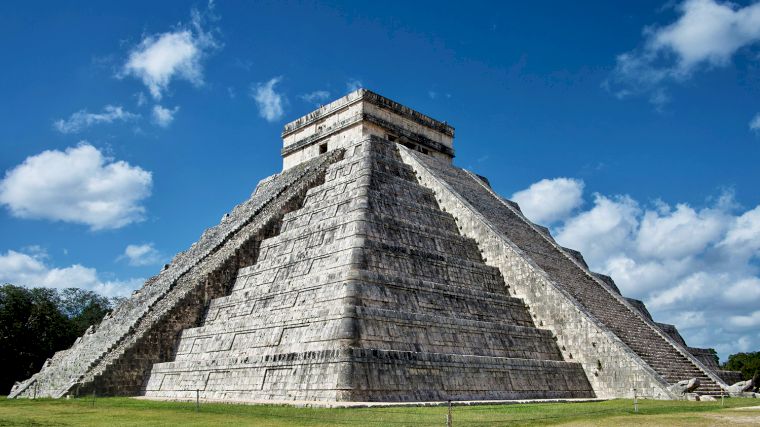
From Valladolid, it’s about fifty kilometers by car to Chichén Itzá. We recommend that you purchase admission tickets online well in advance, as this is the absolute top attraction among the archaeological sites in Yucatán. The Temple of Kukulkán, or El Castillo, is the most famous pyramid, but there are 25 other structures to admire, including the Templo de los Guerreros (Temple of the Warriors), Mil Columnas (Thousand Columns), the El Caracol astronomical observatory, and an underwater burial site, Cenote Sagrado. To gain a deeper understanding of Mayan culture, a visit to the Gran Museo de Chichén Itzá is a must. It’s a fantastic complement to your experience at the archaeological site. In the evening, images are projected onto El Castillo, accompanied by commentary in Spanish and English.
Just southeast of the ruins lies one of the most beautiful cenotes: Ik Kil. It’s not just the water, with its deep blue-green hue, that makes an impression; above all, the lush vegetation and the vines hanging down the walls make this freshwater spring truly special. It can get quite crowded here. Far fewer people find their way to the equally beautiful Oxman cenote, just outside Valladolid.
Ek Balam
Are you put off by the crowds at Chichén Itzá? Then drive your rental car 25 kilometers north from Valladolid. There you’ll find Ek’ Balam, an archaeological site that attracts fewer tourists but is just as interesting. The view of the surrounding area from the gigantic Acropolis and El Palacio Oval is spectacular. In addition to the ruins, you can admire perfectly restored sculptures there.
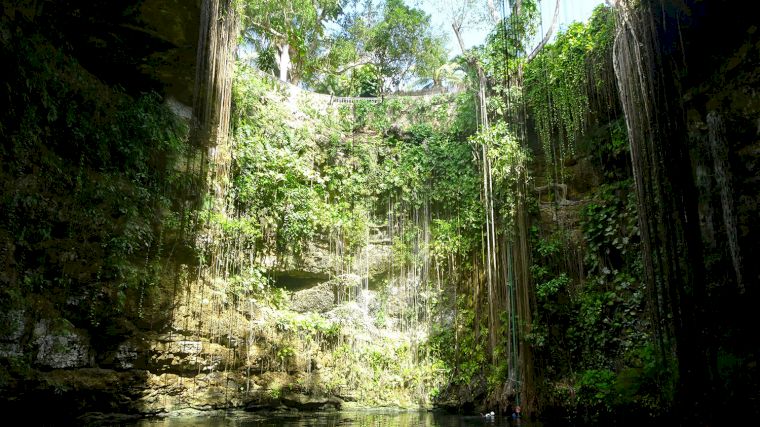
Cenote X’canche is nearby, and this cenote is also much less visited than Ik Kil. With a little luck, you’ll have the freshwater spring all to yourself.
Izamal
On your way to Mérida, the capital of the state of Yucatán, be sure to stop in Izamal, nicknamed La Ciudad Amarilla (the Yellow City), because all the houses there are painted yellow. But it’s not just for that color that you should make a stop in Izamal. This small town has plenty to see from pre-Columbian times and the colonial period. The enormous 16th-century monastery, Convento de San Antonio, is a fine example of colonial architecture. It was built using stones from a Maya pyramid that once stood there. Several other pyramids have been preserved in the heart of the city, such as the pyramid dedicated to the sun god Kinich Kakmó and the pyramid of Itzamná, from which the city derives its name. In the evening, there is a sound-and-light show in the monastery’s courtyard about the history of Izamal.
Mérida
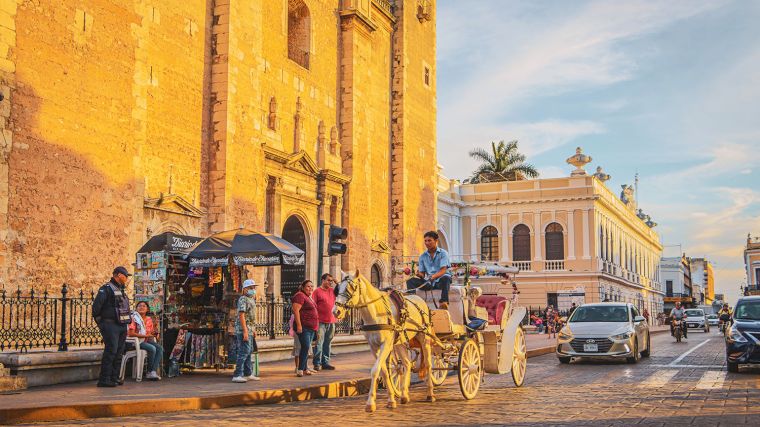
If you’ve rented a car, it’s just over an hour’s drive from Izamal to Mérida, the official—but above all cultural—capital of Yucatán. You can easily spend a few days in this authentic, charming city with a rich history and a beautiful blend of Mayan and colonial architecture. The Plaza Grande is surrounded by historic buildings, including the Catedral de San Idelfonso. Stunning murals in the Palacio de Gobierno and Palacio Municipal tell the story of Yucatán’s history. You’ll also come across one historic building after another along the Paseo de Montejo boulevard. Mérida also boasts interesting museums. Be sure not to miss the Gran Museo del Mundo Maya. The museum takes you on a journey through Maya history. Children love the interactive exhibits.
Uxmal
Mérida is an excellent base from which to take a day trip by rental car to the Mayan city of Uxmal, located about eighty kilometers south of the city. What stands out in Uxmal is its distinctive style. For example, the Piramide del Adivino (Pyramid of the Magician) is oval-shaped rather than rectangular, like most Mayan pyramids. According to legend, this pyramid was built in a single night—and who else but a sorcerer could have done that? Uxmal is famous for its well-preserved ornamentation, such as the carved snakes and hieroglyphs of the rain god Chaac on the façade of the Palacio del Gobernador.
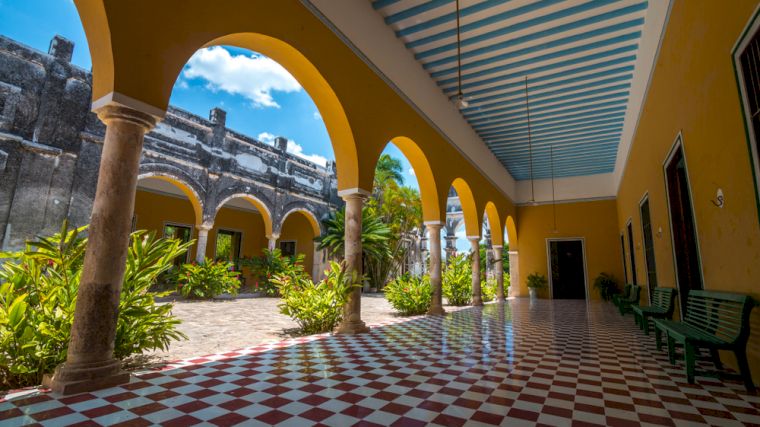
On a completely different note, but definitely worth a visit, is the Chocolate Museum, located on the other side of Highway 261. You can park your rental car near the round Planetarium to visit the Ecomuseo del Cacao, located in a beautiful old hacienda. Speaking of haciendas, there are several very interesting ones to visit in the Mérida area. For example, on your way back from Uxmal, you can visit the authentic hacienda Yaxcopoil in the village of the same name. Just east of Mérida lies the beautifully restored Teya hacienda, which is partially used as a traditional Mexican restaurant.
Río Lagartos
The drive from Mérida to Río Lagartos is the longest leg of this tour, taking about three hours in total. But you can break it up in Tizimín, a small town that’s rarely visited by tourists—which is precisely why it’s worth stopping by. There, you can visit the “catacombs”—which aren’t actually catacombs, but tunnels beneath two houses where reliefs have been carved into the walls and painted. Just outside Tizimín, you can take a dip in the Kikil cenote.
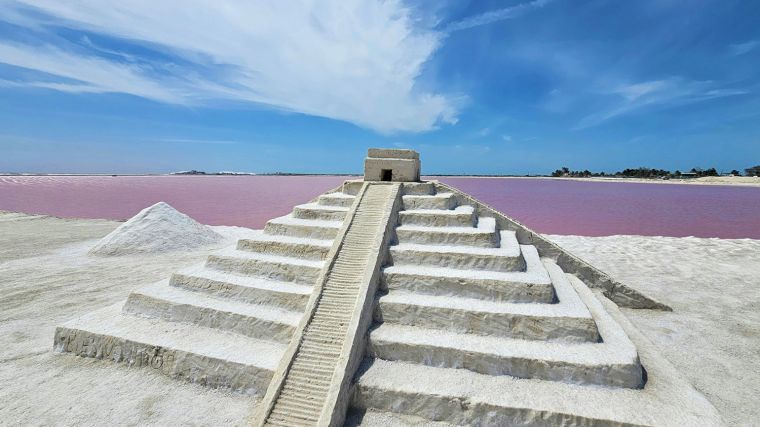
Many people drive from Río Lagartos to Las Coloradas to see the “Pink Lake,” which is actually the salt ponds of a factory. If you’ve ever seen pink salt lakes before, there’s no need to make a special trip here. Instead, take a boat tour through the nature reserve around Río Lagartos. As you cruise past mangrove forests, you’ll spot crocodiles, crabs, flamingos, and other birds, including herons, cormorants, storks, and (in winter) pelicans. A boardwalk runs right through the mangroves of Kambulnah. In addition to nature tours, you can book a boat at the harbor for some sport fishing.
El Cuyo / Isla Holbox
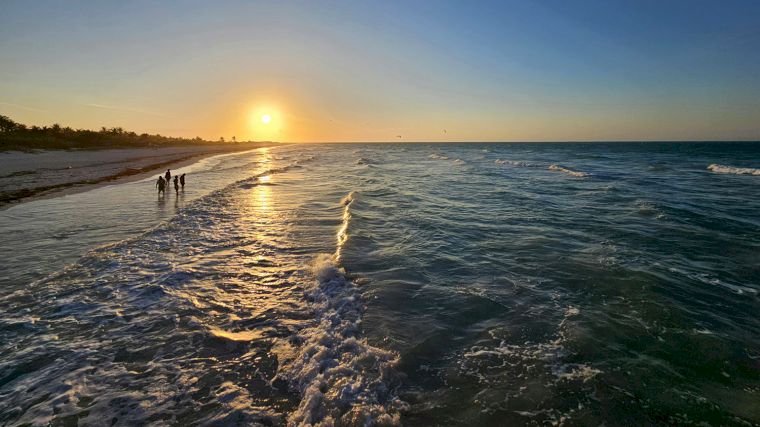
It’s wonderful to relax on the beach after a road trip through the interior. Keep in mind that the Maya Riviera isn’t the only place where you can do that—the state of Yucatán also has beautiful spots along the Gulf of Mexico. For a fantastic beach, head to El Cuyo, located east of Río Lagartos. The last stretch of the road leading there runs right through a marshland and a lagoon. It’s an unspoiled spot where you can go on wonderful kayaking trips and spot rare birds. El Cuyo’s white-sand beach attracts only a select few, making it completely different from the beaches on the Caribbean coast. There are no large hotels, but you can stay overnight in traditional wooden cottages right on the beach. Keep in mind, however, that swimming here isn’t always possible due to strong currents, but you can enjoy lovely walks along the pristine, wide sandy beach. Kitesurfing is also popular there.
Much better known is the beach on Isla Holbox, which you can reach from El Cuyo by fishing boat. Or you can drive to Chiquilá in just over an hour and a half, park your rental car there, and take the ferry to Isla Holbox.
From Chiquilá, it’s a little over a two-hour drive to the Cancún airport; from El Cuyo, the trip takes longer—about three hours. One thing to keep in mind: El Cuyo is located in the state of Yucatán, so the time there is one hour earlier than in Isla Holbox and Cancún, both of which are in Quintana Roo!
2. Further away (to the west)
The itinerary above includes the Mayan city of Uxmal. It’s located at the start of the so-called Ruta Puuc, which is full of archaeological sites. Not only Uxmal, but this entire 40-kilometer route is listed as a UNESCO World Heritage Site. In the Mayan language,“puuc” means hill, and this route indeed passes through much hillier terrain than the rest of Yucatán. You’ll see a very distinctive Mayan architectural style there that differs from that of, say, Chichén Itzá: elegant yet highly geometric. The intricate ornamentation will amaze you, especially when you consider that it was created without the use of metal tools; everything was carved stone by stone. If you’re interested in Maya culture, this is a fantastic route to drive in your rental car.
Northwest of Uxmal, you can visit the Grutas de Calcehtok. These are fascinating caves that were used by the Maya for spiritual ceremonies. Along the narrow Carretera Maxcanu road, there’s a sign pointing to the parking area for your rental car. During the day, guides are always available, unless they’re currently inside the cave. In that case, wait until a guide returns. Do not enter the cave on your own, as there are very narrow sections and the ground can be slippery. The guides offer three different tours, ranging in difficulty: family, adventure, and extreme.
3. Further away (to the south)
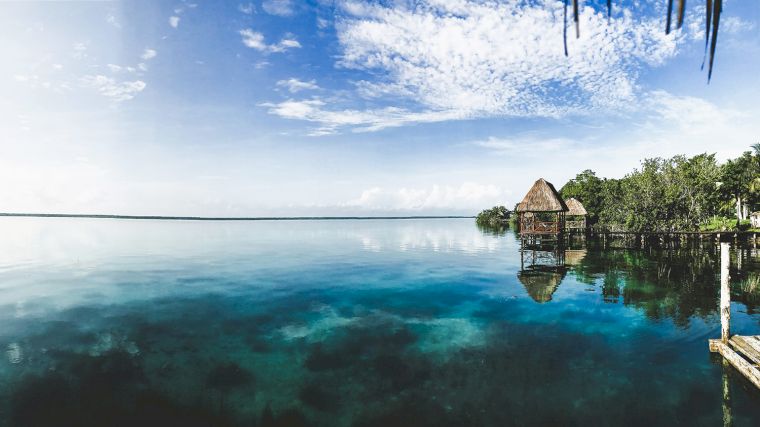
In the southern part of the state of Quintana Roo, north of the city of Chetumal, lies the elongated Lake Bacalar, also known as the Lagoon of Seven Colors because of its shades of blue and turquoise. From Tulum, it takes about two and a half hours to drive to the northernmost tip of the lake, but most people continue on to Buenavista or Bacalar, after which the lake is named. In that town stands a fort built by Spanish colonists to defend themselves against attacks by pirates and indigenous rebels. Book a boat tour or go kayaking on your own to explore the lake and the surrounding area. Halfway between Bacalar and Buenavista, there are five zip lines (tirolesas) that offer fantastic views of the lagoons and the jungle.
From Bacalar, it’s about an hour and a half’s drive to the archaeological sites of Dzibanché and Kinichná. The drive there takes you through beautiful scenery. Drive your rental car slowly on the last stretch, as the narrow road has quite a few potholes. The location of the large temples in the middle of the jungle is magical. Climbing the Templo del Buho (Temple of the Owl) is a bit risky, so be careful, but it’s worth the effort. The nearly 360-degree view from the top is impressive.
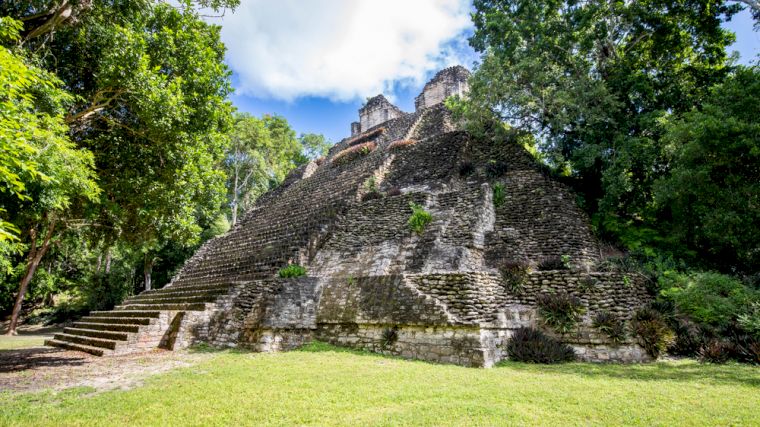
Haven’t had enough of ruins yet? Then drive a little further west to Xpujil. The archaeological site near this town isn’t all that impressive, but wait until you see the Mayan ruins in Chicanná, a little further west. The ruins of Becán are truly impressive, because the temples there are taller. The best part is that the temple ruins around Xpujil are rarely visited. With a little luck, you’ll be wandering through these ancient structures almost entirely on your own.
4. Further away (to the north)
In the itinerary above, we’ve included a drive from Mérida to Río Lagartos. Much closer to Mérida lies an even larger nature reserve of lagoons, marshes, and mangrove forests with a long name: Reserva Estatal Ciénagas y Manglares de la Costa Norte de Yucatán. This nature reserve encompasses the northern coast near the central beach resort of Progreso. Incidentally, this is a place where mainly Mexicans enjoy the sea and the beach; you’ll see relatively few foreigners there. The nature reserve is home to several endangered species. During a boat tour, you can fully enjoy the impressive natural surroundings.
The fishing village of Celestún, west of Mérida, is the gateway to the Ría Celestún nature reserve, home to large flocks of flamingos and other birds such as herons and pelicans.
5. Further away (to the east): Cozumel
If you’re taking a day trip to Cozumel, it’s best to leave your rental car on the mainland, as taking the car on the ferry takes quite a bit of time. But if you want to spend several days on the island, a car is a lifesaver. If your rental car company allows it (be sure to check!), you can take the rental car on the ferry. The car ferry departs several times a day from Punta Venado (also known as Calica), just south of Playa del Carmen. The ferries are often fully booked, so be sure to reserve a spot in advance online with one of the two companies: UltraCarga or TransCaribe. Passenger ferries depart from the pier in Playa del Carmen; they run much more frequently and are also faster. There are many car rental companies on Cozumel.
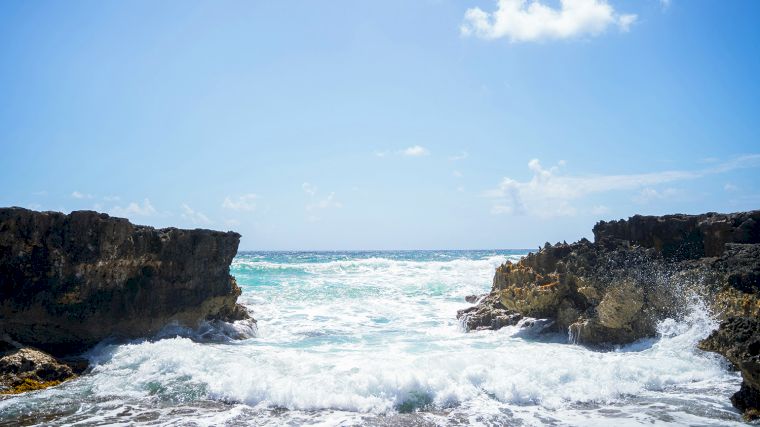
Is this small island worth a visit lasting several days? Well, definitely! For one thing, it’s a paradise for divers, as there are beautiful coral reefs off the island where you can go on fantastic dives. Some are only for advanced divers, but if you want to learn the sport, there are plenty of opportunities for that on Cozumel, too. The west coast of the island gets crowded, especially when a cruise ship has just docked, but thanks to your rental car, you can drive to much quieter (and more beautiful) areas. A dead-straight road runs right across the island, taking you to Cozumel’s east coast in just twenty minutes. Halfway along that road, you can visit the ruins of San Gervasio, nestled in the middle of the jungle. The east coast is mostly rocky, although there are a few beaches, such as Playa Bonito. Nearby, the sea crashes into holes in the rocks, causing the water to shoot up like a fountain. The southern tip of Cozumel consists of lagoons and is a nature reserve, Punta Sur. You can go kayaking or snorkeling there, and the lighthouse offers a panoramic view. If you want to visit the northeastern part of Cozumel, you’ll have to leave your rental car behind, as you can only drive there in off-road Razors.
What should you keep in mind when driving a rental car through Yucatán?
Driving a rental car through Yucatán isn’t difficult: the peninsula is mostly flat, and the main roads are very well maintained. Once you leave those main roads, however, things change. Often, part of the route to an attraction or sight runs along unpaved roads. These are perfectly drivable if you adjust your speed and watch out for potholes and bumps. Mexico is notorious for its speed bumps in towns and cities. These so-called “topes” are intentionally high to force you to drive slowly over them. Be aware of them, as these speed bumps aren’t always easy to spot. If you drive over them too fast, it could damage your rental car.
Car Rentals and Toll Roads in Yucatán
Some major roads in Yucatán require a toll. These toll roads are identified by the suffix “D,” which stands for “directo.” Between Cancún and Mérida, via Valladolid, you can choose between Highway 180 (libre) and 180D (cuota), which run almost parallel to each other. Toll Road 180D is by far the fastest; the old Route 180 winds through small towns and villages, where you’ll need to watch out for the notoriously high speed bumps. The old route may take longer, but it also gives you a better sense of the real Mexico. And when you’re on vacation, you definitely don’t want to miss that. Still, sometimes you just want to get there quickly and opt for a toll road. Start a long trip on a toll road with a full tank, because, surprisingly, there are few gas stations along the toll roads.
When should you rent a car for a road trip in Yucatán?
The high season in this part of Mexico runs from late November to early April. In the final weeks of that period (i.e., late March–early April), the coast is flooded with young Americans letting loose during “Spring Break,” especially in Cancún and Playa del Carmen. The summer months of July and August in Yucatán are hot and humid—in other words, stifling—which isn’t ideal if you want to visit tourist attractions. These months mark the start of the rainy season, which lasts through November. Don’t expect days of constant rain, but do expect heavy thunderstorms with a lot of rainfall in a short time, often in the afternoon.
Rent a Car in Cancún
We hope we’ve convinced you that renting a car is by far the best way to travel through Yucatán. Of course, there are organized tours to highlights like Chichen Itza, but if you’ve rented a car, you can decide for yourself when to go and more easily avoid the biggest crowds. Plus, with a rental car, you can venture off the beaten path and visit lesser-known spots. Rent a car and hit the road to discover the best of the Yucatán Peninsula’s history, culture, and breathtaking beauty!
Sometimes, rental companies in Mexico try to push extras on you when you pick up your rental car, such as “absolutely essential” insurance. That’s why it’s best to choose a car with our Worry-Free label. That way, you’re fully insured and your deductible is covered, so you can confidently turn down the “offers” from the local rental company.

Where would you like to rent a car?
- 24000+ pick-up locations
- Free cancellation
- Independent comparator

Useful tips for a well-prepared trip
Which insurance should I choose, and what's the deal with the deposit? Read our articles with useful information and tips to ensure you choose the right rental car for you.