- Popular countries
- Popular regions
- Popular cities
- Popular airports
- Car Rental Italy
- Car Rental Spain
- Car Rental United States
- Car Rental Portugal
- Car Rental South Africa
- Car Rental France
- Car Rental Netherlands
- Car Rental Greece
- Car Rental Germany
- Car Rental United Kingdom
- Car Rental Belgium
- Car Rental Croatia
- Car Rental Switzerland
- Car Rental Austria
- Car Rental Denmark
- Car Rental Norway
- Car Rental Australia
- Car Rental Ireland
- Car Rental Cyprus
- Car Rental Canada
- Car Rental Florida
- Car Rental Sicily
- Car Rental California
- Car Rental England
- Car Rental Sardinia
- Car Rental Mallorca
- Car Rental Ibiza
- Car Rental Crete
- Car Rental Tenerife
- Car Rental Rhodes
- Car Rental Madeira
- Car Rental Corsica
- Car Rental Gran Canaria
- Car Rental Malta
- Car Rental Scotland
- Car Rental Azores
- Car Rental Fuerteventura
- Car Rental Lanzarote
- Car Rental Corfu
- Car Rental Zakynthos
- Car Rental Amsterdam
- Car Rental Milan
- Car Rental Miami
- Car Rental Lisbon
- Car Rental Malaga
- Car Rental Porto
- Car Rental Rome
- Car Rental Cape Town
- Car Rental Barcelona
- Car Rental Faro
- Car Rental Alicante
- Car Rental Nice
- Car Rental Bari
- Car Rental Naples
- Car Rental Johannesburg
- Car Rental Brussels
- Car Rental Bergamo
- Car Rental Orlando
- Car Rental Palma de Mallorca
- Car Rental Vienna
- Car Rental Amsterdam Schiphol Airport
- Car Rental Miami International Airport
- Car Rental Lisbon Airport
- Car Rental Malaga Airport
- Car Rental Porto Airport
- Car Rental Milan Malpensa Airport
- Car Rental Rome Fiumicino Airport
- Car Rental Faro Airport
- Car Rental Alicante Airport
- Car Rental Bari Palese Airport
- Car Rental Nice Airport
- Car Rental Barcelona Airport
- Car Rental Cape Town Airport - International Terminal
- Car Rental Bergamo Airport
- Car Rental Orlando International Airport
- Car Rental Mallorca Airport
- Car Rental Catania Airport
- Car Rental Johannesburg International Airport
- Car Rental Ibiza Airport
- Car Rental Athens Airport

Fines While Traveling in a Rental Car: How Does It Work?
Car rental company charges fees on top of a fine—is that allowed?
If you’ve rented a car for your vacation, we naturally wish you a pleasant trip, free of any problems. Isn’t it wonderful to drive from one beautiful spot to another in a rental car? There’s so much to enjoy on a road trip that you sometimes forget to pay attention to the (sometimes different) local traffic rules. As a result, you could easily end up with a fine while abroad without even realizing it. For example, you might accidentally park your rental car in a spot where it’s not allowed under local rules. Or you might exceed the speed limit on a stretch of road where it’s lower than usual. How does it actually work if you get a ticket while driving a rental car? We’ll explain it all here.
Administrative Fees for Rental Car Fines
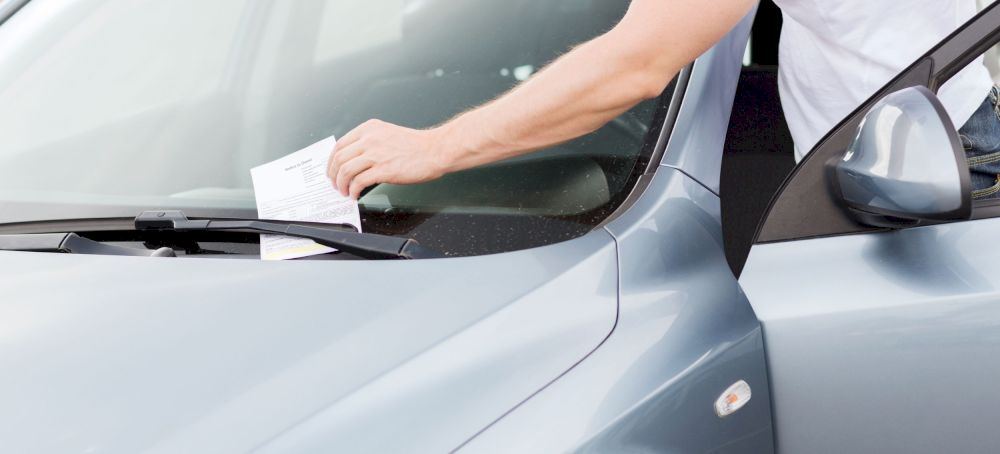
A traffic ticket is always sent to the owner of the vehicle. In the case of a rental car, that means the company that rented out the car. But the rental company obviously won’t pay the ticket itself. The company checks when the ticket was issued and then determines who was driving the rental car at that time. The company then provides the name and address of that renter to the local authorities. Car rental companies receive long lists of traffic tickets, and it’s quite a task to figure out exactly who was driving when each ticket was issued. To cover this, they charge an administrative fee, which is deducted from the credit card you provided as a security deposit when renting the car. This is why, in most cases, you can only rent a car with a credit card. The administrative fees are charged for each fine. If you have three fines, you’ll pay the administrative fee three times. That amount can add up significantly.
Paying Fines When Renting a Car
Some people think the fine is already included in the costs charged by the car rental company. That is not the case. The fine comes later, sometimes much later. By law, a fine can be collected up to one year after the violation. The local authorities will send you the fine along with a letter explaining how to pay. Often, this can be done quite easily online.
Appealing a fine during the car rental period
For privacy reasons, the local rental company only knows that a fine has been issued, not why. If you believe the fine was issued unjustly, you cannot contest it with the rental company; you must do so with the local authority that issued the fine. If you wish to appeal or have questions about the traffic violation, the contact information is included in the letter you received. It’s already difficult to challenge a fine in your own country, let alone abroad. Unless it’s a clear mistake that you can easily prove, we recommend simply paying the fine as soon as possible.
Renting a car abroad? Familiarize yourself with the traffic rules!
Prevention is better than cure. Are you planning to drive a rental car abroad? Then make sure to familiarize yourself with the traffic rules in advance and check for any (different) traffic signs. When it comes to traffic rules, the ANWB provides a comprehensive list of what is and isn’t allowed for virtually every country in the world. One page contains links to all European countries; for other destinations, you can find the traffic rules on the main page for the respective country.
Traffic signs for each country can be found online by searching for “road signs in COUNTRY.” Wikipedia has an overview of the signs and other traffic markings for all European countries. From that page, you can click through to the traffic signs for each country. Especially if you’re driving a rental car through a country where you don’t speak the language, it’s advisable to familiarize yourself in advance with the text on or below traffic signs.
Avoid low-traffic zones with your rental car
The zona a traffico limitato , which is in effect in virtually all historic centers (centro storico) in Italy. Only cars with a permit are allowed to drive in these zones. Sometimes this restriction applies only during certain times of day. We recommend that you never drive your rental car in these zones, because before you know it, you might find yourself there at a time when it’s not allowed, and the fines are steep. Spain also has low-traffic zones that are accessible only to residents with a permit. These are indicated by a sign with the text “Área de Prioridad Residencial.”
Renters Are Always Responsible for Fines
No matter how you look at it: you’re always personally responsible for any fine issued during the period you rented the car. With a little preparation, you can avoid such unpleasant surprises and, when your trip is over, look back on a wonderful, carefree vacation in your rental car!

Where would you like to rent a car?
- 24000+ pick-up locations
- Free cancellation
- Independent comparator

Useful tips for a well-prepared trip
Which insurance should I choose, and what's the deal with the deposit? Read our articles with useful information and tips to ensure you choose the right rental car for you.