- Popular countries
- Popular regions
- Popular cities
- Popular airports
- Car Rental Italy
- Car Rental Spain
- Car Rental United States
- Car Rental Portugal
- Car Rental South Africa
- Car Rental France
- Car Rental Netherlands
- Car Rental Greece
- Car Rental Germany
- Car Rental United Kingdom
- Car Rental Belgium
- Car Rental Croatia
- Car Rental Switzerland
- Car Rental Austria
- Car Rental Denmark
- Car Rental Norway
- Car Rental Australia
- Car Rental Ireland
- Car Rental Cyprus
- Car Rental Canada
- Car Rental Florida
- Car Rental Sicily
- Car Rental California
- Car Rental England
- Car Rental Sardinia
- Car Rental Mallorca
- Car Rental Ibiza
- Car Rental Crete
- Car Rental Tenerife
- Car Rental Rhodes
- Car Rental Madeira
- Car Rental Corsica
- Car Rental Gran Canaria
- Car Rental Malta
- Car Rental Scotland
- Car Rental Azores
- Car Rental Fuerteventura
- Car Rental Lanzarote
- Car Rental Corfu
- Car Rental Zakynthos
- Car Rental Amsterdam
- Car Rental Milan
- Car Rental Miami
- Car Rental Lisbon
- Car Rental Malaga
- Car Rental Porto
- Car Rental Rome
- Car Rental Cape Town
- Car Rental Barcelona
- Car Rental Faro
- Car Rental Alicante
- Car Rental Nice
- Car Rental Bari
- Car Rental Naples
- Car Rental Johannesburg
- Car Rental Brussels
- Car Rental Bergamo
- Car Rental Orlando
- Car Rental Palma de Mallorca
- Car Rental Vienna
- Car Rental Amsterdam Schiphol Airport
- Car Rental Miami International Airport
- Car Rental Lisbon Airport
- Car Rental Malaga Airport
- Car Rental Porto Airport
- Car Rental Milan Malpensa Airport
- Car Rental Rome Fiumicino Airport
- Car Rental Faro Airport
- Car Rental Alicante Airport
- Car Rental Bari Palese Airport
- Car Rental Nice Airport
- Car Rental Barcelona Airport
- Car Rental Cape Town Airport - International Terminal
- Car Rental Bergamo Airport
- Car Rental Orlando International Airport
- Car Rental Mallorca Airport
- Car Rental Catania Airport
- Car Rental Johannesburg International Airport
- Car Rental Ibiza Airport
- Car Rental Athens Airport

Car Rental on Bonaire: Explore the Island with a Rental Car
Why Almost Every Tourist on Bonaire Rents a Car
Bonaire is an ideal destination to explore by rental car. The island is easy to navigate, but the distances are too great to cover everything on foot or by bike. If you really want to make the most of your vacation, renting a car on Bonaire is the way to go. A rental car is especially indispensable for divers and snorkelers: you can easily bring your diving gear and effortlessly reach the most beautiful diving and snorkeling spots, which are often only accessible by car.
With a rental car on Bonaire, you’ll enjoy maximum freedom and discover rugged nature, colorful villages, and secluded beaches at your own pace. From the salt pans in the south to Washington Slagbaai National Park in the north: everything is within easy reach. In this article, you’ll learn about all the things you can see and do when you rent a car on Bonaire.
Kralendijk
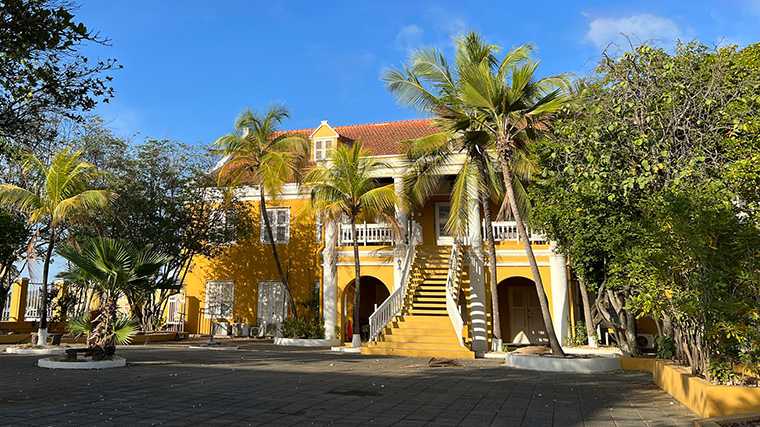
In Bonaire’s colorful capital, it’s best to leave your rental car behind for a while and go for a walk. You can often park your rental car around Plaza Wilhelmina, the heart of Kralendijk. It can get very crowded there, though, when a cruise ship has just docked.
On the south side of that small square stands Bonaire’s oldest building, Fort Oranje. Dutch colonists built it in the seventeenth century, but the distinctive lighthouse wasn’t added until the twentieth century. Incidentally, the cannons on display there have never fired a shot, except for ceremonial salutes.
Kralendijk has two museums. At the Terramar Museum, you’ll take a journey through time to experience the history of Bonaire and the rest of the Caribbean in various ways: through beautiful historical artifacts, fascinating stories, and fun interactive experiences. The Natural History Museum is housed in a former 19th-century planter’s house. The museum is not only dedicated to Bonaire’s flora and fauna; you’ll also see old tools, ancient Native American artifacts, unique shells, and beach finds.
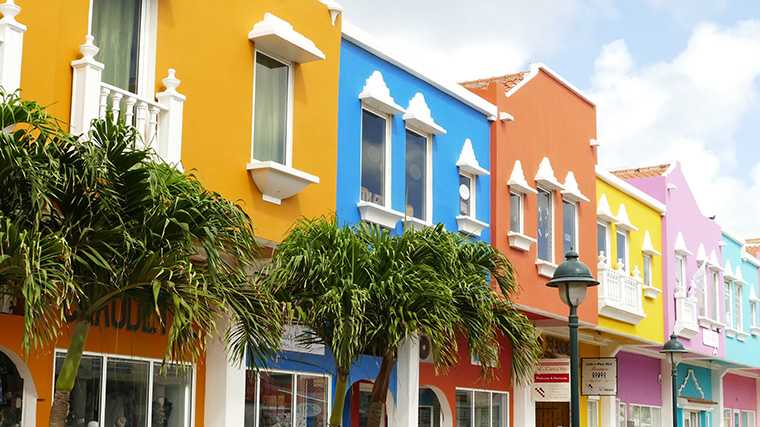
In the evening, it’s wonderful to stroll along the waterfront in Kralendijk, taking in the view of the azure-blue sea and the massive cruise ships moored at the two piers. There are various cafés and restaurants—often with covered patios—along the promenade, officially called Kaya Craane.
The capital’s name is derived from the dike that was built there, which consists of dead coral. Did you know that locals usually refer to Kralendijk as Playa (“beach”)? That was the name of the village that now forms the center of the town. So the residents aren’t referring to the nearest beach, but to the capital itself!
Salt pans / slave huts
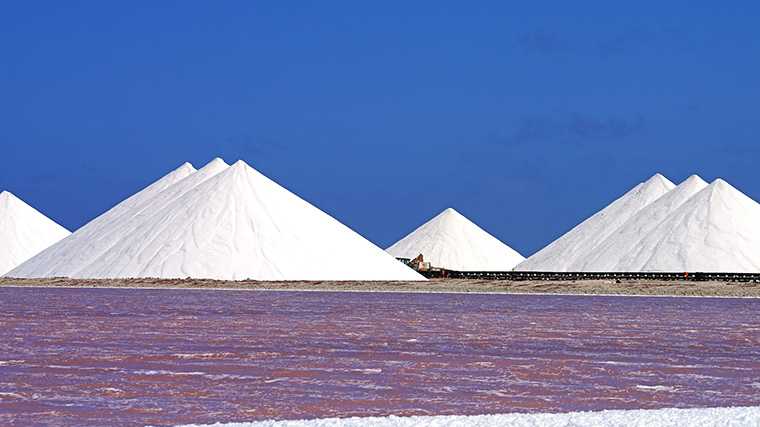
Drive your rental car south from Kralendijk and you’ll pass the salt pans of Bonaire. It’s truly impressive: to the left of the road are the often pink-colored salt lakes, and to the right, the dazzling blue waters of the Caribbean Sea. At the Zoutpier, you’ll see enormous pyramids of salt. There, the salt is loaded onto cargo ships via a large conveyor belt. You might not expect it, but this is also a great spot for snorkeling—though you can only do so when no ships are docked. On the seabed here, you’ll almost always come across sea turtles grazing.
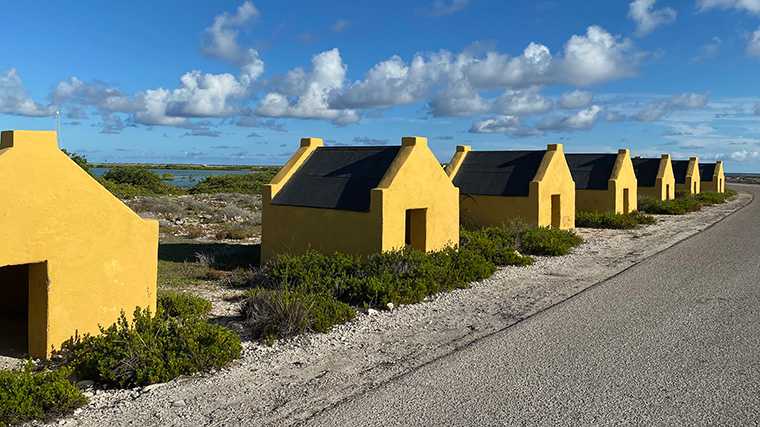
A little further south, you’ll see small houses. These were huts for slaves who worked in the salt pans. The workers had to walk six to seven hours from Rincon to the salt pans on Monday mornings and spent the nights in these huts until Saturday. They serve as a somber reminder of Bonaire’s past.
You’ll also see four obelisks in red, white, blue, and orange—the colors of the Dutch flag and the royal family. These ten-meter-high obelisks served as navigational beacons for ships at sea, helping captains determine which salt pan to sail toward.
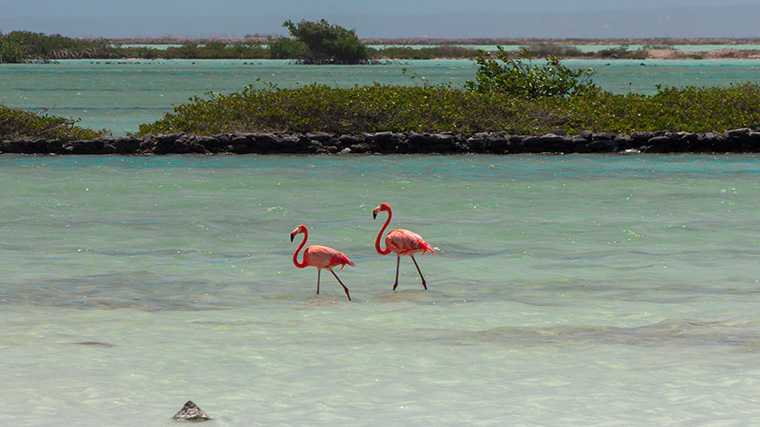
The flamingo is the national symbol of Bonaire. The island is one of the most important breeding grounds for the greater flamingo. The largest concentrations are found in the Pekelmeer in the far south.
Lac Bay / Mangrove Forests
Once you’ve passed the southernmost point of Bonaire in your rental car, the sea becomes increasingly rough. On the rugged east coast, high waves crash against the rocks. You’ll pass a former shrimp farm, where graffiti artists have left their mark on the concrete walls.
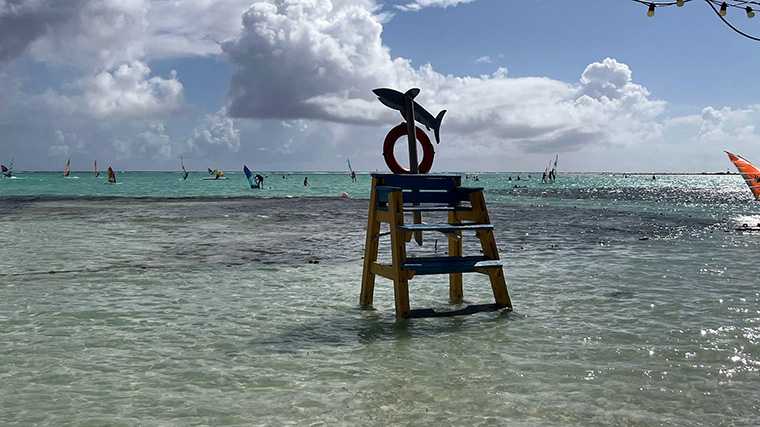
Just past the abandoned factory, you’ll see the turnoff to Sorobon, a small peninsula in Lac Bay. The shallow, azure-blue waters of this bay are sheltered from the open sea by a coral reef and are a popular spot for beginner windsurfers. There are several surf schools where you can take lessons or rent boards and other equipment. Because the beach slopes gently into the water, it’s also a favorite spot for families with small children. At the end of the peninsula stands a wooden observation tower, from which you have a beautiful view of the lagoon and the windsurfers.
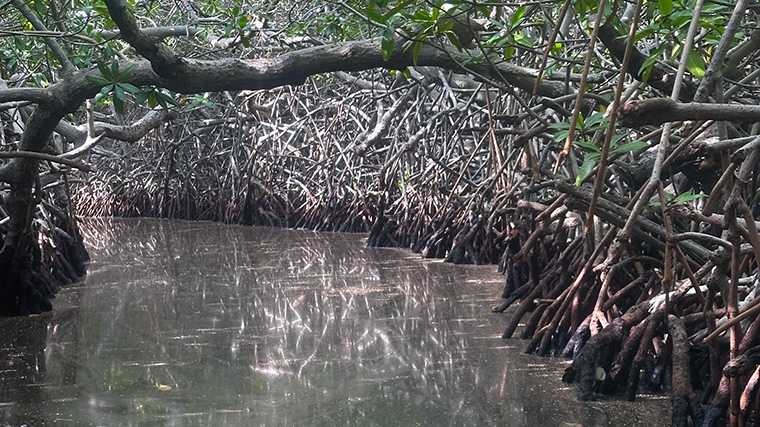
The north side of Lac Bay is dotted with mangrove forests. It’s a real experience to take a canoe or kayak trip from the Mangrove Center and learn all about the importance of these forests along the way. There’s also a beautiful little beach on the north side, Cai Beach. The only question is whether that beach will remain accessible in the coming years, as the access road is increasingly prone to flooding.
Donkey Sanctuary
The Spanish were the first to colonize Bonaire, and they brought donkeys to the island to help transport salt. Later, machines took over that work, and the donkeys were discarded. Since then, they’ve roamed freely across the island—so you’ll need to watch out for them if you’re driving around in a rental car.
To protect the animals, there’s a donkey sanctuary right near the airport. It’s a huge area where the animals are no longer at risk of being hit by cars. You’re allowed to drive your rental car there, but only at a walking pace. At the end of the route, there’s a fenced-off section where injured or sick donkeys are treated.
Kitesurfing at Atlantis Beach
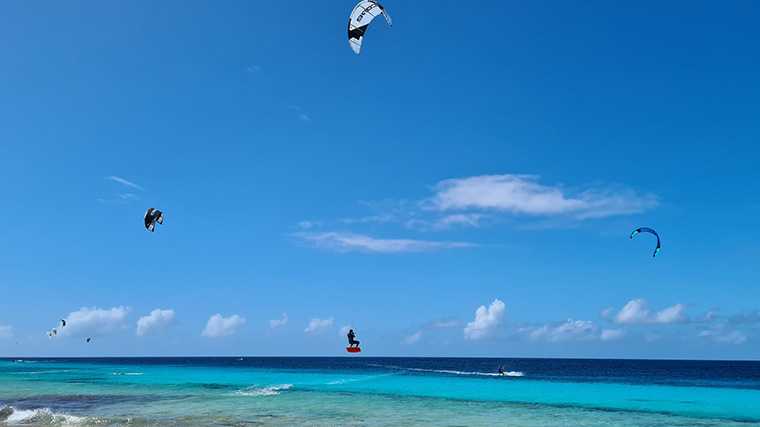
Drive your rental car 15 kilometers south from Kralendijk, and you’ll arrive at Atlantis Beach. The beach is also known as Kite Beach, as it’s home to the school’s unmissable buses for learning to kiteboard. If you’re already an experienced kitesurfer, you can rent equipment there. Atlantis Beach is known for its constant offshore wind, especially from December through July.
Here you’ll also see pelicans and ospreys, which dive spectacularly into the water to catch their prey.
Drive to the summit of Seru Largu in your rental car
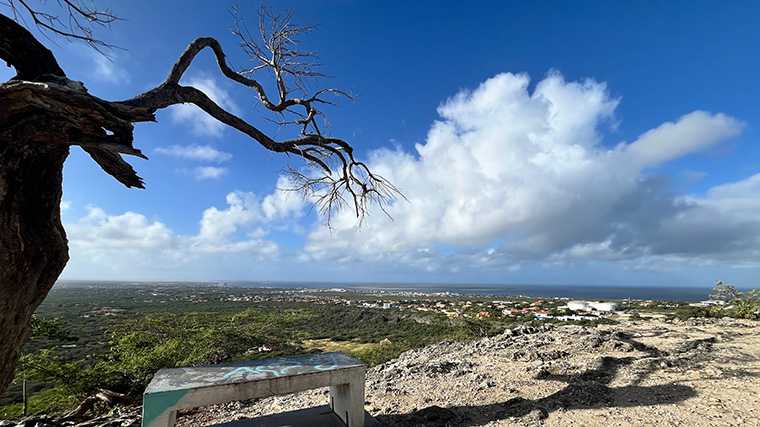
Seru Largu is located just north of Kralendijk. It’s not the highest point on Bonaire—that’s further north—but you can’t drive a rental car up there. You can, however, drive to the lookout point at the top of the “Grote Heuvel” (Big Hill). This hill is only 123 meters high, but it offers a beautiful panoramic view of the island and the neighboring islet of Klein Bonaire. On a clear day, you can even see Curaçao in the distance. This is the place to be on New Year’s Eve. People come here to watch the fireworks and celebrate.
A three-kilometer hiking trail begins at the summit. The path is relatively flat, and along the way you’ll see many colorful birds in the trees, including the prikichi, a species of parakeet.
Boka Onima
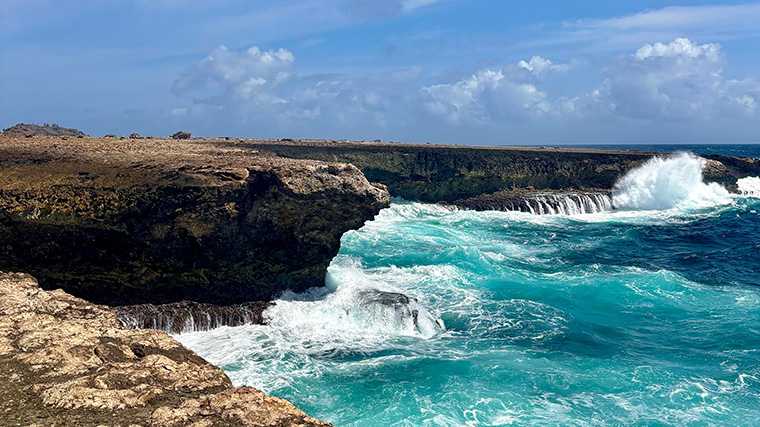
Drive your rental car from Seru Largu further northwest, and at some point you’ll see a wide, unpaved road on the right leading toward the east coast. Weather permitting, you can drive along this road to Boka Onima, the only cove on Bonaire’s east coast that you can drive right up to in a rental car. Note: If you’re not entirely confident, it’s better to park your rental car along the road and walk the last 150 meters. The view from the beach of the waves and cliffs is definitely worth it.
Mangazina di Rei
It’s easy to drive a rental car to Mangazina di Rei, just before Rincon, but slaves had to walk this distance from the salt pans! The king’s warehouse was used to store tools, and it was also where slaves received their weekly rations: corn, salted meat, coffee, and rum. That was nowhere near enough to live on, but the families also grew some vegetables near their huts in Rincon.
The warehouse is the second-oldest stone building on Bonaire. It is now a museum featuring traditional furniture, tools, household items, work clothes, and festive attire. Outside the building are replicas of Bonaire’s historic houses.
Rincon
The Spaniards considered the valley in northern Bonaire the ideal location for a settlement. The surrounding low hills ensured that the village could not be seen from the sea. That was a major advantage during the heyday of piracy.
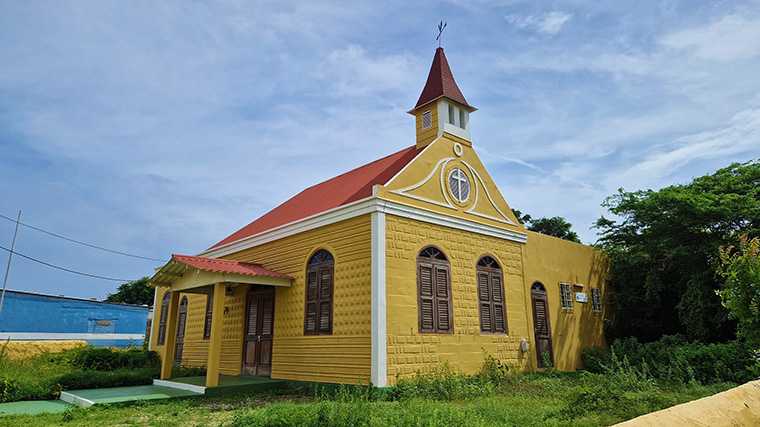
When the Dutch conquered the island in the seventeenth century, they used Rincon as a settlement for slaves from Africa. It also served as a penal colony for soldiers who had misbehaved. As a result, it became a place with a mixed population. Rincon is a charming village and is regarded by the residents of Bonaire as the cradle of their culture. Every year on April 30, this is celebrated exuberantly on Dia di Rincon.
In the heart of the village, you’ll find one of the biggest attractions: the Cadushy distillery. It offers liqueurs that, according to the makers, capture the essence of various other Antillean islands. In addition to Bonaire, there are liqueurs inspired by Aruba, Curaçao, Sint Eustatius, and Saba.
Dos Pos
Before Rincon was connected to the water supply system, residents drew drinking water from two wells (dos pos) just outside the village. Park your rental car at the Dos Pos windmill to enjoy some great hikes. You can choose between the short climb up Montaña Hill and a longer hike of nearly two and a half kilometers. Neither hike is particularly difficult, but sturdy shoes are a must, as there are many loose stones on parts of the trail. You’ll be accompanied by cheerful birdsong, but you’ll sometimes have to look closely to spot the birds in the trees.
Lake Goto
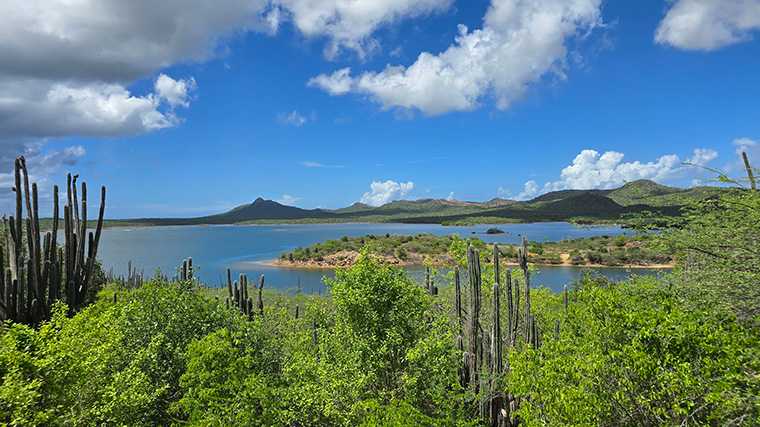
With a rental car, you can drive to the eastern part of Lake Goto, which lies on the border of Slagbaai National Park. The water in this large lake is brackish, although it becomes less salty during the rainy season. Flamingos, herons, and other waterbirds like to forage here.
Bonaire Caves & Karst Nature Reserve
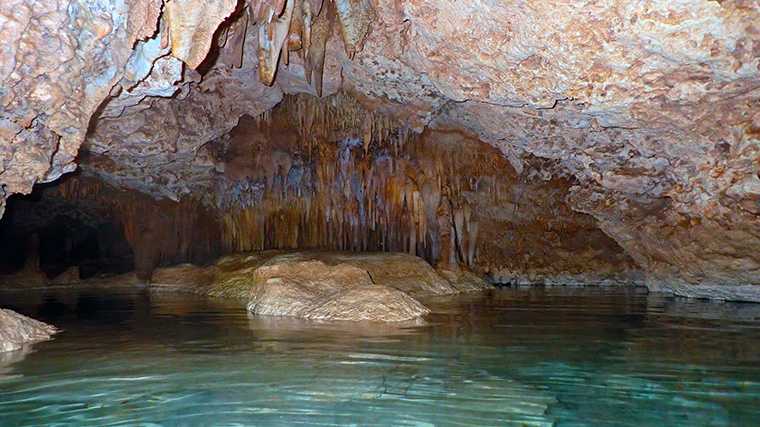
Bonaire has several hundred caves, and you can visit two of them on a guided tour. First, you’ll go to a so-called dry cave, which is home to bats and a few bee colonies. Next, you’ll head to a wet cave with a crystal-clear underground lake that—quite unique for Bonaire—contains fresh water. Here, you can swim and snorkel. Be prepared for some serious climbing and scrambling. It’s also very hot in the caves and the humidity is high, so it feels quite stuffy—and that’s not just because of the sometimes narrow limestone passages you have to navigate.
Washington Slagbaai National Park
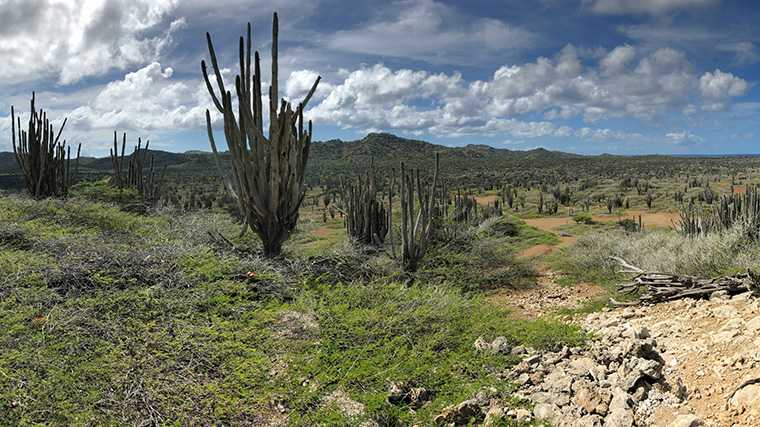
In a rental car, it takes about ten minutes to drive from Rincon to the entrance of the beautiful Washington Slagbaai Nature Reserve. From Kralendijk, it’s just over half an hour’s drive to this national park, which covers the northern part of Bonaire.
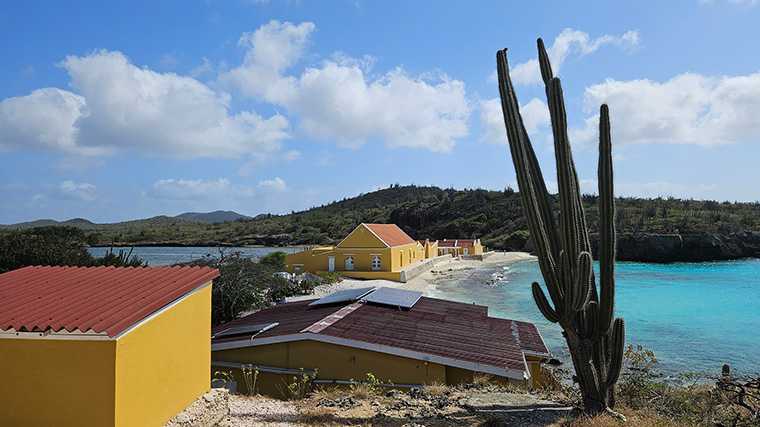
The name comes from the cove known as Boca Slagbaai, where Bonaire’s first harbor was located. You can still see this in the ochre-yellow buildings, where goats were once slaughtered and salted before being shipped to Curaçao.
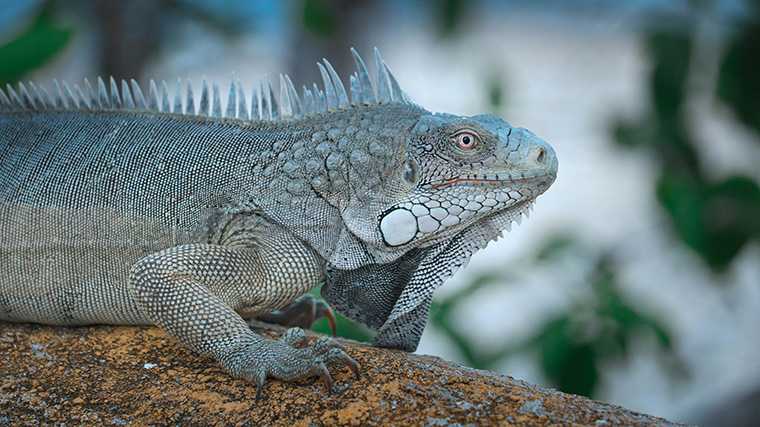
From the entrance, you can take a rental car on either a short or long route, with the latter essentially being an extension of the former. In total, the park has about 35 kilometers of unpaved roads winding through a surprisingly green and hilly landscape. There are several spots where you can pull over briefly to spot birds, enjoy beautiful views, watch water spray spectacularly from blowholes, or go snorkeling at one of the beaches. Diving is no longer permitted in Washington Slagbaai Park.
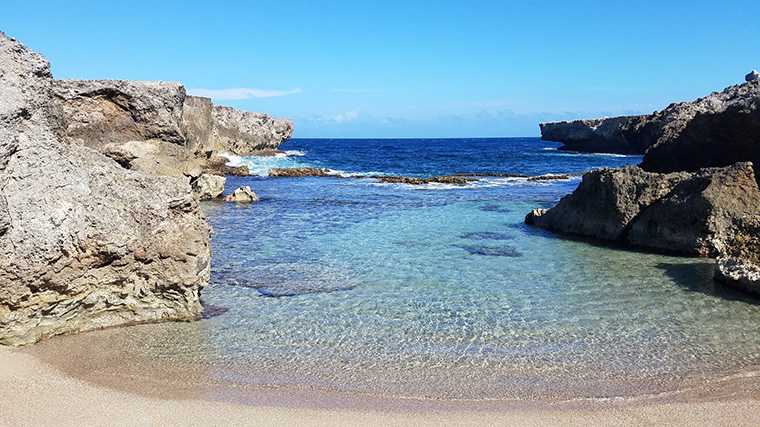
In the past, fire signals were sent to Curaçao from the top of Brandaris Hill (241 m). That’s why the hill was named after the lighthouse on Terschelling. You can park your rental car at the base and hike up via an old donkey trail. Of course, you’ll enjoy a fantastic view of the nature reserve and the rest of Bonaire.
Keep in mind that the park closes at 5:00 p.m. From the west coast, it takes about an hour and a half to reach the exit.
Beaches
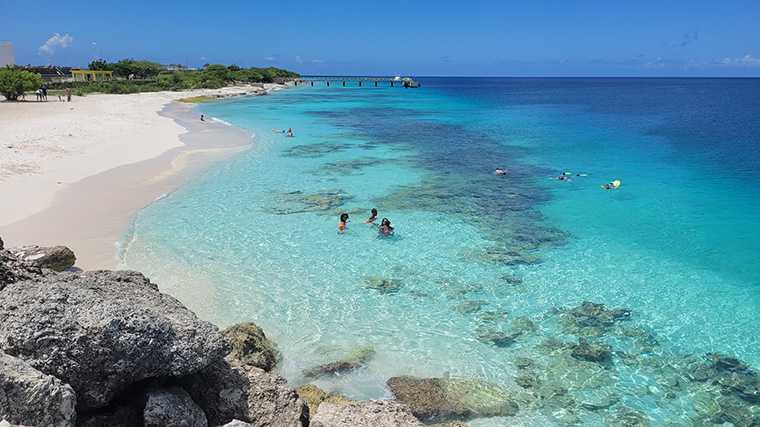
Bonaire is primarily associated with the fantastic underwater world surrounding the island. Still, there are also plenty of opportunities to spend a relaxing day on the beach. For example, you can have a great time at Coco Beach, just north of Kralendijk, or at Kontiki Beach, the quietest of the three beaches at Lac Bay. Airplane spotters prefer the soft sand of Donkey Beach, located directly beneath the airport’s flight path. The most beautiful beach isn’t on the main island, but on Klein Bonaire: No Name Beach.
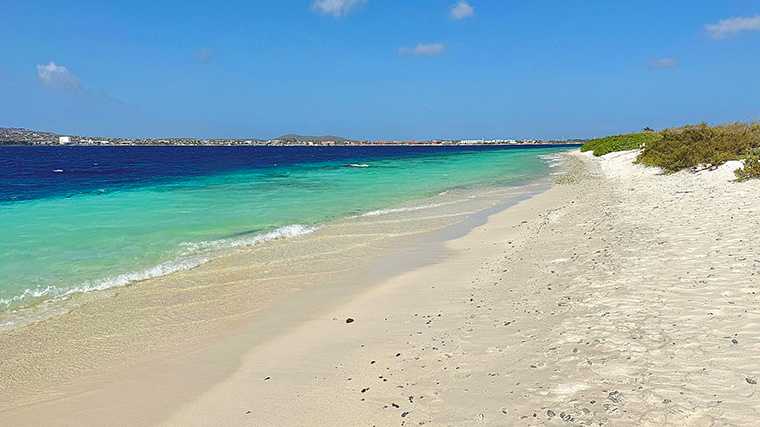
The beaches listed above are public and have very few amenities. So you’ll need to bring your own food and drinks. Bonaire also has a number of private beaches owned by hotels or resorts. Some of these beaches are accessible to non-guests for a fee. There are hardly any signs pointing to the beaches, so be sure to pick up afree map at the tourist office in Kralendijk. This map shows all the beaches, as well as the diving and snorkeling spots and the roads leading to them. Very handy if you’ve rented a car on Bonaire!
Diving and Snorkeling Locations
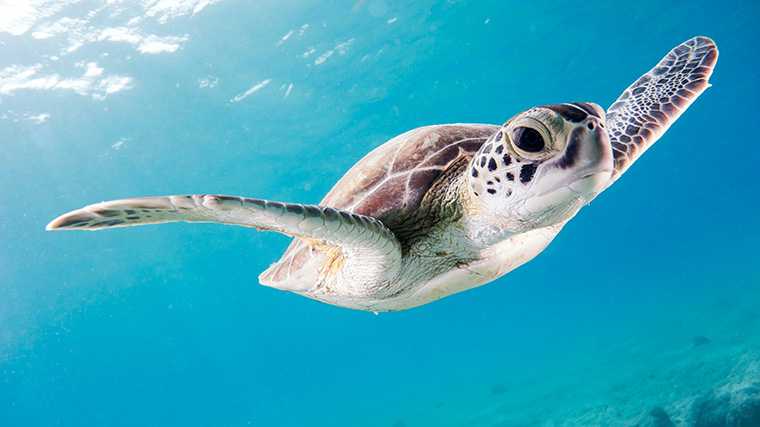
All the waters surrounding Bonaire, from the high-tide line down to a depth of 300 meters, are a protected nature reserve: the Bonaire National Marine Park. You may only access this area after paying the so-called nature fee. This applies not only to divers and snorkelers, but also to kitesurfers and swimmers—in other words, every tourist. The “nature tag” also grants you access to Slagbaai National Park. The e-ticket is valid for an entire calendar year, and you can order it online. Children under the age of 13 are exempt from the fee.
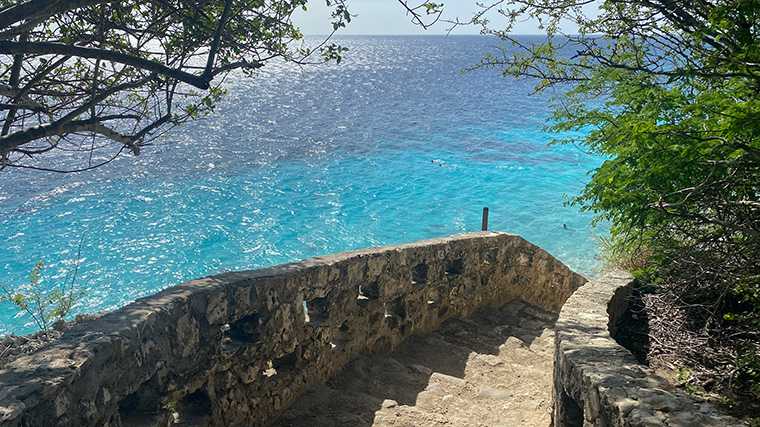
The coral reefs and shipwrecks around Bonaire are popular destinations among divers and snorkelers from all over the world. The best dive sites are located on the west coast, where you can simply walk right into the sea to discover an impressive underwater world. The dive sites are generally marked by a rock painted yellow and/or a buoy in the water. The eastern side of the island is considerably rougher, so you can only dive there with a guide, unless the sea is very calm.
Tips for Driving a Rental Car on Bonaire
The paved roads on Bonaire are generally in reasonable condition. Be aware of potholes, however, as they aren’t always repaired quickly. The further north you go, the narrower the roads become, and in many sections, cars can only pass each other at pull-offs, which, fortunately, are spaced at regular intervals.
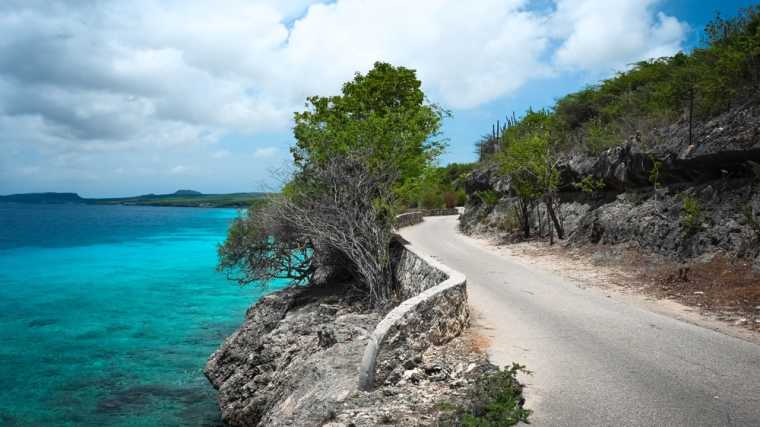
The unpaved roads are generally easy to drive on, but avoid them during or immediately after rain.
Speaking of rain: paved roads can become extremely slippery when the thin layer of dust, sand, and oil gets wet. Adjust your speed and be extra careful on sharp turns.
Traffic on Bonaire is only really heavy in and around the capital, Kralendijk, and on weekends or holidays on the roads leading to popular beaches. Please note: traffic coming from the right does not have the right of way, unless otherwise indicated. On Bonaire, traffic on the main road has the right of way.
Donkeys and goats often tend to suddenly cross the road. Always be aware of this and don’t drive too fast.
One final tip, which might go against your instincts: don’t lock your rental car when you park it, and leave the glove compartment open. Of course, you should never leave anything valuable in the rental car, but if someone does decide to rummage around, at least it won’t cost you a broken window…
Should you rent a 4×4 for Slagbaai?
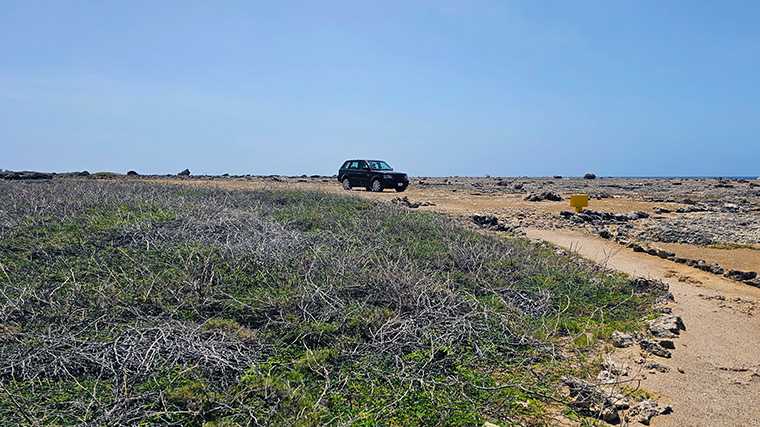
You often read that renting a 4×4 vehicle is absolutely necessary to visit Washington Slagbaai, but that’s an exaggeration. While the roads in the park are unpaved, bumpy, and sometimes steep, they’re perfectly drivable if your rental car has sufficient ground clearance and a powerful engine. So you do need a pickup truck or SUV, but not necessarily a four-wheel-drive rental car. Please note: after heavy rainfall, the roads in the nature park can become difficult to navigate. In such cases, the park is sometimes even closed. This happens mainly during prolonged periods of rain, which can occur especially in October and November.
Incidentally, the weather on Bonaire is particularly difficult to predict. Weather systems usually pass over or along the island quickly. One moment the sun may be shining brightly, the next a downpour may hit, and shortly after that the sky is completely clear again.
Renting a Car on Bonaire: The Best Choice
Renting a car on Bonaire is the best way to explore the island without a care in the world. You decide your own route, visit remote spots, and easily drive from beach to beach or from dive site to dive site. Especially outside of Kralendijk, a rental car isn’t a luxury—it’s a must. And let’s be honest: isn’t driving through sunny Bonaire with the windows down, feeling the wind in your hair, the ultimate vacation feeling? If you’re renting a car with two or more people, it’s fun to take turns driving: rent a car on Bonaire with a second driver!
We recommend booking your rental car on Bonaire well in advance, especially during the high season between November and May. Pick up your car at Bonaire Flamingo Airport so your vacation gets off to a relaxing start right away.
For extra peace of mind, choose a rental car with our Worry-Free label. That way, your deductible is fully covered, and you can hit the road without any worries. Reserve your rental car on Bonaire today and make the most of your stay on this beautiful island.

Where would you like to rent a car?
- 24000+ pick-up locations
- Free cancellation
- Independent comparator

Useful tips for a well-prepared trip
Which insurance should I choose, and what's the deal with the deposit? Read our articles with useful information and tips to ensure you choose the right rental car for you.