- Popular countries
- Popular regions
- Popular cities
- Popular airports
- Car Rental Italy
- Car Rental Spain
- Car Rental United States
- Car Rental Portugal
- Car Rental South Africa
- Car Rental France
- Car Rental Netherlands
- Car Rental Greece
- Car Rental Germany
- Car Rental United Kingdom
- Car Rental Belgium
- Car Rental Croatia
- Car Rental Switzerland
- Car Rental Austria
- Car Rental Denmark
- Car Rental Norway
- Car Rental Australia
- Car Rental Ireland
- Car Rental Cyprus
- Car Rental Canada
- Car Rental Florida
- Car Rental Sicily
- Car Rental California
- Car Rental England
- Car Rental Sardinia
- Car Rental Mallorca
- Car Rental Ibiza
- Car Rental Crete
- Car Rental Tenerife
- Car Rental Rhodes
- Car Rental Madeira
- Car Rental Corsica
- Car Rental Gran Canaria
- Car Rental Malta
- Car Rental Scotland
- Car Rental Azores
- Car Rental Fuerteventura
- Car Rental Lanzarote
- Car Rental Corfu
- Car Rental Zakynthos
- Car Rental Amsterdam
- Car Rental Milan
- Car Rental Miami
- Car Rental Lisbon
- Car Rental Malaga
- Car Rental Porto
- Car Rental Rome
- Car Rental Cape Town
- Car Rental Barcelona
- Car Rental Faro
- Car Rental Alicante
- Car Rental Nice
- Car Rental Bari
- Car Rental Naples
- Car Rental Johannesburg
- Car Rental Brussels
- Car Rental Bergamo
- Car Rental Orlando
- Car Rental Palma de Mallorca
- Car Rental Vienna
- Car Rental Amsterdam Schiphol Airport
- Car Rental Miami International Airport
- Car Rental Lisbon Airport
- Car Rental Malaga Airport
- Car Rental Porto Airport
- Car Rental Milan Malpensa Airport
- Car Rental Rome Fiumicino Airport
- Car Rental Faro Airport
- Car Rental Alicante Airport
- Car Rental Bari Palese Airport
- Car Rental Nice Airport
- Car Rental Barcelona Airport
- Car Rental Cape Town Airport - International Terminal
- Car Rental Bergamo Airport
- Car Rental Orlando International Airport
- Car Rental Mallorca Airport
- Car Rental Catania Airport
- Car Rental Johannesburg International Airport
- Car Rental Ibiza Airport
- Car Rental Athens Airport

Watch out for these pitfalls when renting a car
Would you like a little more? Not with a rental car!
You’ve probably heard them before—stories of people who ended up spending much more money than expected when renting a car. They were talked into buying extra insurance, or the rental car was unfortunately no longer available, but for an additional fee, a different model could be arranged. Another classic: pre-existing damage was labeled “new damage,” and you were asked to cough up the repair costs—which, by the way, also came with a small fee for administrative costs.

So, is renting a car nothing but trouble? Well, that’s an exaggeration. Fortunately, for most people, a vacation with a rental car goes off without a hitch. Don’t forget that it’s especially the stories about bad experiences that stick in people’s minds. Good experiences with car rentals aren’t about the rental itself, but about the amazing adventures you have on a road trip.
Want to rent a car hassle-free and avoid any trouble with your rental car during your vacation? Here, we’ll outline the most common pitfalls and give you tips on how to avoid them. We’ll cover them in the order of key steps in the car rental process: booking, pickup, and drop-off.
Rental Car Booking
Book well in advance
Always reserve a rental car well in advance. If you start looking for a rental car early, you’ll have a wide selection to choose from and (usually) pay a lower price. But that’s not even the most important part. If you pick out a rental car well before your vacation, you’ll have plenty of time to compare options. Not just prices and models, but especially the terms and conditions, since these vary from one rental car provider to another. The terms and conditions include details such as the amount of the security deposit, the insurance deductible, the number of kilometers you’re allowed to drive with the rental car, and the fuel policy. These are all things you’ll want to read through carefully and compare before booking a rental car.Use your official name
When booking, use your official name as it appears in your passport—not your nickname. Even if you’re used to being called “Joke,” if your passport says “Johanna,” use that name on our booking form. Your official name should also appear on your (international) driver’s license and on the credit card required for the rental car deposit. If your name is the same on all documents, a car rental company can never claim “that the name doesn’t match.”You’re booking a rental car category, not a specific model
Keep in mind that whenyou book a rental car, you’re not renting a specificmodel, but a category. Worldwide, rental cars have a code that places them in a specific class. A rental company will provide you with a car from the class you booked. That’s why the rental cars we offer usually include the phrase:“or equivalent.” In a separate article, we explain what an equivalent rental car is. If the category you booked is no longer available, it’s not your fault. The rental company may offer you a car from a higher category, but they’re not allowed to charge you extra for it.Insurance and Deductibles
All rental cars you book through us come standard with collision, theft,and liability insurance. Collision insurance usually includes a deductible. When making your reservation, carefully consider whether you want to cover that deductible. For rental cars with our Worry-Free label, the deductible is always covered. In addition, these cars come from rental companies with a good reputation (7+) and damage to the roof, undercarriage, tires, and windows is usually covered as well.
If you’ve booked a rental car through us, we’ll send you a voucher with the details. That’s your rental confirmation. We’ll also send you the terms and conditions. Read them carefully and review them again right before you pick up the rental car (for example, on the plane). That way, you’ll have a clear understanding of exactly what you’ve rented and under what terms. Then, a little later, you’ll be well-prepared when you arrive at the rental car counter.
Picking Up Your Rental Car
Read the agreement thoroughly
At the counter, you’ll receive the rental agreement, which lists the details of the rental car and the terms and conditions. Check that these match the voucher and terms and conditions you received from us. Pay attention to specific details: the odometer reading, the fuel policy, the security deposit, the return date, the description of any pre-existing damage, and costs for extras such as a child seat.Blah, blah, blah
Car rental employees are trained to sell extras. They play on your state of mind: you’ve just gone through a tiring flight, and you’re in the mood for a vacation—not for haggling over details. You’re quickly tempted to give in and pay for that extra “essential” insurance or that “pretty handy” GPS system. You can easily brush off all those sales pitches if you think carefully about what you do and don’t want to book when you make your reservation—and stick to your decision.Credit Card
As mentioned above, the name on the credit card must match the name of the person who booked the rental car—and is therefore the primary driver. This is very important, because a different credit card will not be accepted for the security deposit. In most cases, the security deposit amount isn’t charged but is held as a hold. It’s released after you return the rental car. Make sure you have sufficient available credit for the security deposit. Check this shortly before you pick up the rental car and memorize the PIN right away, as you’ll often need it.Do not sign anything until you’ve inspected the rental car
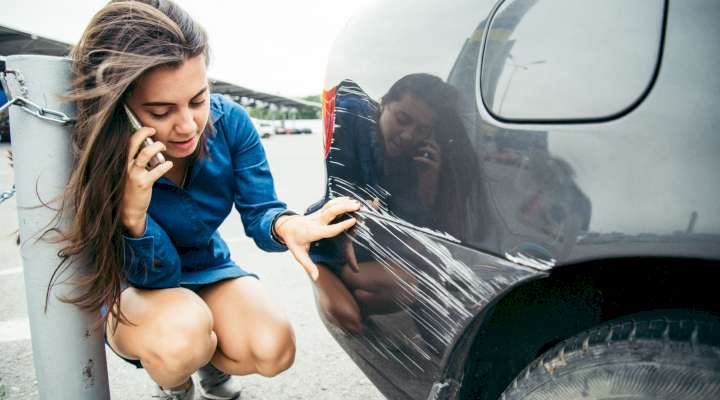
You must thoroughly inspect the car you’ve rented. Pay attention to every scratch and dent in the bodywork. Also check the tires, windows, and interior. If you notice any damage, it must be noted on the so-called checkout form. If not, insist that a note be made of it. Always take photos of the exterior and interior so you have proof of the rental car’s condition when you picked it up. Most rental cars are provided with a full tank of gas, and you’re required to return them with a full tank as well. If the tank isn’t full when you pick up the car, make sure to have that noted so you can avoid difficult discussions later. To be on the safe side, take a photo of the fuel gauge. Only sign the rental agreement once everything is in order and to your satisfaction.
For an even more comprehensive overview of what to look out for when picking up a rental car, we’ve put together a checklist.
Returning the Rental Car and Afterward
Damage Inspection When you return a rental car, it’s naturally inspectedfor any damage. It’s best to inspect the car together with a rental company employee and take photos during the process. If there’s no (new) damage, the employee will give you a signed form confirming this.Unfortunately, a staff member isn’t always available—for example, if you return the rental car outside of business hours and have to deposit the keys in a keybox. In that case, it’s very important to take detailed photos so you have proof of the rental car’s condition upon return. Also take a photo of the dashboard showing the odometer reading and the fuel gauge.
Security Deposit Refund Once the rental period has ended and you’ve returned the rental car in good condition, the security deposit will be refunded. However, you won’t always see this immediately on your bank statement. It can take up to 20 business days for the amount to be credited back to your account.Please note: the security deposit covers more than just the deductible for the collision insurance. For example, a fine for a traffic violation is also deducted from the deposit, often plus administrative fees.
Credit Card Charges Keep a close eye on the charges on yourcredit card. As mentioned above, the car rental company may also charge you for a fine or fuel. Sometimes this happens unjustly. In that case, file a complaint with the rental company immediately. Can’t you reach an agreement? Then contact us so we can help find a solution. Of course, you’ll need to provide supporting documentation.
Worry-Free Car Rental? Worry-Free!
Do you want to be immune to car rental companies’ sales pitches? Do you want to drive around in a rental car completely worry-free during your vacation? Do you want to be sure that the deductible in case of damage is covered? In other words: do you want to avoid most of the pitfalls we mentioned above? Then rent a car with the Worry-Free label through EasyTerra. That way, you can be sure that the deductible for damage insurance is covered. For most rental cars with the Worry-Free label, coverage for damage to the roof, undercarriage, windows, and tires is included. Plus, these cars always have a favorable fuel policy and are provided by rental companies with good customer ratings.
If your “Worry-Free” rental car is damaged, you may sometimes have to pay the deductible upfront, but don’t worry—we’ll reimburse you for that amount. It’s called “Worry-Free” for a reason!

Where would you like to rent a car?
- 24000+ pick-up locations
- Free cancellation
- Independent comparator

Useful tips for a well-prepared trip
Which insurance should I choose, and what's the deal with the deposit? Read our articles with useful information and tips to ensure you choose the right rental car for you.