- Popular countries
- Popular regions
- Popular cities
- Popular airports
- Car Rental Italy
- Car Rental Spain
- Car Rental United States
- Car Rental Portugal
- Car Rental South Africa
- Car Rental France
- Car Rental Netherlands
- Car Rental Greece
- Car Rental Germany
- Car Rental United Kingdom
- Car Rental Belgium
- Car Rental Croatia
- Car Rental Switzerland
- Car Rental Austria
- Car Rental Denmark
- Car Rental Norway
- Car Rental Australia
- Car Rental Ireland
- Car Rental Cyprus
- Car Rental Canada
- Car Rental Florida
- Car Rental Sicily
- Car Rental California
- Car Rental England
- Car Rental Sardinia
- Car Rental Mallorca
- Car Rental Ibiza
- Car Rental Crete
- Car Rental Tenerife
- Car Rental Rhodes
- Car Rental Madeira
- Car Rental Corsica
- Car Rental Gran Canaria
- Car Rental Malta
- Car Rental Scotland
- Car Rental Azores
- Car Rental Fuerteventura
- Car Rental Lanzarote
- Car Rental Corfu
- Car Rental Zakynthos
- Car Rental Amsterdam
- Car Rental Milan
- Car Rental Miami
- Car Rental Lisbon
- Car Rental Malaga
- Car Rental Porto
- Car Rental Rome
- Car Rental Cape Town
- Car Rental Barcelona
- Car Rental Faro
- Car Rental Alicante
- Car Rental Nice
- Car Rental Bari
- Car Rental Naples
- Car Rental Johannesburg
- Car Rental Brussels
- Car Rental Bergamo
- Car Rental Orlando
- Car Rental Palma de Mallorca
- Car Rental Vienna
- Car Rental Amsterdam Schiphol Airport
- Car Rental Miami International Airport
- Car Rental Lisbon Airport
- Car Rental Malaga Airport
- Car Rental Porto Airport
- Car Rental Milan Malpensa Airport
- Car Rental Rome Fiumicino Airport
- Car Rental Faro Airport
- Car Rental Alicante Airport
- Car Rental Bari Palese Airport
- Car Rental Nice Airport
- Car Rental Barcelona Airport
- Car Rental Cape Town Airport - International Terminal
- Car Rental Bergamo Airport
- Car Rental Orlando International Airport
- Car Rental Mallorca Airport
- Car Rental Catania Airport
- Car Rental Johannesburg International Airport
- Car Rental Ibiza Airport
- Car Rental Athens Airport

Renting an RV in Las Vegas: a gamble that always pays off
Las Vegas is the perfect destination for a road trip in an RV
Isn't Las Vegas that American city full of casinos, right in the middle of the desert? Sure, but Las Vegas is also a great starting point for an amazing road trip through the breathtaking natural landscapes of the southwestern United States.
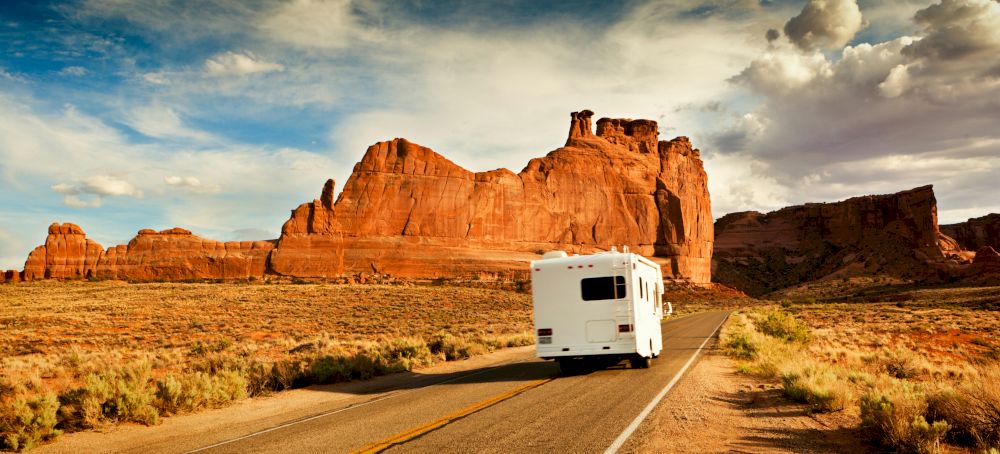
Within a day’s drive, you can reach countless national parks and nature reserves. You can often enjoy active pursuits in this stunning natural setting: hiking, mountain climbing, mountain biking, rafting, and kayaking, to name just a few outdoor sports. Since you won’t be back in Las Vegas anytime soon, renting an RV is the best way to take beautiful, extended trips through Nevada or neighboring states, such as California and Arizona. In the evening, you can sit on a chair outside the RV and gaze at the dark starry sky, which is just as impressive as the surrounding nature.
Still unsure about renting an RV in Las Vegas? Then read on, because we’ll explain the options available, what there is to see, what to look out for when renting an RV in Las Vegas, where you’re allowed to stay overnight with a rented RV, and how it differs from renting a regular passenger car. Finally, we’ll tell you where you can rent a campervan for a road trip starting from Las Vegas.
What to Consider When Renting a Campervan
In principle, there isn’t much difference between renting a passenger car and a campervan, except that picking up a campervan takes more time. When picking up the RV, you should inspect it thoroughly, both inside and out. Due to its size, this naturally takes more time. Walk around the RV and compare any existing dents and scratches with the so-called check-out form. Is a piece of damage not listed? Make sure to have it noted then. Also check the headlights, windows, windshield wipers, and tire pressure. Take detailed photos so you always have proof of the camper’s condition when you picked it up.
If you’re renting a camper in Las Vegas, you’ve likely also rented an inventory of supplies and linens (or they’re included). Check those thoroughly as well: are there enough plates, glasses, cutlery, and towels?
When renting a camper, you’ll receive a detailed explanation of the equipment and where everything is located. Listen carefully and pay close attention to what the rental agent points out and describes. Especially with larger campers, you’ll be bombarded with a lot of information. It’s helpful if there are two of you present and any children aren’t causing a distraction. Make sure you’re fully focused on the briefing about the RV you’ve rented in Las Vegas, especially if it’s your first time. It’s a great idea to record the rental company’s briefing so you can review it later.
What Type of RV to Rent in Las Vegas
RV come in all shapes and sizes: from relatively small campervans to motorhomes and full-fledged homes on wheels. The latter can accommodate up to 7 people, which is one of the most important factors when choosing an RV to rent: how many people are coming along? Another important consideration is how much interior space you want. On road trips starting from Las Vegas, you’ll likely spend a lot of time outdoors, so ample interior space may not be that important—but of course, that’s entirely a matter of personal preference. Another important factor: how much luxury do you want right at your fingertips? The more luxury amenities and accessories, the higher the price—but often, the larger the camper as well.
In Las Vegas, you can rent the following types of RVs:
Campervan: a sort of upgraded van that’s been transformed into a mobile sleeping quarters. Especially popular with (mostly young) couples who don’t have much luggage.
Truck camper: This is a converted vehicle—a pickup truck—with the living area located in the cargo bed and the sleeping area above the cab.
Class C motorhome: these are the true motorhomes and are available for rent in various sizes. You can tell the length by a designation such as C19 or C32. This is a length measurement in feet: 1 foot is just over 30.48 centimeters. A C19 is a motorhome with a length of nearly 5 meters and 80 centimeters. A C32 is no less than 9.75 meters long.
Class A coach-style RV: as the name suggests, these are large RVs the size of a bus, with lengths of up to nearly 11 meters.
In the last two categories, part of the vehicle can sometimes be extended to provide more living space while camping.
In the U.S., all you need to drive any of the above RV types is a standard Class B driver’s license!
Renting an RV in Las Vegas? Spend the first night in a hotel!
If you arrive in the U.S. after a long (intercontinental) flight, you’re not allowed to get into a rented RV and drive off immediately upon arrival. The law requires that you stay in a hotel for at least one night. Some people think this is patronizing, but it’s not really such a crazy rule. Driving a large RV is simply different from driving a passenger car. An experienced driver gets used to a rental car within two minutes, but getting used to driving a rented RV often takes a little longer. You’ll need all your concentration—especially during the first few hours—and it helps if you’re well-rested.
Keep this rule in mind if you want to rent a RV in Las Vegas: plan for at least one night’s stay at a hotel before the rental period begins. RV rental companies will check your passport and, in most cases, will refuse to rent you an RV if you arrived on the same day via an intercontinental flight. This applies not only to direct flights to Las Vegas but also to flights with a layover.
Spending the Night in a RV Near Las Vegas
In English, a camper is also called a Recreational Vehicle. You’ll often come across the abbreviation (RV) when it comes to facilities for campers, including when you’re looking for places to stay overnight with your rental camper. To find those spots, you can search Google for, for example, “RV parks in California’. There’s also a handy website for finding RV parking spots in the United States: The Dyrt.
Signs that say “no overnight parking,” “no camping,” or “closed to camping” leave nothing to be desired in terms of clarity. In many places where those signs aren’t posted, you’re allowed to park your rented RV overnight in the U.S., including in national parks and other government-owned land. This is called dispersed camping or boondocking. To see exactly where it is and isn’t permitted, the U.S. Forest Service provides detailed maps.
Driving a Rented RV
Driving an RV is different from driving a passenger car, but it’s easier than you might think, especially in the U.S. The roads there are relatively wide and generally not very busy, except near major cities. This makes them ideal for driving an RV, and you can relax and enjoy the scenery around you. Moreover, America’s national parks are well-equipped to accommodate visitors traveling by RV. And finding an RV campground, whether inside or outside those parks, is hardly a problem, as there are plenty of them.
We do recommend that you avoid traveling long distances on the first day after renting an RV in Las Vegas. It’s also important to start small. If you’ve never driven an RV before, it’s best not to rent the largest model right away.
You can’t drive as fast in an RV as you can in a car; you’ll be about 20 percent slower. That means your travel time will be longer. Keep this in mind when planning your itinerary. Also, an RV consumes much more fuel than a passenger car. So keep a close eye on the fuel gauge and refuel in time, because gas stations are scarce, especially in more remote areas.
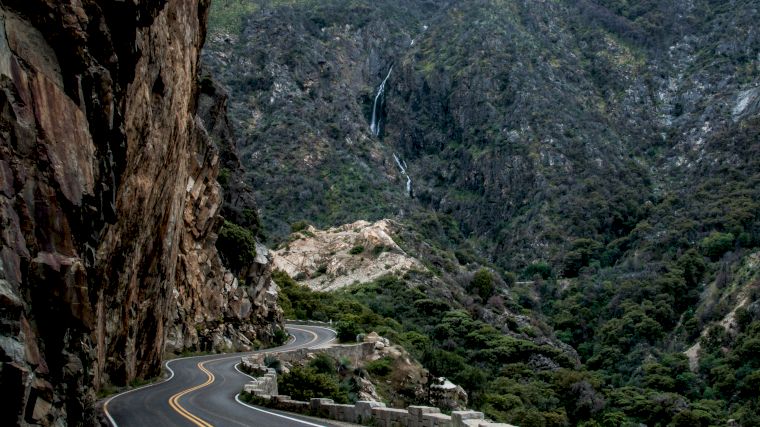
Keep in mind that summers in Nevada can be extremely hot, often exceeding 40 degrees Celsius (110°F). Death Valley is even hotter, with temperatures sometimes reaching over 50 degrees Celsius. Many RV rental companies therefore prohibit driving there during the months of July and August. Outside of those hottest months, in the spring and fall, driving a RV around Las Vegas is a delight. Of course, temperatures in the higher mountains of the Sierra Nevada are significantly lower than in the Mojave Desert. The sun shines abundantly in and around Las Vegas in all seasons, but the mountains receive more precipitation.
Renting a RV for a one-way trip from Las Vegas
The most beautiful natural areas are quite a few kilometers’ drive from Las Vegas. That’s exactly why you’ve rented a camper—so you can spend the night in the most beautiful spots. If you’re traveling through Death Valley and Yosemite National Park , it makes sense to continue on to San Francisco and drop off your rental camper there. The good news is that most camper rental companies are perfectly fine with this. However, they often charge a surcharge for this so-called one-way camper rental.
With a one-way RV rental, you can see much more during your road trip through the American Southwest. You don’t have to drive back to your starting point, which gives you much more flexibility, allows you to travel farther, and lets you discover a wider variety of landscapes and natural areas.
Most RV rental companies in Las Vegas also have offices in popular one-way drop-off destinations, such as San Francisco, Los Angeles, Phoenix, and Denver. If you want to drop off your rental RV in a different city, you may need to do a bit of research to find a rental company that offers the combination of your choice.
Road Trip in a Rented RV from Las Vegas
If this is your first time driving an RV, you might not want to tackle a very long trip right away. You don’t have to, because the RV campgrounds in the Valley of Fire State Park are just a 70-kilometer drive from Las Vegas.
The next day, you can drive your rented RV on to one of America’s biggest attractions: the Grand Canyon. There are many places to park your RV; one of the best is Mather Campground, where you’ll find spacious sites with plenty of privacy. This campground is also close to the famous Rim Trail, one of the most scenic hiking trails.
A beautiful road to drive on with your rental RV is Deer Creek Road along Mount Charleston, less than an hour’s drive west of Las Vegas. Further west, you’ll reach Death Valley, which—despite its intimidating name—offers an amazing experience, especially in early spring. At that time, there may be snow on the highest elevations, while the temperature in the lowest part is very pleasant. With a lot of luck, you’ll witness the so-called “superbloom,” when the entire valley is suddenly filled with golden-yellow wildflowers.
With an RV rented in Las Vegas, you’ll surely want to continue your journey, and there are plenty of options in eastern California: the national parks Sequoia & Kings Canyon and the undisputed highlight, Yosemite. Keep in mind, however, that during the summer months and on some weekends, only a limited number of visitors are allowed.
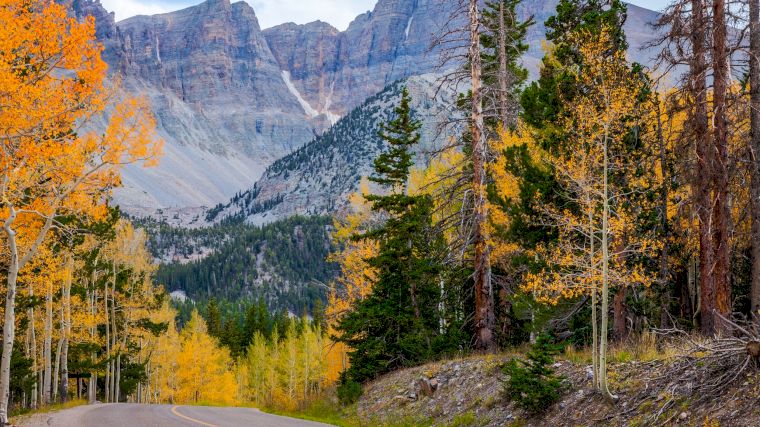
Did you think Nevada was just desert? Not at all—why not take your rental RV to the Great Basin National Park, about a 5-hour drive north of Las Vegas. Enjoy the wilderness and hike among ancient pine trees and along crystal-clear mountain lakes. At night, admire the darkest starry sky while sitting comfortably in your rented RV.
Rent a campervan in Las Vegas
Las Vegas is the perfect starting point for exploring some of America’s most beautiful natural attractions. A campervan is the ideal mode of transportation for this. With a campervan, you’ll enjoy complete flexibility and won’t have to spend money on hotel stays or search for restaurants. You’ll have everything you need right at your fingertips and can go wherever you want—for example, to enjoy a nice picnic along the way. Plus, with a campervan or motorhome, you can park in the most beautiful spots right in the middle of nature. A hotel can never match that.
Interested in setting out from Las Vegas in a campervan? You can rent a campervan in Las Vegas through one of the links below:
Campers America (Dutch)
Escape Campervans Las Vegas (English)
Cruise America (English)

Where would you like to rent a car?
- 24000+ pick-up locations
- Free cancellation
- Independent comparator

Useful tips for a well-prepared trip
Which insurance should I choose, and what's the deal with the deposit? Read our articles with useful information and tips to ensure you choose the right rental car for you.


