- Popular countries
- Popular regions
- Popular cities
- Popular airports
- Car Rental Italy
- Car Rental Spain
- Car Rental United States
- Car Rental Portugal
- Car Rental South Africa
- Car Rental France
- Car Rental Netherlands
- Car Rental Greece
- Car Rental Germany
- Car Rental United Kingdom
- Car Rental Belgium
- Car Rental Croatia
- Car Rental Switzerland
- Car Rental Austria
- Car Rental Denmark
- Car Rental Norway
- Car Rental Australia
- Car Rental Ireland
- Car Rental Cyprus
- Car Rental Canada
- Car Rental Florida
- Car Rental Sicily
- Car Rental California
- Car Rental England
- Car Rental Sardinia
- Car Rental Mallorca
- Car Rental Ibiza
- Car Rental Crete
- Car Rental Tenerife
- Car Rental Rhodes
- Car Rental Madeira
- Car Rental Corsica
- Car Rental Gran Canaria
- Car Rental Malta
- Car Rental Scotland
- Car Rental Azores
- Car Rental Fuerteventura
- Car Rental Lanzarote
- Car Rental Corfu
- Car Rental Zakynthos
- Car Rental Amsterdam
- Car Rental Milan
- Car Rental Miami
- Car Rental Lisbon
- Car Rental Malaga
- Car Rental Porto
- Car Rental Cape Town
- Car Rental Rome
- Car Rental Barcelona
- Car Rental Faro
- Car Rental Alicante
- Car Rental Bari
- Car Rental Nice
- Car Rental Johannesburg
- Car Rental Naples
- Car Rental Brussels
- Car Rental Bergamo
- Car Rental Orlando
- Car Rental Palma de Mallorca
- Car Rental Catania
- Car Rental Amsterdam Schiphol Airport
- Car Rental Miami International Airport
- Car Rental Lisbon Airport
- Car Rental Malaga Airport
- Car Rental Porto Airport
- Car Rental Milan Malpensa Airport
- Car Rental Rome Fiumicino Airport
- Car Rental Faro Airport
- Car Rental Alicante Airport
- Car Rental Bari Palese Airport
- Car Rental Nice Airport
- Car Rental Cape Town Airport - International Terminal
- Car Rental Bergamo Airport
- Car Rental Orlando International Airport
- Car Rental Barcelona Airport
- Car Rental Mallorca Airport
- Car Rental Johannesburg International Airport
- Car Rental Catania Airport
- Car Rental Ibiza Airport
- Car Rental Athens Airport

Safe Driving in the Fall with a Rental Car: 5 Tips
Fall leaves, rain, fog, wildlife, and lighting
Driving in the fall is different from driving in the summer: shorter daylight hours, more rain, slippery fall leaves, and animals crossing the road. When driving a rental car in unfamiliar territory, it’s especially important to drive with caution. Here are 5 practical tips for driving safely in a rental car during the fall break: from Southern European coastal roads to Northern European mountain passes.
On this page:
5 Fall-Specific Driving Risks
| Risk | Region where it occurs most frequently | Impact | Prevention | Recommendation |
|---|---|---|---|---|
| Fall leaves | Southern European hills (Tuscany, Andalusia), forested areas | Slippery roads | Avoid driving in the morning after rain | Drive calmly, brake gradually |
| Rain | All of Europe | Hydroplaning | Reduce speed | Drive slower than the official speed limit |
| Short daylight hours | Northern Europe (sunset as early as 3:30 p.m.) | Reduced visibility | Check your lights | Plan your driving segments early |
| Wildlife | Scotland, Scandinavia, Germany | Risk of collision | Slow down at dusk | Drive significantly slower than the speed limit |
| Cold mornings | Mountain passes | Condensation on the windshield | Allow extra time to warm up | Leave a little later |
1. Fall leaves and slippery roads
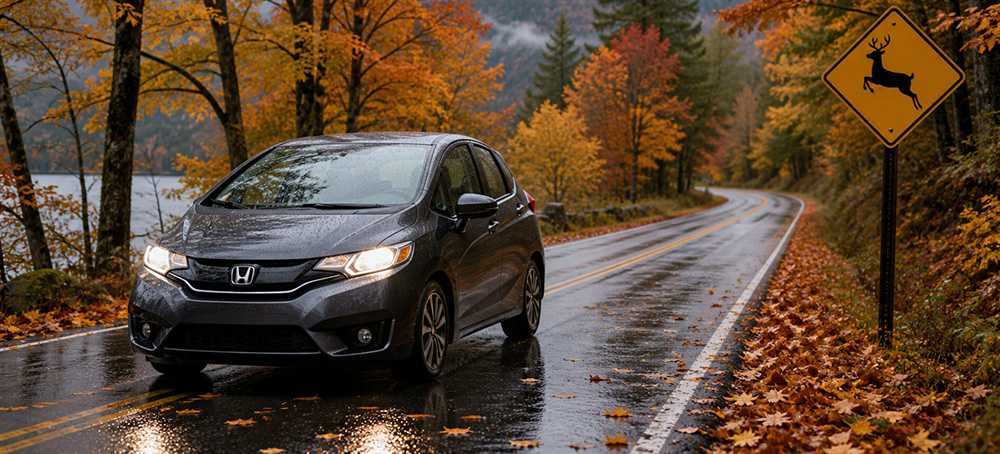
The risk is highest on Mediterranean hill roads (Tuscany, Andalusia, Provence) and in the forested areas of Scotland and the Black Forest in Germany. Roads are especially slippery in the morning after it rains overnight. Wet leaves, combined with narrow roads lacking drainage, create a surface as slippery as soap; braking can quickly lead to a skid.
If you encounter wet leaves on the road, adjust your speed and brake gradually—never suddenly. Avoid sudden steering movements. If you’re planning a long fall drive, have the brakes checked when you pick up your rental car.
If you do feel the car skidding: don’t brake abruptly. Release the gas pedal and gently steer in the direction you want to go. If you’re driving an automatic, just leave the gear in D.
2. Rain and Hydroplaning
Fall is the prime rainy season in much of Europe. Hydroplaning occurs mainly when there’s a layer of water more than 1 to 2 mm deep, combined with higher speeds. You’ll notice hydroplaning because the steering wheel feels light and the car responds sluggishly to steering inputs. If this happens: take your foot off the gas, don’t brake, and keep the steering wheel straight until the tires regain traction.
In heavy rain, drive slower than you normally would and maintain a greater distance from the vehicle ahead. Set the windshield wipers to high speed and drive with low beams: this is mandatory in all European countries when visibility is poor (including in rain). When picking up your rental car, check the tire tread depth: by law, it must be at least 1.6 mm in the EU; for fall conditions, a minimum of 2 mm is recommended. If you’re unsure, feel free to ask for a different rental car.
3. Short daylight hours, daylight saving time, and lighting
On the last Sunday in October each year, clocks are set back one hour to standard time throughout most of Europe. This happens at 3:00 a.m., when the clock is set back to 2:00 a.m. After that, it gets dark early: around 5:00–5:30 p.m. in Southern Europe, 4:30–5:00 p.m. in Central Europe, and around 3:30 p.m. in Northern Europe (in Lapland, as early as 2:30 p.m.). Therefore, plan long drives in your rental car primarily for the morning.
The rules regarding headlights in a (rental) car vary by country. Throughout Europe, you must use low beams as soon as visibility is poor, such as in rain or fog. Several countries in Northern Europe (Norway, Sweden, Denmark, Iceland) and Eastern Europe (Poland, the Czech Republic, Slovenia, and the Baltic states) require the use of low beams or daytime running lights at all times, even in clear weather. Check the regulations at your destination before every trip!
Also be mindful of glare: the low autumn sun in the morning and late afternoon can be quite blinding. Make sure your windshield is clean and keep a pair of sunglasses within reach. If you’re driving at night outside of built-up areas, feel free to use high beams, but switch to low beams immediately when you see oncoming traffic.
When picking up your rental car, check the headlight switch. Some European cars have a sensor that automatically turns on the low beams when it gets dark. Fog and rain aren’t always detected by this sensor, so in those cases, you’ll need to turn on the low beams manually. If you need fog lights, check in advance where the button is located.
4. Animals Crossing the Road
In various regions, you should be on the lookout for animals suddenly crossing the road. These can include herds of livestock as well as wildlife. The risks are highest in Scotland (deer and sheep), Finland and Sweden (moose and reindeer, especially in Lapland), Germany (deer in the Black Forest and Bavaria), Poland and Slovakia (Tatra Mountains), and Slovenia. In Southern Europe, the risk is lower, although in Sardinia and other rural areas, goats sometimes roam freely on the road.
Wild animals are particularly likely to cross the road around sunrise and sunset, when it’s twilight. In remote areas such as Lapland or the Scottish Highlands, there are very few warning signs, so defensive driving is especially important there.
In areas with wildlife warning signs, it’s wise to drive significantly slower than the speed limit, especially if you’re driving a rental car in unfamiliar terrain. Outside built-up areas, use high beams (if there is no oncoming traffic) so you can spot animals’ eyes glinting sooner. If an animal suddenly runs onto the road, do not swerve abruptly; the risk of rolling over is greater than that of a collision. Brake while keeping the steering wheel steady.
In the event of a collision: pull the car over to a safe location, turn on your hazard lights, and call the emergency number—112 throughout Europe. Take photos of the damage for the rental car’s insurance claim. Never take an animal with you, and do not attempt to treat an injured animal yourself if you lack experience; leave this to the emergency services.
5. Vehicle Inspection Upon Pickup and Tire Check
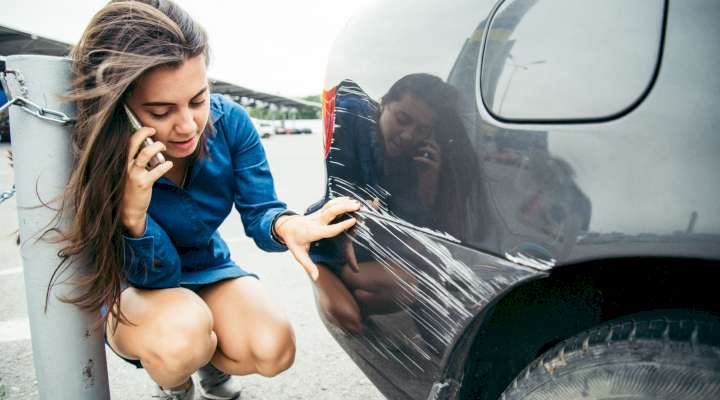
When picking up the rental car, take photos from all angles and, if possible, a video, paying close attention to scratches and dents. Also check the windshield for chips and make sure all dashboard lights are off.
Check the tire tread depth: legally, 1.6 mm is the EU minimum, but in wet fall conditions, a minimum of 2 mm is recommended. With less tread and at higher speeds, you’re at greater risk of hydroplaning. If in doubt, ask for a different rental car.
Winter tires aren’t mandatory everywhere. Germany requires winter tires in wintery conditions; Austria mandates them (in wintery conditions) between November 1 and April 15; and in Finland, Sweden, and Norway, they’re required from December through February. For a fall vacation in October, this is usually not yet an issue, though the winter tire option may be worth considering if you’re heading to the Cairngorms in the Scottish Highlands or toward the Tatra Mountains on the border of Poland and Slovakia, where early snowfall occurs. Going on a winter sports trip? Be sure to read our comprehensive guide on renting a car with winter tires and snow chains.
Finally, check your windshield washer fluid and wipers; autumn mud and sticky leaves call for clean windows.
Frequently Asked Questions About Driving in the Fall
Is storm damage to a rental car covered?
Storm damage caused by, for example, a fallen tree or flying debris is usually not automatically covered under standard coverage (CDW), because rental companies often consider this to be a force majeure event. Damage to the roof is also not automatically covered. Therefore, check the insurance and the terms and conditions in your rental agreement before departure. If damage occurs, take photos of the rental car and the situation immediately and report it right away to the rental company via the emergency number in your contract.
Can I exchange the rental car if I find the tires unsafe when picking it up?
Yes, if you have any doubts about the tire tread or the condition of the tires when picking up the rental car, you can ask for a different vehicle. Do this before signing the vehicle inspection report and document your objection in writing on the pickup form. A rental company is required to provide a safe car; if you can’t reach an agreement, you can contact EasyTerra through your booking for assistance.
Is additional insurance worth it for a fall vacation with a rental car?
In the fall, the risk of damage from rain, fog, or storms is higher than in the summer. Standard insurance (CDW) covers collisions but does not always cover weather-related incidents. A supplementary Super CDW provides extra protection, but you can also choose a rental car with EasyTerra’s Worry-Free label and comprehensive coverage, which also covers your deductible.
What should I do if the rental car’s lights aren’t working properly when I pick it up?
When picking up the rental car, check all the lights: low beams, taillights, turn signals, and fog lights. Note any defects on the inspection report before you leave; otherwise, you may be held liable for them. Many rental cars these days have automatic headlights; check to make sure they’re set to “auto” mode and make sure you know how the switch works. If something stops working while you’re on the road, report it immediately to the rental company.
What should I do if I hit wildlife while driving?
Pull the car over to a safe spot and turn on your hazard lights. Call the emergency number (112 throughout Europe; 911 in much of North, Central, and South America) or the local police number. Take photos of the damage and the location for your insurance claim. Never touch an injured animal yourself, and do not try to move it; the police will contact the appropriate emergency service or veterinarian.

Where would you like to rent a car?
- 24000+ pick-up locations
- Free cancellation
- Independent comparator

Useful tips for a well-prepared trip
Which insurance should I choose, and what's the deal with the deposit? Read our articles with useful information and tips to ensure you choose the right rental car for you.